
Judge Joseph Reprimanded Over 2018 ICE Sidebar
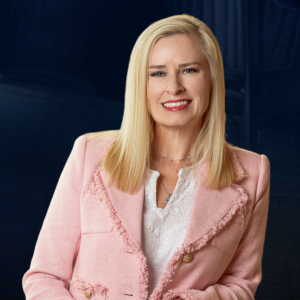
On September 10, 2026, the Massachusetts Supreme Judicial Court publicly reprimanded District Court Judge Shelley M. Richmond Joseph for her conduct during an April 2018 arraignment, the same case that had led to a federal indictment against her in 2019. The court found that comments Joseph made at a sidebar conference, and her instruction to turn off the courtroom’s audio recording during that conference, created an appearance of impropriety and violated a court recording rule. Critically, the court also found, as the hearing officer had, no evidence that Joseph knew of or approved a plan for the defendant to leave through a back door to avoid a waiting immigration officer. Below: what actually happened, what was and was not proven, and where things stand now.
| CASE FILE AT A GLANCE | |
| Judge | Shelley M. Richmond Joseph |
| Court | Newton Division, District Court Department |
| County | Middlesex County, Massachusetts |
| Case Number | OE-0157 |
| Sanction | Public reprimand |
| Decided | September 10, 2026, Supreme Judicial Court (6 to 0) |
| On the Bench Since | November 2, 2017 |
A New Judge’s First Day Alone on the Bench
Joseph was sworn in as a District Court judge in November 2017. On April 2, 2018, five months in, she presided alone over a full arraignment docket in the Newton District Court for the first time. One case on that docket involved Jose Medina-Perez, charged with two misdemeanor drug possession counts and a fugitive-from-justice count tied to an eight-year-old Pennsylvania warrant. A plainclothes ICE officer was in the courtroom, hoping to take custody of Medina-Perez on an ICE detainer once he was released from state custody.
Over the lunch recess, Joseph learned that the court’s First Justice had an informal, unwritten practice of asking ICE officers to wait outside the courtroom itself, though they were still allowed into the lockup area under a policy adopted after the Massachusetts Supreme Judicial Court’s 2017 Lunn decision. Lunn had held that court officers could not hold someone on a civil immigration detainer alone. Joseph, unfamiliar with the practice, checked with the District Court’s legal counsel before following it and having the ICE officer wait in the lobby instead of the courtroom.
The Sidebar
That afternoon, Medina-Perez’s newly retained private attorney, David Jellinek, had separately concluded that ICE had the wrong man and, without telling Joseph, had already arranged with a court officer to let Medina-Perez leave through the courthouse’s back sallyport exit rather than the front door where the ICE officer would be waiting. None of that was known to Joseph when Jellinek requested a sidebar conference.
At sidebar, with the prosecutor present, Jellinek said he believed ICE had misidentified his client and, referring to the ICE officer waiting outside, said he hoped they could resolve the fugitive charge, secure Medina-Perez’s release, and “avoid ICE.” Neither Joseph nor the prosecutor understood him to mean he planned to sneak his client out the back. Joseph responded by asking whether they should instead hold Medina-Perez in custody overnight, effectively offering more time to sort out the identification question. When Jellinek asked to go off the record, Joseph asked the clerk to stop the recording, a request she later said she gave little thought to given how quickly the conversation was moving.
The off-the-record portion lasted under a minute. According to the hearing officer’s findings, based on testimony he found credible, the same overnight-detention idea came up again, and Jellinek rejected it, saying he had matters “under control.” He did not say, and the hearing officer found Joseph did not understand, that this meant sneaking Medina-Perez past the ICE officer. Jellinek separately testified that he had told Joseph his plan and that she gave it her “blessing”; the hearing officer explicitly did not believe him, finding his account “repeatedly at odds with both the factual record and common sense.” The prosecutor, whom the hearing officer did find credible, testified she had no reason to think Joseph knew about any escape plan, though she described the sidebar itself as “weird or sketchy.”
The full sidebar, on and off the record combined, lasted about two minutes. Court resumed; the prosecutor moved to dismiss the fugitive charge for lack of evidence and confirmed she would not seek bail on the drug charges. Joseph granted Jellinek’s request to speak with his client in the lockup area before release, a request she said she granted believing Medina-Perez would go straight into ICE custody there regardless. A miscommunication with the clerk kept the ICE officer waiting in the lobby rather than the lockup area; about six minutes later, a court officer let Medina-Perez out through the sallyport.
What the Court Actually Found, and What It Did Not
The Supreme Judicial Court’s opinion is explicit on this point: it found Joseph created the appearance of impropriety by suggesting, in the middle of a conversation about ICE’s interest in Medina-Perez, that he be held in state custody overnight without any legal basis to do so, and by then instructing the recording turned off during that same conversation. Both, the court held, would lead a reasonable person to question her impartiality, regardless of her actual intent. Separately, turning off the recorder violated Rule 211 of the Special Rules of the District Court, which requires arraignments to be recorded, a rule Joseph did not know existed at the time but was still bound by.
The court did not find that Joseph knew about, authorized, or participated in the plan to help Medina-Perez evade the ICE officer. That specific allegation, the one that drove the original federal prosecution and much of the public narrative around this case, was not established by clear and convincing evidence.
The Discipline Ladder (Massachusetts)
Massachusetts’s Commission on Judicial Conduct investigates complaints and can resolve minor matters privately, but formal public discipline, from public reprimand up through censure, suspension, and removal, requires the Commission to file charges with the Supreme Judicial Court, which appoints a hearing officer, receives the Commission’s recommendation, and decides. A public reprimand is the mildest sanction the Court can impose on the public record; the Court noted Joseph’s conduct here was less severe than other cases that drew the same sanction, but chose a public reprimand anyway given how much public attention the case had already received.
Eight Years and a Dropped Federal Case
Joseph was indicted by a federal grand jury in April 2019 on charges of conspiracy to obstruct justice and related counts, and was suspended from the bench, without pay, for more than three years while that case proceeded. Federal prosecutors dropped the charges in September 2022, on the condition that Joseph refer herself to the Commission on Judicial Conduct and cooperate with its investigation, which she did. The Commission’s own report, issued in January 2026, found she had engaged in conduct that brought the judicial office into disrepute and recommended a public reprimand; one Commission member dissented, favoring an even lighter sanction, a private reprimand made public only because of the case’s notoriety. The Supreme Judicial Court’s six participating justices adopted the majority recommendation unanimously.
The Court weighed as mitigating factors that Joseph was a new judge sitting alone for the first time, that she had substantial prior experience as a criminal defense attorney including in that same courthouse, and that she had already endured years of public scrutiny, the federal prosecution, and an extended unpaid suspension. It found no aggravating factors.
The Rules She Broke
| Rule | What It Requires |
| S.J.C. Rule 3:09, Canon 1, Rule 1.1 | A judge shall comply with the law, which includes court rules and standing orders such as the Special Rules of the District Court. |
| S.J.C. Rule 3:09, Canon 1, Rule 1.2 | A judge shall act at all times in a manner that promotes public confidence in the independence, integrity, and impartiality of the judiciary, and shall avoid impropriety and the appearance of impropriety. |
| Special Rules of the District Court, Rule 211(A)(1) | All courtroom proceedings, including criminal arraignments, shall be electronically recorded, with limited exceptions not applicable here. |
How It Played in the Press
This case drew sustained national coverage from the moment of the 2018 incident through the 2026 reprimand, including the Associated Press, the Boston Globe, WBUR, and Courthouse News, alongside years of coverage during the federal prosecution. Much of the earlier press coverage, and the political debate that surrounded it during a period of heightened federal immigration enforcement, characterized the case as one of a judge helping a defendant escape ICE; the actual findings, once the disciplinary process concluded, were considerably narrower. Joseph’s attorneys, Thomas Hoopes and Elizabeth Mulvey, said in a statement that “it’s been an incredibly long and difficult eight years for Judge Joseph,” and that she was thankful for the support she received and looked forward to rejoining her colleagues.
Where Is She Now?
Joseph has returned to the bench and continues to serve as a District Court judge in Massachusetts. The Supreme Judicial Court’s September 2026 opinion is the final word in the disciplinary matter; no further review is pending.
Facing the System in Texas?Judges are bound by rules too, and there are systems (conduct commissions and appeals) built to hold them to it, in Massachusetts and in Texas alike. Deandra Grant Law handles federal and state criminal defense in Texas. Call (214) 225-7117 • texasdwisite.com |
Sources
PRIMARY SOURCE
- Supreme Judicial Court of Massachusetts, In the Matter of Shelley M. Richmond Joseph, No. OE-0157, decided September 10, 2026. mass.gov
NEWS COVERAGE
- Associated Press (via Boston.com): Newton judge accused of enabling immigrant to escape ICE gets an SJC public reprimand. boston.com
- Boston Globe: SJC issues public reprimand to Newton judge accused of helping defendant evade capture by ICE agents. bostonglobe.com
- WBUR: Mass. judge accused of enabling immigrant to escape ICE gets a rare public reprimand. wbur.org
- Courthouse News Service: Judge reprimanded after detainee fled the court. courthousenews.com
- New Bedford Guide: Eight Years After the Back-Door Escape, a Massachusetts Judge Gets a Public Reprimand. newbedfordguide.com
This post summarizes public judicial-discipline records and news reporting for general informational purposes as of publication. It is not legal advice. It takes no position on federal immigration enforcement policy generally; the issue addressed here is the Massachusetts court’s own findings about a specific judge’s specific courtroom conduct.
Which county your case is filed in changes how it is charged, who prosecutes it, and which court hears it.
Deandra M. Grant, JD, GC, MS, ACS-CHAL Forensic Lawyer-Scientist
She holds a Master of Science in Pharmaceutical Science and a Graduate Certificate in Forensic Toxicology, both from the University of Florida. She is the author of The Texas DWI Manual and has defended Texas DWI cases since 1994.
Charged With a Crime?
Whatever you're facing, a DWI or any criminal charge, the sooner you have a forensic-trained team on it the more we can do. Tell us what happened and we'll review your options, at no cost and no obligation. Intake answers 24/7, and if your case is one we can take on, we schedule a free consultation with an attorney.
Request a Free Case Evaluation
Tell us what happened. We'll respond as soon as possible.