


Overview
In Texas, a defendant convicted of murder can have their sentence dramatically reduced if the defense proves the killing occurred under the influence of sudden passion arising from an adequate cause. This finding reduces murder from afirst-degree felony (5 to 99 years or life)to asecond-degree felony (2 to 20 years) which is a difference that can mean decades of additional imprisonment.
The sudden passion defense does not result in an acquittal. The defendant is still convicted of murder. But the sentencing reduction is one of the most significant outcomes a defense attorney can achieve in a murder case where the evidence of the killing itself is strong.
At Deandra Grant Law, Attorney Douglas Huff fights for sudden passion findings in appropriate murder cases and understands the specific legal and factual requirements this defense demands.
What Is Sudden Passion?
Texas Penal Code §19.02(d)provides that at the punishment stage of a murder trial, the defendant may raise the issue of whether they caused the death under the immediate influence of sudden passion arising from an adequate cause.
Two elements must be established:
Sudden Passion
Sudden passion is defined as passion directly caused by and arising out of provocation by the individual killed or another acting with the person killed. The passion must have arisen at the time of the offense and must not have been solely the result of former provocation. In other words, the defendant must have acted in the heat of the moment and not after a cooling-off period that would have allowed a reasonable person to regain their composure.
Adequate Cause
Adequate cause is defined as cause that would commonly produce a degree of anger, rage, resentment, or terror in a person of ordinary temper, sufficient to render the mind incapable of cool reflection. The provocation must be severe enough that an ordinary person, not the specific defendant, would have been overcome by passion.
The Burden of Proof
Unlike most defenses in criminal law, the burden of proving sudden passion falls on the defense, not the prosecution. The defense must prove sudden passion by a preponderance of the evidence meaning it is more likely than not that the defendant acted under sudden passion arising from adequate cause.
This is a lower burden than the prosecution’s beyond-a-reasonable-doubt standard, but it still requires the defense to present affirmative evidence of both sudden passion and adequate cause.
When Sudden Passion Applies
Sudden passion cases typically involve:
- Discovery of infidelity — walking in on a spouse or partner in the act of adultery with another person. Texas courts have long recognized this as a classic example of adequate cause.
- Immediate response to an attack — situations where the defendant was attacked or threatened and responded with lethal force in the heat of the moment, but where full self-defense may not apply because the force was disproportionate or the threat had arguably subsided
- Severe provocation against a family member — discovering that a child has been molested, witnessing violence against a loved one, or similar provocations that would produce rage in an ordinary person
- Escalating confrontations — arguments that escalated rapidly into physical violence where the defendant acted in rage rather than premeditation
What Sudden Passion Is Not
Sudden passion is not available when:
- The defendant planned the killing in advance. Premeditation is incompatible with sudden passion
- There was a significant cooling-off period between the provocation and the killing
- The provocation came solely from words — Texas courts have generally held that verbal provocation alone is not adequate cause, although this is fact-dependent
- The defendant was the initial aggressor who provoked the confrontation
How Doug Builds the Sudden Passion Case
- Documenting the provocation. Doug investigates the events leading to the killing to establish the specific provocation that triggered the defendant’s passionate response. This includes witness testimony, communications, physical evidence of the provocative event, and any other evidence that establishes what the defendant experienced immediately before the killing.
- Establishing the timeline. The temporal relationship between the provocation and the killing is critical. Doug builds a detailed timeline demonstrating that the defendant acted immediately under the influence of passion, without a cooling-off period.
- Expert testimony on state of mind. In appropriate cases, Doug retains mental health experts to explain the psychological impact of the provocation on the defendant’s state of mind and the defendant’s inability to engage in cool reflection at the time of the offense.
- Mitigation integration. Mitigation reports provide comprehensive background evidence that helps the jury understand the defendant as a person and the context in which the killing occurred, supporting the sudden passion defense with a complete picture of the defendant’s character and circumstances.
Protect Your Future — Contact Deandra Grant Law Today
If you or someone you love is facing homicide charges in Texas, contact Deandra Grant Law for a free, confidential consultation. Attorney Douglas Huff is our Partner and Criminal Division Chief — a senior trial attorney who has defended clients against the most serious violent felony charges throughout his career. Our firm’s forensic science credentials and nearly 30 years of criminal defense experience mean you get a level of defense that most firms cannot provide.
Call (214) 225-7117 or schedule an appointment online at texasdwisite.com.
Attorneys Who Handle This Charge
Meet the attorneys who will argue sudden passion in your case.

Douglas E. Huff
Read Attorney Profile
Jada Fairley
Read Attorney Profile
Jason Bowes
Read Attorney Profile
Kevin Sheneberger
Read Attorney ProfileOffices Handling These Cases
Find the Deandra Grant Law office nearest you for homicide defense in Texas.

Allen
1333 W. McDermott Drive, Suite 180, Allen, TX 75013 Visit This Office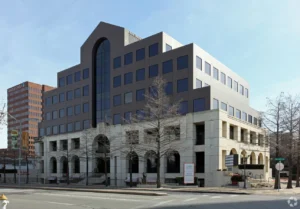
Dallas (HQ)
3300 Oak Lawn Avenue, Suite 700, Dallas, TX 75219 Visit This Office
Denton
1317 E. McKinney Street, Suite 101A, Denton, TX 76209 Visit This Office
Fort Worth
4500 Airport Freeway, Suite 101, Fort Worth, TX 76117 Visit This Office

Waco
605 Austin Avenue, Suite 5, Waco, TX 76701 Visit This OfficeCourthouses We Appear In
Courthouses where our attorneys represent clients facing this charge across Texas.
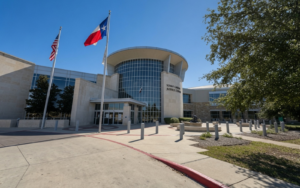
Bell County Courts
Everything you need to know about criminal court in Bell County, Texas: where cases are heard at the…
View Courthouse Info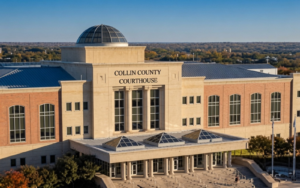
Collin County Courts
Everything you need to know about criminal court in Collin County, Texas: where cases are heard at the…
View Courthouse Info
Cooke County Courts
Everything you need to know about criminal court in Cooke County, Texas: where cases are heard in Gainesville,…
View Courthouse Info
Coryell County Courts
Everything you need to know about criminal court in Coryell County, Texas: where cases are heard in Gatesville,…
View Courthouse Info
Dallas County Courts
Everything you need to know about criminal court in Dallas County, Texas: where cases are heard at the…
View Courthouse Info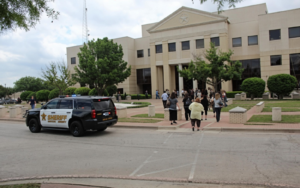
Denton County Courts
Everything you need to know about criminal court in Denton County, Texas: where cases are heard at the…
View Courthouse Info
Ellis County Courts
Everything you need to know about criminal court in Ellis County, Texas: where cases are heard at the…
View Courthouse Info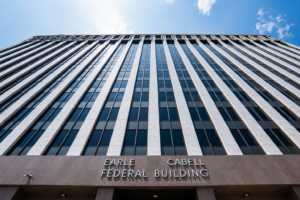
Federal Courts
Deandra Grant Law defends federal criminal cases across all four federal districts in Texas, the District of Columbia,…
View Courthouse Info
Grayson County Courts
Everything you need to know about criminal court in Grayson County, Texas: where cases are heard in Sherman,…
View Courthouse Info
Johnson County Courthouse
Everything you need to know about criminal court in Johnson County, Texas: where cases are heard at the…
View Courthouse Info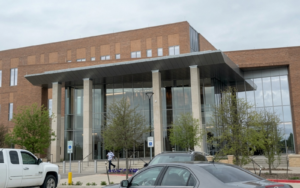
Kaufman County Courts
Everything you need to know about criminal court in Kaufman County, Texas: where cases are heard at the…
View Courthouse Info
McLennan County Courts
Everything you need to know about criminal court in McLennan County, Texas: where cases are heard at the…
View Courthouse Info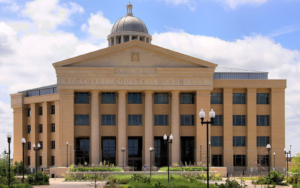
Rockwall County Courts
Everything you need to know about criminal court in Rockwall County, Texas: where cases are heard at the…
View Courthouse Info
Tarrant County Courts
Everything you need to know about criminal court in Tarrant County, Texas: where cases are heard at the…
View Courthouse Info