


Do You Need Legal Help?

"Deandra Grant Law fights hard for their clients and is always willing to go above and beyond. They are the best firm for DWI cases in DFW and beyond. Definitely hire them to represent you in any pending cases."
- P. Williams
"Deandra Grant made a tough situation so much better. She listened to my concerns and helped me so much with my case. I would recommend her to anyone needing legal services."
- M. Haley
"Deandra Grant Law handled my case with diligence and professionalism. Deandra Grant's reputation is stellar and now I know why. She has a team of individuals who provide quality service."
- N. Coulter
As Seen On





A Fighting Team On Your Side
Since 1994 when our doors opened, Deandra Grant Law has helped thousands of clients get their DWI charges reduced or dismissed. We're ready to fight on your behalf.

Managing Partner

Partner & Criminal Division Chief

Criminal Division Senior Associate

Criminal Division DWI Trial Chief

Immigration Division Chief & Criminal Division Deputy Chief

Criminal Division Associate

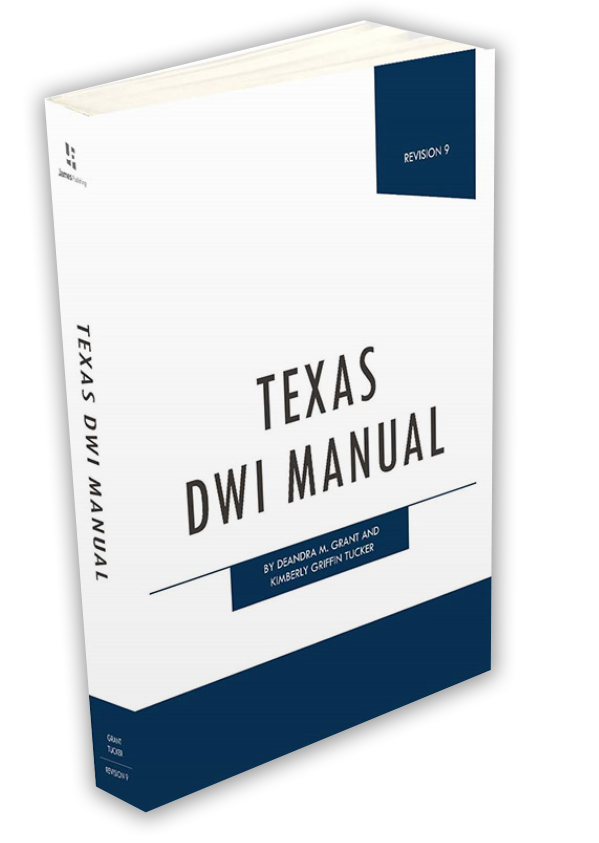
Texas DWI Manual
By Attorney Deandra Grant
Fighting DWI charges can present many challenges, not only for the defense, but prosecutors as well. This is why it is important to be armed with the necessary knowledge so you understand the DWI process.
Attorney Deandra M. Grant is the co-author of the Texas DWI Manual, offering legal advice to both clients and fellow attorneys. Fighting DWI charges can present may challenges, not only for the defense, but prosecutors as well. This is why it is important to be armed with the necessary knowledge so that you understand the DWI criminal process.
Learn MoreAlcohol Absorption and Elimination
DWI prosecutors rely on breath or blood test evidence to get a conviction, or convince a defendant to plead guilty. When a BAC (blood alcohol concentration) test is performed, whether it is a breath test or a blood test, the prosecution will present evidence of alcohol reported to be in the accused’s bloodstream to prove that the defendant was driving a vehicle with a BAC over the legal limit. It is important for a criminal defense attorney defending a client in a DWI case to fully understand the science behind alcohol absorption and elimination rates in order to competently defend a client. Talk to our lawyer, who has been AV® Preeminent Rated by Martindale-Hubbell®, before you do anything else. The quality of your defense lawyer could not be more important in a DWI case.
Related Videos
Nationally Recognized Lawyers
At Deandra Grant Law, we are highly trained and experienced in DWI defense and are extremely knowledgeable about the breath and blood alcohol testing systems used by law enforcement to prosecute DWI offenses in Texas. Attorney Deandra M. Grant is a nationally known speaker who routinely lectures to lawyers on the subjects of trial skills, cross examination, and forensic breath and blood alcohol testing. Having been listed by Super Lawyers® for 2011 and 2012, a nationally recognized attorney rating service, it is without question that when facing a DWI charge in Texas, Attorney Grant and her team are the right option for fighting your DWI.
Read the recent wins page and see for yourself the many cases the firm has won defending clients who have been arrested for DWI. There are many reasons why a case may be dismissed or won based on lack of evidence or a failure on the part of the police to follow proper procedure. Call us today to see if we can help you avoid a costly conviction for DWI.
Contact our offices today and schedule an initial consultation so that we can discuss you case in detail and advise you on your options.
Related Blogs

Understanding DWI Laws for CDL Holders in Texas
Driving while intoxicated (DWI) is a serious offense with severe repercussions for anyone found guilty. [...]

Understanding DWI Charges in Texas
Driving while intoxicated (DWI) is a serious offense in Texas, carrying severe penalties that can [...]

What to Do If You’re Pulled Over for a Suspected DWI in Texas
Driving in Texas can be a liberating experience, with its sprawling highways and scenic routes. [...]

Navigating First-Time DWI Offenses in Texas
Facing a first-time DWI charge in Texas can be overwhelming and daunting. The legal system’s [...]

Navigating Field Sobriety Tests in Texas DWI Cases
Driving while intoxicated (DWI) charges in Texas are serious legal matters that can have significant [...]

DWI Probation Rules in Texas
Driving while intoxicated (DWI) is a serious offense in Texas, carrying significant consequences. However, for [...]

Understanding DWI in Texas: What You Need to Know
Driving while intoxicated (DWI) is a serious offense that can have significant legal consequences in [...]

Understanding DWI vs. DUI in Texas: Navigating Legal Waters
Are you facing the daunting reality of DWI or DUI charges in Texas? Understanding the [...]
Client Reviews

“Deandra Grant Law handled my case with diligence and professionalism. Deandra Grant’s reputation is stellar and now I know why. She has a team of individuals who provide quality service.”