
Overview
Most people who request an Administrative License Revocation hearing do so because they want to keep their driver’s license. That is a legitimate and important goal. But the ALR hearing is more than a license proceeding — it is one of the most strategically valuable events in the entire DWI defense, and an attorney who uses it only to fight the suspension is leaving significant defensive value on the table.
The ALR hearing is, in most DWI cases, the first opportunity to put the arresting officer under oath and on the record. The testimony the officer gives at the ALR hearing creates a transcript. If that testimony differs from what the officer says months later at the criminal trial, the transcript is a direct impeachment tool. That strategic dimension is what distinguishes effective ALR representation from merely showing up.
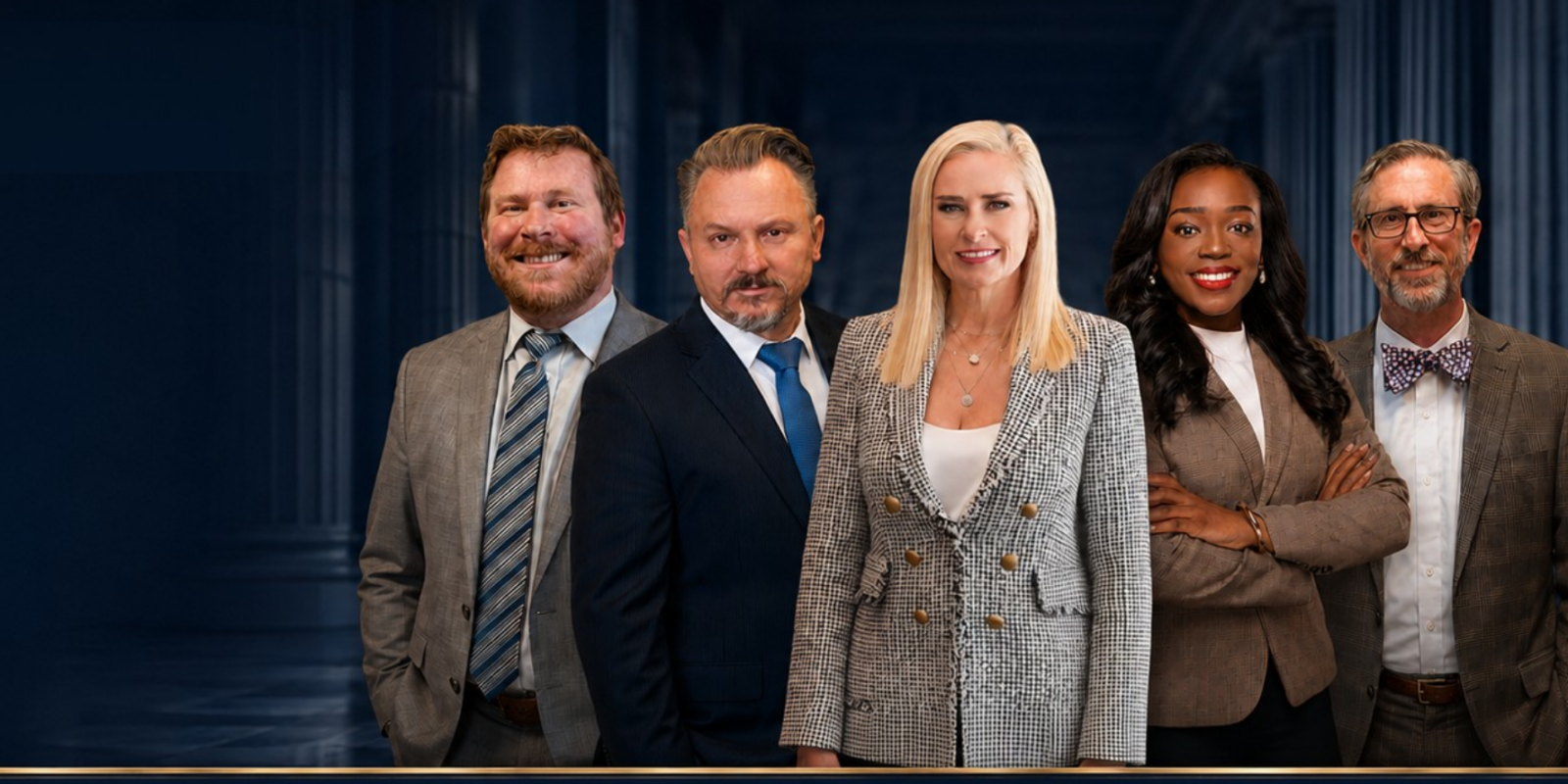
Managing Partner Deandra Grant is a certified SFST instructor and ACS-CHAL Forensic Lawyer-Scientist who has been conducting ALR hearings across North and Central Texas for more than 30 years. This page focuses specifically on what happens at the hearing itself.
The ALR Hearing: What It Is and Who Decides It
The ALR hearing is an administrative proceeding before the State Office of Administrative Hearings (SOAH). It is not a criminal trial. There is no jury. The case is decided by a State Office of Administrative Hearings judge — an administrative law judge (ALJ) — who applies administrative law standards rather than criminal law standards.
The hearing is typically conducted by telephone or videoconference, though in-person hearings can be requested. DPS is represented by its own attorney. The defendant is represented by their attorney. The arresting officer, and in some cases the breath test operator or blood draw technician, may be called as witnesses.
The standard of proof is lower than in the criminal case. In the criminal DWI prosecution, the State must prove guilt beyond a reasonable doubt. In the ALR hearing, DPS must establish the relevant elements by a preponderance of the evidence — more likely than not. This means that evidence that is not strong enough to support a criminal conviction may still be sufficient to sustain a license suspension. The two proceedings are independent and the outcome of one does not determine the outcome of the other.
What DPS Must Prove
The elements DPS must establish at the ALR hearing depend on whether the case is a refusal or a failure:
Failure Cases (Test Result of 0.08 or Above)
DPS must prove: (1) the officer had reasonable suspicion to initiate the traffic stop or other law enforcement contact; (2) the officer had probable cause to arrest the defendant for DWI; (3) the defendant was operating a motor vehicle in a public place; (4) the defendant provided a specimen; and (5) the specimen had an alcohol concentration of 0.08 or greater at the time of driving or at the time of the specimen collection.
Refusal Cases
DPS must prove: (1) the officer had reasonable suspicion for the stop; (2) the officer had probable cause to arrest for DWI; (3) the defendant was operating a motor vehicle in a public place; and (4) the defendant refused to provide a specimen of breath or blood when requested by a peace officer.
If DPS fails to establish any one of these elements, the suspension must be rescinded. The failure of DPS to call the arresting officer, or the officer’s failure to appear, is a basis for rescission in many cases — though DPS can in some circumstances present documentary evidence in lieu of live testimony.
What the Defense Does at the ALR Hearing
Challenging Reasonable Suspicion for the Stop
The initial stop is the foundation of everything that follows. If the officer lacked reasonable suspicion to pull the defendant over — or to approach the vehicle in a parking lot or at a checkpoint — the evidence obtained from that contact may be subject to suppression in the criminal case under Texas Code of Criminal Procedure Article 38.23 . The ALR hearing is an early opportunity to lock in the officer’s account of why they initiated the stop, before they have the opportunity to refine their recollection in preparation for the criminal trial.
Challenging Probable Cause for the Arrest
Probable cause for a DWI arrest is typically established through the officer’s observations and the results of field sobriety tests . Cross-examining the officer at the ALR hearing about how the field sobriety tests were administered — whether the surface was level, whether the instructions were standardized, whether the scoring was accurate — creates a record of the officer’s administration and scoring that can be compared against the dashcam and bodycam footage obtained in discovery. Deandra Grant is a certified SFST instructor who administers and grades the same tests officers use, which means this cross-examination goes to the level of the protocol rather than remaining at the level of general legal argument.
Challenging the Chemical Test Evidence
In failure cases, the defense has the opportunity to question the breath test operator about the Intoxilyzer 9000’s calibration and maintenance records, whether the required 15-minute observation period was maintained, and whether the two readings were within the required 0.02 tolerance. In blood test cases, questions about chain of custody, preservative adequacy, and laboratory methodology can be raised. These challenges are covered in depth on our DWI blood tests and DWI breath tests pages.
Creating the Impeachment Record
Every answer the officer gives at the ALR hearing is on the record. If the officer testifies at the ALR hearing that they observed the defendant’s eyes to be glassy and bloodshot, that observation is now locked in. If the bodycam footage obtained later in discovery does not show what the officer described, or if the officer’s trial testimony differs from the ALR testimony, the transcript is a direct impeachment tool. This is why ALR preparation is not separate from criminal defense preparation — it is the beginning of it.
When the Hearing Results in Suspension Anyway
Even when the ALR hearing results in a license suspension, the hearing has served its criminal defense purpose. The officer is on the record. The evidence has been tested. The defense has a clearer picture of what the prosecution’s case will look like.
If your license is suspended, an occupational driver’s license may allow you to drive for work, school, and essential household purposes during the suspension period. Deandra Grant Law can assist with both the ALR hearing and the occupational license petition.
Schedule Your ALR Hearing Now
The 15-day deadline to request your ALR hearing is already running. Deandra Grant Law handles ALR hearings across North and Central Texas. We request the hearing, prepare the defense, cross-examine the officer, and use every aspect of the hearing to build the strongest possible foundation for the criminal case.
Call (214) 225-7117 immediately. The deadline does not wait.
Attorneys Who Handle This Charge

Douglas E. Huff
Read Attorney Profile
Jada Fairley
Read Attorney Profile
Jason Bowes
Read Attorney Profile
Kevin Sheneberger
Read Attorney ProfileOffices Handling These Cases
Allen
1333 W. McDermott Drive, Suite 180, Allen, TX 75013 Visit This Office
Dallas (HQ)
3300 Oak Lawn Avenue, Suite 700, Dallas, TX 75219 Visit This Office
Denton
1317 E. McKinney Street, Suite 101A, Denton, TX 76209 Visit This Office
Fort Worth
4500 Airport Freeway, Suite 101, Fort Worth, TX 76117 Visit This Office
Waco
605 Austin Avenue, Suite 5, Waco, TX 76701 Visit This OfficeBooks & Guides
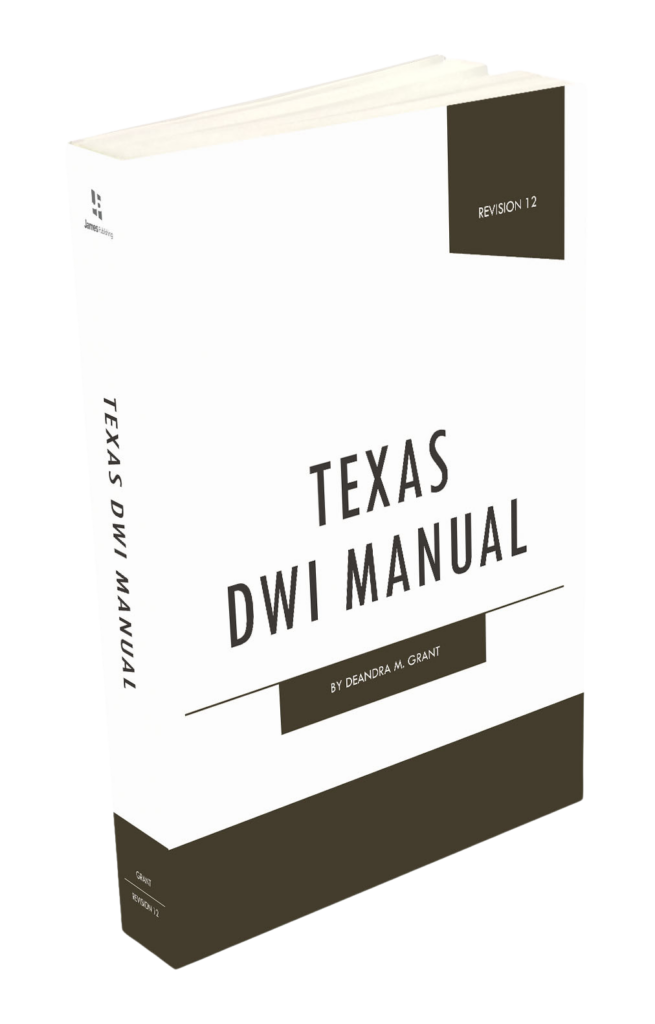
The Texas DWI Manual
Get the Book
Surviving Your DWI in McLennan County
Get the Book
Surviving Your DWI in Bell County
Get the Book
Surviving Your DWI in Hays County
Get the Book
Surviving Your DWI in Tarrant County
Get the Book
Surviving Your DWI in Travis County
Get the Book
Surviving Your DWI in Kaufman County
Get the Book
Surviving Your DWI in Rockwall County
Get the Book
Surviving Your DWI in Ellis County
Get the Book
Surviving Your DWI in Grayson County
Get the Book
Surviving Your DWI in Cooke County
Get the Book
Surviving Your DWI in Collin County
Get the Book
Surviving Your DWI in Denton County
Get the Book
Surviving Your DWI in Dallas County
Get the BookBlogs
Ask Deandra: What Is an ALR Hearing and Do I Need One?
Read Article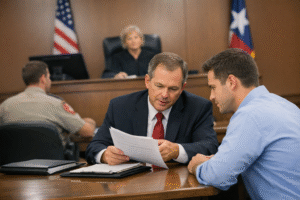
The Texas ALR Hearing: What It Is, What’s at Stake, and Why the 15-Day Deadline Is Not Negotiable
Read ArticleVideos
ALR Hearing for a CDL Holder in Texas
Watch the Video
New DWI Client Series | Driver’s License Issues and ALR Hearings in Texas
Watch the Video
What To Expect at an ALR Hearing
Watch the Video
How the Texas ALR Process Works
Watch the Video