
Home »

Do You Need Legal Help?

"Deandra Grant Law fights hard for their clients and is always willing to go above and beyond. They are the best firm for DWI cases in DFW and beyond. Definitely hire them to represent you in any pending cases."
- P. Williams
"Deandra Grant made a tough situation so much better. She listened to my concerns and helped me so much with my case. I would recommend her to anyone needing legal services."
- M. Haley
"Deandra Grant Law handled my case with diligence and professionalism. Deandra Grant's reputation is stellar and now I know why. She has a team of individuals who provide quality service."
- N. Coulter
New! AI Legal Avatar — Get 24/7 Answers on Texas DWI Law, Penalties, and Defenses
Our AI Legal Avatar provides instant, plain-language answers to your questions about Texas DWI laws—like penalties, license suspension, and defense strategies—anytime, day or night. While it's a helpful starting point, it doesn't replace the clarity and advocacy of our experienced DWI attorneys.
As Seen On






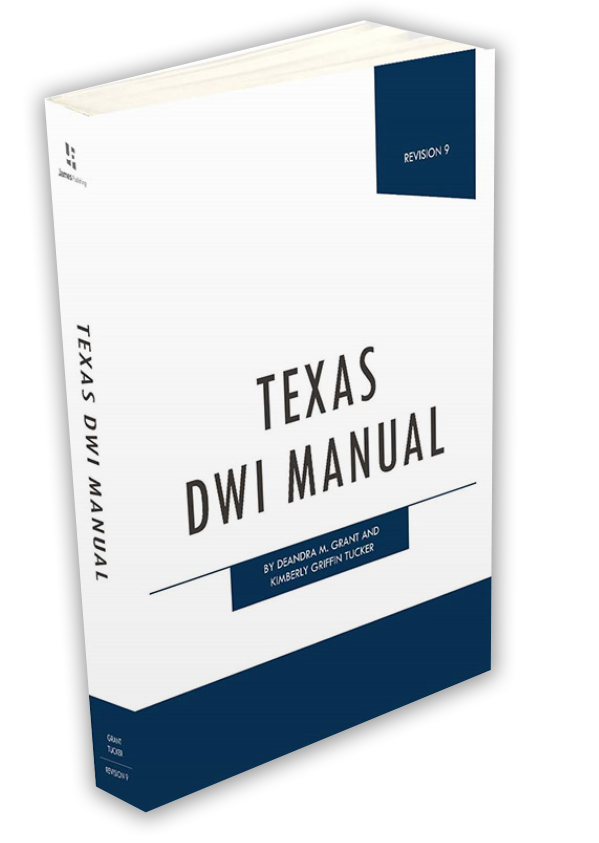
Texas DWI Manual
By Attorney Deandra Grant
Fighting DWI charges can present many challenges, not only for the defense, but prosecutors as well. This is why it is important to be armed with the necessary knowledge so you understand the DWI process.
Attorney Deandra M. Grant is the co-author of the Texas DWI Manual, offering legal advice to both clients and fellow attorneys.
Learn More⏰ DWI ARREST? THE 15-DAY ALR DEADLINE IS RUNNING.
You have 15 days from notice of suspension to request an ALR hearing or your license is automatically suspended, regardless of the criminal outcome.
Texas Multiple DWI Lawyers
A second or third DWI arrest is not simply a repeat of the first. The statute is different, the penalty range is different, the mandatory minimums are different, and the prosecution’s approach is different. Most importantly, the prior conviction becomes part of the prosecution’s case. A prior DWI conviction or completed deferred adjudication is treated as a punishment-phase enhancement for a DWI 2nd. This means the State proves the prior conviction only after a jury finds the defendant guilty. For a DWI 3rd, the two prior DWI convictions are considered essential, jurisdictional elements and not merely enhancements for punishment.
Deandra Grant Law has been defending repeat DWI cases in North and Central Texas courts for more than 30 years. Managing Partner Deandra Grant holds a Master’s Degree in Pharmaceutical Science and the ACS-CHAL Forensic Lawyer-Scientist designation. In cases where a prior conviction is being used to enhance a new charge, and where the chemical test result is the centerpiece of the prosecution’s case, that scientific depth matters as much as the legal argument.
How Texas Law Treats Prior DWI Convictions
Under Texas Penal Code §49.09, a prior DWI conviction or certain related convictions (intoxication assault, intoxication manslaughter, boating while intoxicated, flying while intoxicated) can be used to enhance a new DWI charge.
What counts as a prior. A prior conviction or completed deferred adjudication for DWI, BWI, FWI, intoxication assault, or intoxication manslaughter anywhere in the United States can be used for enhancement. Out-of-state convictions must have elements substantially similar to the Texas offense. Each prior must be examined individually.
Deferred adjudication in Texas. Texas law permits the State to use a prior Texas deferred adjudication for DWI as an enhancement for a subsequent DWI charge.
Jail as a Condition of Probation: What the Mandatory Minimums Actually Require
When probation is granted in a DWI case, Texas law requires a minimum number of days in county jail as a condition of that probation (COP) for certain offense levels. These minimums cannot be waived by plea agreement or judicial discretion. The following figures reflect the statutory minimums and maximums:
OFFENSE MIN COP MAX COP
DWI (first offense) 0 days 30 days
DWI BAC ≥ 0.15 0 days 30 days
DWI with Open Container 0 days 30 days
DWI Second 72 hours 30 days
DWI with Child Passenger 0 days 180 days
DWI 3rd (third-degree felony) 10 days 180 days
Intoxication Assault 30 days 180 days
Intoxication Manslaughter 120 days 180 days
Note: These are jail days as a condition of probation only. They do not represent the full sentence range for each offense level.
Related Videos
Second DWI: Class A Misdemeanor
A second DWI conviction in Texas is a Class A misdemeanor carrying up to one year in county jail and a fine up to $4,000. Two consequences set the second offense apart from the first:
Mandatory minimum jail as COP. Even if the judge grants probation, a defendant convicted of a second DWI must serve a minimum of 72 hours in county jail as a condition of that probation. This mandatory minimum cannot be waived. It applies regardless of the circumstances of the offense or the defendant’s personal history.
Ignition interlock device. A second DWI conviction triggers mandatory ignition interlock installation as a condition of bond and, if probation is granted, as a condition of probation.
License suspension for a second DWI conviction can extend up to two years. The ALR proceeding must be requested within 15 days of arrest regardless of what happens in the criminal case.
Third DWI: Third-Degree Felony
A third DWI conviction in Texas is a third-degree felony carrying 2 to 10 years in the Texas Department of Criminal Justice and a fine up to $10,000. This is the threshold at which a DWI becomes a felony with all the consequences that follow: loss of voting rights during sentence, loss of firearms rights, permanent felony record, immigration consequences for non-citizens, and mandatory supervision conditions that extend well beyond the sentence itself.
A plea of guilty or no contest to a third DWI results in a felony conviction. That consequence belongs in any honest assessment of a plea offer before it is accepted.
Jail as COP for third DWI. For a third DWI (third-degree felony), the statutory minimum jail period as a condition of probation is 10 days, with a maximum of 180 days. Community supervision at the felony DWI level also typically carries substantially more restrictive conditions: a longer supervision term, mandatory ignition interlock, no alcohol use, random testing, and significant community service hours.
Related Blogs
The Rising Blood Alcohol Defense in Texas: Why the Number on the Test May Not Be the Number That Matters
By Deandra Grant, J.D., M.S. (Pharmaceutical Science), ACS-CHAL Forensic Lawyer-Scientist Driving at 11 pm and [...]
Breath Tests in Texas DWI Cases: What the Machine Gets Wrong
If you were arrested for DWI in Texas, there’s a good chance a breath test [...]

When the Lab Gets It Wrong: What a ‘Rogue’ Forensic Lab Scandal Means for Your DWI Case
By Deandra Grant, J.D., M.S. (Pharmaceutical Science), ACS-CHAL Forensic Lawyer-Scientist A story out of Illinois [...]

Operating a Motor Vehicle in Texas: Can You Get a DWI While Parked?
By Deandra Grant, J.D., M.S. (Pharmaceutical Science), ACS-CHAL Forensic Lawyer-Scientist You didn’t drive anywhere. You [...]
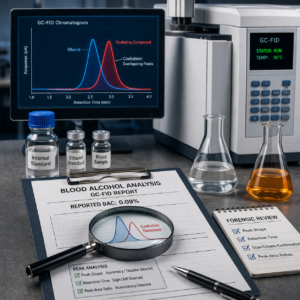
What Is Coelution in Gas Chromatography — And Why Your Attorney Should Know
Of all the scientific challenges to blood test accuracy in DWI cases, coelution may be [...]
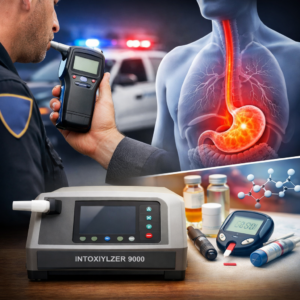
Can Medical Conditions Like GERD or Diabetes Cause a False Positive Breath Test?
The Intoxilyzer 9000 measures the amount of alcohol in a breath sample using infrared spectroscopy. [...]

How Blood Sample Contamination Happens — And How to Recognize It
The prosecution’s blood test result in your DWI case is only as reliable as the [...]

What Is Partition Ratio Variability — And Why a 0.08 Result May Not Mean What the Prosecution Claims
Every breath test result presented in a Texas DWI case is based on an assumption [...]
What the Defense Examines in a DWI 3rd Case
The Prior Convictions
The State must prove the prior two convictions beyond a reasonable doubt through certified court records. Those records must be examined for accuracy: the correct defendant, the correct offense, a valid plea or finding of guilt, and proper judgment entry. Paperwork for prior convictions are sometimes incomplete or contain errors that can be challenged. If the priors cannot both be proven, the enhancement fails and the charge reduces to a misdemeanor DWI.
The Chemical Test
In blood cases, the analysis performed by SWIFS in Dallas, the TCME laboratory in Fort Worth or any of the DPS crime labs is subject to the same forensic scrutiny as in any DWI: chain of custody, sodium fluoride preservative adequacy, in vitro fermentation, headspace gas chromatography methodology, and analyst qualifications. Deandra Grant’s ACS-CHAL designation and Master’s Degree in Pharmaceutical Science mean that evaluation happens at the level of the science, not just the legal argument about admissibility.
The Rising BAC Defense
The timeline between driving and the chemical test is often critical. If alcohol was still being absorbed at the time of driving, the BAC at the time of the test may be meaningfully higher than the BAC while the defendant was behind the wheel. The rising BAC defense is a pharmacokinetic argument grounded in the science of alcohol absorption and distribution, and it requires the kind of expertise that a Master’s Degree in Pharmaceutical Science provides.
The Stop and the Constitutional Foundation
Every repeat DWI case begins with the same question as every first offense: was there reasonable suspicion for the stop? Under Texas Code of Criminal Procedure Article 38.23, evidence obtained through an unlawful stop is suppressible with no good faith exception. Suppression of the stop means suppression of everything that followed, including the chemical test.
The ALR Hearing
The administrative license revocation hearing must be requested within 15 days of notice of suspension. In a repeat DWI case, the ALR hearing is particularly valuable because it is an opportunity to take sworn testimony from the arresting officer before the criminal case proceeds and creating a record that can be used at trial or in plea negotiations.
Frequently Asked Questions About Second and Third DWI Charges in Texas
Facing second or third DWI charges in Texas can lead to a multitude of questions and concerns. At Deandra Grant Law – Criminal & DWI Defense, we understand the complexities of these situations and are here to provide you with answers to some common questions you might have. Here’s a closer look at what you need to know:
What Are the Penalties for Second DWI Offense in Texas?
For a second DWI offense in Texas, you could face fines up to $4,000, mandatory jail time ranging from 30 days to one year, driver’s license suspension for up to two years, and an annual fee to retain your driver’s license. These penalties increase with subsequent convictions.
Is a Third DWI a Felony in Texas?
Yes, a third DWI in Texas is considered a felony offense. This means the potential consequences become even more severe, including fines up to $10,000, prison time ranging from 2 to 10 years, and a potential driver’s license suspension of up to two years.
Can I Refuse a Field Sobriety Test or a Breathalyzer Test?
While you have the right to refuse field sobriety tests, refusing a breathalyzer test can lead to automatic driver’s license suspension. It’s important to consult with an attorney from Deandra Grant Law – Criminal & DWI Defense before making any decisions regarding these tests.
What Can a Lawyer Do to Help Me if I'm Facing Multiple DWI Charges?
An experienced Texas Multiple DWI Lawyer can provide personalized guidance, build a strong defense strategy, protect your rights during legal proceedings, negotiate on your behalf, and work towards minimizing the consequences you may face.
Will I Lose My Driver's License After a Second or Third DWI Conviction?
Yes, it’s possible to have your driver’s license suspended after a second or third DWI conviction. The duration of the suspension can vary based on the specifics of your case. However, our team at Deandra Grant Law – Criminal & DWI Defense can help you explore options for retaining your driving privileges.
Can I Get a Case Dismissed if it's My Second or Third DWI?
While a case dismissal is not guaranteed, it’s possible to have charges reduced or dismissed based on various factors such as procedural errors, lack of evidence, or constitutional violations. Our team will thoroughly analyze your case to identify potential avenues for a successful outcome.
How Long Does a Second or Third DWI Stay on My Record?
DWI convictions can remain on your record for a significant period. A second DWI conviction can stay on your record for up to 10 years, while a third DWI conviction can have lasting effects throughout your life.
What Sets Deandra Grant Law – Criminal & DWI Defense Apart in Handling Multiple DWI Cases?
Our team of experienced Texas Multiple DWI Lawyers offers in-depth knowledge of Texas DWI laws, personalized defense strategies, protection of your rights, negotiation skills, and a commitment to securing a positive outcome for your case.
Talk to a Multiple DWI Defense Attorney Before Any Other Decision
The penalty range for a second or third DWI in Texas is not the only thing that changes. The strategic calculus of every decision (whether to request an ALR hearing, whether to engage in plea negotiations, whether to challenge the prior conviction, whether to contest the chemical test) is different when a prior conviction is on the record and a mandatory minimum or felony threshold is at stake.
Deandra Grant Law has offices in Dallas, Fort Worth, Allen, Denton, Waco, and Rockwall. We have appeared in North and Central Texas courts for more than 30 years, across more than 500 trials to verdict.
Call (214) 225-7117 for a confidential consultation. The 15-day ALR deadline starts running from the date of your arrest. Don’t wait.
Client Reviews

“Deandra Grant Law – Criminal & DWI Defense handled my case with diligence and professionalism. Deandra Grant’s reputation is stellar and now I know why. She has a team of individuals who provide quality service.”
N. Coulter


(214) 225-7117
Experienced DWI Defense