
Home »


Do You Need Legal Help?

"Deandra Grant Law fights hard for their clients and is always willing to go above and beyond. They are the best firm for DWI cases in DFW and beyond. Definitely hire them to represent you in any pending cases."
- P. Williams
"Deandra Grant made a tough situation so much better. She listened to my concerns and helped me so much with my case. I would recommend her to anyone needing legal services."
- M. Haley
"Deandra Grant Law handled my case with diligence and professionalism. Deandra Grant's reputation is stellar and now I know why. She has a team of individuals who provide quality service."
- N. Coulter
As Seen On







Download Our Free Texas Criminal Guide
Learn what you should and shouldn't be doing to help your criminal defense case.
Texas Assault on a Public Servant Defense Lawyers
Assault on a public servant is one of the most commonly overcharged offenses in Texas. Under Texas Penal Code §22.01(b)(1), an assault that would otherwise be a misdemeanor is elevated to a third-degree felony (2 to 10 years in prison) when the victim is a public servant who was lawfully discharging an official duty at the time of the assault. This enhancement applies regardless of how minor the alleged injury was.
In practice, these charges arise most frequently during DWI arrests, traffic stops, and other encounters with law enforcement where a person who is handcuffed, restrained, or physically controlled by officers makes contact with an officer that the prosecution characterizes as an “assault.” At Deandra Grant Law, Attorney Douglas Huff defends clients against these charges and understands how to challenge the prosecution’s narrative.
Who Is a “Public Servant”?
Under Texas law, a “public servant” for purposes of the assault enhancement includes:
- Police officers (municipal, county, state)
- Sheriff’s deputies and constables
- Correctional officers and detention officers
- Firefighters and emergency medical personnel (EMTs, paramedics)
- Judges and court personnel
- CPS investigators
- Probation and parole officers
- Code enforcement officers and animal control officers
- Any government employee acting in an official capacity
The public servant must have been lawfully discharging an official duty at the time of the alleged assault. If the officer was acting outside the scope of their authority using excessive force, conducting an unlawful arrest, or acting in a personal rather than official capacity then the enhancement may not apply.
Related Videos
Emotions of an assault defense client
Assault against a police officer or public servant
Charged with assault but no injuries occurred
Choosing an assault defense attorney
Different degrees of assault
Assault by contact
Penalties for aggravated assault
Penalties for a misdemeanor assault
What makes a regular assault case an aggravated assault case?
Is Self-Defense Ever an Effective Defense in an Assault Case?
Can an aggravated assault charge in Texas be downgraded or dropped?
Can false accusations of aggravated assault be beaten?
How can a misdemeanor assault charge be enhanced to a felony?
What could happen to me if I am convicted of assault?What should I do if am arrested for assault?
Facing prison after an assault charge
Mistakes of an assault defense client
Penalties of an assault charge
Relieving stress of an assault defense client
Should I hire an attorney for an assault charge?
Rehabilitative Options After an Assault Charge
How long will my aggravated assault case take?
Statute of limitations for Assault
Probation for Assault
Charged for assault after a bar fightHow can a misdemeanor assault charge be enhanced to a felony?
What evidence do prosecutors use to prove aggravated assault?
What is a Class C misdemeanor assault in Texas?
What is an Affidavit of Non-Prosecution and how does it work in Texas?
What Is Simple Assault?
How These Charges Typically Arise
During DWI Arrests
The most common scenario: a person arrested for DWI is handcuffed and placed in a patrol car. During the process, they pull away from an officer’s grip, accidentally kick an officer while being placed in the vehicle, or make contact with an officer while being physically moved. The officer writes up the contact as an assault, and the defendant is now facing a felony in addition to the DWI charge. Many of these cases involve contact that was reflexive, involuntary, or incidental to the physical process of being arrested — not an intentional attack on the officer.
During Mental Health Crises
Individuals experiencing mental health emergencies who are contacted by law enforcement may make contact with officers during the crisis. Behavior driven by psychosis, mania, or extreme agitation may be charged as assault on a public servant even when the person lacked the capacity to form the intent required for the offense.
During Protests or Public Encounters
Physical encounters between civilians and police during protests, demonstrations, or other public events can result in assault on a public servant charges, even when the contact was incidental to crowd dynamics or the officer’s use of force.
Related Blogs

When the Evidence Is AI-Generated: The Take It Down Act, Section 1466A, and What the Strahler Case Means for Criminal Defense
By Douglas E. Huff | Partner, Deandra Grant Law | Dallas, Texas On April 7, [...]

Arson Convictions, Cameron Todd Willingham, and Texas’s Junk Science Writ
In late April 2026, The Appeal reported on the appeal of Maria Montalvo, a New [...]
Daniel Ross: A Frisco Traffic Stop, a Gun and the Hemp-Law Problem
By Deandra Grant & Griffin Grant Welcome to The Defense File, where we examine the [...]
Adam “Pacman” Jones: Talent, Trouble, and a Pattern of Charges
By Deandra Grant & Griffin Grant Welcome to The Defense File, where we examine the [...]
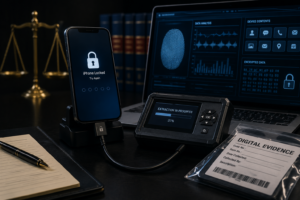
Can Police Get Into Your iPhone? How Apple’s New Security Is Reshaping Digital Evidence
By Douglas E. Huff | Partner, Deandra Grant Law | Dallas, Texas In March 2026, [...]
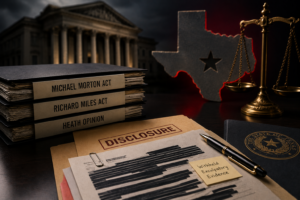
The Michael Morton Act, the Richard Miles Act and the Heath Opinion Now Under Fire
Most people who are not lawyers do not think much about criminal discovery. It sounds [...]
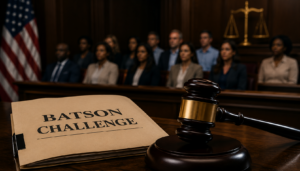
Pitchford v. Cain: What a Batson Challenge Is, and Why the Jury Is Often Decided Before the First Witness
By Deandra Grant | Deandra Grant Law | Dallas, Texas On May 28, 2026, the [...]

Probabilistic DNA Software in the Courtroom: What Defense Lawyers Need to Watch For
This month Cybergenetics (the company behind the TrueAllele probabilistic genotyping system) announced the launch of [...]
Defense Strategies
- Challenging intent. Assault requires intentional, knowing, or reckless conduct. Reflexive movements, involuntary contact during physical restraint, and accidental contact during the arrest process are not assaults. Doug examines body camera footage, dash camera recordings, and witness accounts to demonstrate that the contact was not voluntary or intentional.
- Challenging the “lawful discharge” element. If the officer was not lawfully performing an official duty because the underlying stop or arrest was unlawful, because the officer used excessive force, or because the officer was acting outside their authority then the felony enhancement does not apply.
- Self-defense against excessive force. Texas law recognizes a limited right to resist excessive force by law enforcement. If the officer used force beyond what was reasonably necessary, the defendant’s resistance may be justified. This is a narrow defense, but body camera footage increasingly provides evidence of officer conduct that supports it.
- Video evidence analysis. Body camera and dash camera footage is often the most important evidence in these cases. Doug’s Garrett Discovery digital forensics training allows him to evaluate video evidence critically including challenging the prosecution’s characterization of what the video shows.
- Reducing to misdemeanor. Even when the evidence supports some level of contact, Doug fights to reduce the charge from felony assault on a public servant to misdemeanor assault which is a difference of potential prison time versus county jail or probation.
Protect Your Future — Contact Deandra Grant Law Today
If you or someone you love is facing assault charges in Texas, contact Deandra Grant Law for a free, confidential consultation. Attorney Douglas Huff has defended clients against violent felony charges throughout his career. Our firm’s forensic science credentials and 30+ years of criminal defense experience mean you get a level of defense that most firms cannot provide.
Client Reviews

“Deandra Grant Law – Criminal & DWI Defense handled my case with diligence and professionalism. Deandra Grant’s reputation is stellar and now I know why. She has a team of individuals who provide quality service.”
N. Coulter


(214) 225-7117
Experienced DWI Defense