

Overview
Federal conspiracy charges are among the most broadly drawn in the federal criminal code. A person can be charged with conspiracy before any underlying crime is completed, based entirely on an alleged agreement and a single step taken toward carrying it out. Because conspiracy charges sweep broadly and carry the same punishment as the completed offense in most cases, prosecutors use them routinely to charge peripheral participants alongside organizers, to add counts that increase sentencing exposure, and to create leverage for cooperation agreements.
At Deandra Grant Law, Attorney James Lee Bright leads our federal criminal defense practice. Lee has more than 25 years of federal trial experience across all four Texas federal districts, the District of Columbia, the Fifth Circuit, and the United States Supreme Court. He has tried some of the most significant federal cases in the country, including the three-month Stewart Rhodes/Oath Keepers seditious conspiracy trial in Washington, D.C. That depth of experience in federal conspiracy defense is what this practice demands.
What Federal Conspiracy Requires
The primary federal conspiracy statute is 18 U.S.C. §371, which makes it a crime for two or more persons to conspire to commit any offense against the United States or to defraud the United States, where one or more of the conspirators takes an overt act to effect the object of the conspiracy. Three elements must be proven beyond a reasonable doubt:
- An agreement between two or more persons. The agreement does not have to be written, formal, or explicitly stated. The prosecution can prove agreement through circumstantial evidence of coordinated conduct. But a true agreement (a meeting of minds) must exist. Mere knowledge that others are engaged in criminal activity, presence at the scene, or association with co-conspirators does not establish membership in the conspiracy.
- Intent to further the object of the conspiracy. The defendant must have intended to participate in the conspiracy and to bring about the criminal objective. Unwitting involvement, misunderstanding of the nature of the agreement, or lack of criminal purpose defeats the intent element.
- At least one overt act in furtherance of the conspiracy. A single overt act by any member of the conspiracy (not necessarily by the defendant) satisfies this element. The act does not have to be illegal on its own. A phone call, a meeting, or a purchase can constitute an overt act.
Drug conspiracy charges under 21 U.S.C. §846 are the most common federal conspiracy charges in Texas and do not require proof of an overt act. The agreement itself is sufficient. Drug conspiracies carry the same statutory penalties as the underlying drug trafficking offense, including mandatory minimums based on drug type and quantity.
How Conspiracy Charges Are Used in Texas Federal Courts
In the Northern District of Texas (which covers the Dallas-Fort Worth metropolitan area) conspiracy charges arise most commonly in:
- Drug trafficking cases. Multi-defendant drug trafficking investigations nearly always include conspiracy charges under §846. Conspiracy allows the government to charge all members of a distribution network together, to attribute the entire drug quantity to each defendant regardless of their individual role, and to hold each conspirator responsible for the foreseeable acts of their co-conspirators under Pinkerton liability.
- White collar and fraud cases. Wire fraud conspiracy (§1349), mail fraud conspiracy (§1349), healthcare fraud conspiracy, securities fraud conspiracy, and conspiracy to commit money laundering are the charging vehicles in virtually every multi-defendant white collar prosecution. Co-conspirators in fraud cases often include executives, employees, and third parties whose connection to the underlying scheme is indirect.
- Federal firearms cases. Conspiracy charges in firearms trafficking investigations allow prosecution of straw purchasers, intermediaries, and distributors together with the alleged ringleaders of a gun trafficking network.
- Public corruption. Federal conspiracy charges are the standard vehicle for prosecuting bribery, kickback schemes, and public corruption involving government officials, contractors, and private parties who allegedly acted in concert.
The Pinkerton Problem: Liability for Your Co-Conspirators’ Actions
One of the most significant and often misunderstood aspects of federal conspiracy law is Pinkerton liability, established by the Supreme Court in Pinkerton v. United States (1946). Under Pinkerton, each member of a conspiracy can be held criminally responsible for the substantive crimes committed by other members of the conspiracy in furtherance of its objectives even if the defendant did not personally participate in or know about those specific acts.
This means a person who played a minor role in a drug distribution network (a driver, a lookout, a bookkeeper) can be held accountable under Pinkerton for drug quantities they never handled, for acts of violence they never witnessed, and for crimes committed by co-conspirators they may have met only once. Pinkerton liability frequently drives the sentencing exposure in conspiracy cases far above what the defendant’s personal conduct would otherwise justify.
Challenging Pinkerton liability requires demonstrating that the alleged acts were not within the reasonably foreseeable scope of the conspiracy, that the defendant withdrew from the conspiracy before the acts were committed, or that the connection between the defendant’s alleged role and the acts of co-conspirators is too attenuated to support liability.
Drug Quantity and Mandatory Minimums in Conspiracy Cases
In federal drug conspiracy cases, the drug quantity attributed to each defendant determines the applicable mandatory minimum sentence. Under the Sentencing Guidelines, each defendant is held accountable for the drug quantities within the scope of the conspiracy that were reasonably foreseeable to them and not just the quantities they personally handled.
The government’s drug quantity calculation is one of the most contestable issues in federal drug conspiracy cases, and one of the most consequential. The difference between being held responsible for 499 grams of methamphetamine versus 500 grams is the difference between no mandatory minimum and a ten-year mandatory minimum. Drug quantity should be independently verified through the discovery materials (lab reports, evidence logs, co-conspirator statements) and challenged where the government’s calculation is not supported by the evidence.
Withdrawal From a Conspiracy
A defendant who withdrew from a conspiracy before it was completed and before the statute of limitations period began may have a complete defense to the conspiracy charge. Withdrawal requires affirmative action (i.e. communicating to co-conspirators that the defendant is no longer participating, or taking other action inconsistent with continued participation). Mere cessation of activity is not sufficient.
If withdrawal is established, the defendant is not liable for the acts of co-conspirators that occurred after the withdrawal, and the statute of limitations runs from the date of withdrawal rather than from the date the conspiracy ended. In cases involving alleged conspiracies that span many years, withdrawal timing can be dispositive.
Defenses to Federal Conspiracy Charges
- No agreement. The prosecution’s evidence of agreement is often circumstantial. Challenging whether the evidence establishes a true meeting of minds (rather than parallel conduct, a buyer-seller relationship, or mere association) is frequently the most viable defense.
- No intent to further a criminal objective. A defendant who was deceived about the nature of the activity, who participated in what they believed was a lawful enterprise, or whose involvement was limited to legal acts that happened to overlap with criminal activity may lack the intent required for conspiracy.
- Withdrawal. As discussed above, timely withdrawal with affirmative action can constitute a complete defense.
- Statute of limitations. The general federal conspiracy statute of limitations is five years from the last overt act in furtherance of the conspiracy. In cases involving older alleged agreements, identifying when the statute of limitations began running and whether any charged conduct falls outside the limitations period is critical.
- Suppression of evidence. Federal conspiracy investigations typically involve wiretaps, surveillance, informants, and search warrants. The legality of the government’s investigative techniques is subject to Fourth Amendment challenge, and suppression of unlawfully obtained evidence can significantly weaken or eliminate the prosecution’s case.
- Challenging co-conspirator statements. Statements by alleged co-conspirators are admissible against a defendant as non-hearsay under Federal Rule of Evidence 801(d)(2)(E) only if the court finds a conspiracy existed and the statement was made in furtherance of it. Challenging the foundational requirements for admissibility of co-conspirator statements (requiring what is known as a James hearing) can limit the evidence the jury hears.
Federal Sentencing in Conspiracy Cases
Federal conspiracy sentences are driven by the Sentencing Guidelines applicable to the underlying offense. Drug conspiracy sentences depend on drug type and quantity. Fraud conspiracy sentences depend on the loss amount and number of victims. Firearms conspiracy sentences depend on the firearms involved and the defendant’s role.
Role adjustments are particularly significant in conspiracy cases. A defendant who played a minor or minimal role in a conspiracy may receive a downward adjustment of two to four levels which is a meaningful reduction in the guidelines range. A defendant who was an organizer or leader may receive an upward adjustment. Contesting the government’s characterization of the defendant’s role is often one of the most productive defense arguments at sentencing.
The availability of cooperation agreements (substantial assistance motions under §5K1.1 of the Sentencing Guidelines) is a significant consideration in multi-defendant conspiracy cases. Whether cooperation is in a client’s interest requires careful evaluation of the specific facts, the strength of the government’s case, the client’s actual knowledge, and the potential for safety risks associated with cooperation. This is a decision that must be made with full information and sound judgment, not under pressure.
Lead Attorney: James Lee Bright
James Lee Bright has spent more than 25 years defending clients against the most serious federal charges in courts across Texas and the country.
- Juris Doctor, University of Tennessee College of Law (1996)
- LL.M. in International Law, SMU Dedman School of Law (2003) — Phi Delta Phi honor fraternity
- Admitted to all four U.S. District Courts in Texas (Northern, Eastern, Southern, and Western Districts)
- Admitted to the U.S. District Court for the District of Columbia
- Admitted to the U.S. Court of Appeals for the Fifth Circuit
- Admitted to the United States Supreme Court
- Lead defense counsel in the Stewart Rhodes/Oath Keepers seditious conspiracy trial which was a three-month federal trial in Washington, D.C., among the most significant federal conspiracy prosecutions in recent history
- President, Dallas Criminal Defense Lawyers Association (2010–2011)
- Super Lawyers® (2021–2024)
- D Magazine Best Lawyers — multiple appearances
Facing Federal Conspiracy Charges? Time Matters.
Federal conspiracy investigations are typically well advanced before charges are filed. By the time a target learns they are under investigation (through a target letter, a grand jury subpoena, or an arrest) the government has often spent months building the case. Early legal intervention gives the defense the best opportunity to challenge the evidence, assess cooperation options before they are foreclosed, and in some cases present information to prosecutors that can affect the charging decision.
Contact Deandra Grant Law for a free, confidential consultation with Attorney James Lee Bright. We represent clients in federal courts throughout Texas and beyond.
Call (214) 949-4295 or schedule an appointment online.
Attorneys Who Handle This Charge
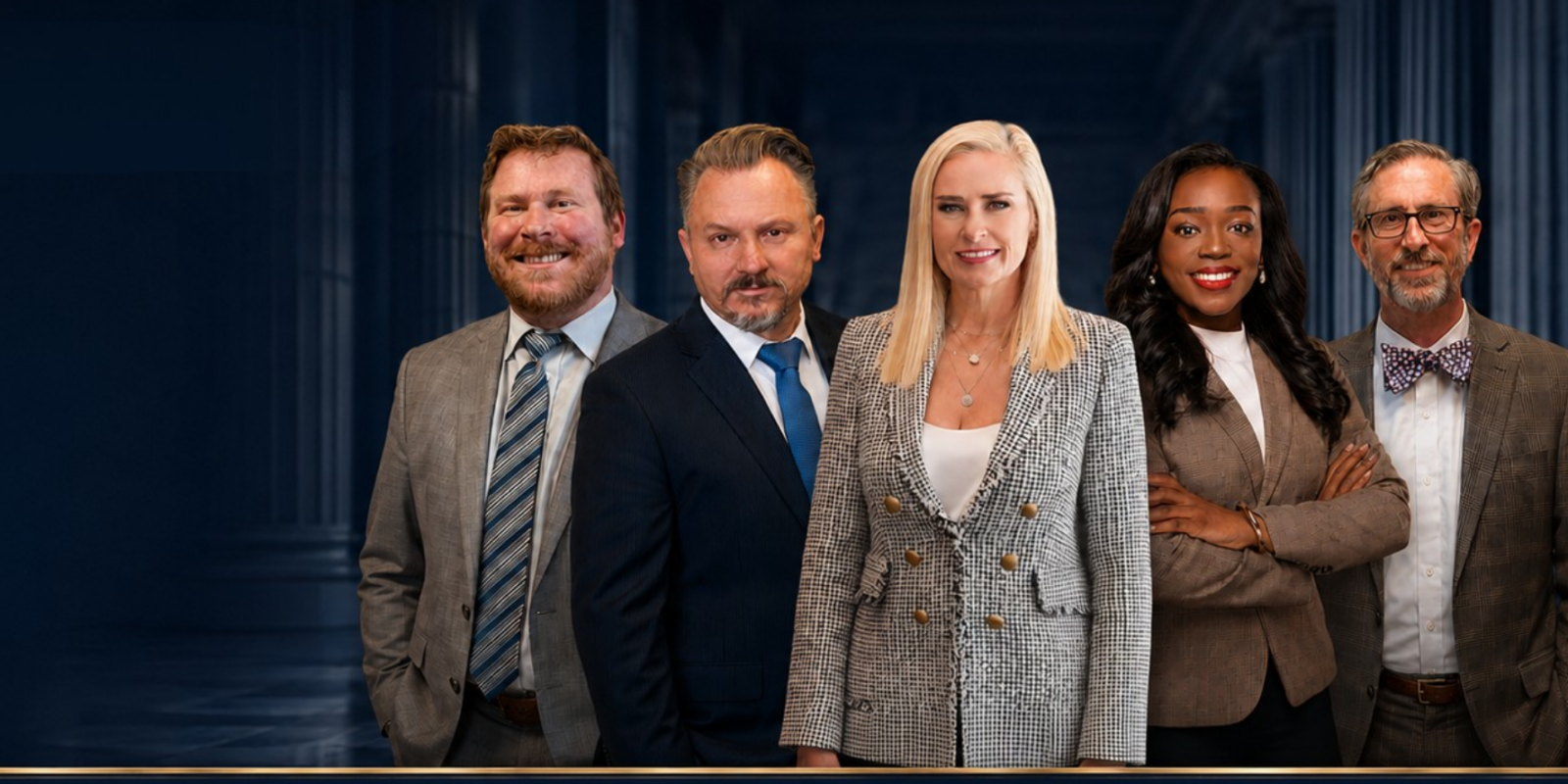
Meet the attorneys who will personally handle your conspiracy defense.


Offices Handling These Cases
Find the Deandra Grant Law office nearest you for conspiracy defense across Texas.

Allen
1333 W. McDermott Drive, Suite 180, Allen, TX 75013 Visit This Office
Dallas (HQ)
3300 Oak Lawn Avenue, Suite 700, Dallas, TX 75219 Visit This Office
Denton
1317 E. McKinney Street, Suite 101A, Denton, TX 76209 Visit This Office
Fort Worth
4500 Airport Freeway, Suite 101, Fort Worth, TX 76117 Visit This Office

Waco
605 Austin Avenue, Suite 5, Waco, TX 76701 Visit This OfficeCourthouses We Appear In
Courthouses where our attorneys represent clients facing this charge across Texas.
Bell County Courts
Everything you need to know about criminal court in Bell County, Texas: where cases are heard at the…
View Courthouse Info
Collin County Courts
Everything you need to know about criminal court in Collin County, Texas: where cases are heard at the…
View Courthouse Info
Cooke County Courts
Everything you need to know about criminal court in Cooke County, Texas: where cases are heard in Gainesville,…
View Courthouse Info
Coryell County Courts
Everything you need to know about criminal court in Coryell County, Texas: where cases are heard in Gatesville,…
View Courthouse Info
Dallas County Courts
Everything you need to know about criminal court in Dallas County, Texas: where cases are heard at the…
View Courthouse Info
Denton County Courts
Everything you need to know about criminal court in Denton County, Texas: where cases are heard at the…
View Courthouse Info
Ellis County Courts
Everything you need to know about criminal court in Ellis County, Texas: where cases are heard at the…
View Courthouse Info
Federal Courts
Deandra Grant Law defends federal criminal cases across all four federal districts in Texas, the District of Columbia,…
View Courthouse Info
Johnson County Courthouse
Everything you need to know about criminal court in Johnson County, Texas: where cases are heard at the…
View Courthouse Info
Kaufman County Courts
Everything you need to know about criminal court in Kaufman County, Texas: where cases are heard at the…
View Courthouse Info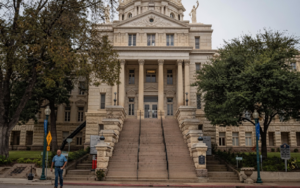
McLennan County Courts
Everything you need to know about criminal court in McLennan County, Texas: where cases are heard at the…
View Courthouse Info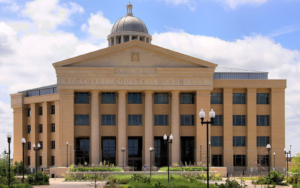
Rockwall County Courts
Everything you need to know about criminal court in Rockwall County, Texas: where cases are heard at the…
View Courthouse Info