
Home »


Do You Need Legal Help?

"Deandra Grant Law fights hard for their clients and is always willing to go above and beyond. They are the best firm for DWI cases in DFW and beyond. Definitely hire them to represent you in any pending cases."
- P. Williams
"Deandra Grant made a tough situation so much better. She listened to my concerns and helped me so much with my case. I would recommend her to anyone needing legal services."
- M. Haley
"Deandra Grant Law handled my case with diligence and professionalism. Deandra Grant's reputation is stellar and now I know why. She has a team of individuals who provide quality service."
- N. Coulter
As Seen On







Download Our Free Texas Criminal Guide
Learn what you should and shouldn't be doing to help your criminal defense case.
Texas Terroristic Threat Defense Lawyers
The term “terroristic threat” sounds like it describes terrorism, but under Texas law it covers a much broader range of conduct. Texas Penal Code §22.07 makes it a criminal offense to threaten violence against a person or property with the intent to cause certain reactions including fear, disruption of public services, or interference with government operations. These charges have increased dramatically in recent years due to school threat prosecutions, workplace threats, and social media posts that are interpreted as threats.
At Deandra Grant Law, Attorney Douglas Huff defends clients against terroristic threat charges. Doug understands that many of these cases involve statements that were never intended as genuine threats such as venting, hyperbole, sarcasm, song lyrics, or online posts taken out of context.
What Constitutes a Terroristic Threat?
Under §22.07, a person commits this offense if they threaten to commit any offense involving violence to a person or property with the intent to:
- Cause a reaction of any type by an official or volunteer agency organized to deal with emergencies (e.g., bomb squad, SWAT team, fire department) — Class B misdemeanor
- Place any person in fear of imminent serious bodily injury — Class B misdemeanor
- Prevent or interrupt the occupation or use of a building, room, place of assembly, or public place — Class B misdemeanor
- Cause impairment or interruption of public communications, transportation, water supply, gas, power, or other public service — Class B misdemeanor
- Place the public or a substantial group in fear of serious bodily injury — Class B misdemeanor
- Influence the conduct or activities of a government branch or agency — Class B misdemeanor
Enhanced Penalties
The offense is elevated in several circumstances:
- Class A misdemeanor if the threat is against a family member, household member, or dating partner (family violence context)
- Third-degree felony (2 to 10 years) if the offense occurs during a declared state of emergency, involves a threat against a public servant, involves a threat to commit a school shooting or mass casualty event, or is committed against a person the defendant knows is a peace officer or judge
Related Videos
Emotions of an assault defense client
Assault against a police officer or public servant
Charged with assault but no injuries occurred
Choosing an assault defense attorney
Different degrees of assault
Assault by contact
Penalties for aggravated assault
Penalties for a misdemeanor assault
What makes a regular assault case an aggravated assault case?
Is Self-Defense Ever an Effective Defense in an Assault Case?
Can an aggravated assault charge in Texas be downgraded or dropped?
Can false accusations of aggravated assault be beaten?
How can a misdemeanor assault charge be enhanced to a felony?
What could happen to me if I am convicted of assault?What should I do if am arrested for assault?
Facing prison after an assault charge
Mistakes of an assault defense client
Penalties of an assault charge
Relieving stress of an assault defense client
Should I hire an attorney for an assault charge?
Rehabilitative Options After an Assault Charge
How long will my aggravated assault case take?
Statute of limitations for Assault
Probation for Assault
Charged for assault after a bar fightHow can a misdemeanor assault charge be enhanced to a felony?
What evidence do prosecutors use to prove aggravated assault?
What is a Class C misdemeanor assault in Texas?
What is an Affidavit of Non-Prosecution and how does it work in Texas?
What Is Simple Assault?
Common Scenarios
School Threats
School threat cases have become one of the most common sources of terroristic threat charges. Students who make threats verbally, in writing, through text messages, or on social media about violence at school can be charged with terroristic threats and prosecuted in juvenile or adult court depending on their age and the circumstances. These cases frequently involve statements made in anger, as jokes, or as hyperbole that were never intended as genuine plans for violence. Prosecutors nonetheless take an aggressive stance, and the consequences for the student can include criminal prosecution, school expulsion, and a permanent record.
Social Media Posts
Posts on social media platforms that reference violence, even in an indirect, metaphorical, or artistic context, can result in terroristic threat charges. Song lyrics, memes, vague expressions of anger, and even obvious sarcasm have been the basis for criminal charges when someone reports the post to law enforcement. The context of an online post such as the platform, the audience, the genre conventions, and the poster’s history is often ignored in the prosecution’s rush to charge.
Workplace and Domestic Threats
Statements made during arguments at work or at home (ex. “I’m going to kill you,” “I’ll burn this place down”) are frequently reported and charged as terroristic threats even when the speaker had no intent or ability to carry out the threat and the statement was understood by both parties as an expression of anger rather than a genuine threat.
Related Blogs

When the Evidence Is AI-Generated: The Take It Down Act, Section 1466A, and What the Strahler Case Means for Criminal Defense
By Douglas E. Huff | Partner, Deandra Grant Law | Dallas, Texas On April 7, [...]

Arson Convictions, Cameron Todd Willingham, and Texas’s Junk Science Writ
In late April 2026, The Appeal reported on the appeal of Maria Montalvo, a New [...]
Daniel Ross: A Frisco Traffic Stop, a Gun and the Hemp-Law Problem
By Deandra Grant & Griffin Grant Welcome to The Defense File, where we examine the [...]
Adam “Pacman” Jones: Talent, Trouble, and a Pattern of Charges
By Deandra Grant & Griffin Grant Welcome to The Defense File, where we examine the [...]
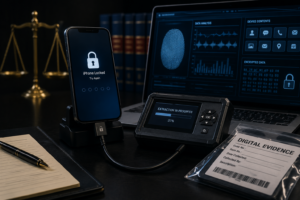
Can Police Get Into Your iPhone? How Apple’s New Security Is Reshaping Digital Evidence
By Douglas E. Huff | Partner, Deandra Grant Law | Dallas, Texas In March 2026, [...]
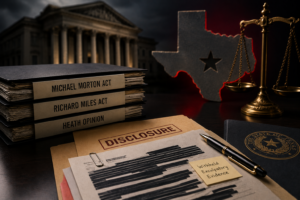
The Michael Morton Act, the Richard Miles Act and the Heath Opinion Now Under Fire
Most people who are not lawyers do not think much about criminal discovery. It sounds [...]
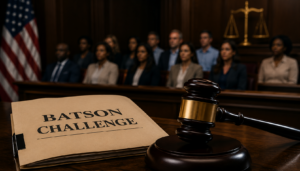
Pitchford v. Cain: What a Batson Challenge Is, and Why the Jury Is Often Decided Before the First Witness
By Deandra Grant | Deandra Grant Law | Dallas, Texas On May 28, 2026, the [...]

Probabilistic DNA Software in the Courtroom: What Defense Lawyers Need to Watch For
This month Cybergenetics (the company behind the TrueAllele probabilistic genotyping system) announced the launch of [...]
Defense Strategies
- Challenging intent. Terroristic threat requires proof that the defendant intended to cause one of the specific reactions listed in the statute. A statement made in anger, as a joke, as hyperbole, or without any intent to cause fear or disruption does not satisfy the intent element. Doug examines the context in which the statement was made including the relationship between the parties, the tone, the history of similar statements, and the defendant’s actual conduct to demonstrate the absence of criminal intent.
- Challenging the “threat” element. Not every statement that references violence is a “threat” under the statute. The statement must communicate a specific threat of violence against a person or property. Vague statements, conditional statements (“if you do X, I’ll do Y”), and statements that no reasonable person would interpret as a genuine threat of imminent violence may not satisfy this element.
- First Amendment defense. The First Amendment protects speech, including offensive and disturbing speech. The line between protected speech and a criminal threat is drawn at the point where the speech constitutes a “true threat”, i.e. a statement that a reasonable person would interpret as a serious expression of intent to commit an act of unlawful violence. Doug evaluates whether the prosecution’s case can survive First Amendment scrutiny.
- Context and credibility. A threat is evaluated based on its context. Doug presents evidence of the circumstances surrounding the statement including the parties’ relationship, the history of similar exchanges, and the defendant’s actual behavior after the alleged threat to demonstrate that the statement was not a credible threat of violence.
- Digital evidence analysis. In social media and text message cases, Doug’s digital forensics training allows him to analyze the complete digital context of the allegedly threatening communication including the full conversation thread, the platform’s conventions, and any evidence that the statement was taken out of context.
Protect Your Future — Contact Deandra Grant Law Today
If you or someone you love is facing criminal charges in Texas, contact Deandra Grant Law for a free, confidential consultation. Attorney Douglas Huff has defended clients against serious criminal charges throughout his career. Our firm’s forensic science credentials and 30+ years of criminal defense experience mean you get a level of defense that most firms cannot provide.
Client Reviews

“Deandra Grant Law – Criminal & DWI Defense handled my case with diligence and professionalism. Deandra Grant’s reputation is stellar and now I know why. She has a team of individuals who provide quality service.”
N. Coulter


(214) 225-7117
Experienced DWI Defense