

Overview
Federal drug conspiracy is the most commonly charged federal drug offense in the Northern District of Texas. Under 21 U.S.C. §846, the government does not need to prove that a defendant personally manufactured, distributed, or possessed drugs. It only needs to prove that the defendant agreed to participate in a plan to commit a drug offense. This low threshold means that individuals who played minor or peripheral roles (drivers, lookouts, couriers, people who made phone calls or introductions) can face the same mandatory minimum sentences as the leaders of the operation.
At Deandra Grant Law, Attorney James Lee Bright leads our federal drug conspiracy defense. Lee has spent more than 25 years defending clients in multi-defendant federal conspiracy cases which are the kind of complex, high-stakes prosecutions that demand deep knowledge of federal procedure, sentencing law, and the tactics federal prosecutors use to leverage cooperating witnesses and wiretap evidence against individual defendants.
How Federal Drug Conspiracy Charges Work
A federal drug conspiracy charge under §846 requires proof of three elements beyond a reasonable doubt:
- An agreement between two or more people to violate federal drug laws. The agreement does not need to be formal, written, or explicitly stated. The prosecution can prove it through circumstantial evidence of coordinated conduct. But a true agreement (a genuine meeting of minds about a shared criminal objective) must exist.
- The defendant knowingly and voluntarily joined the conspiracy. Mere presence around drug activity, association with people involved in drug trafficking, or knowledge that others are committing drug offenses is not sufficient. The defendant must have known about the conspiracy’s drug trafficking purpose and chosen to join it.
- At least one overt act in furtherance of the conspiracy. Note: unlike the general conspiracy statute (18 U.S.C. §371), §846 drug conspiracies do not require proof of an overt act. The agreement itself is sufficient. However, prosecutors typically present overt acts as evidence of the agreement’s existence and scope.
The practical consequence of this framework is that a person who served as a lookout during one transaction, drove a car to a meeting, or made introductions between buyers and sellers can be charged as a full member of the conspiracy and held accountable for the entire drug quantity of the operation including quantities they never personally handled, never saw, and may not have known about in detail.
Penalties: Mandatory Minimums That Track the Underlying Offense
Under §846, a drug conspiracy conviction carries the same penalties as the underlying drug offense. Those penalties are driven by drug type and quantity:
- 5-year mandatory minimum (10-year maximum): 500 grams or more of a methamphetamine mixture; 500 grams or more of cocaine; 100 grams or more of heroin; 1 kilogram or more of marijuana.
- 10-year mandatory minimum (life maximum): 50 grams or more of pure methamphetamine (or 500 grams of a mixture); 5 kilograms or more of cocaine; 1 kilogram or more of heroin; 1,000 kilograms or more of marijuana.
- Enhanced penalties for prior drug felonies: A prior felony drug conviction can double mandatory minimums and in some cases require a life sentence. Notice must be filed by the government under 21 U.S.C. §851 to trigger these enhancements, and those notices can be challenged.
Under the “relevant conduct” rules of U.S.S.G. §1B1.3, a defendant is accountable for all drug quantities within the scope of the conspiracy that were reasonably foreseeable to them and not just the quantities they directly controlled. This can result in sentences based on quantities far exceeding anything the defendant personally touched. Challenging the drug quantity attributed to a specific defendant is often the most consequential battle in a federal drug conspiracy case.
How We Defend Federal Drug Conspiracy Cases
Challenging the Existence of the Agreement
The government rarely has direct evidence of an agreement. Lee evaluates whether the circumstantial evidence (communications, surveillance, financial records, cooperating witness testimony) actually proves a true agreement or merely shows proximity, association, or coincidence. A buyer-seller relationship, standing alone, is not a drug conspiracy. Knowing that others are trafficking drugs is not joining their conspiracy. These distinctions matter, and they are frequently blurred in the government’s charging theory.
Challenging Knowledge and Intent
Even if a conspiracy existed, the government must prove that this defendant knew about the conspiracy’s drug trafficking purpose and voluntarily chose to join it. Lee examines whether the evidence proves actual knowledge and intent or merely proves association which is not a crime. Defendants who were deceived about the nature of an enterprise, who performed legal services not knowing they were facilitating drug trafficking, or whose connection to the conspiracy was based on a personal relationship rather than a criminal agreement have viable intent defenses.
Challenging Cooperating Witness Testimony
Federal drug conspiracy cases are frequently built on cooperator testimony. These witnesses have extraordinary incentives to implicate others (ex. reduced sentences, avoided charges, financial considerations). Lee’s decades of federal trial experience make him exceptionally effective at cross-examining cooperators: probing the cooperation agreement and its specific benefits, examining prior inconsistent statements, establishing the witness’s criminal history and motive to fabricate, and demonstrating where the cooperator’s testimony is unsupported by any objective corroborating evidence.
Challenging Wiretap and Electronic Surveillance Evidence
Title III wiretap evidence is powerful, but it comes with strict legal requirements. Lee challenges compliance at every level: the necessity showing required before authorization, the scope of the order and whether agents exceeded it, compliance with duration restrictions, minimization protocols requiring agents to stop listening when non-criminal conversations occur, and the sealing requirements for intercepted communications. A successful suppression motion targeting wiretap evidence can eliminate the government’s most important evidence against a defendant.
Challenging Drug Quantity Attribution
Our firm’s ACS-CHAL Forensic Lawyer-Scientist credentials (held by both Deandra Grant and Douglas Huff) allow us to evaluate drug evidence at a level most defense attorneys cannot match. This includes review of laboratory analysis of seized substances for methodology and accuracy, challenge to cooperator-based quantity estimates that are not corroborated by physical evidence, assessment of whether quantities attributed to a specific defendant were actually within their reasonably foreseeable scope, and independent forensic expert engagement when the government’s quantity evidence is contestable. Because mandatory minimums are keyed to specific quantity thresholds, reducing the attributed quantity (even modestly) can move a defendant below a threshold that carries years of additional mandatory prison time.
Withdrawal Defense
A defendant who withdrew from the conspiracy before the criminal objective was completed has a valid defense. Withdrawal requires more than simply stopping participation. It requires affirmative action communicating to co-conspirators that the defendant is no longer part of the conspiracy, or taking other action inconsistent with continued membership. Lee investigates whether the evidence supports a withdrawal defense and, where it does, presents it as a complete defense to the conspiracy charge or as a basis for limiting the scope of relevant conduct.
Sentencing Mitigation in Federal Drug Conspiracy Cases
Safety Valve Relief
18 U.S.C. §3553(f) (the federal safety valve) allows defendants who meet specific criteria to be sentenced below the applicable mandatory minimum. To qualify, the defendant must: have no more than four criminal history points under the Sentencing Guidelines; have no prior three-point offense; have no prior two-point violent offense; not have used violence, threats, or a firearm in the offense; not have been a leader, organizer, manager, or supervisor; and have truthfully provided the government with all information the defendant has about the offense and related conduct before sentencing.
The safety valve is one of the most important tools in federal drug conspiracy sentencing, and Lee evaluates every client’s eligibility carefully. The proffer required to satisfy the safety valve (the “tell-all” session with prosecutors) must be carefully prepared with counsel. Providing inaccurate or incomplete information can disqualify a defendant from safety valve relief and potentially create additional exposure.
Role in the Offense
The Sentencing Guidelines provide for downward adjustments of two levels (minor role) or four levels (minimal role) for defendants who played substantially less culpable roles than the average participant in the criminal activity. In multi-defendant drug conspiracy cases involving large distribution networks, many defendants (ex. low-level distributors, couriers, peripheral participants) qualify for role reductions that can significantly reduce the guidelines range. Lee evaluates the role adjustment argument in every conspiracy case.
§851 Enhancement Challenges
The government’s ability to double mandatory minimums based on a prior felony drug conviction requires filing a formal notice under 21 U.S.C. §851. That notice can be challenged on multiple grounds: whether the prior conviction qualifies as a “felony drug offense” under federal law, whether the conviction was constitutionally obtained, and whether procedural requirements for the enhancement were met. A successful §851 challenge can halve the mandatory minimum the defendant faces.
Substantial Assistance
Where cooperation with the government is in a client’s interest, a substantial assistance motion under U.S.S.G. §5K1.1 allows the court to sentence below the mandatory minimum based on the value of the defendant’s cooperation. Whether cooperation is appropriate (and how to structure it to maximize the benefit while minimizing risks) requires careful legal judgment based on the specific facts of the case, the strength of the government’s evidence, and the client’s individual circumstances. Lee has the federal trial experience to evaluate cooperation decisions accurately.
Lead Attorney: James Lee Bright
James Lee Bright has spent more than 25 years defending clients against the most serious federal drug charges in courts across Texas and the country.
- Juris Doctor, University of Tennessee College of Law (1996)
- LL.M. in International Law, SMU Dedman School of Law (2003) — Phi Delta Phi honor fraternity
- Admitted to all four U.S. District Courts in Texas (Northern, Eastern, Southern, and Western Districts)
- Admitted to the U.S. District Court for the District of Columbia
- Admitted to the U.S. Court of Appeals for the Fifth Circuit
- Admitted to the United States Supreme Court
- Lead defense counsel in the Stewart Rhodes/Oath Keepers seditious conspiracy trial which was a three-month federal trial in Washington, D.C., among the most significant federal conspiracy prosecutions in recent history
- President, Dallas Criminal Defense Lawyers Association (2010–2011)
- Super Lawyers® (2021–2024)
- D Magazine Best Lawyers — multiple appearances
Facing Federal Drug Conspiracy Charges? Act Immediately.
By the time federal drug conspiracy charges are filed, the investigation has typically been underway for months. Wiretaps have been running. Cooperators have been debriefed. Drug quantity calculations have been assembled. The government’s case is already substantially built. Early legal intervention (before the indictment, if possible) gives the defense the best opportunity to challenge the evidence, assess sentencing options, and in some cases influence whether and how charges are brought.
Contact Deandra Grant Law for a free, confidential consultation with Attorney James Lee Bright. We represent clients in federal courts throughout Texas and beyond.
Call (214) 949-4295 or schedule an appointment online.
Attorneys Who Handle This Charge
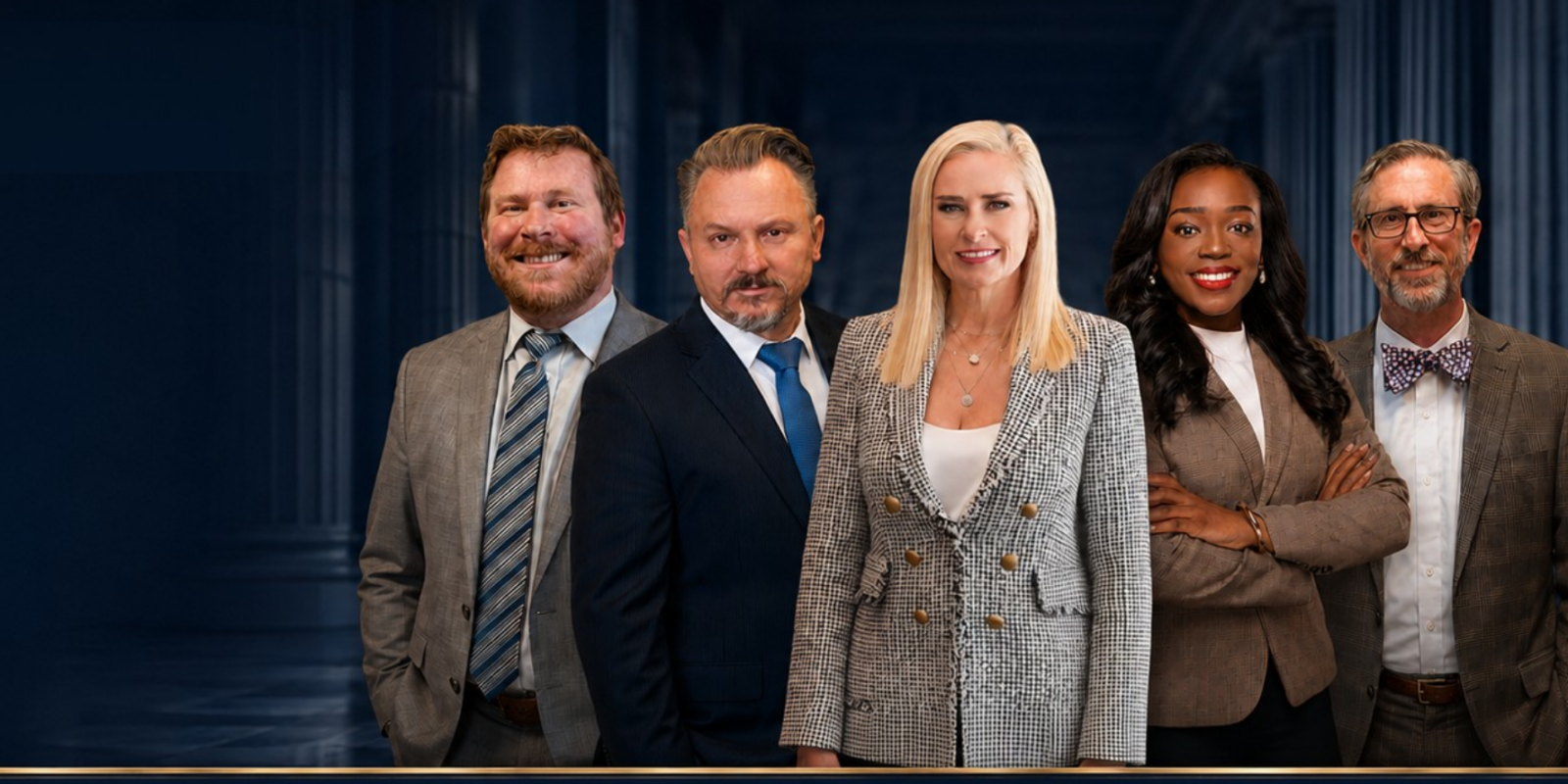
Meet the attorneys who will personally handle your drug conspiracy defense.


Offices Handling These Cases
Find the Deandra Grant Law office nearest you for drug conspiracy defense across Texas.

Allen
1333 W. McDermott Drive, Suite 180, Allen, TX 75013 Visit This Office
Dallas (HQ)
3300 Oak Lawn Avenue, Suite 700, Dallas, TX 75219 Visit This Office
Denton
1317 E. McKinney Street, Suite 101A, Denton, TX 76209 Visit This Office
Fort Worth
4500 Airport Freeway, Suite 101, Fort Worth, TX 76117 Visit This Office

Waco
605 Austin Avenue, Suite 5, Waco, TX 76701 Visit This OfficeCourthouses We Appear In
Courthouses where our attorneys represent clients facing this charge across Texas.
Bell County Courts
Everything you need to know about criminal court in Bell County, Texas: where cases are heard at the…
View Courthouse Info
Collin County Courts
Everything you need to know about criminal court in Collin County, Texas: where cases are heard at the…
View Courthouse Info
Cooke County Courts
Everything you need to know about criminal court in Cooke County, Texas: where cases are heard in Gainesville,…
View Courthouse Info
Coryell County Courts
Everything you need to know about criminal court in Coryell County, Texas: where cases are heard in Gatesville,…
View Courthouse Info
Dallas County Courts
Everything you need to know about criminal court in Dallas County, Texas: where cases are heard at the…
View Courthouse Info
Denton County Courts
Everything you need to know about criminal court in Denton County, Texas: where cases are heard at the…
View Courthouse Info
Ellis County Courts
Everything you need to know about criminal court in Ellis County, Texas: where cases are heard at the…
View Courthouse Info
Federal Courts
Deandra Grant Law defends federal criminal cases across all four federal districts in Texas, the District of Columbia,…
View Courthouse Info
Johnson County Courthouse
Everything you need to know about criminal court in Johnson County, Texas: where cases are heard at the…
View Courthouse Info
Kaufman County Courts
Everything you need to know about criminal court in Kaufman County, Texas: where cases are heard at the…
View Courthouse Info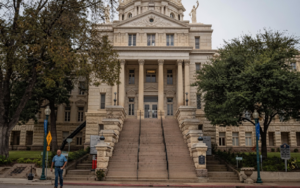
McLennan County Courts
Everything you need to know about criminal court in McLennan County, Texas: where cases are heard at the…
View Courthouse Info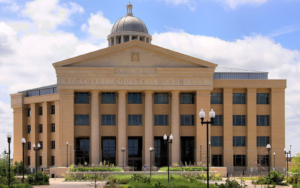
Rockwall County Courts
Everything you need to know about criminal court in Rockwall County, Texas: where cases are heard at the…
View Courthouse Info