
Home » Southlake DWI and Criminal Defense Lawyers

ARVE error: <a href="https://nextgenthemes.com/plugins/arve/documentation/installation/">ARVE Pro</a> license not activated or valid

Southlake DWI and Criminal Defense Lawyers

With Offices in Dallas, Fort Worth, Allen, Denton, Waco & Rockwall

Do You Need Legal Help?


    Southlake DWI and Criminal Defense Lawyers

    With Offices in Dallas, Fort Worth, Allen, Denton, Waco & Rockwall

    Do You Need Legal Help?


      ARVE error: <a href="https://nextgenthemes.com/plugins/arve/documentation/installation/">ARVE Pro</a> license not activated or valid

      "Deandra Grant Law fights hard for their clients and is always willing to go above and beyond. They are the best firm for DWI cases in DFW and beyond. Definitely hire them to represent you in any pending cases."

      - P. Williams

      "Deandra Grant made a tough situation so much better. She listened to my concerns and helped me so much with my case. I would recommend her to anyone needing legal services."

      - M. Haley

      "Deandra Grant Law handled my case with diligence and professionalism. Deandra Grant's reputation is stellar and now I know why. She has a team of individuals who provide quality service."

      - N. Coulter

      As Seen On

      DWI Book BG

      Tarrant County Criminal Courts Guide By Attorney Deandra Grant

      If you’re facing a criminal charge in Tarrant County, understanding how the local courts work can make the process far less confusing. This guide explains where cases are heard, what each court handles, and what you can expect as your case moves through the system.

      Read Now

      Southlake DWI and Criminal Defense Lawyers

      ⏰  DWI ARREST IN SOUTHLAKE? THE 15-DAY ALR DEADLINE IS RUNNING.

      You have 15 days from the date of notice of suspension to request an ALR hearing or your license is automatically suspended, regardless of what happens in the criminal case.

      Southlake sits within Tarrant County, which means DWI arrests and criminal charges in Southlake are prosecuted by the Tarrant County District Attorney’s Office and heard in the courts at the Tim Curry Criminal Justice Center at 401 W. Belknap in Fort Worth. The Southlake Department of Public Safety is an active agency on Southlake Boulevard, FM 1709, TX 114, and throughout the city’s residential areas. What happens at a Southlake traffic stop, what the arresting officer did and did not do, and where the evidence goes afterward all determine what the defense looks like.

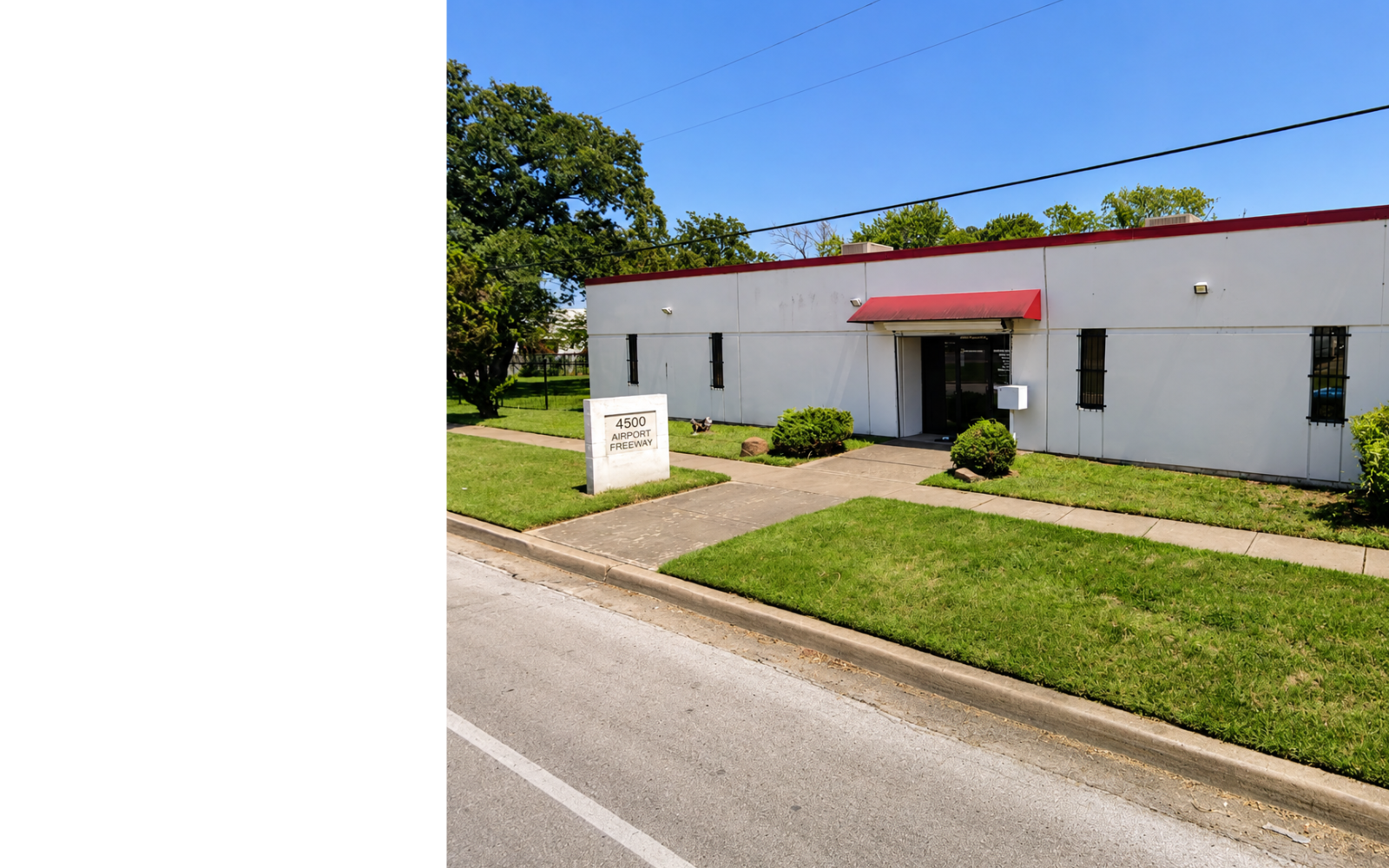
      At Deandra Grant Law, Managing Partner Deandra Grant has been defending DWI and criminal cases in Tarrant County courts for more than 30 years. She holds a Master’s Degree in Pharmaceutical Science and the ACS-CHAL Forensic Lawyer-Scientist designation. Partner Douglas Huff holds the same designation. Our Fort Worth office at 4500 Airport Freeway, Suite 101 is minutes from the Tim Curry Criminal Justice Center where Southlake cases are tried.

      Blood Testing in Southlake DWI Cases

      Blood draws in Southlake DWI arrests are typically analyzed by the Tarrant County Medical Examiner’s Forensic Laboratory (TCME) at 200 Feliks Gwozdz Place in Fort Worth. TCME uses gas chromatography and mass spectrometry techniques to analyze DWI blood specimens. Understanding the TCME’s specific methodology, analyst qualifications, calibration records, and quality assurance protocols is specific knowledge that matters in Southlake DWI cases.

      What the Defense Examines in Every Blood Test Case

      The warrant.  A blood draw typically requires a warrant. The warrant affidavit must establish probable cause based on accurate, specific facts. An affidavit that recites generic observations without connecting them to the specific circumstances of the stop, or that contains inaccurate information, is subject to challenge. Under Texas Code of Criminal Procedure Article 38.23, evidence obtained through a constitutionally defective warrant is suppressible. Texas has no good faith exception.

      The collection.  Blood must be drawn in a gray-top tube containing sodium fluoride as a preservative and potassium oxalate as an anticoagulant. Sodium fluoride inhibits microbial fermentation of glucose in the sample. Without sufficient preservative, bacteria in the blood can produce ethanol after collection, causing the reported BAC to overstate the defendant’s actual BAC at the time of driving. This is called in vitro fermentation.

      The chain of custody.  Every person who handles the blood sample from collection through laboratory analysis must be documented. Gaps in the chain of custody raise questions about whether the sample analyzed is the same sample collected, and whether it was stored properly during any transfer period.

      The laboratory methodology.  The TCME’s GC-MS analysis must be performed by a qualified analyst using a properly calibrated instrument. The analyst’s training records, the instrument’s calibration logs, the reference standards used, and the lab’s quality assurance documentation are all discoverable and subject to challenge.

      The timeline.  The blood draw typically occurs 30 minutes to several hours after the stop. If the defendant was still absorbing alcohol at the time of the stop, the BAC at the time of the draw may be higher than it was at the time of driving. The rising BAC defense is a pharmacokinetic argument that requires the kind of analysis a Master’s Degree in Pharmaceutical Science makes possible.

      Breath Testing in Southlake DWI Cases

      The Southlake Department of Public Safety uses the Intoxilyzer 9000 for breath testing. The device measures alcohol concentration in deep lung air using infrared spectroscopy and correlates the result to an estimated blood alcohol concentration using a fixed population-average partition ratio of 2,100:1. That ratio does not apply uniformly to every individual, and deviation from it in either direction affects the reported result.

      Where Breath Test Challenges Begin

      The observation period.  Texas protocol requires a continuous 15-minute observation period before a breath test is administered, during which the subject must not eat, drink, smoke, belch, or regurgitate. The purpose is to ensure no residual mouth alcohol contaminates the sample. An officer who failed to maintain the required observation or who allowed the subject out of their direct line of sight during that period compromises the validity of the test.

      Mouth alcohol.  Alcohol trapped in the mouth from belching, acid reflux, recent consumption, or alcohol-containing products like mouthwash can cause the Intoxilyzer to read a falsely elevated BrAC. The instrument has a slope detector designed to identify mouth alcohol, but it is not infallible under all conditions.

      Medical conditions.  Individuals with GERD or acid reflux are at elevated risk for mouth alcohol contamination. Diabetics in a state of ketoacidosis produce isopropanol and acetone which are compounds the Intoxilyzer can misidentify as ethanol, producing a falsely elevated reading. These are documented, peer-reviewed phenomena.

      Calibration and maintenance records.  The Intoxilyzer 9000 must be calibrated and inspected under Texas DPS protocols. Calibration records are discoverable. Gaps in maintenance, out-of-range calibration results, or use of a recently failed instrument are grounds for challenging the reliability of the result.

      Second DWI in Southlake: Class A Misdemeanor

      A second DWI in Texas is a Class A misdemeanor carrying up to one year in county jail and a fine up to $4,000. Two consequences set it apart from a first offense regardless of how the case resolves:

      Mandatory minimum jail as a condition of probation.  Even if the judge grants probation, a defendant convicted of a second DWI must serve a minimum of 72 hours in county jail as a condition of that probation. This cannot be waived by plea agreement or judicial discretion.

      Ignition interlock.  A second DWI triggers mandatory ignition interlock installation as a condition of bond from the moment of arrest and as a condition of probation.

      Additional conditions of probation for a second DWI typically include community service hours, a DWI intervention program, no alcohol use, random testing, and license suspension up to two years.

      Third DWI in Southlake: Third-Degree Felony

      A third DWI in Texas is a third-degree felony. It is the same offense level regardless of whether it is a fourth, fifth, or subsequent conviction. The penalty range is 2 to 10 years in the Texas Department of Criminal Justice and a fine up to $10,000. A guilty plea to a third DWI is a felony conviction, with all that follows: loss of voting rights during sentence, loss of firearms rights, permanent felony record, and immigration consequences for non-citizens.

      Mandatory minimum jail as a condition of probation.  For a third DWI, the mandatory minimum jail period as a condition of probation is 10 days, with a maximum of 180 days. Community supervision at the felony level also carries mandatory ignition interlock, no alcohol use, random testing, community service hours, and a probation term that can extend to 10 years.

      Criminal Defense in Southlake

      Criminal charges arising in Southlake (ex. assault, family violence, drug offenses, gun crimes, theft, and others) follow the same path as DWI cases: prosecuted by the Tarrant County DA’s office and heard at the Tim Curry Criminal Justice Center.

      Every Southlake criminal defense begins with Article 38.23  which is the Texas exclusionary rule with no good faith exception. If evidence was obtained through an unlawful stop, a defective warrant, or a search that exceeded its scope, that evidence is suppressible and suppression often ends the prosecution’s case. In assault and family violence cases, the family violence affirmative finding carries permanent consequences for firearms rights, future enhancement, expunction eligibility, and child custody that go far beyond the immediate criminal penalty.

      In digital evidence cases (ex. fraud, online solicitation, cybercrime, sex offenses involving electronic communications) Doug Huff’s digital forensics training means the defense can better evaluate the prosecution’s digital evidence: metadata, chain of custody, account authentication, and whether what law enforcement says the data shows is actually what the data shows.

      Related Blogs

      The ALR Hearing and Your License

      The administrative license revocation hearing  must be requested within 15 days of your notice of suspension. Missing that deadline means an automatic license suspension regardless of what happens in the criminal case. In Tarrant County cases, the ALR hearing is also a strategic asset: sworn testimony from the Southlake officer taken at the ALR creates a record that can be used at trial. If your license is suspended, an occupational driver’s license may allow you to drive for essential purposes during the suspension period.

      Talk to Deandra Grant Law About Your Southlake Case

      Deandra Grant Law’s Fort Worth office at 4500 Airport Freeway, Suite 101 is minutes from the Tim Curry Criminal Justice Center where your case will be heard. We have appeared in Tarrant County courts for more than 30 years, across more than 500 trials to verdict. We know the DA’s office, the TCME laboratory, and the courts.

      Call (214) 225-7117 for a confidential consultation. The 15-day ALR deadline starts running from the date of your arrest. Don’t wait.

      Related Blogs

      Texas SB 4 Goes Live May 15: What Defense Lawyers and Their Clients Need to Know Right Now

      On April 24, 2026, the en banc Fifth Circuit vacated the preliminary injunction that had [...]

      How Forensic Misconduct Can Unravel a Conviction: The Missy Woods Case and What It Means for Texas

      For 29 years, Yvonne “Missy” Woods was a star analyst at the Colorado Bureau of [...]

      Can the Algorithm Convict You? TrueAllele and a Defendant’s Right to Cross-Examine the Code

      In March 2026, the U.S. Court of Appeals for the Third Circuit handed prosecutors a [...]

      Can a Texas Warrant Expire or Does It Follow You Forever?

      One of the most common misconceptions about warrants in Texas is that they eventually expire [...]

      How Child Sexual Assault Cases Are Investigated in Texas And Where the Process Can Go Wrong

      If you have been accused of sexually assaulting a child in Texas, you are likely [...]

      Indicted for Murder in Texas? How the Grand Jury Process Works and What a Defense Packet Can Do

      When you are under investigation for murder in Texas, the grand jury proceeding is often [...]

      I-35 and the Drug Stop Playbook: What Law Enforcement Is Doing and How These Cases Are Defended

      you were stopped on I-35 in North or Central Texas and found yourself facing drug [...]

      Thirty Years on Death Row for Something You Didn’t Do: Why Wrongful Convictions Make the Death Penalty Irreversible

      This week, Notre Dame Law School is hosting its second annual Death Penalty Abolition Week. [...]

      Client Reviews

      “Deandra Grant Law – Criminal & DWI Defense handled my case with diligence and professionalism. Deandra Grant’s reputation is stellar and now I know why. She has a team of individuals who provide quality service.”

      N. Coulter

      Read More Reviews