
Overview
A first-offense DWI in Texas is a Class B misdemeanor under Texas Penal Code §49.04: operating a vehicle in a public place while intoxicated, meaning a blood alcohol concentration of 0.08 or higher, or the loss of normal mental or physical faculties. A conviction can carry up to 180 days in jail, a fine up to $2,000, and a license suspension. The charge can be fought.
How Do You Get Out of Jail After a First DWI Arrest?
Most first DWI arrests are misdemeanors, so release usually comes quickly. Many North Texas defendants qualify for a personal recognizance bond, which is release on a written promise to appear, or a low cash bond commonly between $500 and $5000, depending on the county, the alleged BAC, and whether there was a crash.
Expect conditions attached to your release. Courts increasingly require an ignition interlock device, a breath unit wired to your ignition, as a condition of bond on a first DWI, especially when the reported BAC was high or an accident was involved. No-alcohol conditions and, in some courts, a portable monitor can also apply. Violating a condition can put you back in jail while the case is pending, so treat the conditions as seriously as the charge.
The 15-day license deadline runs from your suspension notice
If you failed or refused a breath or blood test, the Texas Department of Public Safety moves to suspend your license through a separate civil process called Administrative License Revocation, or ALR. You have 15 days from the date you are served with the notice of suspension to request an ALR hearing. Miss that deadline and the suspension takes effect automatically, no matter how strong your criminal defense is. Requesting the hearing protects your license and gives your lawyer an early chance to question the arresting officer under oath.
What Should You Do Right Now?
The first days after a DWI arrest decide what evidence survives and what deadlines get met. Here is the order that matters:
- Request your ALR hearing within 15 days of notice of suspension. This is the one hard deadline in a first DWI. It protects your license and creates an early chance to cross-examine the officer under oath.
- Stop talking about the arrest. Beyond identifying yourself, do not explain to officers, friends, or social media. Anything you say about what or when you drank becomes evidence.
- Write down everything while it is fresh. What you ate and drank and when, the route you drove, the reason the officer gave for the stop, which tests you were asked to perform, and how you were treated.
- Save anything that fixes your timeline. Receipts, texts, and rideshare records can show when you stopped drinking, which drives the science of the case.
- Hire a DWI lawyer immediately. Early work, including preserving dash and body camera video and test records, shapes everything that follows.
What Is a First-Offense DWI in Texas?
Under Texas Penal Code §49.04, you commit DWI if you operate a motor vehicle in a public place while intoxicated. Texas defines intoxicated two ways, and both matter.
The per se definition
A blood alcohol concentration, or BAC, of 0.08 or higher. BAC is the percentage of alcohol in your blood. If a breath or blood test returns a number at or above 0.08, the State can charge you on that number alone, without proving you were actually impaired.
The impairment definition
Not having the normal use of your mental or physical faculties because of alcohol, a drug, a controlled substance, or any combination. Under this theory you can be charged even below 0.08 if the officer believes your faculties were impaired. It is also why a DWI can be built on prescription or over-the-counter medication, not just alcohol.
Which theory the prosecutor pursues changes how the defense is built, so identifying it early matters.
What Evidence Do Prosecutors Need to Convict You?
To convict, the State must prove beyond a reasonable doubt that you operated a vehicle in a public place and were intoxicated. In a first DWI that usually rests on four kinds of evidence, and each has known weak points.
The chemical test. A breath test on the Intoxilyzer 9000, or a blood draw analyzed at a lab. The number is only as reliable as the process behind it: calibration and maintenance logs, the 15-minute observation period, and operator certification for breath, and the draw protocol, preservative, storage, and chain of custody for blood.
Field sobriety tests. The walk-and-turn, one-leg stand, and horizontal gaze nystagmus, which is the eye-tracking test, are scored by the same officer building the case, often roadside in poor light on uneven ground. These tests are voluntary in Texas and declining them is not a crime.
The officer’s observations. Odor, slurred speech, balance, and driving behavior, written up in the offense report. These are subjective and frequently contradicted by the video.
The video. Dash and body camera footage often tells a different story than the report. It is one of the first things we request.
What Are the Penalties for a First DWI in Texas?
A first DWI is a Class B misdemeanor. A conviction can carry:
- 72 hours to 180 days in county jail
- a fine up to $2,000
- a driver’s license suspension of 90 days to 1 year
- 24 to 100 hours of community service
- a mandatory DWI education program
- an ignition interlock device as a condition of bond, and often of probation
The superfine
On top of the statutory fine, Texas Transportation Code §709.001 adds a civil superfine on a final DWI conviction. For a first conviction it is $3,000, rising to $6,000 if your BAC was 0.15 or higher. It generally applies to final convictions, meaning a jail sentence or revoked probation, not to successfully completed straight probation, and courts can waive it for defendants found to be indigent.
Factors that raise the charge
- A BAC of 15 or higher at the time of analysis makes it a Class A misdemeanor: up to 1 year in jail and a fine up to $4,000.
- A passenger under 15 makes it a state jail felony, regardless of BAC. See our DWI with Child Passenger page.
- A crash causing serious bodily injury can become intoxication assault, a third-degree felony. See our intoxication assault page.
Can You Fight a First DWI?
Yes, and a first offense is often the most winnable point in a DWI case, because the evidence has not yet been tested. Realistic outcomes range across the spectrum: dismissal when the stop or the test fails constitutional or scientific review, reduction to a lesser charge such as obstruction of a highway, deferred adjudication that keeps a conviction off your record, pretrial diversion in counties that offer it to first offenders, and acquittal at trial.
No lawyer can promise a result, and you should be wary of one who does. What we can tell you is that a breath or blood number is not a verdict. First cases with a BAC over the limit have been dismissed and won because the stop, the testing, or the timing did not hold up.
A word on deferred adjudication
Since September 1, 2019, Texas allows deferred adjudication on a first DWI under Code of Criminal Procedure Art. 42A.102, if your BAC was under 0.15 and you do not hold a commercial driver license. It can keep a conviction off your record, but it requires an interlock, the arrest stays unless you later win an order of nondisclosure, and a future DWI can unseal it and use it to enhance the new charge. It is sometimes the right call and sometimes not. The point is to weigh it against the strength of your defense before you accept it, not after.
How Is a Texas DWI Different From a DUI?
In Texas the two are not interchangeable. DWI is the Penal Code §49.04 offense that applies to any driver who is intoxicated, a BAC of 0.08 or impaired faculties. DUI is a separate, lesser offense under Alcoholic Beverage Code §106.041 that applies only to drivers under 21 who have any detectable amount of alcohol in their system. DUI is a Class C misdemeanor with a fine up to $500 and no jail, while a first DWI is a Class B misdemeanor with possible jail and a far larger fine.
The distinction matters because an underage driver can face either charge depending on the evidence, and the gap in consequences is wide. See our underage DWI page for how those cases work.
How We Defend First DWI Cases
We read the test, not just the result
Managing Partner Deandra Grant holds a Master’s Degree in Pharmaceutical Science and the ACS-CHAL Forensic Lawyer-Scientist designation. Partner Douglas Huff holds the same forensic designation. For a breath case, we examine the Intoxilyzer 9000’s calibration and maintenance records, the operator’s certification, and the observation period. For blood, we pull the full laboratory package and review the draw, the preservative and storage, the chain of custody, and the lab’s methodology. A BAC number is the product of a process, and the process is where cases turn.
We check the timing with science
The BAC measured at the station is not necessarily your BAC behind the wheel, which is the legally relevant moment. Depending on when you last drank, alcohol may still have been absorbing when you drove, so your level while driving could have been lower than the number reported later. Sorting that out is retrograde extrapolation, and it is pharmacokinetics, the study of how the body absorbs and eliminates substances. That is the science this firm was built on.
We start with the stop
Under Texas Code of Criminal Procedure Article 38.23, evidence obtained through an unlawful stop or a defective warrant is suppressible. If the officer lacked reasonable suspicion to pull you over, everything that followed may be thrown out. The dash and body camera footage are among the first things we request.
We hold the field tests to their own standard
Field sobriety tests have to be administered under standardized NHTSA procedures. Wrong instructions, a poor surface, bad lighting, or an unaccounted-for medical condition all undercut what the officer claims the tests showed.
Do You Really Need a Lawyer for a First DWI?
A first DWI feels minor until you see what a conviction actually does: a permanent criminal record, a license suspension, the superfine, years of higher insurance, and a predicate that turns any future DWI into a worse one. Pleading guilty at the first setting locks all of that in based on evidence no one ever tested.
You can represent yourself or take a quick plea, but a first DWI is a forensic case. The value of counsel here is the ability to read the lab data, litigate the stop, and protect both your record and your eligibility for nondisclosure down the line. The cheapest path through a first DWI is rarely the least expensive one over time.
How Long Does a First DWI Case Take?
Most first DWI cases take roughly 6 to 18 months from arrest to resolution, and contested cases built on blood evidence can run a year or more. The case moves through arrest and bond, the ALR hearing within weeks, then a pretrial phase of discovery, video and lab-record production, and any motions to suppress, before a plea, dismissal, or trial.
Slower is often better. Pulling the breath or blood records and litigating the stop takes time, and that work is what produces dismissals and reductions. We keep you updated at each step so the wait never feels like silence.
How Much Does a First DWI Defense Cost?
The fee depends on the county, the evidence, whether the case involves blood that needs independent review, and whether it resolves before trial. A breath case that pleads early and a contested blood case that goes to a hearing are different engagements.
We quote a flat fee after a free consultation, so you know the investment up front. Weigh it against what a conviction costs over time: the fine, the superfine, years of higher insurance, and a record that raises the stakes on any future charge.
How First DWI Cases Move Through North and Central Texas Courts
First DWI cases are misdemeanors, so they are heard in the county courts at law. In Dallas County they run through the county criminal courts at the Frank Crowley Courts Building, where blood is typically analyzed by SWIFS or a DPS Lab. Tarrant County cases are heard at the Tim Curry Criminal Justice Center in Fort Worth. Collin, Denton, Rockwall and McLennan County DWI cases are heard in their respective county courts.
We appear in these courthouses every week. See our courthouse guides for what to expect at each one, from parking to docket procedure.
What Are the Long-Term Effects of a First DWI?
A first DWI conviction reaches well past the fine and probation conditions.
Your record. A conviction is permanent and cannot be expunged. Deferred adjudication can later qualify for an order of nondisclosure, which seals the record from most employers, but the arrest itself remains unless that order is granted.
Professional licensing. Nurses, doctors, pharmacists, teachers, CDL holders, and attorneys can face separate board proceedings, monitoring, or suspension on a DWI conviction, independent of the criminal case.
Immigration. For non-citizens, a DWI can carry immigration consequences depending on the offense and status, and it should be handled with immigration-aware counsel from the start.
Future charges. A first conviction is the predicate for everything after it. A second DWI carries mandatory jail time, and a third is a felony. The first case is the foundation any future charge is built on, which is the strongest reason to fight it now.
First DWI FAQs
Should I have refused the breath or blood test?
Refusing does not make the case disappear. A refusal still triggers the 15-day period to request an ALR hearing, and in most counties an officer can get a warrant and draw your blood. But a refusal also denies the State an easy number and can shift the case onto the officer’s subjective observations, which are easier to challenge. What you did is now a fact to work with, not a verdict.
Will my car insurance go up and what is an SR-22?
Usually yes. After a DWI suspension, Texas requires an SR-22 which is a rider insurance policy best issued by a company that specializes in SR-22s and not your own insurance company. Insurance premiums commonly rise for several years. Avoiding the conviction is the most direct way to limit that cost.
Can I travel to Canada with a DWI?
Canada can treat a DWI as serious criminality and deny entry, even on a first offense and even years later. If you travel to Canada for work or family, raise it early so we can weigh it in how we resolve the case and, if necessary, refer you to a Canadian immigration attorney.
What if this is my first Texas DWI but I have a prior from another state?
An out-of-state DWI or DUI can count as a prior for enhancement in Texas, which can turn what looks like a first offense into a second. Tell your lawyer about any alcohol-related driving offense anywhere, so there are no surprises later.
Is jail time likely on a first DWI?
For a typical first DWI without a crash or a very high BAC, probation rather than jail is the common outcome, though a short jail term can be a condition of probation in some courts. Aggravating facts change that, which is why the details of your stop and test matter.
Talk to a Lawyer Who Can Read the Test
A first DWI is a commonly a forensic case: a breath or blood result, a stop, and a set of roadside tests that all have to hold up. Deandra Grant Law challenges each one with the science it was built on. We have offices in Dallas, Fort Worth, Allen, Denton, Rockwall, and Waco, with more than 30 years in North and Central Texas courts.
Call (214) 225-7117 for a free, confidential consultation. Available 24/7. No cost, no obligation.
Reviewed by Deandra Grant, Managing Partner, ACS-CHAL Forensic Lawyer-Scientist with an MS in Pharmaceutical Science and a Graduate Certificate in Forensic Toxicology.
Attorneys Who Handle This Charge
Meet the attorneys who will personally handle your first-offense DWI defense.

Douglas E. Huff
Read Attorney Profile
Jada Fairley
Read Attorney Profile
Jason Bowes
Read Attorney Profile
Kacey Simmons
Read Attorney Profile
Kevin Sheneberger
Read Attorney ProfileOffices Handling These Cases
Find the Deandra Grant Law office nearest you for first-offense DWI defense across Texas.

Allen
1333 W. McDermott Drive, Suite 180, Allen, TX 75013 Visit This Office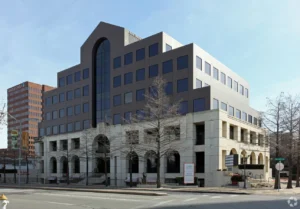
Dallas (HQ)
3300 Oak Lawn Avenue, Suite 700, Dallas, TX 75219 Visit This Office
Denton
1317 E. McKinney Street, Suite 101A, Denton, TX 76209 Visit This Office
Fort Worth
4500 Airport Freeway, Suite 101, Fort Worth, TX 76117 Visit This Office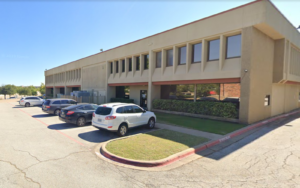

Waco
605 Austin Avenue, Suite 5, Waco, TX 76701 Visit This OfficeCourthouses We Appear In
Courthouses where our attorneys represent clients facing this charge across Texas.
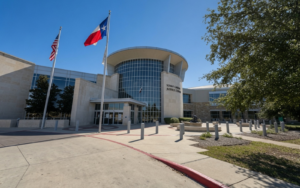
Bell County Courts
Everything you need to know about criminal court in Bell County, Texas: where cases are heard at the…
View Courthouse Info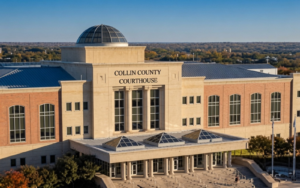
Collin County Courts
Everything you need to know about criminal court in Collin County, Texas: where cases are heard at the…
View Courthouse Info
Cooke County Courts
Everything you need to know about criminal court in Cooke County, Texas: where cases are heard in Gainesville,…
View Courthouse Info
Coryell County Courts
Everything you need to know about criminal court in Coryell County, Texas: where cases are heard in Gatesville,…
View Courthouse Info
Dallas County Courts
Everything you need to know about criminal court in Dallas County, Texas: where cases are heard at the…
View Courthouse Info
Denton County Courts
Everything you need to know about criminal court in Denton County, Texas: where cases are heard at the…
View Courthouse Info
Ellis County Courts
Everything you need to know about criminal court in Ellis County, Texas: where cases are heard at the…
View Courthouse Info
Federal Courts
Deandra Grant Law defends federal criminal cases across all four federal districts in Texas, the District of Columbia,…
View Courthouse Info
Grayson County Courts
Everything you need to know about criminal court in Grayson County, Texas: where cases are heard in Sherman,…
View Courthouse Info
Johnson County Courthouse
Everything you need to know about criminal court in Johnson County, Texas: where cases are heard at the…
View Courthouse Info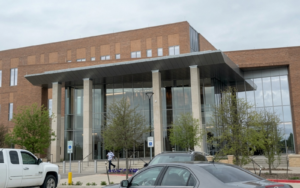
Kaufman County Courts
Everything you need to know about criminal court in Kaufman County, Texas: where cases are heard at the…
View Courthouse Info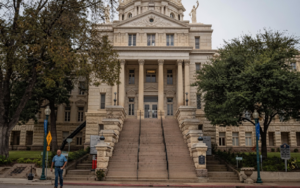
McLennan County Courts
Everything you need to know about criminal court in McLennan County, Texas: where cases are heard at the…
View Courthouse Info
Rockwall County Courts
Everything you need to know about criminal court in Rockwall County, Texas: where cases are heard at the…
View Courthouse Info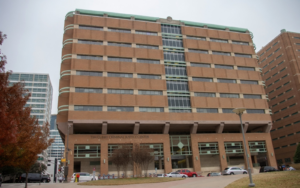
Tarrant County Courts
Everything you need to know about criminal court in Tarrant County, Texas: where cases are heard at the…
View Courthouse InfoBooks & Guides
Free books and guides on first-offense DWI, explaining your rights and options.
The Texas DWI Manual
Get the Book
Surviving Your DWI in McLennan County
Get the Book
Surviving Your DWI in Bell County
Get the Book
Surviving Your DWI in Hays County
Get the Book
Surviving Your DWI in Tarrant County
Get the Book
Surviving Your DWI in Travis County
Get the Book
Surviving Your DWI in Kaufman County
Get the Book
Surviving Your DWI in Rockwall County
Get the Book
Surviving Your DWI in Ellis County
Get the Book
Surviving Your DWI in Grayson County
Get the Book
Surviving Your DWI in Cooke County
Get the Book
Surviving Your DWI in Collin County
Get the Book
Surviving Your DWI in Denton County
Get the Book