reduced
Intoxication Manslaughter
Felony intoxication manslaughter reduced to a misdemeanor before trial

Deandra Grant Law - Criminal & DWI Defense defends drivers facing intoxication manslaughter charges and years of prison

Intoxication manslaughter under Texas Penal Code §49.08 is causing a death, by accident, while operating a vehicle intoxicated. It is a second-degree felony carrying 2 to 20 years in prison. The State does not have to prove intent or recklessness, only intoxication and that your intoxication caused the death, which makes causation the central battleground.
This is a serious felony, so a magistrate sets bond individually, and amounts are high, often well into five or six figures, with conditions that reflect the gravity of the case: an ignition interlock, a portable alcohol monitor, no alcohol, surrendered passport, and supervised release in some courts. A violation can return you to jail for the duration of a case that may run a year or more.
Even with a death involved, the license side runs separately. If you failed or refused testing, you have 15 days from the notice of suspension to request an Administrative License Revocation, or ALR, hearing, or the suspension is automatic. The hearing is also an early, sworn opportunity to question the officer, which matters in a case this technical.
The investigation that will decide this case is happening now, and evidence disappears. In order:
Texas Penal Code §49.08 defines intoxication manslaughter as operating a motor vehicle in a public place while intoxicated and, by reason of that intoxication, causing the death of another by accident or mistake. Every element, operation, public place, intoxication, and causation, must be proven beyond a reasonable doubt.
Under §49.01, intoxication means either a BAC of 0.08 or higher at the time of driving, the loss of normal mental faculties from alcohol or a drug or the loss of normal physical faculties from alcohol or a drug. The State only has to prove one prong, so a driver can be charged even with a result below 0.08 if officer observations support loss of normal mental or physical faculties.
Unlike ordinary manslaughter, intoxication manslaughter does not require proof of recklessness. A driver who was intoxicated and caused a fatal crash through ordinary negligence can be convicted. That near-strict-liability structure is exactly why the causation element carries so much weight.
Beyond intoxication, the State must prove your intoxication caused the death, and each piece of that proof can be contested.
Causation. This is the heart of the case. Presence at the scene and operation of a vehicle are not enough; the State must prove your intoxication, not someone else’s conduct or a road condition, caused the death. A driver with a 0.09 BAC rear-ended by someone who ran a red light was intoxicated and present, but the other driver caused the crash.
Crash reconstruction. The State’s investigators produce a report on speed, point of impact, and fault. These are technical judgments built on assumptions that an independent expert can test.
The blood evidence. A warrant-authorized blood draw, analyzed by a forensic lab, whose accuracy at the time of driving, not the later time of the draw, depends on pharmacokinetic analysis.
It is a second-degree felony: 2 to 20 years in state prison and a fine up to $10,000, with up to 800 hours of community service. Two features raise the stakes further:
The number and age of the victim’s minor children belong in any honest assessment of a plea offer, because Bentley’s Law can attach a financial obligation that lasts for years after release.
Yes. Even in a fatality case, the State has to prove causation and intoxication beyond a reasonable doubt, and either can fail. Realistic outcomes include a reduction to a misdemeanor DWI or acquittal when causation belongs to another driver or a road condition, a not-guilty verdict when the blood or the reconstruction does not hold up, reduction when intoxication or causation is weak, and probation rather than prison in the right case.
No lawyer can promise a result, and you should be wary of one who does. But a crash reconstruction, a blood result, and a causation theory are all things to be tested. A death does not relieve the State of proving that your intoxication is what caused it.
The difference is the outcome of the crash. Intoxication assault, under §49.07, applies when intoxicated driving causes serious bodily injury, and it is a third-degree felony, 2 to 10 years. Intoxication manslaughter, under §49.08, applies when it causes a death, and it is a second-degree felony, 2 to 20 years, with Bentley’s Law obligations on top. Both turn on the same causation question: did the defendant’s intoxication, rather than another factor, cause the harm.
See our intoxication assault page for the serious-injury version, and our felony DWI page for the full felony picture.
The State must prove your intoxication caused the death, not merely that you were intoxicated and present. We develop third-party fault, a road or vehicle condition, and concurrent causes to break the link the State needs. Causation is a separate element, and it is where many of these cases are won.
The State’s reconstruction is a set of technical judgments about speed, impact, and fault. Our independent expert tests the methodology, the measurements, and the physical evidence, because skid analysis and speed calculations can be wrong when the underlying data does not support them.
The vehicle’s black box records speed, braking, throttle, and steering in the seconds before impact, often more reliable than eyewitness accounts or after-the-fact reconstruction. We make sure it is preserved and correctly interpreted, because it can establish exactly what your vehicle was doing.
Managing Partner Deandra Grant holds a Master’s Degree in Pharmaceutical Science, a Graduate Certificate in Forensic Toxicology, and the ACS-CHAL Forensic Lawyer-Scientist designation, and Partner Douglas Huff holds the same ACS-CHAL designation. A hospital blood draw taken hours after a crash requires retrograde extrapolation to reach the time of driving, and that projection rests on assumptions we are trained to challenge.
Under Texas Code of Criminal Procedure Article 38.23, evidence from a constitutionally defective warrant is suppressible. Whether the blood-draw affidavit stated the facts accurately and established probable cause is one of the first questions in every case.
You will have one, because a felony means appointed counsel if you cannot afford it. The real question is whether your lawyer can fight on every front this charge demands at once: the constitutional validity of the blood draw, the forensic accuracy of the BAC, the science of the crash reconstruction, and the legal sufficiency of causation. A quick plea here accepts years in prison and a Bentley’s Law obligation based on evidence no one tested.
These cases require independent experts, early evidence preservation, and graduate-level forensic analysis that overloaded appointed dockets rarely support. This is the highest-stakes DWI charge there is, and it is worth counsel built for it.
These cases typically run 1 to 3 years or more, longer than any other DWI charge. The timeline moves through arrest and bond, the ALR hearing within weeks, grand jury indictment, then an extended phase of discovery, independent reconstruction, blood analysis, expert work, and suppression motions before any trial.
Time is a tool here. Independent reconstruction and blood review take months, and that work is what builds a causation defense. We keep you informed at every stage so the wait never feels like silence.
This is the most resource-intensive DWI defense there is. The fee depends on the complexity of the crash, the experts required, whether the case goes to trial, and the county. Independent crash reconstruction and forensic toxicology are usually essential, and they are exactly what changes outcomes.
We discuss the investment in a confidential consultation after reviewing your case. Weigh it against what a conviction costs: years in prison, a permanent felony record, civil liability, and a Bentley’s Law obligation that can last well beyond release.
As a felony, intoxication manslaughter is heard in the district courts. In Dallas County that means the felony courts at the Frank Crowley Courts Building, in Tarrant County at the district courts in the Tim Curry Criminal Justice Center, and in Collin, Denton, Rockwall, and McLennan Counties, their respective district courts. These cases draw the most experienced prosecutors, and the lab and reconstruction battles begin early.
We appear in these courthouses every week. See our courthouse guides for what to expect at each one.
Your record. A second-degree felony conviction is permanent. It cannot be expunged or sealed, and it appears on every background check for life.
Your freedom and rights. Beyond the prison term, a felony conviction ends firearm rights and the right to vote during the sentence, and parole conditions can extend for years.
Bentley’s Law. Where the deceased was a parent, the child-support restitution obligation continues after release, a financial consequence that can last until the child reaches adulthood.
Civil liability and immigration. A criminal conviction can drive a parallel wrongful-death suit, and for non-citizens the immigration consequences are severe. The stakes could not be higher, which is why the defense has to start now.
No. Intoxication manslaughter does not require recklessness. If you were intoxicated and your intoxication caused the death, even through ordinary negligence, the offense can be proven. That is why causation, not recklessness, is the focus of the defense.
Then causation may not be met. The State must prove your intoxication caused the death, so evidence that another driver ran a light, was distracted, or created the hazard directly contests the charge. Developing that evidence early is critical.
Yes. The State can proceed on the loss-of-normal-use prong using officer observations and other evidence, so a result below 0.08 does not by itself defeat the charge. It does, however, weaken the intoxication element.
It is the vehicle’s black box, recording speed, braking, and steering in the seconds before impact. In a fatality case it is often the most reliable evidence of what actually happened, and it can support or undercut the State’s causation theory.
It is a Texas law requiring monthly child-support restitution when an intoxication manslaughter victim was the parent of a minor child. Payments are deferred during incarceration but not waived, and resume after release until the child turns 18 or graduates.
No. The State of Texas prosecutes intoxication manslaughter, not the family. Their wishes can influence the prosecutor but do not control whether the case proceeds.
Intoxication manslaughter is defended on every front at once: the blood warrant, the BAC, the crash reconstruction, and the causation theory. Deandra Grant Law challenges each with the science it was built on, across more than 500 trials to verdict. We have offices in Dallas, Fort Worth, Allen, Denton, Rockwall, and Waco, with more than 30 years in North and Central Texas courts.
Call (214) 225-7117 for a free, confidential consultation. Available 24/7. The investigation is happening now, so do not wait.
Reviewed by Deandra Grant, Managing Partner, ACS-CHAL Forensic Lawyer-Scientist with an MS in Pharmaceutical Science.
Real results from intoxication manslaughter cases our team has defended across Texas.
Felony intoxication manslaughter reduced to a misdemeanor before trial
Prior results do not guarantee a similar outcome. Each case is unique.
Meet the attorneys who will personally handle your intoxication manslaughter defense.





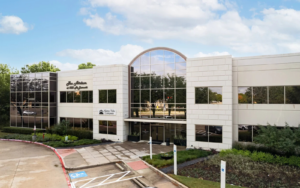
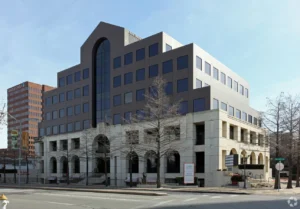
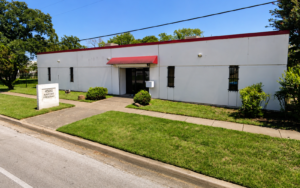
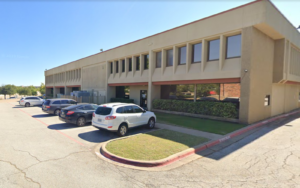
Find the Deandra Grant Law office nearest you for intoxication manslaughter defense across Texas.


Courthouses where our attorneys represent clients facing this charge across Texas.
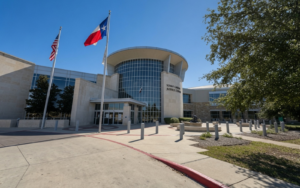
Everything you need to know about criminal court in Bell County, Texas: where cases are heard at the…
View Courthouse Info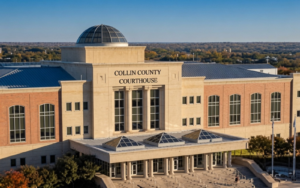
Everything you need to know about criminal court in Collin County, Texas: where cases are heard at the…
View Courthouse Info
Everything you need to know about criminal court in Cooke County, Texas: where cases are heard in Gainesville,…
View Courthouse Info
Everything you need to know about criminal court in Coryell County, Texas: where cases are heard in Gatesville,…
View Courthouse Info
Everything you need to know about criminal court in Dallas County, Texas: where cases are heard at the…
View Courthouse Info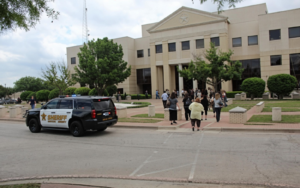
Everything you need to know about criminal court in Denton County, Texas: where cases are heard at the…
View Courthouse Info
Everything you need to know about criminal court in Ellis County, Texas: where cases are heard at the…
View Courthouse Info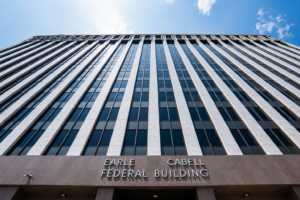
Deandra Grant Law defends federal criminal cases across all four federal districts in Texas, the District of Columbia,…
View Courthouse Info
Everything you need to know about criminal court in Grayson County, Texas: where cases are heard in Sherman,…
View Courthouse Info
Everything you need to know about criminal court in Johnson County, Texas: where cases are heard at the…
View Courthouse Info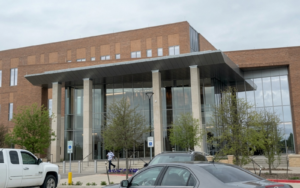
Everything you need to know about criminal court in Kaufman County, Texas: where cases are heard at the…
View Courthouse Info
Everything you need to know about criminal court in McLennan County, Texas: where cases are heard at the…
View Courthouse Info
Everything you need to know about criminal court in Rockwall County, Texas: where cases are heard at the…
View Courthouse Info
Everything you need to know about criminal court in Tarrant County, Texas: where cases are heard at the…
View Courthouse InfoFree books and guides on intoxication manslaughter, explaining your rights and options.
Articles on intoxication manslaughter — what's at stake and how we defend you.

Watch our attorneys explain intoxication manslaughter and how we defend these cases.


Every case starts with a conversation. Reach out today and put an experienced, trial-tested team in your corner. We’re available 24/7 across all six Texas offices.
Tell us what happened. We’ll respond within one business hour.
Submitting this form does not create an attorney-client relationship. All communications are confidential.