Assault
Causing bodily injury, threatening, or offensively touching another person under Texas law.
Learn More
Trial-tested defense across Texas for misdemeanors, felonies, and everything in between.
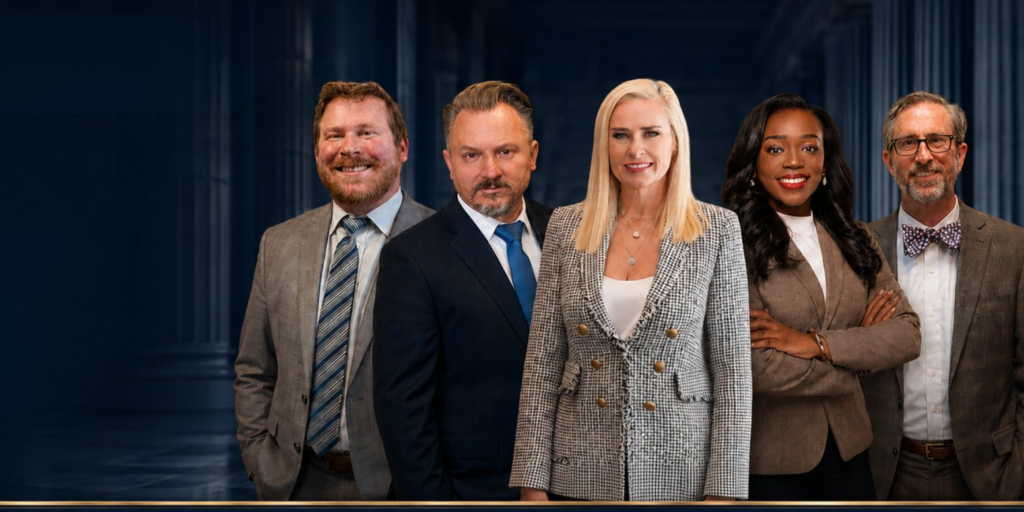
Most criminal defense firms in Texas offer the same thing: a lawyer who knows the law, has been in court, and will fight for you. That description fits thousands of attorneys across the state. What it does not describe is what Deandra Grant Law actually brings to a criminal case.
Managing Partner Deandra Grant holds a Master’s Degree in Pharmaceutical Science and the ACS-CHAL Forensic Lawyer-Scientist designation. Partner Douglas Huff holds the same designation and has completed advanced digital forensics training. Of Counsel James Lee Bright has more than 25 years of federal criminal trial experience across all four federal districts in Texas. Together, that team covers the legal, scientific, and federal dimensions of criminal defense in ways that a traditional criminal defense firm cannot.
We have offices in Dallas, Fort Worth, Allen, Denton, Waco, and Rockwall. We have been in North and Central Texas courtrooms for more than 30 years, across more than 500 trials to verdict.
From a Class C misdemeanor through a first-degree felony, and federal charges in every district of Texas, each charge below links to a dedicated page with offense-specific analysis, defense strategy, and penalty structure.
Causing bodily injury, threatening, or offensively touching another person under Texas law.
Learn MoreOffenses involving harm to minors, prosecuted aggressively with enhanced penalties in Texas.
Learn MoreAssault against a family member, partner, or household member under Texas law.
Learn MoreCharges for possessing, delivering, or manufacturing controlled substances under Texas penalty groups.
Learn MoreFailing to follow probation terms can trigger revocation and the original sentence.
Learn MoreForensic-science-driven defense against Texas sex crime charges, led by ACS-CHAL attorney Douglas Huff.
Learn MoreCharges for unlawfully possessing, carrying, or using weapons under Texas law.
Learn MoreFinancially motivated, non-violent offenses like fraud, embezzlement, and money laundering.
Learn MoreA sample of criminal cases we have resolved for Texas clients.
Grand jury returned no bill on a capital murder charge
Robbery and aggravated kidnapping charges dismissed
Felony domestic violence assault charge dismissed
Felony drug possession charge dismissed
Unlawful carrying of a weapon charge dismissed
Two felony theft charges dismissed
Prior results do not guarantee a similar outcome. Each case is unique.
Most criminal defense firms offer a lawyer who knows the law and has been in court; what sets Deandra Grant Law apart is the ability to challenge the prosecution's evidence at the scientific level, not just the legal one.
More than three decades in North and Central Texas, with over 500 cases tried to verdict. Prosecutors know which attorneys will actually try a case, and it changes how they handle yours.
Both partners hold the ACS-CHAL Forensic Lawyer-Scientist designation. Deandra Grant also holds a Master's in Pharmaceutical Science and a Graduate Certificate in Forensic Toxicology,
Texas Super Lawyer since 2011. AV® Preeminent rated by Martindale-Hubbell®. Author of 17 published law books, including The Texas DWI Manual, the reference other defense attorneys rely on.
Our AI receptionist answers calls around the clock, every day of the year. Arrested at midnight, served a suspension notice on a holiday, you'll get a response, not a voicemail.
Attorney Deandra Grant prosecuted criminal cases as a Dallas County ADA, so she knows exactly how the State builds them.
Attorney Deandra Grant authored the Texas DWI Manual and 17 legal books defense lawyers across the state rely on.
Recognition our criminal defense team has earned from peers and organizations.











Our attorneys have been featured in regional and national news media.





A criminal defense lawyer is an attorney who represents people accused of crimes, from a Class C misdemeanor through a first-degree felony, and in some cases federal charges. In Texas, the offense determines almost everything: the court, the range of punishment, and the strategy. State charges are prosecuted by the District or County Attorney in the county where the case is filed, and federal charges are prosecuted in one of the four federal districts of Texas. What matters in every one of them is whether the defense can match the prosecution on both the legal side and the evidence.
We have offices in Dallas, Fort Worth, Allen, Denton, Waco, and Rockwall. We have been in North and Central Texas courtrooms for more than 30 years, across more than 500 trials to verdict. You can see the full range of cases we handle above.
Most criminal defense firms in Texas offer the same thing: a lawyer who knows the law, has been in court, and will fight for you. That description fits thousands of attorneys across the state. What it does not describe is what Deandra Grant Law actually brings to a criminal case.
Managing Partner Deandra Grant holds a Master’s Degree in Pharmaceutical Science and the ACS-CHAL Forensic Lawyer-Scientist designation. Partner Douglas Huff holds the same designation and has completed advanced digital forensics training. Of Counsel James Lee Bright has more than 25 years of federal criminal trial experience across all four federal districts in Texas. Together, that team covers the legal, scientific, and federal dimensions of criminal defense in ways that a traditional criminal defense firm cannot.
Criminal prosecution in Texas rests on evidence. The question is whether the defense can independently evaluate that evidence at the same level of sophistication the prosecution uses to present it. In most criminal cases, the answer from most defense firms is no because evaluating forensic evidence requires scientific training that most attorneys do not have. The defenses in your case begin with that evaluation.
The penalty range depends entirely on the exact charge. Texas categorizes offenses by class and degree, and aggravating factors can move a case up the ladder. The consequences can vary widely based on the nature and severity of the crime.
Misdemeanors. Less serious offenses, but they can still result in significant penalties.
Felonies. More serious crimes that carry more severe penalties. Texas classifies felonies into five degrees.
Aggravated offenses. Aggravating factors, such as the use of a deadly weapon or causing serious bodily injury, can elevate the severity of a crime, leading to enhanced penalties.
Collateral consequences. In addition to legal penalties, criminal arrests in Texas can have collateral consequences. These include difficulties in finding employment, obtaining housing, and securing loans. A criminal record can significantly impact various aspects of your life. The full set of long-term costs is on our consequences of a criminal conviction page.
Texas Code of Criminal Procedure Article 38.23 prohibits the use of evidence obtained in violation of the Texas or United States Constitutions. Texas has no good faith exception. When law enforcement obtained evidence through an unlawful stop, an insufficient warrant, a search that exceeded the scope of consent, or a blood draw without proper legal authority, that evidence is suppressible and suppression frequently ends the prosecution’s case. Every Deandra Grant Law case begins with an Article 38.23 analysis before any other defense strategy is built.
To convict, the State must prove every element of the offense beyond a reasonable doubt. In modern cases that proof is increasingly forensic and digital. The prosecution’s central exhibit may be a laboratory result in a DWI, intoxication assault, intoxication manslaughter, or drug case, or it may be digital evidence in a fraud, theft, sex offense, or cybercrime case. Every category of that evidence can be independently evaluated, and every category has conditions under which it becomes unreliable. How we evaluate and challenge each one is covered in our defense strategies.
If you or someone you care about has been arrested in Texas, the most important thing you can do right now is speak with an attorney before making any decisions about what to say to law enforcement, whether to cooperate, or what to do about bond conditions. Those early decisions shape the entire case. Do not discuss the facts with anyone but your lawyer, write down everything you remember while it is fresh, and preserve anything that could be evidence. Our guide on what to do after a criminal arrest walks through each step.
Being arrested is not the same as being convicted. Criminal prosecution rests on evidence, and when that evidence was obtained unlawfully or cannot withstand independent review, it can be suppressed, excluded, or undermined. Under Article 38.23, suppression frequently ends the prosecution’s case. The available criminal defenses depend on the specific facts and the specific charge.
Every serious criminal defense has two components: the legal analysis and the scientific analysis. Most defense attorneys cover the legal side. The forensic science side is where Deandra Grant Law is different.
Blood and toxicology evidence. In DWI, intoxication assault, intoxication manslaughter, and drug cases, the prosecution’s central exhibit is a laboratory result. Evaluating that result (the methodology, the chain of custody, the analyst’s qualifications, the instrument calibration records, the possibility of in vitro fermentation or sample contamination) requires pharmacokinetic and analytical chemistry training. Deandra Grant’s Master’s Degree in Pharmaceutical Science and ACS-CHAL designation make that evaluation possible in every case where blood or toxicology evidence is at issue.
Digital evidence. In fraud, theft, sex offense, and cybercrime cases, the prosecution’s evidence is increasingly digital: phone extractions, metadata, account records, and device forensics. Doug Huff’s digital forensics training means the defense can better evaluate that evidence and not just challenge its admissibility.
Meet the defense attorneys who will personally handle your criminal case.





Visit one of our Texas offices to discuss your criminal case.





Courthouses across Texas where our attorneys defend clients facing serious criminal charges.

Everything you need to know about criminal court in Bell County, Texas: where cases are heard at the…
View Courthouse Info
Everything you need to know about criminal court in Collin County, Texas: where cases are heard at the…
View Courthouse Info
Everything you need to know about criminal court in Cooke County, Texas: where cases are heard in Gainesville,…
View Courthouse Info
Everything you need to know about criminal court in Coryell County, Texas: where cases are heard in Gatesville,…
View Courthouse Info
Everything you need to know about criminal court in Dallas County, Texas: where cases are heard at the…
View Courthouse Info
Everything you need to know about criminal court in Denton County, Texas: where cases are heard at the…
View Courthouse Info
Everything you need to know about criminal court in Ellis County, Texas: where cases are heard at the…
View Courthouse Info
Everything you need to know about criminal court in Grayson County, Texas: where cases are heard in Sherman,…
View Courthouse Info
Everything you need to know about criminal court in Johnson County, Texas: where cases are heard at the…
View Courthouse Info
Everything you need to know about criminal court in Kaufman County, Texas: where cases are heard at the…
View Courthouse Info
Everything you need to know about criminal court in McLennan County, Texas: where cases are heard at the…
View Courthouse Info
Everything you need to know about criminal court in Rockwall County, Texas: where cases are heard at the…
View Courthouse Info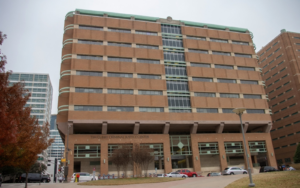
Everything you need to know about criminal court in Tarrant County, Texas: where cases are heard at the…
View Courthouse InfoBooks and guides to help you understand your criminal charges.

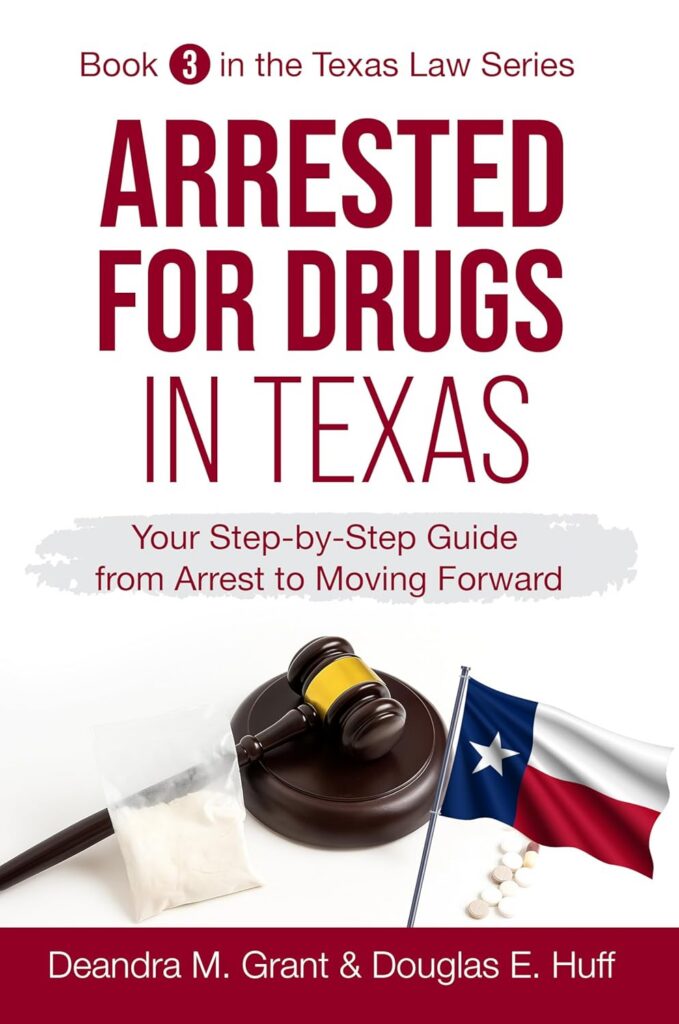


Watch our attorneys explain criminal charges, penalties, and how defenses work.










































































































































































































































































































What clients say about working with Deandra Grant Law through one of the most difficult times of their lives.
Listen to their client and they are very responsive
The Best! They are really responsive and extremely helpful.
The entire team at Deandra Grant is top notch!
Answers to common questions about facing criminal charges in Texas.
Yes. Even a misdemeanor can mean jail time, a fine, and a permanent record that follows you onto job and housing applications. A lawyer can challenge the evidence, negotiate from a position of strength, and in many cases keep a charge off your record entirely.
Misdemeanors are less serious offenses punishable by a fine or up to a year in county jail. Felonies are more serious, carrying state prison time that ranges from months to life depending on the degree. The classification sets the court, the punishment range, and the long-term consequences.
Sometimes. Texas allows expunction or an order of nondisclosure for certain outcomes, such as dismissals, acquittals, and some deferred adjudications. Eligibility depends on the charge and how the case ended, which is one reason the outcome of your case matters as much as avoiding a conviction.
Talk to a lawyer first. You have the right to remain silent for a reason. Officers can question you in ways designed to produce admissions, and even innocent statements can be used out of context. Politely decline to answer questions until your attorney is present.
The first setting, often an arraignment or announcement, is usually procedural. Charges are confirmed, bond conditions are addressed, and your lawyer begins obtaining the State's evidence. Having counsel in place by then means the case is being worked from the start.
It depends on the level of the charge and the work the case requires. We explain fees clearly at the first consultation and offer payment options. The cost of a conviction, measured in lost jobs, lost rights, and a permanent record, is almost always higher than the cost of a strong defense.
Every case starts with a conversation. Reach out today and put an experienced, trial-tested team in your corner. We’re available 24/7 across all six Texas offices.
Tell us what happened. We’ll respond within one business hour.
Submitting this form does not create an attorney-client relationship. All communications are confidential.