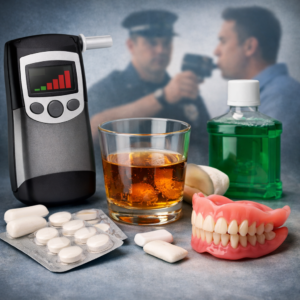
The Intoxilyzer 9000 measures the amount of alcohol in a breath sample using infrared spectroscopy. It assumes that all detected alcohol came from deep lung air and represents the defendant’s blood alcohol concentration. But several common medical conditions can introduce substances into the breath that the instrument misidentifies as ethanol — or that elevate the true ethanol reading above its accurate level.

"Deandra Grant Law – Criminal & DWI Defense handled my case with diligence and professionalism. Deandra Grant's reputation is stellar and now I know why. She has a team of individuals who provide quality service."
- N. Coulter
"Deandra Grant Law – Criminal & DWI Defense fights hard for their clients and is always willing to go above and beyond. They are the best firm for DWI cases in DFW and beyond. Definitely hire them to represent you in any pending cases."
- P. Williams
"Deandra Grant made a tough situation so much better. She listened to my concerns and helped me so much with my case. I would recommend her to anyone needing legal services."
- M. Haley
GERD (Gastroesophageal Reflux Disease)
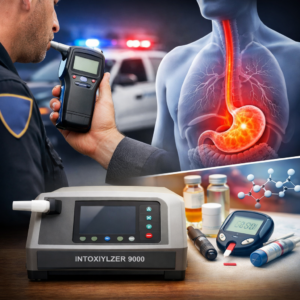
GERD is the most significant medical condition affecting breath test accuracy. Approximately 20% of the adult population suffers from GERD, which causes stomach acid and gases to travel back up through the esophagus into the throat and mouth.
When a person with GERD has consumed alcohol, the reflux brings alcohol-laden stomach vapors into the airway. The Intoxilyzer 9000 measures this stomach alcohol along with the lung alcohol, producing a result that is higher than the person’s actual blood alcohol concentration. Critically, GERD reflux can be silent (the person may not feel heartburn or any sensation) making it undetectable during the 15-minute observation period.
In the most rigorous controlled study on this issue (Booker and Renfroe (2015), published in the Journal of Forensic Sciences) researchers dosed 10 subjects with diagnosed GERD and 5 control subjects with alcohol and collected paired blood and breath samples every 20 minutes for 8 hours. Three of the 10 GERD subjects produced breath alcohol readings that were significantly higher than their simultaneously drawn blood alcohol concentrations during the absorptive phase. One subject produced a breath reading of 0.105 g/dL that was attributable to gastric alcohol passing through the lower esophageal sphincter — not from belching or visible regurgitation, but from the kind of silent reflux that a 15-minute observation period cannot detect. The authors themselves noted that the effect of gastric alcohol ‘was not consistently proportional to the amount of unabsorbed gastric alcohol,’ meaning that the magnitude of the elevation is unpredictable in any individual case. For a defendant whose true BAC is near the legal limit, even a modest elevation caused by a reflux event they did not feel and the officer did not see could be the difference between a legal BAC and a conviction — or the difference between a Class B misdemeanor and a Class A.
Diabetes and Ketoacidosis
Individuals with diabetes, particularly those with poorly controlled Type 1 diabetes or Type 2 diabetes experiencing hyperglycemia, may enter a state called ketoacidosis. In this condition, the body breaks down fatty acids for energy, producing ketone bodies including acetone and isopropanol.
Acetone and isopropanol are volatile organic compounds that are exhaled through the lungs. The Intoxilyzer 9000 uses infrared spectroscopy to detect ethanol, but acetone and isopropanol absorb infrared light at wavelengths that can overlap with ethanol’s absorption bands. While the Intoxilyzer 9000 includes an interferent detection system designed to flag non-ethanol compounds, this system is not perfectly reliable. Studies have shown that in some cases, ketone bodies can produce a false positive reading or elevate a low actual BAC to a reading above the legal limit.
Additionally, individuals with elevated blood glucose provide more substrate for in vitro fermentation if a blood test is taken, compounding the risk of false elevation in both breath and blood testing.
Other Medical Conditions
- Hiatal hernia. A hiatal hernia allows part of the stomach to push up through the diaphragm, increasing the likelihood of acid and alcohol reflux into the esophagus and airway.
- COPD and asthma. Chronic lung conditions can affect the gas exchange in the alveoli, altering the concentration of alcohol in exhaled breath relative to the concentration in the blood.
- Low blood sugar conditions can produce acetone and other ketone bodies, similar to diabetic ketoacidosis.
- Auto-brewery syndrome. A rare but documented condition in which gut fungi (particularly Candida) ferment carbohydrates in the digestive tract, producing ethanol that is absorbed into the bloodstream. Individuals with this condition can produce elevated BAC readings without consuming alcohol.
Case Results
How We Use Medical History in DWI Defense
When we take a DWI case, we investigate the defendant’s medical history to identify conditions that could have affected the accuracy of the breath or blood test. If the defendant has GERD, diabetes, or any other relevant condition, we obtain medical records, retain medical expert witnesses, and present evidence to the jury explaining how the condition could have produced a falsely elevated result. This is the kind of defense that requires both legal skill and scientific understanding — and it is exactly what our forensic training equips us to provide.
Your DWI Defense Should Be Built on Science
At Deandra Grant Law, our forensic credentials give us the foundation to challenge the prosecution’s evidence at a scientific level. If you are facing DWI charges in Texas, contact us for a free, confidential consultation.
Call (214) 225-7117 or schedule an appointment online at texasdwisite.com.
Firm Accolades

Better Business Bureaus

D Magazine