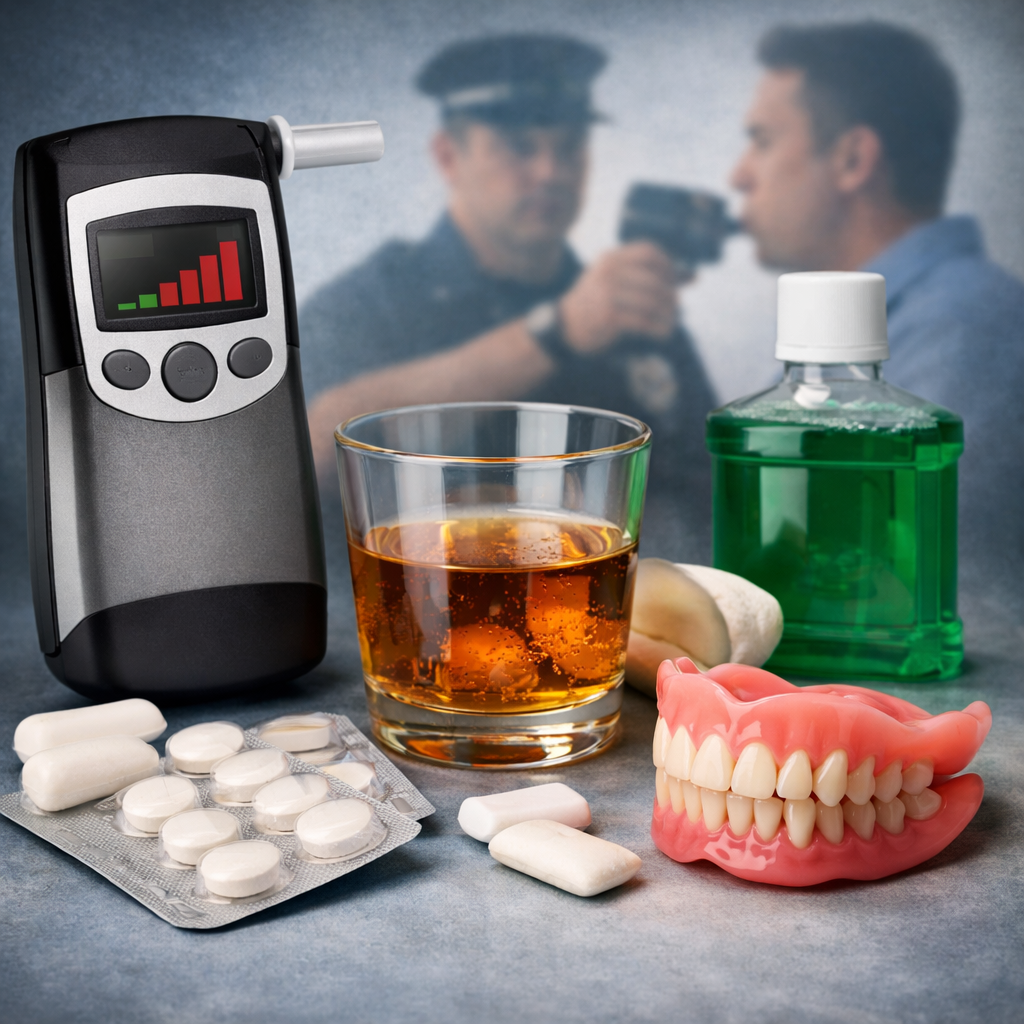
Breath testing instruments like the Intoxilyzer 9000 are designed to measure alcohol in deep lung air which is air from the alveoli of the lungs where gas exchange occurs between the blood and the breath. The instrument assumes that the alcohol it detects came from the lungs and uses that measurement to estimate blood alcohol concentration.
But if there is residual alcohol in the mouth, throat, or esophagus, the instrument cannot distinguish it from lung alcohol. It measures the total alcohol in the breath sample (lung alcohol plus mouth alcohol) and reports an artificially elevated result.
Sources of Mouth Alcohol
- Gastroesophageal reflux disease (GERD). GERD causes stomach contents, including alcohol-laden stomach gases, to travel back up through the esophagus. This reflux can be silent (the subject may not feel it happening) but it introduces alcohol into the airway that the breath test instrument will detect. GERD is extremely common, affecting approximately 20% of the adult population.
- Recent burping or belching. A burp or belch brings gas from the stomach into the mouth and throat. If you consumed alcohol, this gas contains alcohol vapor that will contaminate the next breath sample.
- Recent vomiting. Vomiting introduces stomach contents (including alcohol) into the mouth and esophagus, leaving residual alcohol that persists for an extended period.
- Dentures, dental work, and oral piercings. These create crevices and surfaces where alcohol-containing substances can be trapped and released slowly into the mouth over time.
- Mouthwash and breath sprays. Many mouthwash products (including Listerine) contain significant concentrations of alcohol. Breath sprays may also contain alcohol. Recent use of these products can leave residual alcohol in the mouth.
- Cough medicine and throat lozenges. Some cough syrups and lozenges contain alcohol that can remain in the mouth and throat after use.
- Chewing tobacco or smokeless tobacco. These products can trap alcohol-containing substances in the mouth.
The 15-Minute Observation Period
Texas law requires a 15-minute observation period before a breath test. During this period, the breath test operator is supposed to continuously observe the subject to ensure they do not eat, drink, smoke, vomit, belch, or put anything in their mouth. The purpose is to allow any residual mouth alcohol to dissipate before the test.
In practice, this observation period is frequently compromised:
- The officer is completing paperwork, operating the instrument, or attending to other tasks during the “observation” period
- The officer may not detect a silent GERD reflux event
- The officer may not notice a small, quiet burp or belch
- The officer may start the observation period over if they see an event but fail to note it in their report, creating questions about whether the full 15 minutes elapsed
Case Results
How Much Difference Can Mouth Alcohol Make?
Even a small amount of residual mouth alcohol can produce a dramatically elevated breath test result. Research has shown that a single GERD reflux event can elevate a breath test result by 0.02 to 0.08 g/dL or more which is easily enough to push a result from below 0.08 to above 0.08, or from below 0.15 to above 0.15. The effect is temporary (usually dissipating within 15–20 minutes), which is why the observation period exists. But if the observation period was not properly conducted, mouth alcohol contamination is a real and significant source of error.
How We Challenge Mouth Alcohol Contamination
- Review the officer’s observation period documentation for completeness and accuracy
- Investigate the defendant’s medical history for GERD, hiatal hernia, and other reflux conditions
- Examine whether the Intoxilyzer 9000’s slope detector (designed to identify mouth alcohol) functioned properly and what it recorded
- Present expert testimony on the prevalence and effects of GERD and other mouth alcohol sources
- Compare the breath test result to any available blood test result to identify discrepancies consistent with mouth alcohol contamination
Your DWI Defense Should Be Built on Science
At Deandra Grant Law, our forensic credentials give us the foundation to challenge the prosecution’s evidence at a scientific level. If you are facing DWI charges in Texas, contact us for a free, confidential consultation.
Call (214) 225-7117 or schedule an appointment online at texasdwisite.com.
Firm Accolades

Better Business Bureaus

D Magazine