Home »


Do You Need Legal Help?
As Seen On






"Deandra Grant Law fights hard for their clients and is always willing to go above and beyond. They are the best firm for DWI cases in DFW and beyond. Definitely hire them to represent you in any pending cases."
- P. Williams
"Deandra Grant made a tough situation so much better. She listened to my concerns and helped me so much with my case. I would recommend her to anyone needing legal services."
- M. Haley
"Deandra Grant Law handled my case with diligence and professionalism. Deandra Grant's reputation is stellar and now I know why. She has a team of individuals who provide quality service."
- N. Coulter

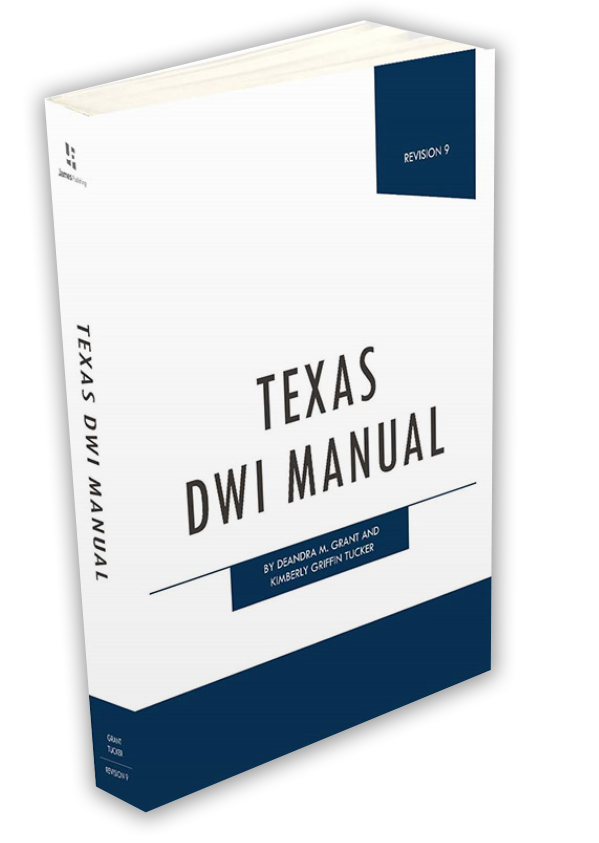
Texas DWI Manual
By Attorney Deandra Grant
Fighting DWI charges can present many challenges, not only for the defense, but prosecutors as well. This is why it is important to be armed with the necessary knowledge so you understand the DWI process.
Attorney Deandra M. Grant is the co-author of the Texas DWI Manual, offering legal advice to both clients and fellow attorneys.
Learn MoreDallas DWI with CDL Lawyers
A DWI arrest is a serious matter for anyone. For a CDL holder, it is a career-level event. Federal law (49 CFR § 383.51 and the associated Part 383 regulations, as implemented in Texas through Chapter 522 of the Transportation Code) requires a minimum one-year CDL disqualification on a first DWI-related offense, and a lifetime disqualification on a second. That disqualification follows the CDL holder whether the DWI happened in an eighteen-wheeler or in a personal pickup, and it cannot be avoided through the kinds of plea bargains that save a non-CDL driver’s license.
Defending a DWI for a CDL holder is not the same as defending a regular DWI. The goal is not just the criminal case. It is keeping the commercial driver’s license that makes a living. Deandra Grant Law represents CDL holders facing DWI charges in Dallas County. Call (214) 225-7117 to discuss your case.
Why CDL DWI Cases Are Different
Three features of federal CDL law make these cases distinct from regular DWI defense:
The 0.04 BAC Threshold — Only While Operating a CMV
A CDL holder operating a commercial motor vehicle is considered impaired at 0.04 BAC or greater under 49 CFR § 383.51(b) and § 392.5 which is half the 0.08 civilian threshold. Outside the CMV, the civilian 0.08 standard applies. A CDL holder who is stopped driving a personal car faces a DWI at 0.08, but that DWI still triggers the CDL consequences.
CMV or Non-CMV — Both Trigger CDL Disqualification
Under § 383.51(a)(3), a CDL holder is subject to federal CDL disqualification whether the DWI-related offense occurred while operating a commercial motor vehicle or a personal vehicle. This is the single point most frequently misunderstood. A DWI in a passenger car costs the CDL just as thoroughly as a DWI in a tractor-trailer.
No Masking — Deferred Adjudication Does Not Help
49 CFR § 384.226 prohibits states from masking CDL driver convictions. A Texas plea that produces deferred adjudication (which can keep a regular DWI off the final-conviction record under most circumstances) still counts as a conviction for federal CDL disqualification purposes. This is why conventional DWI plea strategy does not work on CDL cases, and why the defense has to be built around attacking the state’s case at trial or winning pretrial suppression.
CDL Disqualification Under 49 CFR § 383.51
First Major Offense
- One-year disqualification for a DWI, a refusal of testing, leaving the scene of an accident, using a motor vehicle to commit a felony (other than certain drug-distribution felonies), driving a CMV while the CDL is suspended/revoked/canceled, or causing a fatality through negligent operation.
- Three-year disqualification if the offense occurred while the CDL holder was operating a CMV transporting hazardous materials required to be placarded under the Hazardous Materials Regulations.
- Lifetime disqualification (not reducible to 10 years) for a first offense of using a CMV to commit a felony involving the manufacture, distribution, or dispensing of a controlled substance.
Second Major Offense
- Lifetime CDL disqualification for any second conviction of a major offense under Table 1 to § 383.51.
- After 10 years, a state may reinstate under § 383.51(a)(6) if the driver has voluntarily entered and successfully completed a state-approved rehabilitation program. The ten-year pathway exists but is not automatic; Texas administers it through DPS and requires specific documentation and evaluation.
What Counts as a “Major Offense”
Under 49 CFR § 383.51(b), Table 1 “major offenses” include:
- Being under the influence of alcohol as prescribed by state law;
- Being under the influence of a controlled substance;
- Having a BAC of 0.04 or more while operating a CMV;
- Refusing to take an alcohol test as required by state or federal law (implied consent);
- Leaving the scene of an accident;
- Using the vehicle to commit a felony;
- Driving a CMV when the CDL is revoked, suspended, canceled, or the driver is disqualified;
- Causing a fatality through the negligent operation of a CMV.
Under § 383.51(a)(4), convictions are counted separately even if one was in a CMV and the other in a non-CMV. A DWI in a personal car followed by a DWI in a CMV is a first offense plus a second offense, producing lifetime disqualification.
The Underlying Texas DWI Offense
The Texas criminal charge itself is prosecuted under the standard DWI statutes, with one additional wrinkle for CDL holders:
- Penal Code § 49.04 — the standard DWI statute. A first offense is a Class B misdemeanor (72 hours to 180 days, fine up to $2,000); Class A (up to 1 year, fine up to $4,000) if BAC is 0.15 or higher.
- Penal Code § 49.04(d) — the 0.15 BAC elevation to Class A misdemeanor, with mandatory ignition interlock as a bond condition under Code of Criminal Procedure Article 17.441.
- Penal Code § 49.04 combined with CDL operation — the state may charge standard DWI based on intoxication (0.08 BAC or loss of normal faculties), not the federal 0.04 CMV threshold. The 0.04 is a federal CDL-regulatory standard; the criminal charge in Texas still requires § 49.01 intoxication.
- Penal Code § 49.07 / § 49.08 — intoxication assault and intoxication manslaughter, if the driving caused serious bodily injury or death. Either charge produces felony exposure in addition to the CDL consequences.
- Texas Transportation Code § 522.081 — mirrors federal CDL disqualification periods and implements them at the state licensing level.
Collateral CDL Consequences
- FMCSA Drug and Alcohol Clearinghouse. Since January 2020, drug and alcohol test violations must be reported to the FMCSA Clearinghouse, where employers are required to query before hiring and annually for current drivers. A violation in the Clearinghouse can end a driving career even when the state criminal case is still pending.
- Employer notification. Under 49 CFR § 383.31, a CDL driver convicted of any traffic violation other than parking must notify the employer within 30 days. Under § 383.33, any driver’s license suspension, revocation, or cancellation must be reported by the end of the next business day.
- DAC (Drive-A-Check) report. Commercial driver employment history reports maintained by HireRight and other vendors track DWI arrests and convictions, and new employers routinely check them.
- Return-to-duty process. Under 49 CFR Part 40, Subpart O, a CDL driver with a drug or alcohol violation must complete a return-to-duty process with a DOT-qualified Substance Abuse Professional (SAP), including evaluation, education/treatment, a return-to-duty test, and follow-up testing for a minimum of one year.
- Insurance and employability. Even after any CDL disqualification ends, insurance and employer background reviews typically impose de facto hiring restrictions on drivers with DWI histories for years.
Related Blogs
How CDL DWI Cases Are Defended
Because deferred adjudication does not save the CDL, CDL defense is built differently. The objective is either a not-guilty verdict, a dismissal, or a reduction to a non-disqualifying offense that Texas courts will accept without triggering § 384.226’s masking prohibition.
Pretrial Suppression
Motions to suppress the stop, the arrest, and any warrant-based blood evidence are at the center of CDL defense. Every traffic stop requires reasonable suspicion; every arrest requires probable cause; every warrant requires a sufficient affidavit. Any of them, if successfully attacked, can end the case before the CDL consequences attach.
Forensic Challenges
Ethanol concentration is measured by headspace gas chromatography with flame ionization detection (GC-FID). Attack points include sample collection, preservative adequacy, chain of custody, calibration, column chemistry, and measurement uncertainty. On drug cases, LC-MS/MS protocols, active versus inactive metabolites, and correlation with impairment are all contestable.
SFST Challenges
Deandra Grant is a Standardized Field Sobriety Test instructor. She teaches the same curriculum the officers in your case were trained on and can identify administration errors that invalidate the results the state wants to rely on.
Reduction to a Non-Disqualifying Offense
Where a DWI conviction would trigger disqualification, a reduction to obstruction of a highway, reckless driving, or another non-disqualifying offense (negotiated with prosecutorial consent, based on the facts and the strength of the state’s case) can preserve the CDL. Whether such a reduction is available depends entirely on the case.
ALR Hearing
The 15-day ALR hearing request is critical. The ALR hearing produces an opportunity to cross-examine the arresting officer under oath before the criminal case is tried which, in a CDL case, often provides the critical factual material for later suppression motions.
Where Dallas County CDL DWI Cases Are Heard
Misdemeanor CDL DWI cases are filed in the Dallas County Criminal Courts at the Frank Crowley Courts Building, 133 N. Riverfront Boulevard. Felony CDL DWI cases (DWI 3rd, intoxication assault, intoxication manslaughter) are filed in the Dallas County Criminal District Courts at the same building. The ALR suspension proceeds on a separate administrative track through the State Office of Administrative Hearings.
Frequently Asked Questions
I was in my personal vehicle. Does the CDL still get disqualified?
Yes. Under 49 CFR § 383.51(a)(3), a CDL holder is subject to CDL disqualification for a DWI conviction whether the offense occurred in a commercial motor vehicle or in the driver’s personal vehicle. The CDL follows the driver, not the vehicle.
If I get deferred adjudication, does that save my CDL?
No. 49 CFR § 384.226 prohibits states from masking CDL driver convictions through deferred adjudication or similar mechanisms. For federal CDL purposes, a deferred adjudication still counts as a conviction. This is the single most important fact for any CDL holder considering a plea.
Is there any way to get a hardship or occupational license for my CDL?
No. Texas cannot issue any hardship license for CDL privileges during a federal disqualification period. An occupational or essential-need license cannot restore CDL privileges while the federal disqualification is in effect. Limited relief may be available for non-CDL (Class C) driving privileges under Chapter 521 of the Transportation Code, but the CDL remains disqualified.
Can I get my CDL back after a lifetime disqualification?
Potentially, under 49 CFR § 383.51(a)(6), after 10 years but only if the driver has voluntarily entered and successfully completed a state-approved rehabilitation program. The process runs through the Texas Department of Public Safety and requires specific documentation. The lifetime disqualification for a first offense of using a CMV to commit a controlled-substance-distribution felony is not subject to this ten-year reinstatement pathway.
Should I tell my employer about the arrest?
Under 49 CFR § 383.33, notification of any suspension, revocation, or cancellation is required by the end of the next business day. Notification of convictions is required within 30 days under § 383.31. Specifically what to disclose, and when, is a question to work through with counsel but the regulatory obligation to notify is not discretionary.
About Deandra Grant Law
Deandra Grant Law is a Texas criminal defense and DWI firm with offices in Dallas, Fort Worth, Allen, Denton, Waco, and Rockwall. Our DWI practice is built on the forensic science that drives these cases and on the understanding that CDL defense has different objectives than regular DWI defense.
Deandra M. Grant, Managing Partner
- More than 30 years in practice, focused on criminal defense and DWI
- Former prosecutor
- J.D.; M.S. in Pharmaceutical Sciences
- Graduate Certificate in Forensic Toxicology
- ACS-CHAL Forensic Lawyer-Scientist from the American Chemical Society
- Standardized Field Sobriety Test (SFST) Instructor
- Texas Super Lawyer since 2011
- Author of 17 law books including The Texas DWI Manual
- Executive Director, DUI Defense Lawyers Association (DUIDLA)
Douglas E. Huff, Partner
- ACS-CHAL Forensic Lawyer-Scientist
- Digital forensics and electronic evidence training
- Extensive DWI trial experience across North Texas
James Lee Bright, Of Counsel
- National federal criminal defense practice
- Admitted to all four Texas federal districts, the District of Columbia, the Fifth Circuit Court of Appeals, and the Supreme Court of the United States
Contact Our Dallas CDL DWI Attorneys
For a CDL holder, the goal of the defense is not just the criminal case. It is the license that pays the bills. A deferred adjudication that would satisfy most DWI defendants is the wrong answer. A dismissal, an acquittal, or a reduction to a non-disqualifying offense is the right one. Knowing which is realistic in any given case requires early investigation, aggressive pretrial work, and an honest assessment of the evidence.
Call Deandra Grant Law at (214) 225-7117 to schedule a consultation. We serve Dallas County and surrounding North Texas counties from our Dallas office.
Frequently Asked Questions: DWI with a CDL in Dallas, TX
Facing a DWI with a CDL arrest in Dallas, TX can be overwhelming, and you may have numerous questions about your situation and the legal process ahead. At Deandra Grant Law – Criminal & DWI Defense, we understand the importance of providing you with clear and accurate information. Here are some frequently asked questions about DWI with a CDL in Dallas, TX, along with expert answers from our experienced DWI with CDL Lawyers:
What is a DWI with a CDL, and how is it different from a regular DWI?
A DWI with a CDL, or Commercial Driver’s License Driving While Intoxicated, involves a professional driver with a CDL operating a commercial vehicle while under the influence of alcohol or drugs. The legal limit for commercial drivers is lower than that for non-commercial drivers, with a BAC (Blood Alcohol Concentration) of 0.04% or higher constituting a DWI with a CDL. The penalties for DWI with a CDL can be more severe due to the potential risks associated with operating large commercial vehicles.
Can I keep my CDL after a DWI arrest in Dallas, TX?
The possibility of retaining your CDL after a DWI arrest depends on the specific circumstances of your case and whether you are ultimately convicted. A DWI with a CDL conviction can lead to a disqualification of your CDL for a significant period or even a lifetime, depending on the number of prior offenses.
Should I refuse a breathalyzer or chemical test if I'm pulled over for a DWI with a CDL?
Refusing a breathalyzer or chemical test during a DWI with a CDL stop can have serious consequences, including an automatic CDL disqualification for one year. In Texas, there are implied consent laws, meaning that by obtaining a CDL, you have already agreed to submit to chemical testing when suspected of DWI.
Can I represent myself in court for a DWI with a CDL case?
While you have the right to represent yourself in court, it’s not recommended, especially for DWI with CDL cases. Defending against DWI with CDL charges requires specialized knowledge and experience in both DWI laws and CDL regulations. Having an experienced DWI with CDL Lawyer by your side can significantly improve your chances of achieving a favorable outcome.
How can a DWI with CDL Lawyer help with my case?
A skilled DWI with CDL Lawyer can provide expert legal guidance, build a robust defense strategy, and represent you in court proceedings. They will protect your rights, challenge evidence, negotiate with the prosecution, and work towards a positive outcome for your DWI with a CDL case.
Is it possible to have my DWI with CDL charges reduced or dismissed?
Every case is unique, and the potential for reducing or dismissing DWI with CDL charges depends on various factors. An experienced DWI with CDL Lawyer will carefully analyze the details of your arrest and explore all available defense strategies to pursue the best possible result for your case.
Client Reviews

“Deandra Grant Law – Criminal & DWI Defense handled my case with diligence and professionalism. Deandra Grant’s reputation is stellar and now I know why. She has a team of individuals who provide quality service.”
N. Coulter


(214) 225-7117
Experienced DWI Defense