


Do You Need Legal Help?

"Deandra Grant Law fights hard for their clients and is always willing to go above and beyond. They are the best firm for DWI cases in DFW and beyond. Definitely hire them to represent you in any pending cases."
- P. Williams
"Deandra Grant made a tough situation so much better. She listened to my concerns and helped me so much with my case. I would recommend her to anyone needing legal services."
- M. Haley
"Deandra Grant Law handled my case with diligence and professionalism. Deandra Grant's reputation is stellar and now I know why. She has a team of individuals who provide quality service."
- N. Coulter
As Seen On





A Fighting Team On Your Side
Since 1994 when our doors opened, Deandra Grant Law has helped thousands of clients get their DWI charges reduced or dismissed. We're ready to fight on your behalf.

Managing Partner

Partner & Criminal Division Chief

Criminal Division Senior Associate

Criminal Division DWI Trial Chief

Immigration Division Chief & Criminal Division Deputy Chief

Criminal Division Associate

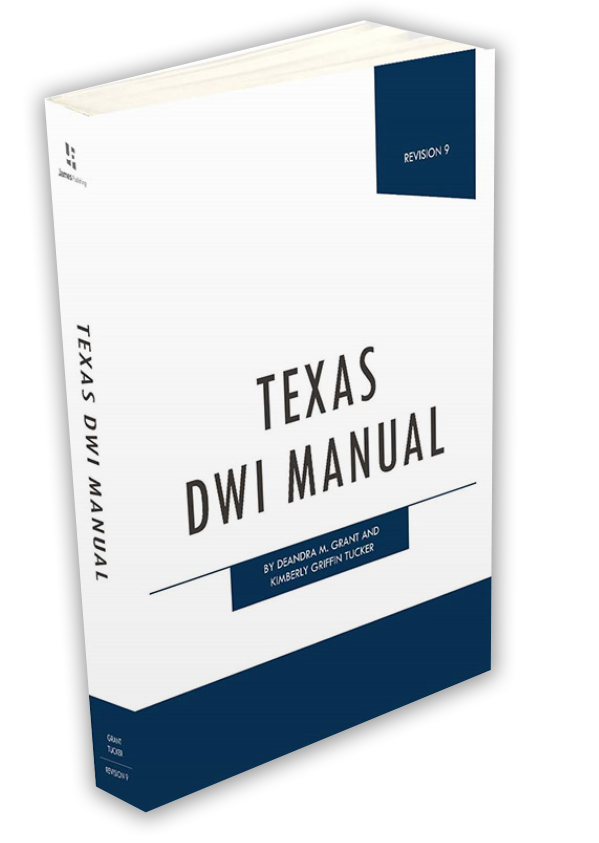
Texas DWI Manual
By Attorney Deandra Grant
Fighting DWI charges can present many challenges, not only for the defense, but prosecutors as well. This is why it is important to be armed with the necessary knowledge so you understand the DWI process.
Attorney Deandra M. Grant is the co-author of the Texas DWI Manual, offering legal advice to both clients and fellow attorneys. Fighting DWI charges can present may challenges, not only for the defense, but prosecutors as well. This is why it is important to be armed with the necessary knowledge so that you understand the DWI criminal process.
Learn MoreDallas DWI Attorneys
Legal Guidance When It Matters Most
If you’ve recently been arrested for Boating While Intoxicated (BWI) in Dallas, TX, you may be feeling overwhelmed and uncertain about what lies ahead. At Deandra Grant Law, we understand the gravity of the situation you’re facing, and we are here to offer you the skilled legal defense you need during this challenging time.
Empathy in the Face of Adversity
Finding yourself on this page is not a journey you expected to take, and we want you to know that you are not alone. Our dedicated Dallas Boating While Intoxicated Lawyers are here to be your allies, providing the guidance and support you need to navigate the legal process and protect your future.
Understanding Boating While Intoxicated Charges
Boating While Intoxicated involves operating a watercraft while under the influence of alcohol or drugs. In Texas, the legal limit for operating a watercraft is a BAC (Blood Alcohol Concentration) of 0.08% or higher. BWI charges can have severe consequences, including fines, potential jail time, and the suspension of your boating privileges. Here are the general penalties for a first-time BWI offense:
First Offense BWI:
Class B Misdemeanor: A first-time BWI offense is typically classified as a Class B misdemeanor, punishable by up to 180 days in jail and/or a fine of up to $2,000.
Enhanced Penalties:
If a person’s blood alcohol concentration (BAC) is 0.15% or higher at the time of arrest, the penalties can be enhanced, resulting in a Class A misdemeanor charge. This carries a potential jail sentence of up to one year and/or a fine of up to $4,000.
Other Consequences:
In addition to criminal penalties, a person convicted of BWI may face administrative penalties, such as the suspension of their boating privileges and the requirement to complete an alcohol education or intervention program.
It’s important to note that subsequent BWI offenses and certain aggravating factors can lead to more severe penalties, including increased fines and longer jail sentences.
The Impact of BWI in Dallas, TX
Boating is a popular recreational activity in Dallas, with countless individuals enjoying the beautiful lakes and rivers the city has to offer. Unfortunately, alcohol-related boating incidents can disrupt the peace and safety of these waters. In 2020, the Texas Parks and Wildlife Department reported 174 alcohol-related boating accidents, leading to 52 injuries and 26 fatalities in the state.
The Importance of Hiring a Dallas Boating While Intoxicated Lawyer
When facing BWI charges, having an experienced Boating While Intoxicated Lawyer in Dallas, TX, by your side can make all the difference. At Deandra Grant Law, we have a deep understanding of the laws and regulations surrounding BWI offenses, and we are prepared to mount a strong defense on your behalf.
How Deandra Grant Law Can Help: Pursuing the Best Possible Outcome
Our team will carefully review the details of your arrest, examine the evidence, and explore all potential defense strategies to pursue a positive outcome for your case. We understand the unique challenges that BWI cases present, and we are committed to protecting your rights and preserving your future.
Choose Deandra Grant Law: Your Trusted Defense Against Boating While Intoxicated Charges
If you find yourself facing Boating While Intoxicated (BWI) charges in Dallas, TX, you may feel like you’re adrift in stormy seas. The legal process can be daunting and confusing, but you don’t have to navigate it alone. At Deandra Grant Law, our experienced team of Dallas Boating While Intoxicated Lawyers is here to be your lifeline, providing expert legal guidance and unwavering support during this challenging time.
Empowering You with Knowledge
When it comes to BWI charges, knowledge is power. We believe that informed decisions lead to the best outcomes. That’s why we offer free consultations to those facing BWI charges in Dallas, TX. During this initial meeting, we’ll listen to your side of the story, assess the details of your arrest, and provide you with a clear understanding of your rights and options. Our compassionate team will guide you through the legal landscape, empowering you with the knowledge you need to make informed choices about your defense.
Serious Consequences of BWI Convictions
A conviction for Boating While Intoxicated can have serious and lasting consequences. You may face substantial fines, potential jail time, and the burden of a criminal record. Even more, the loss of your ability to operate a boat can dramatically impact your lifestyle and livelihood. Our goal is to help you avoid these harsh outcomes and chart a course towards a positive outcome for your case.
Expert Navigation through the Legal Waters
The legal process can be intricate and challenging to navigate, especially when it comes to BWI cases. At Deandra Grant Law, we have the experience and expertise to skillfully guide you through the complex court and administrative proceedings. Our team of dedicated Dallas Boating While Intoxicated Lawyers will meticulously analyze the evidence, challenge the prosecution’s case, and craft a robust defense tailored to your unique circumstances.
Your Best Chances for a Successful Outcome
At Deandra Grant Law, our commitment to your success is unwavering. We understand that each BWI case is unique, and we will work tirelessly to determine the most effective strategy for your defense. Our goal is to secure a positive outcome for your case, whether that means negotiating for reduced charges, pursuing an acquittal, or exploring alternative resolutions.
Related Blogs

Understanding DWI Laws for CDL Holders in Texas
Driving while intoxicated (DWI) is a serious offense with severe repercussions for anyone found guilty. [...]

Understanding DWI Charges in Texas
Driving while intoxicated (DWI) is a serious offense in Texas, carrying severe penalties that can [...]

What to Do If You’re Pulled Over for a Suspected DWI in Texas
Driving in Texas can be a liberating experience, with its sprawling highways and scenic routes. [...]

Navigating First-Time DWI Offenses in Texas
Facing a first-time DWI charge in Texas can be overwhelming and daunting. The legal system’s [...]

Navigating Field Sobriety Tests in Texas DWI Cases
Driving while intoxicated (DWI) charges in Texas are serious legal matters that can have significant [...]

DWI Probation Rules in Texas
Driving while intoxicated (DWI) is a serious offense in Texas, carrying significant consequences. However, for [...]

Understanding DWI in Texas: What You Need to Know
Driving while intoxicated (DWI) is a serious offense that can have significant legal consequences in [...]

Understanding DWI vs. DUI in Texas: Navigating Legal Waters
Are you facing the daunting reality of DWI or DUI charges in Texas? Understanding the [...]
Avoiding Pitfalls: Mistakes to Steer Clear of After a Boating While Intoxicated Arrest
If you’ve recently been arrested for Boating While Intoxicated (BWI) in Dallas, TX, you may feel overwhelmed and uncertain about what steps to take next. Navigating the legal waters after a BWI arrest can be challenging, but avoiding common mistakes is essential to protecting your rights and building a strong defense. At Deandra Grant Law, our experienced team of Dallas Boating While Intoxicated Lawyers is here to be your compass, providing valuable advice to help you avoid missteps and chart a course towards a successful resolution.
Delaying Legal Representation: Anchoring Your Defense Early
One of the most critical mistakes to avoid after a BWI arrest is delaying the acquisition of legal representation. The sooner you consult with an experienced Boating While Intoxicated Lawyer, the better equipped you’ll be to protect your rights and build a solid defense. At Deandra Grant Law, we offer free consultations to provide you with the opportunity to discuss your case without delay.
Providing Incriminating Statements: Guarding Your Words
It’s essential to be cautious about what you say to law enforcement officers and others after a BWI arrest. Anything you say may be used against you in court. It is advisable to exercise your right to remain silent and avoid providing any potentially incriminating statements until you have legal representation.
Failing to Preserve Evidence: Securing Your Defense
Preserving evidence is crucial to building a robust defense. Unfortunately, evidence can disappear or become compromised over time. Working with our skilled Dallas Boating While Intoxicated Lawyers at Deandra Grant Law ensures that critical evidence is gathered and preserved promptly, increasing your chances of a favorable outcome.
Overlooking Administrative Deadlines: Navigating the Process
A BWI arrest can lead to both criminal and administrative proceedings, and it’s crucial not to overlook important deadlines. Our experienced team will guide you through the administrative process and ensure all necessary paperwork is completed correctly and on time.
Assuming Guilt: Asserting Your Innocence
Feeling overwhelmed by a BWI arrest can lead to assumptions of guilt. However, it’s essential to remember that you are innocent until proven guilty. Our team at Deandra Grant Law will tirelessly investigate the circumstances of your arrest, challenge the evidence, and assert your innocence in pursuit of a positive outcome.
Frequently Asked Questions About Boating While Intoxicated (BWI) in Dallas, TX
Facing a Boating While Intoxicated (BWI) arrest in Dallas, TX, can be overwhelming and may leave you with many questions about your legal situation. At Deandra Grant Law, we understand the uncertainty you may be experiencing, and we’re here to provide you with the answers you need to make informed decisions about your defense. Below are some frequently asked questions we often receive from individuals recently arrested for BWI:
What is Boating While Intoxicated (BWI) in Texas?
Boating While Intoxicated (BWI) refers to operating a watercraft while under the influence of alcohol or drugs. In Texas, the legal limit for BWI is a Blood Alcohol Concentration (BAC) of 0.08% or higher.
What are the Penalties for BWI in Dallas, TX?
The penalties for BWI in Dallas, TX, can include fines, potential jail time, and the suspension of boating privileges. A first-time BWI offense is typically classified as a Class B misdemeanor, but the penalties can be enhanced for higher BAC levels.
Should I Hire a BWI Lawyer for My Case?
Yes, hiring a skilled and experienced Boating While Intoxicated Lawyer is essential to protect your rights and build a strong defense. A BWI attorney can help you understand your legal options, gather evidence, and navigate the complex legal process.
What Can a BWI Lawyer Do for Me?
A dedicated BWI Lawyer can investigate the circumstances of your arrest, challenge the evidence, and work to assert your innocence or negotiate for reduced charges. They will guide you through both criminal and administrative proceedings and strive to achieve a positive outcome for your case.
Can I Refuse a Breathalyzer Test During a BWI Stop?
While you have the right to refuse a breathalyzer test, doing so can have consequences, including the suspension of your boating privileges. It’s essential to consult with a BWI attorney before making such a decision.
What if I Have Prior BWI Convictions?
If you have prior BWI convictions, the penalties for subsequent offenses can be more severe. It becomes even more crucial to seek the counsel of an experienced BWI Lawyer to build a robust defense.
How Long Do BWI Cases Typically Last?
The duration of a BWI case can vary based on various factors, including the complexity of the case and the court’s caseload. A BWI case may take several months to resolve.
Can I Expunge a BWI Conviction from My Record?
In Texas, BWI convictions cannot be expunged from your record. It’s vital to work with a BWI attorney to explore possible alternatives and defend against the charges to avoid a permanent criminal record.
Boating While Intoxicated Client Story
This client story is for educational purposes only.
In the wake of an unforgettable summer afternoon on the tranquil waters of Lake Ray Hubbard, Roger’s life was forever changed. The sun was beginning its gentle descent, painting the sky with shades of orange and pink as he cruised along, cherishing moments of bliss with his loved ones. Little did he know that his idyllic voyage would soon take a dark turn.
As the sun dipped below the horizon, laughter and joy filled the air. Unbeknownst to Roger, the laughter would soon be replaced by the sounds of uncertainty and fear. As they docked the boat, a group of law enforcement officers stood waiting, their stern expressions shrouded in shadows.
The officers approached Roger, claiming they suspected he had been operating the watercraft under the influence. Roger’s heart sank, disbelief and confusion clouding his mind. He had only enjoyed a couple of beers during their outing, and he certainly didn’t feel intoxicated. But as the officers conducted their tests, doubt and fear crept in.
In the days that followed, Roger found himself entangled in a legal whirlwind, facing charges of Boating While Intoxicated. The joyous memories of that summer day now mingled with feelings of anxiety and despair. With the prospect of fines, jail time, and the loss of his boating privileges looming overhead, Roger felt like he was adrift in a sea of uncertainty.
In his darkest hour, a glimmer of hope emerged. A friend recommended seeking the counsel of Makenzie Zarate at Deandra Grant Law, a beacon of light in the realm of legal defense. From their first meeting, Makenzie’s genuine compassion and unwavering dedication to justice shone through. She listened intently to Roger’s story, leaving no detail unexplored, and assuring him that he was not alone in this storm.
With Makenzie Zarate by his side, Roger found renewed strength and a sense of purpose. Throughout the legal journey that lay ahead, Makenzie served as his steadfast guide, navigating the complexities of the legal system with expertise and grace. She meticulously examined the evidence, challenged any discrepancies, and assembled a formidable defense to protect Roger’s rights.
As the trial approached, Roger felt a mix of nerves and hope. Makenzie’s confidence in his innocence became a source of comfort, filling him with the belief that justice could prevail. The trial was an emotional rollercoaster, but
Makenzie’s unwavering determination never faltered.
Finally, the moment of truth arrived. Makenzie’s persuasive arguments, coupled with her mastery of the law, presented a compelling case for Roger’s innocence.
The jury listened intently, weighing the evidence presented before them.
In the end, justice prevailed. The jury delivered a verdict of “Not Guilty,” and Roger’s heart soared with relief and gratitude. He had weathered the storm, and the sun began to rise once again in his life.
Contact Deandra Grant Law for Skilled Boating While Intoxicated Defense in Dallas, TX
If you or a loved one has recently been arrested for Boating While Intoxicated in Dallas, TX, navigating the legal waters ahead can be daunting. At Deandra Grant Law, we understand the challenges you may be facing and are here to offer our unwavering support and expert legal guidance.
Our team of experienced Boating While Intoxicated Lawyers is dedicated to protecting your rights and pursuing a positive outcome for your case. With a deep understanding of Texas DWI laws and a track record of successful defense strategies, we are prepared to navigate the complexities of your BWI case.
At Deandra Grant Law, we know that every case is unique, and we approach each one with empathy and compassion. We offer free consultations to discuss the details of your Boating While Intoxicated charge, answer your questions, and provide an honest assessment of your legal options.
Striving for the Best Possible Outcome
Facing a BWI charge can be overwhelming, with potential consequences that may impact your future and freedom. Our team will work tirelessly to build a strong defense, challenge the evidence, and advocate for your innocence. Our ultimate goal is to achieve a positive outcome for your case, protecting your rights and securing your peace of mind.
Contact Deandra Grant Law Today
Don’t face the legal storm of a Boating While Intoxicated charge alone. Our experienced team at Deandra Grant Law is here to stand by your side, providing the legal expertise and support you need during this challenging time. Take the first step towards securing your future by contacting us for a free consultation.
Client Reviews

“Deandra Grant Law handled my case with diligence and professionalism. Deandra Grant’s reputation is stellar and now I know why. She has a team of individuals who provide quality service.”