
Magazine Marks Under Scrutiny

A Texas Forensic Science Commission panel says matching cartridges to the same magazine, without the magazine, is not supported by the science.
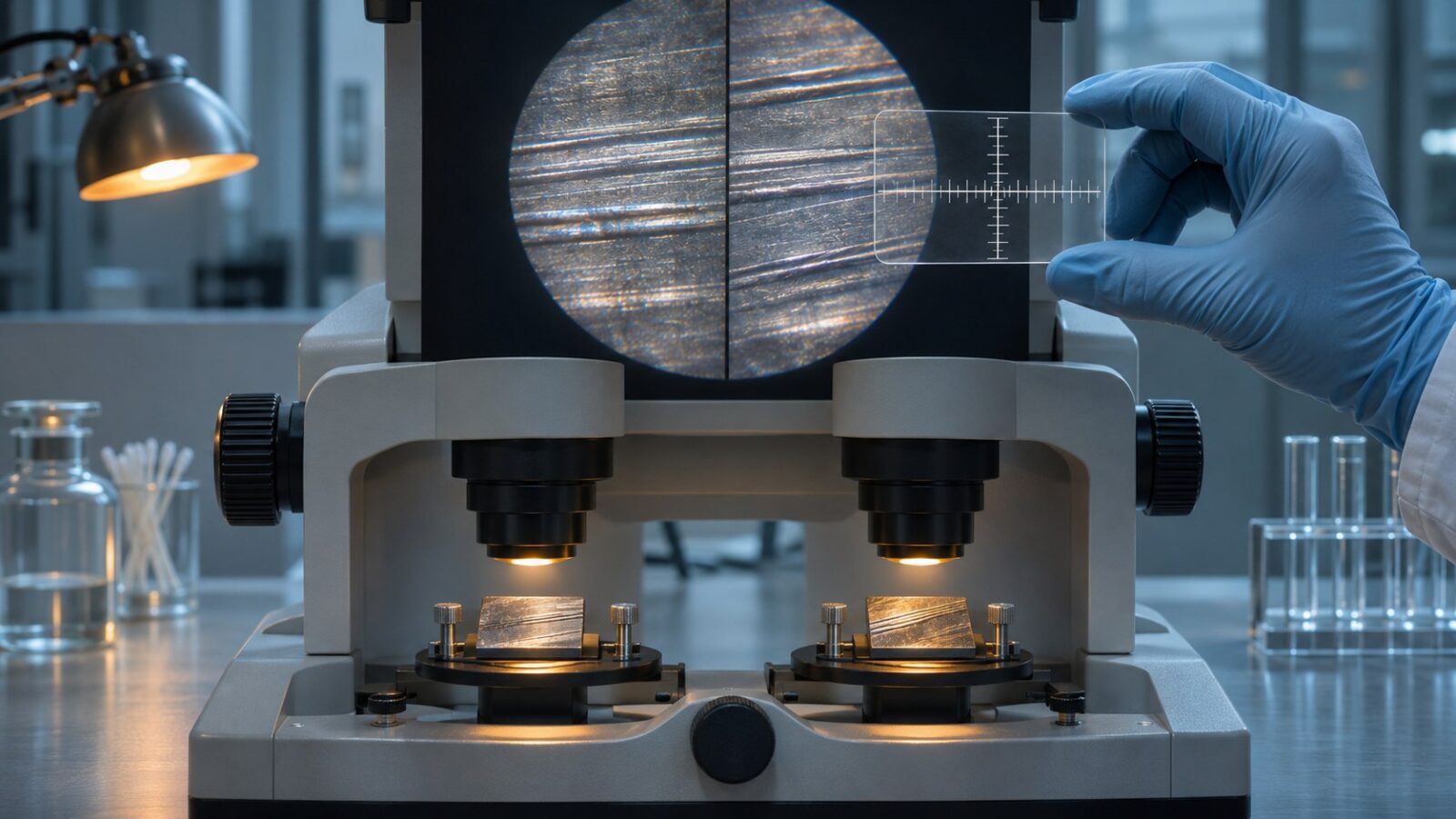
A Death Penalty Case and a Mark Nobody Could Check
A panel of the Texas Forensic Science Commission has proposed finding that a type of firearms evidence used in a 1999 capital murder trial is not supported by science.
The case involved Charles Mamou, who was convicted and sentenced to death in the 1998 killing of Mary Carmouche in Houston. A Houston Police Department firearm and toolmark analyst testified that markings on an unfired cartridge found at the scene showed it had passed through the same magazine as fired cartridge casings recovered from a separate scene linked to Mamou.
No gun was ever recovered in the case. Neither was the magazine. The entire comparison rested on marks on the cartridges themselves.
The North Texas Federal Public Defender’s Office brought the matter to the Commission as Complaint 25.77, which the Commission’s docket lists against both the Houston Police Department and the Houston Forensic Science Center. A three member investigative panel met on May 27, 2026 to go through it, and the minutes of that meeting are now public. The panel was Dr. Jeffrey Barnard, who presided, Mark Daniel and Dr. Patrick Buzzini.
What a Magazine Mark Actually Is
A magazine is the spring loaded box that holds cartridges and feeds them into a gun. Its metal lips scrape each cartridge on the way in and on the way out. Those scrapes are magazine marks.
This is not the kind of firearms evidence most people have heard about. The marks jurors usually hear about come from the gun itself: the dent a firing pin leaves on the primer, the impression of the breech face, the scratches from the extractor and ejector. Those marks have been studied for decades and have published validation research behind them, though that research has problems of its own.
Magazine marks are different. They come from a separate piece of equipment, one that is cheap, mass produced, and easily swapped between guns. An examiner who compares magazine marks is not saying two cartridges came from the same gun. The claim is narrower and stranger: that two cartridges passed through the same box.
That claim has appeal for investigators, because it can appear to tie one crime scene to another without anyone ever finding a weapon. In the Mamou case it did exactly that.
Why the Panel Said the Science Is Not There
The panel’s review turned up almost no published research. Staff reported that only two or three relevant articles exist in the journal of the Association of Firearm and Tool Mark Examiners, the main professional publication in the field.
What little research exists is not encouraging. A 2001 study concluded that magazine marks carry limited information and should be examined with extreme caution, because of how magazines are manufactured. A 2006 study found that examiners could not tell three consecutively manufactured magazines apart, and that marks they took for unique accidents of wear were actually features shared across the whole production run.
The panel then listed what the field does not have:
- No study isolates magazine marks as the only feature compared and reports how often examiners get it right or wrong
- No error rates, and no measures of whether results can be repeated or reproduced
- No data showing whether a given mark is rare or common across the millions of magazines in circulation
- No way to test whether a different magazine would leave similar marks, once the magazine itself is missing
That last point matters most in a case like Mamou’s. If you cannot produce the magazine, you cannot run the obvious test, which is to see whether some other magazine makes the same marks.
Dr. Buzzini, a forensic science professor, made the sharper version of the argument. The missing magazine is not really the problem. The problem is that nobody has ever established what counts as a match in the first place, and twenty years of an examiner’s personal experience is no substitute for measured data on how rare a mark actually is. He drew a line worth borrowing: magazine marks may be useful for investigative purposes, the way a database hit points police somewhere, and that is a different thing from an opinion offered to a jury as proof. Dr. Barnard made a related point about the Mamou comparison in particular, which stacked several unsupported steps on top of each other by comparing a fired cartridge to an unfired one with neither weapon nor magazine in hand.
The finding the panel proposed for its final report reads as follows:
A positive source-level identification of two cartridge cases having been cycled through the same specific magazine, based solely on magazine marks and without the magazine, is not currently supported by scientific literature or validation studies.
Texas Has Seen This Technique Before
Here is what the coverage of the Mamou complaint has missed. Texas has a published decision on this exact technique, and it has been on the books since 2002.
In Sexton v. State, 93 S.W.3d 96 (Tex. Crim. App. 2002), a Bexar County firearm and toolmark examiner testified that magazine marks tied twenty-four live rounds found in the defendant’s apartment to fired cartridge cases from the scene of an aggravated assault. The magazine was never recovered there either. The examiner told the court that magazine marks are unique to a magazine, “like a fingerprint,” and that if two cartridge cases share the same mark, one could say “with one hundred percent certainty” that they had been cycled through the same magazine. He also acknowledged that this was the first time he had been asked to make an identification using only magazine marks.
The Court of Criminal Appeals granted review “to determine whether the expert’s testimony met the reliability requirement in Kelly v. State,” and concluded that it did not. It reversed the judgment of the court of appeals and sent the case back to that court for a harm analysis, so what the opinion settled was the admissibility of the technique rather than the outcome of Sexton’s own case.
The reasoning: The court found that the examiner’s assertion was contradicted by the literature, which says these marks may allow an examiner to connect cartridge cases. The only literature explaining when that is possible, the court said, requires that the examiner possess knowledge of the manufacturing process of the tool surface and have the tool available for creating test toolmarks. Neither condition was met. The magazine was never found, so no test marks could be made, and the examiner never said whether he knew anything about how the magazine had been manufactured.
The opinion records one more detail that shows how loose the comparison was. The examiner could not say whether all twenty-four rounds had been in a single magazine or half in one and half in a second, because some magazine designs leave one mark on half the shells and a different mark on the other half.
The ground the court agreed to review is worth quoting, because it frames the question the same way the Commission panel would frame it twenty-four years later. The court took the case to decide whether admitting magazine marking identification of unfired cartridge cases, in the words of the granted ground, “without any other supporting toolmark examination,” sets a precedent for the admission of unreliable expert testimony.
One caution on how far the case reaches. The court did not hold that magazine marks are categorically inadmissible. It said the underlying theory of toolmark examination could be reliable in a given case, but that on this record the State failed to produce evidence that the technique applied here was valid. That is a failure of proof, which leaves the State free to try again with better support. What the Commission panel’s 2026 review establishes is how little better support there is to be had.
Compare that to what the Commission panel found twenty-four years later and the two line up almost exactly. The court in 2002 identified the two things an examiner needs. The panel in 2026 reported that the validation data to support the practice still does not exist. In between, a man was sentenced to death in a case that used the technique.
The Paperwork Problem
Separately from the science, the panel found that the 1999 case file cannot be reviewed at all.
There were no photographs of the marks. There were no detailed analytical notes. What survives in the technical record is a set of conclusions with nothing underneath them. The panel observed that under modern standards, that failure by itself would make any meaningful review of the analyst’s conclusions impossible.
This is a problem no matter what you think of the analyst. If the file holds only a conclusion, then nobody can check the work. Not another examiner, not a defense expert, not a court years later. The jury that heard the testimony in 1999 was asked to take the result on trust, and so is everyone who has looked at the case since.
What Texas Labs Do With Magazine Marks Today
The panel asked around. The answers show a field that has already moved away from the practice at issue in Mamou’s trial.
- Houston Police Department. Does not perform magazine mark comparisons at all.
- Tarrant County. Permits them only when the result is replicated using test cartridges from the actual magazine.
- Austin Police Department. Rarely used as the sole basis for an identification, typically used alongside firing pin and breech face marks.
The Tarrant County rule is the interesting one for North Texas readers, and it is not a coincidence. It is Sexton written into a laboratory procedure: you may reach this kind of conclusion only if you have the magazine in hand and can show your work by running cartridges through it. It is also the opposite of what happened in the Mamou case.
The complaint itself also came out of North Texas, filed by the federal public defender’s office that covers the Northern District.
If This Kind of Evidence Shows Up in Your Case
Most people reading this will never see a magazine mark comparison. It is a narrow technique, and the Mamou matter reaches back to 1999. But the panel’s reasoning travels further than the technique does.
A few things are worth knowing.
First, there is now a record. When a state agency whose job is overseeing forensic science says a comparison has no validation data behind it, that statement is available to anyone whose case involves the same comparison. It is no longer just a defense expert’s opinion against a state analyst’s, and the Commission adopted these panel minutes at its July 31, 2026 meeting, which puts the panel’s account in the agency’s own record rather than in a working document. The Commission exists under Article 38.01, and Article 38.35 ties the admissibility of forensic analysis to laboratory accreditation, so what the Commission says about a method is not a stray opinion.
Second, there is a real difference between evidence used to support other evidence and evidence standing on its own. The panel was careful about this. It said magazine marks are genuine, observable tool marks that can play a corroborating role next to stronger marks from the gun itself. What it rejected was treating them as enough, by themselves, to declare a match. That is also the distinction between an investigative lead and an opinion a jury hears.
Third, the absence of documentation is its own issue. If a lab report states a conclusion and the file behind it holds no photographs and no notes, that is worth asking about regardless of the discipline involved. It applies to blood alcohol testing and drug analysis as much as to firearms, and Article 39.14, the Michael Morton Act, is how you ask.
Fourth, where a conviction already rests on a technique the science has since undercut, Article 11.073, the junk science writ, is the vehicle. We cover how it works in our post on arson convictions.
If you think forensic evidence in your case rests on a technique like this, the time to raise it with your attorney is early, while there is still room to have an expert look at the underlying file. Nothing here predicts an outcome in any particular case.
What Happens Next
What exists today is a set of investigative panel minutes, not an adopted Commission report. The panel voted to have staff draft a final report, send it to the statewide firearms examiner working group for review, and bring it to the Commission’s quarterly meeting on July 31, 2026.
That is where it was headed, and the minutes of that July 31, 2026 meeting, which the Commission posted after its October meeting, show where it actually got. The Commission adopted the May 27 panel minutes. It did not adopt a final report. Instead it directed staff to retain an outside firearms and toolmarks subject matter expert to work on the report, which is the best available explanation for why no report has issued. At the Commission’s next quarterly meeting on October 23, 2026, Complaint 25.77 appeared again, as an update on the investigative panel rather than as a report up for a vote. As of early November 2026 no final report in Complaint 25.77 appears on the Commission’s investigative reports page, and the minutes of the October 23, 2026, meeting have not been posted. The proposed finding quoted above is still a proposal.
The October agenda also carried something new: Complaint 26.74, filed by the Federal Public Defender Office for the Northern District of Texas against the Houston Forensic Science Center, again in firearms and toolmarks. Whether it touches the same ground is not public yet.
The panel also limited what it was doing. It said the scope of the investigation is reliability and best practices, and that given the age of the underlying case it is not investigating whether any individual analyst was professionally negligent. So this is a review of a method, not a disciplinary proceeding against a person.
One more detail from the minutes. Houston Police Department has located the actual cartridge cases from both crime scenes, and they are available for re-examination if the parties or a court decide to pursue it.
We track the Commission’s docket every quarter in our Forensic Science Commission Dispatch, and we will update this post when the final report is published.
If you are facing a Texas case built on firearms or toolmark evidence, our firm can talk with you about the specific facts.
Deandra Grant is the managing partner of Deandra Grant Law, a Texas DWI and criminal defense firm with offices across Dallas-Fort Worth and Central Texas. She holds a master’s degree in pharmaceutical science and a graduate certificate in forensic toxicology, and she and her team challenge forensic evidence throughout the region.
Further Reading
- Texas Forensic Science Commission, investigative panel meeting minutes, Complaint No. 25.77 (May 27, 2026).
- Texas Forensic Science Commission, July 31, 2026 meeting agenda (item 9, final report in Complaint 25.77 up for possible adoption) and October 23, 2026 meeting agenda (item 8, update on the investigative panel; new Complaint 26.74).
- Texas Forensic Science Commission, July 31, 2026 quarterly meeting minutes (adoption of the May 27, 2026 investigative panel minutes; direction to staff to retain a firearms and toolmarks subject matter expert in Complaint 25.77), posted after the October 23, 2026 meeting.
- Sexton v. State, 93 S.W.3d 96 (Tex. Crim. App. 2002) (magazine mark identification failed the reliability requirement where the examiner lacked the magazine and did not establish knowledge of its manufacture; judgment of the court of appeals reversed and remanded for a harm analysis).
- Kelly v. State, 824 S.W.2d 568 (Tex. Crim. App. 1992) (the Texas scientific reliability standard).
- Tex. Code Crim. Proc. art. 38.01 (Forensic Science Commission); art. 38.35 (accreditation and admissibility); art. 39.14 (Michael Morton Act); art. 11.073 (relief based on changed or discredited science).
- Related on this site: firearms and toolmark matching; Texas’s junk science writ; and our quarterly Forensic Science Commission Dispatch.
This post is an informational synthesis for educational purposes and is not legal advice. The panel’s finding described here is a proposal and has not been adopted by the Texas Forensic Science Commission. The panel stated that it is not investigating individual professional negligence, and nothing here is offered as a finding about any analyst. Charles Mamou’s conviction and sentence stand. Anyone facing charges should consult a licensed Texas attorney about the specific facts of their case.
Which county your case is filed in changes how it is charged, who prosecutes it, and which court hears it.
Deandra M. Grant, JD, GC, MS, ACS-CHAL Forensic Lawyer-Scientist
She holds a Master of Science in Pharmaceutical Science and a Graduate Certificate in Forensic Toxicology, both from the University of Florida. She is the author of The Texas DWI Manual and has defended Texas DWI cases since 1994.
Charged With a Crime?
Whatever you're facing, a DWI or any criminal charge, the sooner you have a forensic-trained team on it the more we can do. Tell us what happened and we'll review your options, at no cost and no obligation. Intake answers 24/7, and if your case is one we can take on, we schedule a free consultation with an attorney.
Request a Free Case Evaluation
Tell us what happened. We'll respond as soon as possible.