DismissedApr 2026
Charge
DWI
Dallas County Pre-Trial

Deandra M. Grant: former Dallas County prosecutor, 30+ years of DWI defense, author of The Texas DWI Manual, ACS-CHAL Forensic Lawyer-Scientist, Texas Super Lawyers 2026, D Magazine Best Lawyers in Dallas 2026. Her firm defends every Dallas County DWI and drunk driving charge, from first offense to felony, and challenges the State's blood evidence at the chemistry level.
Intake answers 24/7 · Case review at no cost · You have 15 days from the notice of suspension to request your ALR hearing
Tell us what happened. Our intake team reviews every message.
No cost. No obligation. Confidential.








Every case gets forensic-level attention. These are recent outcomes for people facing DWI charges in Dallas County.
Meet our trial teamPast results do not guarantee a similar outcome. Every case is fact-specific. Client names and identifying details have been omitted for privacy.
Deandra Grant Law defends people charged with DWI in Dallas and throughout Dallas County. In Texas the adult charge is DWI, even if you’d call it drunk driving or a DUI; DUI is the separate charge Texas uses for drivers under 21. We handle every level of the offense, from a first-offense DWI to high-BAC, repeat, and felony charges, including DWI with a child passenger, intoxication assault, intoxication manslaughter, and drugged driving. Our Dallas office is at 3300 Oak Lawn Avenue in Oak Lawn, eight minutes from the Frank Crowley Courts Building. Call (214) 225-7117 any hour.
A DWI charge is not a conviction, and the evidence behind it is rarely as solid as it looks. Our Texas DWI attorneys have tried more than 500 cases to verdict and built their reputation on the science, led by Deandra M. Grant, a former Dallas County prosecutor and ACS-CHAL Forensic Lawyer-Scientist who wrote The Texas DWI Manual and trains other DWI attorneys. That matters more in Dallas than almost anywhere. The county tests blood at its own SWIFS lab rather than the state DPS lab, which means its methods, calibration records, and analysts can be examined and challenged on their own terms.
Getting started costs nothing. Call or schedule online to talk through what happened and understand your options. The sooner we start, the more we can protect, and in Texas you have just 15 days from the notice of suspension to request the hearing that keeps your license.
It starts when you receive the notice of suspension, not automatically at arrest. In a blood case that notice often arrives by mail weeks later, so the deadline may still be ahead of you.
In Texas, DWI and DUI are two different charges. DWI, driving while intoxicated under Penal Code 49.04, is the adult charge, and it is the word on the ticket, the docket, and the DPS suspension notice. DUI, driving under the influence by a minor under Alcoholic Beverage Code 106.041, is the charge for drivers under 21 with any detectable alcohol, and it carries lighter penalties. Drunk driving is simply the everyday phrase for a DWI arrest. If you are 21 or older and were arrested in Dallas for what you would call a DUI or drunk driving, your case is a DWI, and everything on this page applies to you. If you or your child is under 21, the charge may be DUI, and we defend those cases too.
Most Dallas drunk driving arrests start with a traffic stop by Dallas police or a DPS trooper, then field sobriety tests on the roadside. If you refuse a breath test, Dallas police can get a blood warrant signed at any hour, and the sample goes to SWIFS, the county's own lab. You are booked at Lew Sterrett, released on bond, and handed a notice of suspension that starts the 15-day clock on your license. The case is filed as DWI under Penal Code 49.04, and for most people it is a first offense, a Class B misdemeanor. What we do first: request the ALR hearing, preserve the dash and body camera video before it is overwritten, and pull the lab's calibration and chromatogram records. Intake answers 24/7, and if we can take your case, the consultation is free.
A driver under 21 with any detectable alcohol can be charged with DUI, driving under the influence by a minor, under Alcoholic Beverage Code 106.041. A first DUI is a Class C misdemeanor: a fine, an alcohol awareness class, community service, and a license suspension, usually handled in a Dallas municipal or justice court rather than at Frank Crowley. The catch is that a driver under 21 who tests at 0.08 or higher, or who has lost the normal use of their faculties, is charged with the adult DWI instead, with jail exposure and the same 15-day ALR clock. Parents usually make the first call. We defend both the DUI and the DWI version, and the first thing we check is which one the ticket actually says.
Three moments bring most Dallas DWI clients to us. Find yours. Intake answers 24/7, and if we can take your case, the consultation with an attorney is free.
You were released from Lew Sterrett with a court date weeks away and a stack of paperwork. Two clocks are already running: the video of your stop is only preserved if someone asks for it, and the 15-day license deadline may have started. Tell us what happened today and we take both off your plate.
Tell us what happened last nightYour license is not suspended yet. Request the ALR hearing within 15 days of the notice of suspension and you keep driving until the hearing, which is also our first chance to question the officer under oath. Send us the notice and we file the request.
Send us your suspension noticeDallas blood goes to SWIFS, and results can take weeks, so the case is often not even filed yet. That wait is when we request the chromatograms, calibration and QC records and preserve the video, so the number arrives to a defense that is already built.
Start the defense before the result landsDallas runs its DWI cases differently from the counties around it. Here is the path from the arrest to the end of the case. Find where you are on it.
Dallas County DWI arrests come from Dallas Police, the Dallas County Sheriff's Office, DPS troopers on the highways, and the suburban departments in Garland, Irving, Mesquite, and the rest of the county.
After a Dallas arrest you are booked at the Lew Sterrett Justice Center, next door to the courthouse.
A magistrate sets your bond and any release conditions before your first court setting. Time already spent in Lew Sterrett counts against any sentence later.
Dallas tests blood at the county's own Southwestern Institute of Forensic Sciences rather than the state DPS lab. Its methods, calibration records, and analysts are all discoverable.
Your license case runs separately from the criminal case. Request the hearing within 15 days of the notice of suspension, and the hearing becomes the first chance to question the officer under oath.
The 15-day ruleDallas DWI cases run through the Frank Crowley Courts Building. Misdemeanors are set in the County Criminal Courts. Felonies go to the Criminal District Courts in the same building.
The Dallas County District Attorney charges DWIs through separate misdemeanor and felony divisions, each with its own process and timelines.
Dallas does not offer a DWI pretrial diversion program. DIVERT covers drug cases only. That makes the defense itself the path to a better outcome here, whether that ends in dismissal, reduction, or trial.
Every Dallas County DWI charge, from a first offense to intoxication manslaughter.
Driving while intoxicated with no prior convictions, a Class B misdemeanor.
First DWI penaltiesA DWI with one prior conviction, a Class A misdemeanor with mandatory jail time.
Second DWI penaltiesA DWI with two prior convictions, a third-degree felony carrying two to ten years.
Third DWI penaltiesA passenger under fifteen turns a misdemeanor DWI into a felony.
Why this is a felonyCausing serious bodily injury to another while intoxicated, a third-degree felony.
Assault penaltiesCausing a death while intoxicated, a second-degree felony carrying prison time.
Manslaughter penaltiesDrivers under twenty-one face DUI charges for any detectable amount of alcohol.
DWI vs. DUIA DWI where the intoxicant is a drug, prescribed or illegal, with no breath number involved.
How they prove itMarijuana and edibles can support a DWI without any measurable level.
The marijuana rulesA valid prescription is no defense if the medication impaired your driving.
Prescription rulesOperating a boat while intoxicated, prosecuted much like a driving DWI.
The BWI rulesWhat decides a DWI case is how well your lawyer understands the evidence.
From the first call, in order:
Intake answers 24/7, and if we can take your case, the consultation with an attorney is free. We quote a flat fee there, so the investment is known before you commit.
613 reviews across our six offices in North and Central Texas. These came through the Dallas office, from clients our Dallas DWI attorneys represented in the Frank Crowley Courts.
Deandra Grant Law is the legal team you need in your corner! Cheryl and Doug Huff are a true class act. They would reply promptly to my messages and concerns—there's nobody else I would want defending my rights. I picked up a felony DWI in 2020 and Doug Huff was able to talk it down to a DWI 1st offense. Talk about a life saver. 10/10 I recommend Deandra Grant Law for all your legal issues.
Deandra Grant Law and the whole staff were very helpful in my DWI case. Through the client portal they are very quick to help and answer any questions you have. To them no question is a stupid one and they will always answer truthfully and respectfully. I was looking at a possible 24 months supervised probation but this team worked magic and got me 16 months! Amazing—highly recommended to anyone who is having doubts about their DWI case.
There aren’t enough words to express how grateful I am for Kevin Sheneberger. From the moment he took my case, he carried the weight of it so I didn’t have to. He handled every detail, kept me informed, and gave me complete peace of mind during one of the most stressful times of my life. I truly felt like I could trust him completely.
Kevin fought for me every step of the way and never stopped working to get the best possible outcome. Because of his dedication, hard work, and knowledge, my DUI case was dismissed, and I avoided a conviction. I honestly couldn’t have asked for a better attorney.
Deandra Grant is the lawyer's lawyer. In addition to fighting and winning her cases, she is consulted by lawyers and judges for her knowledge regarding the defense of DWI cases. She is a scientist and a lawyer—a powerful combination—and any client thinking of hiring her should look no further: you cannot make a better choice of counsel for a DWI blood case in the greater Dallas area.
Deandra Grant is at the top of her game in skill and influence. Attorney Grant is often consulted and hired by other lawyers for her experience and expertise. I would not hesitate to hire her for myself or a family member. She works hard for each and every client. Every client is lucky to have her. She literally wrote the book on DWI in Texas.
Forensic-science training, three decades of Dallas County defense, and the courtroom record to back it up.









We defend DWI cases from every corner of Dallas County: Dallas itself, from Oak Lawn and Uptown to Deep Ellum and downtown, plus Garland, Irving, Mesquite, Grand Prairie, Carrollton, Richardson, Highland Park, Rowlett, DeSoto, Duncanville, Cedar Hill, and Lancaster. If the arrest happened in Dallas County, the case lands at Frank Crowley, and that is a building we work in every week. A few of these cities cross a county line. A stop on the Rockwall County side of Rowlett is heard in Rockwall. A stop on the Denton County side of Carrollton is heard in Denton. The Collin County parts of Richardson and Sachse go to McKinney, where our Allen office appears. We work in all of those courts.
Wherever the stop happened in Dallas County, the arrest books at Lew Sterrett and the case is set at Frank Crowley. What changes is who made the stop.
Stops on the Dallas North Tollway, LBJ Freeway, and Preston Road are worked by the Dallas Police North Central division.
I-35E, I-30, Loop 12, and US-67 through Oak Cliff produce a large share of Dallas County DWI arrests, most from the Southwest and South Central divisions.
Garland Road, Gaston Avenue, and the streets around White Rock Lake are Northeast division territory.
Eight minutes from the Frank Crowley Courts Building. Visitor parking at no cost, validated for clients.
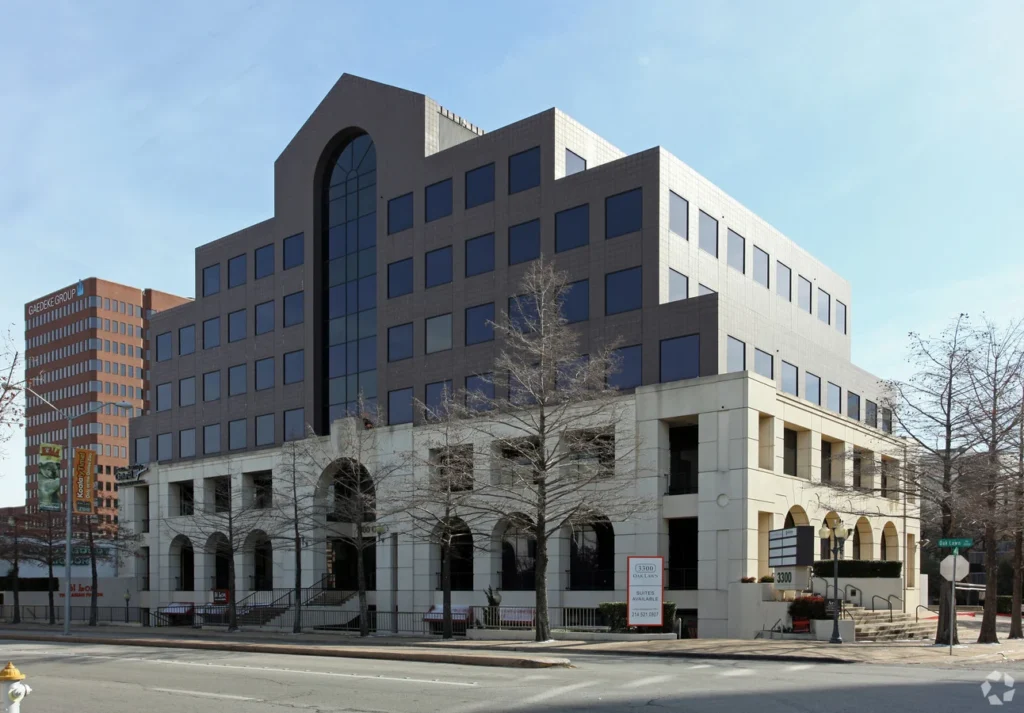
Free and confidential if we can take your case, in person, by phone, or by video.
Visitor parking at no cost in the Oak Lawn building garage, validated for clients. Enter the garage off Hall Street, take the elevator to the lobby level, then change elevators to the 7th floor. Reception is on your left.
Head north on Riverfront Blvd, merge onto I-35E North, exit Oak Lawn Avenue. Office is on the left.
Take TX-114 E to I-35E S. Exit Oak Lawn Avenue and turn left. Office is two blocks east.
Take Pearl St north to Cedar Springs Rd, continue to Oak Lawn Avenue. Office is on the right.
Take Dallas North Tollway south, exit Wycliff Ave, turn left on Oak Lawn. Office is half a mile down.
Court guides for the counties this office covers: Dallas County, Ellis County, Irving, Richardson, Carrollton, Highland Park.
A DWI case has many moving parts. Find the question you are asking right now.
What happens next, from booking through your first court date, and the deadline that comes first.
Booking to court dateA DWI arrest starts a second, separate case against your license, and it runs on a 15-day clock.
Save your licenseWhat Texas actually has to prove, and the three elements every case rests on.
The three elementsTexas charges DWI at six levels, and four facts can turn a misdemeanor into a felony.
See the charge levelsWhat a first, second, or felony DWI carries in jail time, fines, and suspension.
Jail, fines, suspensionBreath, blood, and roadside tests: what each measures and where each one goes wrong.
Where the tests failWhat police need before the lights come on, what the roadside can and cannot require of you, and how to tell afterwards.
The 24 driving cuesEvery Texas DWI defense by category, from the stop through the elements the State still has to prove.
Every defense, by typeEvery stage of a Texas DWI case, from filing through disposition, and what happens at each.
Walk through a caseDismissal, acquittal, reduction, deferred, probation, or jail, and which endings let you clear your record.
See how cases endWhat a DWI touches beyond the courtroom: your job, insurance, immigration status, and license.
What a conviction costsWhat to ask, which credentials matter in a DWI case, what fees should cover, and the red flags.
Credentials and feesNot sure what a term means? Check the glossary.
DWI is the majority of our work, not all of it. The same attorneys handle these charges in the same courthouses.
Assault, drugs, theft, weapons, and every other Texas charge, defended by the same trial team.
Criminal Defense in Dallas CountyFederal court runs on different rules and different sentencing math. Federal cases from Dallas County are filed in the Northern District of Texas, Dallas Division.
Federal Defense in DallasFree, confidential case review with Dallas DWI attorneys who defend cases in the Frank Crowley Courts. Intake answers 24/7, and if we can take your case, the consultation with an attorney is free.
Tell us what happened. We'll respond as soon as possible.