
What Should You Know About Digital Evidence Before Accepting a Plea Deal in Texas?

The decision to accept or reject a plea offer is the most consequential choice a defendant makes in a criminal case. And increasingly, that decision hinges on digital evidence — data from phones, computers, GPS records, social media, surveillance video, and online activity that the prosecution presents as proof of guilt.
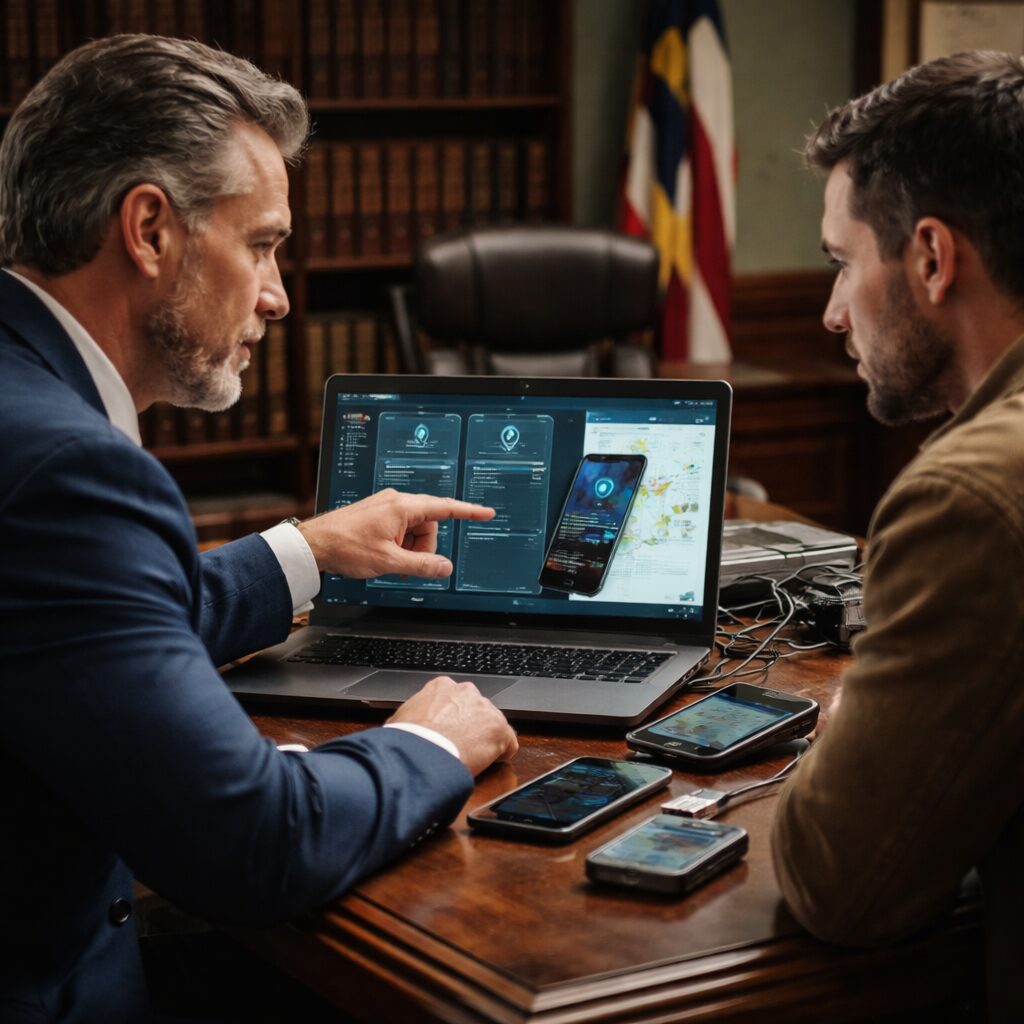
Too many defendants accept plea deals based on digital evidence they and their attorneys never truly evaluated. The prosecutor says the evidence is overwhelming, the defense attorney lacks the technical knowledge to disagree, and the defendant pleads guilty to charges that might not have survived a competent forensic challenge.
Why Digital Evidence Must Be Evaluated Before Any Plea Decision
The Prosecution Overstates Its Evidence
Prosecutors routinely present digital evidence as more conclusive than it actually is. Cell tower data is described as “placing the defendant at the scene.” A computer forensic report is characterized as proving “the defendant downloaded illegal files.” An IP address match is presented as identifying the defendant personally. In many cases, the evidence does not actually support these confident claims but the defendant never learns this because nobody with technical knowledge examined the evidence before the plea.
The Government’s Analysis May Be Flawed
Law enforcement forensic analysts are not infallible. They may use outdated tools, follow incomplete protocols, draw conclusions the data does not support, or simply make mistakes. Defense experts have found that government forensic reports sometimes expose false narratives not because of deliberate misconduct, but because of inadequate training and the institutional pressure to produce results that support the prosecution’s theory.
Exculpatory Evidence May Be Hiding in the Data
The same devices and data that the prosecution uses against you may contain evidence that supports your defense. Text messages that provide context for the prosecution’s selected excerpts. GPS data that places you somewhere other than the crime scene. Device activity logs that show someone else was using the computer. Browser history that contradicts the prosecution’s timeline. This evidence will never be found if nobody looks for it.
What a Proper Digital Evidence Evaluation Looks Like
Before any plea decision, Doug evaluates:
- The search and seizure. Were the warrants valid? Was the scope of the search proper? Is there a basis for suppression that would eliminate key evidence?
- The forensic imaging process. Was the device properly imaged with write-blocking? Do the hash values match? Was the chain of custody maintained?
- The government’s forensic analysis. What tools were used? What methodology was followed? Are the analyst’s conclusions supported by the data?
- Does the evidence actually prove you were the person responsible for the digital activity, or could it have been someone else?
- The completeness of discovery. Has the government produced all relevant digital evidence, including potentially exculpatory data?
- Independent analysis. Does the case warrant retention of an independent digital forensics expert to conduct a defense-side analysis of the evidence?
The Real Cost of an Uninformed Plea
A guilty plea based on digital evidence you never evaluated is a decision made in the dark. If you are facing criminal charges that involve any form of digital evidence, you owe it to yourself to have that evidence examined by a defense team with the technical knowledge to understand it.
Doug’s Garrett Discovery training means that no plea decision at Deandra Grant Law is made without a thorough evaluation of the evidence including the digital evidence that many defense attorneys simply accept at face value.
Talk to a Defense Team That Understands Digital Evidence
At Deandra Grant Law, Attorney Douglas Huff is our Partner and Criminal Division Chief — a senior trial attorney Scientist who has completed advanced training in digital forensics with Garrett Discovery, one of the nation’s leading digital forensics firms. Doug doesn’t just read the prosecution’s forensic reports. He has the training to understand the tools, challenge the methods, and expose the weaknesses in digital evidence.
If you are facing criminal charges involving digital evidence of any kind, contact Deandra Grant Law for a free, confidential case review.
Call (214) 225-7117 or schedule an appointment online at texasdwisite.com.
Which county your case is filed in changes how it is charged, who prosecutes it, and which court hears it.
Deandra M. Grant, JD, GC, MS, ACS-CHAL Forensic Lawyer-Scientist
She holds a Master of Science in Pharmaceutical Science and a Graduate Certificate in Forensic Toxicology, both from the University of Florida. She is the author of The Texas DWI Manual and has defended Texas DWI cases since 1994.
Charged With a Crime?
Whatever you're facing, a DWI or any criminal charge, the sooner you have a forensic-trained team on it the more we can do. Tell us what happened and we'll review your options, at no cost and no obligation. Intake answers 24/7, and if your case is one we can take on, we schedule a free consultation with an attorney.
Request a Free Case Evaluation
Tell us what happened. We'll respond as soon as possible.