
Which DWI Lawyer Credentials Actually Matter
The credentials that matter in a DWI case are the ones tied to the evidence. Forensic training helps a lawyer read the blood or breath records behind the State’s number. NHTSA field sobriety training helps a lawyer test whether the roadside tests were administered and scored correctly. Texas criminal law board certification is real, but it is not DWI-specific and is not required. Awards and badges vary widely. Verify every lawyer’s license, eligibility, discipline history, and claimed certifications yourself through the State Bar and the issuing organizations.
What ACS-CHAL Actually Is
ACS-CHAL stands for American Chemical Society, Chemistry and the Law. The Forensic Lawyer-Scientist designation goes to defense lawyers who complete a sequence of forensic science coursework taught in a working laboratory rather than a lecture hall.
The coursework centers on the instruments and methods that actually produce an alcohol or drug test result. Forensic chromatography is the core of it, because gas chromatography is how a crime lab turns a vial of blood into a number. Related courses cover sample preparation, calibration, quality control, and the analysis of drugs other than alcohol.
Three things it is not, because the marketing around it can blur them:
- It is not a law license or a substitute for one. It is coursework a licensed lawyer completes on top of a law degree.
- It does not make a lawyer a scientist, and a lawyer holding it cannot testify as an expert in their own case.
- It does not change what a lawyer is permitted to do in court. Every lawyer has the same tools available.
What it changes is narrower and more useful than any of that. It changes what the lawyer can read without help.
What the Training Changes in a Case
A blood alcohol result reaches your case as a number on a one-page lab report. The number is the last step of a long process, and the report does not show you the process.
Behind it sits a data package: the chromatogram itself, the calibration curve the instrument was working from, the control samples run alongside your blood, the analyst’s bench notes, and the maintenance and repair history of the instrument. Breath cases have their own equivalent, including the instrument’s records, the reference sample, and the observation period before the test.
A lawyer who cannot read that material has two options. Take the number as given, or pay an outside expert to look at it and explain what they find. Both are legitimate. But the first one forfeits the issue, and the second means someone else decides what is worth pursuing before the lawyer ever sees it.
A lawyer who can read it makes that judgment directly, and makes it early, when there is still time to do something with the answer. This is the whole practical case for forensic training. It is not that science wins cases by itself. It is that you cannot challenge what you cannot read.
Where this shows up in an actual defense is covered on Challenging the Blood Test and The Intoxilyzer 9000.
NHTSA Certification for Defense Lawyers
The standardized field sobriety tests are not folk wisdom. They are a three-test battery with a written administration standard, published by the National Highway Traffic Safety Administration and taught to officers from a student manual.
Defense lawyers can take that same training at two levels.
Practitioner. The same course an officer takes, covering how the horizontal gaze nystagmus test, the walk and turn, and the one leg stand are supposed to be administered and scored, and what conditions invalidate them.
Instructor. A further level, qualifying the holder to teach the battery rather than only perform it.
The reason a defense lawyer takes a police training course is straightforward. The tests only mean what they are claimed to mean if they were given the way the manual says. Deviations in administration, unsuitable surface or footwear, and medical conditions that affect balance or eye movement all matter, and none of that is visible to someone who has not been through the curriculum. How that plays out is covered on Field Sobriety Tests.
Board Certification in Texas
This is a genuine reader question and it deserves a straight answer.
The Texas Board of Legal Specialization is a program of the State Bar of Texas that certifies attorneys in a defined list of practice areas. Criminal law is one of them. There is no DWI-specific certification in Texas, so criminal law is the closest relevant category.
Certification generally requires a minimum period in practice, substantial documented involvement in the area, peer references from lawyers and judges familiar with the applicant’s work, and a written examination. It is a real credential and a demanding one.
It is also not required. A Texas lawyer does not need it to accept, defend, or try a DWI case, and its absence tells you very little on its own. Many experienced DWI practitioners hold it. Many equally experienced ones have never applied for it.
Treatises and Teaching
There is a second kind of credential that does not come with a badge: what a lawyer has written, and who reads it.
The Texas DWI Manual is a James Publishing treatise used by Texas defense lawyers as a working reference for DWI practice. It is a professional legal treatise sold through its publisher, not a consumer guide and not something a reader downloads from a website.
Its lead author is the managing partner of this firm. That is the sort of claim worth checking rather than taking on faith, and it is checkable: the treatise is published under her name and carries her biography in its front matter.
Teaching works the same way. Lawyers who present at continuing legal education seminars, or who teach on the faculty of forensic science programs, are being vetted by the people who would most easily catch them being wrong. Peer audiences are unforgiving in a way that marketing copy never is.
Ratings, Awards, and Badges
The row of badges at the bottom of a law firm website is the least informative part of the page, because the badges do not distinguish themselves. They all look the same. They are not the same.
Broadly there are three kinds:
- Peer-evaluated recognitions. Selection runs on nominations or confidential surveys of other lawyers, sometimes with independent research on top. These are the most meaningful of the three, because the people voting have seen the work.
- Editorial or research-based lists. A publication or research organization applies its own published criteria and picks a list. Quality depends entirely on the criteria, which reputable organizations publish openly.
- Paid directory listings. Any lawyer who pays the fee gets the badge. There is no selection at all.
There is a fourth wrinkle that catches people out. Many legitimate, genuinely selective organizations also sell plaques, crystal awards, and marketing licenses to the lawyers they select. Paying for the plaque afterward does not mean the selection was bought. It does mean the badge on the website is not evidence of anything by itself.
The way through this is simple and it takes about a minute. Look up the organization that issued the award and find its published selection methodology. If you cannot find one, that is your answer.
How to Verify Any Texas Lawyer Yourself
Everything above is easier than it sounds to check, and you should check it, including on this firm. Telling you how to verify a lawyer is worth more than any claim on this page.
Every Texas attorney is listed in the State Bar of Texas online directory. It is free, it is public, and it takes a few minutes.
- Search the attorney by name in the State Bar of Texas online lawyer directory at texasbar.com.
- Confirm the person is actually licensed. The listing shows a bar card number and the date the license was issued, which is also how you check how long someone has really been practicing.
- Check eligibility status. The directory shows whether the attorney is currently eligible to practice law in Texas. Anything other than an active, eligible status is worth asking about directly.
- Read the public disciplinary history. Public disciplinary sanctions are shown in the listing. Note that only public sanctions appear, so a clean record means no public discipline rather than no complaints ever filed.
- Check the certification listing separately. If an attorney claims certification through the Texas Board of Legal Specialization, TBLS maintains its own searchable list of certified attorneys.
If a lawyer’s claims and the State Bar record do not line up, believe the State Bar record.
Which Credentials Matter for Your Case
Not all of these carry the same weight, and which ones matter depends on what your case turns on.
If your case rests on a blood or breath result, forensic training is the credential that changes the work. Someone has to be able to read the underlying data, and it is better if that someone is your lawyer.
If your case rests on an officer’s observations and the roadside tests, NHTSA training is the one that matters, because the challenge lives in how the battery was administered.
If your case rests on the stop itself, on a search, or on a procedural defect, then general criminal defense skill and courtroom experience matter more than any forensic credential.
And in every case, the credential nobody advertises matters most: whether the lawyer actually handles DWI cases regularly, and whether they handle the license case alongside the criminal one. That question is worked through on Do You Need a DWI Specialist?, and the questions that surface it in a consultation are on Questions to Ask a DWI Lawyer.
You can read the individual attorney biographies and check each one against the State Bar directory from the firm’s attorney profiles.
The other guides in this section.
Do You Need One?
What It Costs
How to Vet
After You Hire
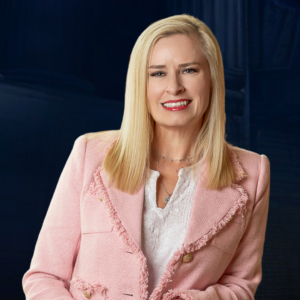
Deandra M. Grant, JD, GC, MS, ACS-CHAL Forensic Lawyer-Scientist
She holds a Master of Science in Pharmaceutical Science and a Graduate Certificate in Forensic Toxicology, both from the University of Florida. She is the author of The Texas DWI Manual and has defended Texas DWI cases since 1994.
Charged With a DWI in Texas?
Intake answers 24/7, and if your case is one we can take on, we schedule a free consultation with an attorney.
Request a Free Case Evaluation
Tell us what happened. We'll respond as soon as possible.