
Judge Peffer Suspended for Sharing an AI Deepfake
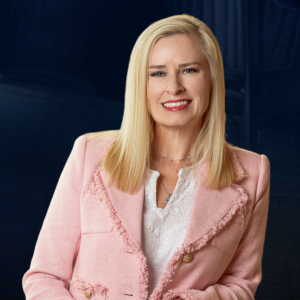
The Supreme Court of Florida suspended Judge Lauren Nichole Peffer of the Seventeenth Judicial Circuit, which covers Broward County, for 30 days on October 9, 2026, fined her $10,000, ordered a public reprimand, and taxed the costs of the proceedings against her. During her 2024 campaign she told a South Florida Sun-Sentinel reporter that the Ninth Judicial Circuit showed a crisis of public trust in Florida’s judiciary, cited a self-published book she admitted she had never read, and sent the reporter a link to a recording that purported to capture two Florida Supreme Court justices and a chief judge in conversation. The recording was fabricated, and the Judicial Qualifications Commission concluded it was likely generated with AI. The Court rested its decision on the canon requiring judicial candidates to maintain the dignity of the office, not on the canon against knowing misrepresentation. Below: what that distinction means, and why this is the first file in this series about carelessness rather than intent.
| CASE FILE AT A GLANCE | |
| Judge | Lauren Nichole Peffer |
| Court | Seventeenth Judicial Circuit (Broward County), Florida |
| Case | Inquiry Concerning a Judge, JQC No. 2025-001, re: Lauren Nichole Peffer, No. SC2025-0647 |
| Decided | October 9, 2026 |
| Sanction | 30-day suspension, $10,000 fine, public reprimand, and costs of the proceedings, with the amount remanded to the Commission |
| Canon | Florida Canon 7A(3)(b), requiring a candidate for judicial office to maintain the dignity appropriate to the office |
| Conduct | 2024 judicial campaign; she was elected August 20, 2024 with 52.5 percent of the vote |
| Recusals | Justices Carlos Muniz and Renatha Francis, both depicted in the fabricated recording, did not participate |
| Partial Dissent | Justice Adam Tanenbaum concurred in the disposition but dissented from taxing administrative costs |
What She Did
Peffer ran in 2024 on restoring public confidence in the courts. When a Sun-Sentinel reporter asked her for the basis of that claim, she pointed to a book containing numerous denigrating statements about past and present judges of the Ninth Judicial Circuit, which covers Orange and Osceola counties, written by a former employee of that court who had been fired in 2022. She had not read it, and later admitted she took no steps to authenticate anything in it. Asked whether she had evidence that the book’s allegations were true, she sent the reporter a recording.
The recording presented itself as a phone call among then-Chief Justice Carlos Muniz, Justice Renatha Francis, and Ninth Circuit Chief Judge Lisa Munyon, in which Munyon made derogatory remarks about a former chief judge of that circuit. All three said no such call happened. Several purported recordings from the same source were referred to the Orange County Sheriff’s Office for criminal investigation. The Commission concluded the audio was fabricated and most likely generated with AI.
She testified at a December 2025 hearing that she would not have cited the book had she read even its first pages, and said she could not explain why she had thought the recording was genuine. The Commission’s hearing panel recommended a 30-day suspension, a public reprimand, a $10,000 fine, and costs on February 27, 2026. The Supreme Court adopted all of it.
What the Court Did Not Find
The Commission charged two canons. Canon 7A(3)(e) forbids a judicial candidate from knowingly misrepresenting facts. Canon 7A(3)(b) requires a candidate to maintain the dignity appropriate to judicial office. The Court rested on 7A(3)(b).
There is no finding that Peffer knew the recording was fake, and no finding that she set out to deceive anyone. What the Court found is that she “failed to verify the accuracy of the book or the recording on which she relied” and that she “had no basis to suggest a lack of trust in the judges of the Ninth Judicial Circuit.” Her answer was that it was unintentional. The Court’s answer was that it did not matter: “Intentional or not, her conduct undermined public confidence in the integrity of the judiciary.”
Negligence Was Enough
Every other file in this series turns on something a judge chose to do. A judge who sued the complainant who reported him. A judge who handed a colleague a slip of paper with a defendant’s name on it. A judge who presided over cases built by his own stepson. This one turns on a judge who believed something false and repeated it.
This conduct required no bad intent and no unusual opportunity. It required a plausible-sounding audio file and a few minutes of not checking. The holding is that a judicial candidate carries a duty of diligence about what she repeats, and that passing along a fabrication is sanctionable even if she was fooled by it.
Who Had to Step Aside
Two of the seven justices who would normally have decided this case could not sit on it, because the fabricated recording put words in their mouths. Chief Justice Muniz and Justice Francis both recused. The case was decided by the remaining members, with Justice Tanenbaum concurring in the sanction but dissenting from the order taxing administrative costs against Peffer.
A single fabricated audio file disqualified two justices from hearing a case about itself. The same mechanism reaches trial courts: a convincing fake naming a judge, a prosecutor, or an investigating officer can create a conflict where none existed. Challenging a suspected fake as evidence is a separate fight with its own rules, and our post on deepfake evidence covers authentication, Texas Rule of Evidence 901 and Tienda v. State.
How It Works in Texas
Texas regulates judicial campaign speech through Canon 5 of the Code of Judicial Conduct rather than Florida’s Canon 7, and the structure differs. Texas judges run in partisan elections, so Canon 5(1) targets pledges and promises about cases, and Canon 5(2) bars knowingly misrepresenting a candidate’s identity, qualifications, present position, or other facts, or those of an opponent. Canon 2A requires a judge to respect and comply with the law and to act at all times in a manner that promotes public confidence in the integrity and impartiality of the judiciary.
Texas has no exact analogue to Florida’s standalone dignity requirement for candidates, which is the provision that carried this case. A Texas version of these facts would most likely run through Canon 2A, and the question would be whether promoting a fabrication a candidate never verified is conduct that fails to promote public confidence. The Commission has sanctioned Texas judges over online conduct before, including the Montgomery County justice of the peace admonished over his official and personal Facebook pages in Case File No. 32. For how the Texas process works end to end, see our explainer, Who Polices Texas Judges? The SCJC Explained.
The Rule She Broke
| Canon | What It Requires |
| Fla. Canon 7A(3)(b) | A candidate for judicial office shall maintain the dignity appropriate to judicial office and act in a manner consistent with the impartiality, integrity and independence of the judiciary, and shall encourage members of the candidate’s family to adhere to the same standards of political conduct that apply to the candidate. This is the provision the Court rested on, and the emphasized duty is the one it quoted. |
| Fla. Canon 7A(3)(e) | A candidate shall not knowingly misrepresent the identity, qualifications, present position, or other facts concerning the candidate or an opponent. Charged by the Commission; not the basis of the Court’s decision. |
How It Played in the Press
Bloomberg Law had it the day the order issued, and the ABA Journal carried it nationally within days. Nearly every headline led with the same two words, deepfake and AI, which is understandable and slightly beside the point. The Court made no finding that Peffer knew the recording was fake. It sanctioned her for relying on a book she had not read and a recording she had not checked. The technology explains how the falsehood was built. The holding is about what a candidate owes before repeating one.
The South Florida Sun-Sentinel sits in an odd position here, because the paper is where the conduct happened. A reporter asked her for evidence, and her answer to that question became the record the Commission charged. Local outlets ran earlier and closer to the ground, Florida Politics on the formal charges and Broward.us on the hearing panel’s February recommendation and her testimony. WorkersCompensation.com was among the few to lead with the money and the reprimand rather than with the technology.
Where Things Stand Now
Peffer serves the 30-day suspension and pays the $10,000 fine. The public reprimand is accomplished by publication of the order itself. The effective date of the suspension is set by the Chief Judge of the Seventeenth Judicial Circuit, and the amount of the costs goes back to the Commission to determine. She remains a circuit judge; nothing in the order removes her, and the term she won in 2024 runs its course.
The author of the recording is a separate question this order does not answer. Purported recordings from the same source were referred for criminal investigation, and no charge arising from them appears in the public record reviewed for this file. The Gavel of Shame will follow up if that changes.
Facing the System in Texas?If a recording in your case might not be real, that is a question with rules behind it and a way to litigate it. Deandra Grant Law handles federal and state criminal defense in Texas. Call (214) 225-7117 • texasdwisite.com |
Sources
PRIMARY SOURCE
- Supreme Court of Florida, Inquiry Concerning a Judge, JQC No. 2025-001, re: Lauren Nichole Peffer, No. SC2025-0647, order of October 9, 2026 (Couriel, C.J., and Labarga, Grosshans and Barrios, JJ., concurring; Tanenbaum, J., concurring in the administrative disposition but dissenting from the judgment for costs; Muñiz and Francis, JJ., recused). The order approves the hearing panel’s findings of fact, conclusions of law and recommendations, and every quotation and finding in this post is taken from it. The full docket and the order are on the Florida Appellate Case Information System. acis.flcourts.gov
NEWS COVERAGE
- Bloomberg Law: Florida judge suspended over deepfake call mimicking justices (Oct. 9, 2026), reporting the case number, the sanction, the recusals, and Justice Tanenbaum’s partial dissent. news.bloomberglaw.com
- ABA Journal: Florida judge suspended over AI deepfake phone call. abajournal.com
- WorkersCompensation.com: Falling for deepfake costs judge more than $10k, earns her public reprimand (Oct. 13, 2026), reporting the public reprimand, the costs remand, and Canon 7A(3)(b). workerscompensation.com
- Florida Politics: Broward judge faces charges for sharing deepfake recording, unread e-book during campaign, reporting the canons charged and the content of the fabricated recording. floridapolitics.com
- Broward.us: Suspension, fine recommended for Broward judge who cited deepfake call in campaign (Feb. 28, 2026), reporting the hearing panel’s recommendation and her testimony. broward.us
REFERENCE
- Deandra Grant Law: When the Video Might Be a Lie, How Texas Defense Lawyers Are Fighting Deepfake-Era Evidence. Covers Texas Rule of Evidence 901, Tienda v. State, the native-file demand, and the steps for challenging synthetic media. texasdwisite.com
- Deandra Grant Law: Who Polices Texas Judges? The SCJC Explained. texasdwisite.com
- Texas Code of Judicial Conduct, Canon 5, political activity of judges and judicial candidates. law.uh.edu
- Texas Code of Judicial Conduct, Canon 2, avoiding impropriety and the appearance of impropriety. law.uh.edu
This post summarizes a judicial-discipline decision and news reporting for general informational purposes as of publication. It is not legal advice. The recording described here was fabricated: the justices and judge it depicted have stated that no such conversation occurred, and nothing in this post should be read as suggesting otherwise. The Court made no finding that Judge Peffer knew the recording was false. The author of the recording has not been identified in the public record reviewed for this file, and no one is accused here of creating it.
Which county your case is filed in changes how it is charged, who prosecutes it, and which court hears it.
Deandra M. Grant, JD, GC, MS, ACS-CHAL Forensic Lawyer-Scientist
She holds a Master of Science in Pharmaceutical Science and a Graduate Certificate in Forensic Toxicology, both from the University of Florida. She is the author of The Texas DWI Manual and has defended Texas DWI cases since 1994.
Charged With a Crime?
Whatever you're facing, a DWI or any criminal charge, the sooner you have a forensic-trained team on it the more we can do. Tell us what happened and we'll review your options, at no cost and no obligation. Intake answers 24/7, and if your case is one we can take on, we schedule a free consultation with an attorney.
Request a Free Case Evaluation
Tell us what happened. We'll respond as soon as possible.