DismissedJul 2026
Charge
DWI
Collin County Trial Setting

Science-driven DWI defense for McKinney arrests, heard at the Collin County courts in your own city and handled from our Allen office fifteen minutes away.
Intake answers 24/7 · Case review at no cost · You have 15 days from the notice of suspension to request your ALR hearing
Tell us what happened. Our intake team reviews every message.
No cost. No obligation. Confidential.








Every case gets forensic-level attention. These are recent outcomes for people facing DWI charges in Collin County.
Meet our trial teamPast results do not guarantee a similar outcome. Every case is fact-specific. Client names and identifying details have been omitted for privacy.
Deandra Grant Law defends people charged with DWI in McKinney and across Collin County, from a first DWI to high-BAC, repeat, and felony charges, including DWI with a child passenger, intoxication assault, and drugged driving. McKinney is the county seat, which makes a McKinney DWI different from every other Collin County DWI in exactly one respect: the courthouse that decides your case is in your own city. A driver stopped in Plano or Frisco drives to McKinney for every setting. A driver stopped in McKinney is already there.
That convenience does not buy a home advantage. Your file is handled by the Collin County District Attorney, not the City of McKinney, on the same docket and under the same policies as every other Collin case, including the county’s stated policy against reducing a DWI to obstruction of a highway. Whatever advantage exists comes from the evidence and from familiarity with these specific courts. This firm answers with more than 500 trials to verdict, an Allen office fifteen minutes down US-75, and a managing partner who wrote The Texas DWI Manual and trains DWI attorneys across the state. When the State’s case rests on a breath number or a DPS blood result, we go to the underlying science.
Getting started costs nothing. Call or schedule online to talk through what happened. You have 15 days from the notice of suspension before your license suspension becomes automatic, so sooner beats later.
Your license is on its own clock. It starts when you receive the notice of suspension, which in a blood case often arrives by mail weeks later.
Collin runs its DWI cases differently from the counties around it. These are the local specifics that shape a defense here.
Every Collin County DWI, wherever the arrest happened, is heard at the Russell A. Steindam Courts Building at 2100 Bloomdale Road in McKinney. Misdemeanor DWIs go to one of the County Courts at Law, felonies to the District Courts. For a McKinney arrest that is a drive across town, not across the county.
The Collin County District Attorney's office works its cases up thoroughly and expects prepared lawyers. It also has a stated policy against reducing a DWI to obstruction of a highway, the plea that quietly disposes of DWIs in some other counties, so a McKinney DWI is generally prosecuted as a DWI.
Collin County sends DWI blood to the DPS crime lab in Garland, and the turnaround is often slow, which is frequently where the defense takes shape. The lab's chromatography, calibration, and quality control records are discoverable, and we request them in every blood case.
After a McKinney PD or Collin County Sheriff's arrest you are booked at the Collin County Detention Facility on Bloomdale Road, next to the courts. Bond is set at magistration, usually within 48 hours.
Collin County runs the Burden to Blessing program and a Veterans Court, and it runs no-refusal weekends when a breath test refusal can turn into a warrant and a blood draw the same night. Whether your case qualifies for any alternative track is one of the first things we check.
Every Collin County DWI charge, from a first offense to intoxication manslaughter.
Driving while intoxicated with no prior convictions, a Class B misdemeanor.
First DWI penaltiesA DWI with one prior conviction, a Class A misdemeanor with mandatory jail time.
Second DWI penaltiesA DWI with two prior convictions, a third-degree felony carrying two to ten years.
Third DWI penaltiesA passenger under fifteen turns a misdemeanor DWI into a felony.
Why this is a felonyCausing serious bodily injury to another while intoxicated, a third-degree felony.
Assault penaltiesCausing a death while intoxicated, a second-degree felony carrying prison time.
Manslaughter penaltiesDrivers under twenty-one face DUI charges for any detectable amount of alcohol.
DWI vs. DUIA DWI where the intoxicant is a drug, prescribed or illegal, with no breath number involved.
How they prove itMarijuana and edibles can support a DWI without any measurable level.
The marijuana rulesA valid prescription is no defense if the medication impaired your driving.
Prescription rulesOperating a boat while intoxicated, prosecuted much like a driving DWI.
The BWI rulesWhat decides a DWI case is how well your lawyer understands the evidence.
From the first call, in order:
Intake answers 24/7, and if we can take your case, the consultation with an attorney is free. We quote a flat fee there, so the investment is known before you commit.
613 reviews and counting. Real Texans, real charges, real outcomes.
They are very responsive to requests and questions. Doug went above and beyond to fight for me and get the best possible deal I could in Collin County. I even had questions during probation and they were quick to answer and help (which they didn't have to do).
My son was facing possible prison prison time, I was afraid. But by the Grace of God I found Deandra Law Firm where Doug and Jada both worked awesome deals for my son in both counties he was facing..no prison. Thank you for being team Vick for us
Deandra Grant Law is top-notch! I was provided with great resources from day one. Elena was also super helpful and patient! They're the perfect team to guide you through a tough time.
Forensic-science training, three decades of Collin County defense, and the courtroom record to back it up.









We defend DWI cases across McKinney and the rest of Collin County: Plano, Frisco, Allen, Prosper, Celina, Melissa, Princeton, Fairview, and Wylie. Wherever the stop happened, the case is prosecuted in McKinney, and those are courts we work every week.
The full county walkthrough is on Collin County DWI Lawyer, and the building itself on the Collin County courts guide. Facing a non-DWI charge? See Collin County Criminal Defense Lawyer.
The Collin County courts sit in McKinney at the Russell A. Steindam Courts Building on Bloomdale Road, with the county detention facility nearby, so a McKinney arrest is booked and set within a few miles of where it happened. The historic courthouse on the square no longer hears criminal cases.
McKinney PD and DPS stops on US-75, SH-121, and Eldorado Parkway produce a steady share of the city DWI arrests, and all of them are prosecuted by the Collin County DA under its policy of not reducing DWIs.
Arrests north and east of McKinney on US-380 and US-75 are Collin County cases heard in McKinney, unless a Prosper stop fell on the Denton County side of that city.
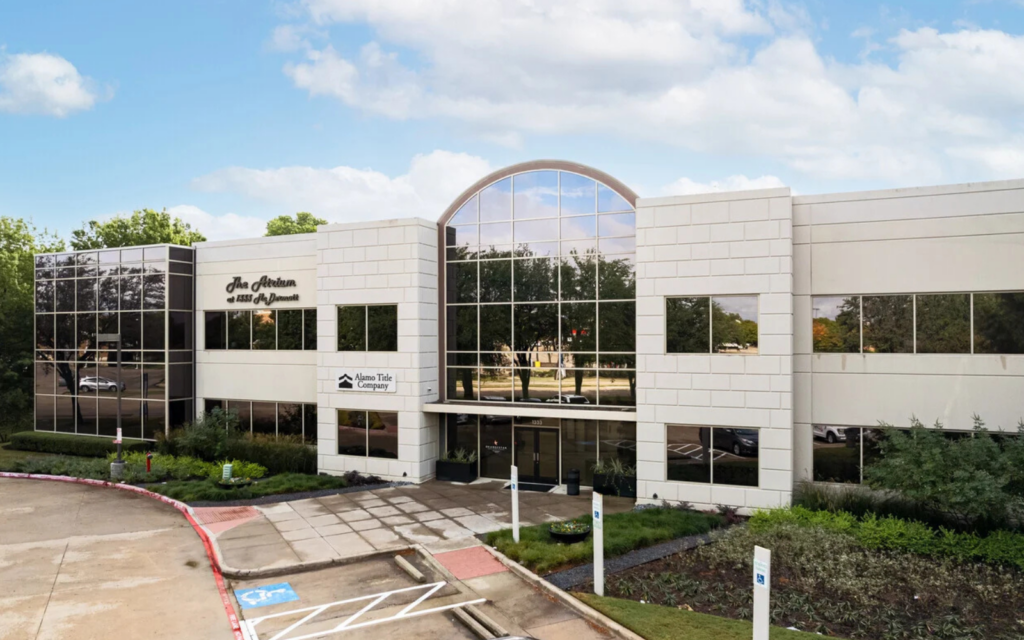
Fifteen minutes from the McKinney courts down US-75. Free parking on site at the Atrium building.
Free and confidential if we can take your case, in person, by phone, or by video.
Surface and covered parking at no cost on site at the Atrium building, with visitor spaces near the main W. McDermott Drive entrance.
From 2100 Bloomdale Road, take US-75 South and exit W. McDermott Drive in Allen. Turn right and continue west; the Atrium building is at 1333 W. McDermott.
Exit W. McDermott Drive and head west toward Alma Road. The Atrium at 1333 W. McDermott is just past the Watters Road intersection.
Take US-75 North, exit W. McDermott Drive in Allen, and turn left across the highway. Continue west to 1333 W. McDermott.
Take SH-121 east to US-75 North, then exit W. McDermott Drive and head west.
Take US-75 North (Central Expressway) to Allen, exit W. McDermott Drive, and turn left across the highway.
Court guides for the counties this office covers: Collin County, Grayson County, McKinney, Plano, Frisco.
A DWI case has many moving parts. Find the question you are asking right now.
What happens next, from booking through your first court date, and the deadline that comes first.
Booking to court dateA DWI arrest starts a second, separate case against your license, and it runs on a 15-day clock.
Save your licenseWhat Texas actually has to prove, and the three elements every case rests on.
The three elementsTexas charges DWI at six levels, and four facts can turn a misdemeanor into a felony.
See the charge levelsWhat a first, second, or felony DWI carries in jail time, fines, and suspension.
Jail, fines, suspensionBreath, blood, and roadside tests: what each measures and where each one goes wrong.
Where the tests failWhat police need before the lights come on, what the roadside can and cannot require of you, and how to tell afterwards.
The 24 driving cuesEvery Texas DWI defense by category, from the stop through the elements the State still has to prove.
Every defense, by typeEvery stage of a Texas DWI case, from filing through disposition, and what happens at each.
Walk through a caseDismissal, acquittal, reduction, deferred, probation, or jail, and which endings let you clear your record.
See how cases endWhat a DWI touches beyond the courtroom: your job, insurance, immigration status, and license.
What a conviction costsWhat to ask, which credentials matter in a DWI case, what fees should cover, and the red flags.
Credentials and feesNot sure what a term means? Check the glossary.
DWI is the majority of our work, not all of it. The same attorneys handle these charges in the same courthouses.
Assault, drugs, theft, weapons, and every other Texas charge, defended by the same trial team.
Criminal Defense in Collin CountyFederal court runs on different rules and different sentencing math. Federal cases from Collin County are filed in the Eastern District of Texas, Sherman Division.
Texas Federal CrimesThe county works its cases hard. So do we. Free, confidential case review. Intake answers 24/7, and if we can take your case, the consultation with an attorney is free.
Tell us what happened. We'll respond as soon as possible.