
Judge Smith Reprimanded for ‘Shoot All Three of You’
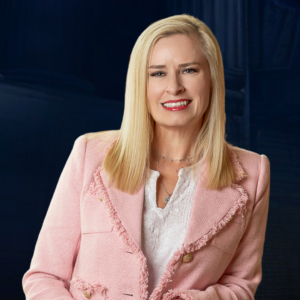
On September 24, 2026, the Supreme Court of Florida accepted a joint stipulation between Judge J. Layne Smith of the Second Judicial Circuit and the state’s Judicial Qualifications Commission and ordered him to appear for a public reprimand. Smith admitted that during a September 23, 2025, show-cause hearing he made repeated intemperate and caustic remarks, including telling the parties he would like to have a deputy shoot them, and belittling the attorneys as the “Keystone Cops” and the “Apple Dumpling Gang.” He recused nine days later, then self-reported and apologized. That mitigation kept the sanction at the low end. It did not keep the discipline private. Below: what he said, what his cooperation actually bought him, and how the same canons read in Texas.
| CASE FILE AT A GLANCE | |
| Judge | J. Layne Smith |
| Court | Second Judicial Circuit (Franklin, Gadsden, Jefferson, Leon, Liberty, and Wakulla Counties) |
| State | Florida |
| Disciplinary Body | Supreme Court of Florida, on findings and recommendation of the Judicial Qualifications Commission |
| Case | Inquiry Concerning a Judge, JQC No. 2025-1109, Re: J. Layne Smith, No. SC2026-0476 |
| Underlying Matter | Raker v. Vause, Wakulla County Case No. 2022-CA-90 |
| Canons Violated | Canons 1, 2, 3B(4), 3B(5), and 3E(1) of the Florida Code of Judicial Conduct |
| Sanction | Public reprimand, to be administered in person before the Supreme Court of Florida |
| Vote | Unanimous per curiam, 7 justices concurring |
| Date Decided | September 24, 2026 |
| Status | Not final until the time to move for rehearing expires and any motion is decided |
What He Said
The hearing was about as routine as court gets. On September 23, 2025, Smith held an order-to-show-cause hearing on a motion to compel discovery in a Wakulla County civil case. He became frustrated when the attorneys could not confirm that one party had actually been served. Over the rest of the hearing, in the Court’s words, he “made numerous intemperate and caustic comments to the attorneys and the parties.”
Smith told the parties: “I would like to tell the deputy to pull his gun and shoot all three of you as far as my level of frustration right now. I really don’t want him to do that.” He also belittled the attorneys, calling them the “Keystone Cops” and the “Apple Dumpling Gang.”
Nobody suggested Smith meant it, and no one treated this as a threat in the criminal sense. That is precisely what makes the case useful. Judicial discipline does not require a judge to mean it. It asks what the conduct does to the proceeding and to public confidence in it, and a judge musing aloud from the bench about having armed court security shoot the lawyers answers that question by itself.
He Turned Himself In
What happened next is the unusual part. On October 2, 2025, nine days after the hearing, Smith recused himself from the case on his own accord, with no motion pending against him. On October 21, he self-reported his own behavior to the Judicial Qualifications Commission, issued a public apology, and recused himself from every remaining case involving those parties. By the time the Commission had a file open, the judge had already removed himself from the situation and handed over the evidence.
He then went further. The Commission credited him with putting procedures in place to keep it from happening again, specifically taking recesses and adjourning when a proceeding turns contentious. Combined with a clean disciplinary record and what the Commission called remorse and cooperation throughout, that package is about as strong a mitigation showing as a judge can assemble.
The Discipline Ladder (Florida)
Florida splits the work. The Judicial Qualifications Commission investigates, charges, and recommends. Only the Supreme Court of Florida imposes discipline, and under Article V, section 12(c)(1) of the Florida Constitution it may accept, reject, or modify what the Commission recommends.
The sanctions run from a private reprimand, through a public reprimand administered in person before the justices, to a fine, suspension, or removal from office. A stipulated resolution like this one is a joint recommendation, not a binding deal, which is why the Court sometimes rejects them. It did exactly that earlier this year in the Diana Tennis matter, covered in Case File No. 41.
What Mitigation Actually Buys You
Smith’s cooperation likely earned him the bottom of the public ladder. A judge who says something like this and then fights the charge, or minimizes it, or has prior discipline on his record, is in suspension territory. The Commission’s list of mitigators is the reason this resolved by stipulation at the lowest public sanction rather than after a contested hearing.
What it did not buy was privacy. The Commission could have recommended a private reprimand, and the Court could have imposed one. Neither did. Instead, the Court accepted the recommendation and then went out of its way to add a line the stipulation did not require, emphasizing that Smith’s conduct “fell far below the standard of professionalism that Florida judges owe to those who appear before them.” That sentence is the Court making sure nobody reads a negotiated outcome as a soft one.
There is one more detail worth noticing. Among the canons cited is 3E(1), the disqualification rule, which requires a judge to step aside where impartiality might reasonably be questioned, including where the judge holds a personal bias against a party or a party’s lawyer. That citation says the ethical problem was not only what Smith said. It was that having said it, he was no longer a judge who could preside over that case. He eventually reached that conclusion himself, nine days later.
How It Works in Texas
A Texas judge who did this would be answering for nearly identical language. Texas Canon 3B(4) requires a judge to be “patient, dignified and courteous to litigants, jurors, witnesses, lawyers and others with whom the judge deals in an official capacity.” Canon 3B(5) requires a judge to “perform judicial duties without bias or prejudice.” Canon 3B(6) adds that a judge shall not, in performing judicial duties, manifest bias or prejudice by words or conduct. Those are the same two rules Florida applied here, almost word for word, plus one Florida did not need.
The route is different. In Florida the Commission recommends and the Supreme Court imposes, so every public sanction is a court order. In Texas the State Commission on Judicial Conduct issues its own sanctions, from a private warning up through public censure, without any court signing off. Only removal has to leave the Commission, through a Review Tribunal of appellate justices. The practical difference for a Texas judge in Smith’s position is that the sanction could have stayed private, because the Commission has the power to keep it that way and uses it in most cases it acts on.
Texas voters narrowed that discretion last year. Proposition 12, approved in November 2025, restructured the Commission and the Review Tribunal, kept private discipline available for first-time non-criminal matters, and required a public sanction or a removal referral where misconduct is willful or persistent. A single courtroom outburst, self-reported and not repeated, is the kind of matter that still lands on the private side of that line. For the full walk-through, see our explainer, Who Polices Texas Judges? The SCJC Explained.
If a Judge Loses His Temper in Your Case
Get it on the record. None of this reaches a commission without a transcript. Smith’s own words are the entire evidentiary basis of the order against him. If a hearing is going sideways, make sure the reporter is taking it down and order the transcript afterward.
Temper and bias are separate questions. A judge can be rude without being disqualified. What moves a disqualification motion is language showing a fixed view about a party or a lawyer, which is why the “bias against the attorneys” finding here drew a disqualification canon and not just a courtesy one.
A conduct complaint and a recusal motion are different tracks, and neither one decides the other. Filing with a conduct commission does not get you a new judge, and winning recusal does not sanction anyone.
Complaints are free and anyone can file. In Texas, a party, a lawyer, a juror, a court employee, or a member of the public who sat through the hearing can file with the State Commission on Judicial Conduct, at no cost and without a lawyer.
The Rules He Broke
| Rule | What It Requires |
| Fla. Canon 1 | A judge shall uphold the integrity and independence of the judiciary. |
| Fla. Canon 2 | A judge shall avoid impropriety and the appearance of impropriety in all of the judge’s activities. |
| Fla. Canon 3B(4) | A judge shall be patient, dignified, and courteous to litigants, jurors, witnesses, lawyers, and others with whom the judge deals in an official capacity. |
| Fla. Canon 3B(5) | A judge shall perform judicial duties without bias or prejudice. |
| Fla. Canon 3E(1) | A judge shall disqualify in a proceeding in which the judge’s impartiality might reasonably be questioned, including where the judge has a personal bias or prejudice concerning a party or a party’s lawyer. |
How It Played in the Press
The quote traveled, as quotes like this do. Bloomberg Law, Florida Politics, the Florida Phoenix, Orlando Weekly, and Tallahassee public radio all covered the order within a day, most of them leading with the shooting remark and several noting that Smith was appointed to the circuit bench by Governor Ron DeSantis in 2020 after five years as a Leon County judge. The Florida Bar News covered it as a professionalism story. Almost no coverage led with the part that makes the case interesting, which is that the judge is the one who turned it in.
Where Things Stand Now
Smith remains on the bench. A public reprimand does not suspend or remove a judge; it requires him to stand before the Supreme Court of Florida in person and be reprimanded on the record, at a time the Clerk will set. That appearance had not been scheduled when the order issued.
The order is also not final yet. It carries the Court’s standard notation that it is not final until the time to move for rehearing expires and any such motion is decided. Given that this resolved on a joint stipulation Smith himself signed, a rehearing motion would be a surprise, but the order is not closed until that window runs. The Gavel of Shame will note it if anything changes.
Facing the System in Texas?What a judge says on the record matters, and there is a process when it crosses a line. Deandra Grant Law handles federal and state criminal defense in Texas. Call (214) 225-7117 • texasdwisite.com |
Sources
PRIMARY SOURCE
- Supreme Court of Florida, Inquiry Concerning a Judge, JQC No. 2025-1109, Re: J. Layne Smith, No. SC2026-0476 (Sept. 24, 2026). flcourts.gov
- Supreme Court of Florida, Inquiry Concerning a Judge Re: J. Layne Smith, full opinion text. courtlistener.com
NEWS COVERAGE
- Bloomberg Law: Florida Judge Reprimanded for Threat to Have Lawyers Shot. news.bloomberglaw.com
- Florida Phoenix: Gov. DeSantis-appointed trial judge faces public reprimand for shooting comment (Sept. 24, 2026). floridaphoenix.com
- The Florida Bar News: Judge receives public reprimand for comments during hearing. floridabar.org
- WFSU: A north Florida judge is facing a public reprimand (Sept. 25, 2026). news.wfsu.org
REFERENCE
- Texas Code of Judicial Conduct, Canon 3. law.uh.edu
- Deandra Grant Law: Who Polices Texas Judges? The SCJC Explained. texasdwisite.com
- Texas State Commission on Judicial Conduct: how to file a complaint against a Texas judge. scjc.texas.gov
This post summarizes a published court order and news reporting for general informational purposes as of publication. It is not legal advice. The order described here is not final until the time to move for rehearing expires and any such motion is decided.
Which county your case is filed in changes how it is charged, who prosecutes it, and which court hears it.
Deandra M. Grant, JD, GC, MS, ACS-CHAL Forensic Lawyer-Scientist
She holds a Master of Science in Pharmaceutical Science and a Graduate Certificate in Forensic Toxicology, both from the University of Florida. She is the author of The Texas DWI Manual and has defended Texas DWI cases since 1994.
Charged With a Crime?
Whatever you're facing, a DWI or any criminal charge, the sooner you have a forensic-trained team on it the more we can do. Tell us what happened and we'll review your options, at no cost and no obligation. Intake answers 24/7, and if your case is one we can take on, we schedule a free consultation with an attorney.
Request a Free Case Evaluation
Tell us what happened. We'll respond as soon as possible.