
Home »
Do You Need Legal Help?

"Deandra Grant Law fights hard for their clients and is always willing to go above and beyond. They are the best firm for DWI cases in DFW and beyond. Definitely hire them to represent you in any pending cases."
- P. Williams
"Deandra Grant made a tough situation so much better. She listened to my concerns and helped me so much with my case. I would recommend her to anyone needing legal services."
- M. Haley
"Deandra Grant Law handled my case with diligence and professionalism. Deandra Grant's reputation is stellar and now I know why. She has a team of individuals who provide quality service."
- N. Coulter
As Seen On







Download Our Free Texas Criminal Guide
Learn what you should and shouldn't be doing to help your criminal defense case.
Waco Domestic Violence Lawyers
Texas does not have a stand-alone “domestic violence” offense. What people describe as a domestic violence arrest is technically an Assault under Penal Code § 22.01 (or Aggravated Assault under § 22.02) with a family violence finding under Family Code § 71.004 (or Continuous Violence Against the Family under § 25.11) or a Violation of Protective Order under § 25.07. Each of these is a distinct charge with distinct elements, distinct penalties, and distinct collateral consequences. Understanding which one applies (and what the state actually has to prove) is where defense begins.
The collateral consequences of a domestic violence conviction often matter more than the criminal penalty. A first-offense misdemeanor Assault FV conviction triggers lifetime federal firearm prohibition under the Lautenberg Amendment. Texas law generally blocks nondisclosure relief for FV cases even after successful deferred adjudication. Family Code Chapter 153 creates a custody presumption against the defendant. Immigration, professional licensing, housing, and employment consequences extend for decades.
Deandra Grant Law represents clients facing domestic violence charges in Waco, Hewitt, Woodway, Bellmead, and throughout McLennan County. Call (254) 735-3588 to discuss your case.
Who Qualifies — Family Code Definitions
The “family violence” finding depends on the relationship between the defendant and the alleged victim. Under the Family Code:
- § 71.004 defines family violence as an act by a family or household member against another family or household member intended to result in physical harm, bodily injury, assault, or sexual assault or a threat that reasonably places the member in fear of imminent physical harm.
- § 71.003 defines family as persons related by consanguinity or affinity, spouses, former spouses, parents of the same child, foster parents, and others.
- § 71.005 defines household as persons living together in the same dwelling regardless of whether they are related.
- § 71.0021 defines dating relationship as a relationship between individuals who have or have had a continuing relationship of a romantic or intimate nature.
The Actual Texas Offenses
Assault — Penal Code § 22.01 (with FV finding)
The most common “domestic violence” charge. Assault by causing bodily injury to a family or household member, with the family violence finding attached. Penalties:
- First-offense Assault FV — Class A misdemeanor. Up to 1 year in county jail, fine up to $4,000.
- Strangulation (impeding normal breathing or circulation of a family member) — third-degree felony on the first offense (2 to 10 years), second-degree felony with a prior FV conviction.
- Second Assault FV (after a prior FV conviction) — third-degree felony (2 to 10 years). This misdemeanor-to-felony enhancement is one of Texas’s most consequential mechanisms.
Aggravated Assault — Penal Code § 22.02 (with FV finding)
Assault causing serious bodily injury, or use or exhibition of a deadly weapon, with a family violence finding. Second-degree felony generally (2 to 20 years); first-degree felony (5 to 99 or life) when the aggravated assault is against a family member and causes serious bodily injury.
Continuous Violence Against the Family — Penal Code § 25.11
A person commits § 25.11 if, during a 12-month period, the person engages in conduct that would constitute an assault under § 22.01(a)(1) two or more times against a person with whom the defendant has a relationship described in Family Code § 71.0021(b), § 71.003, or § 71.005. The offense is a third-degree felony, even when the predicate assaults would individually have been Class A misdemeanors. A critical feature of the statute: the state does not have to prove that both predicate assaults resulted in convictions; it has to prove the conduct occurred.
Violation of Protective Order — Penal Code § 25.07
Violation of a protective order is a Class A misdemeanor on the first offense. Under § 25.07(g), the offense is enhanced to a third-degree felony when:
- The violation involves an assault;
- The defendant has two prior convictions for violating a protective order;
- The violation involves stalking under § 42.072.
EPO violations, standing Family Code protective order violations, and magistrate’s orders all can support § 25.07 charges.
Stalking — Penal Code § 42.072
A person commits stalking by engaging in conduct on more than one occasion that is directed at a specific person, causing the person to feel harassed or in fear of bodily injury or death, where a reasonable person would feel the same. Stalking is a third-degree felony on the first offense, second-degree felony with a prior stalking conviction. Stalking frequently overlaps with domestic violence cases involving repeated contact by the defendant with the alleged victim after separation.
Terroristic Threat — Penal Code § 22.07
Threatening violence with certain specified purposes. The family violence variant under § 22.07(a)(2) (placing a family, household, or dating-relationship member in fear of imminent serious bodily injury) is a Class A misdemeanor.
The Lautenberg Amendment — Lifetime Federal Firearm Disqualification
Under 18 U.S.C. § 922(g)(9), any person convicted of a “misdemeanor crime of domestic violence” is permanently prohibited from possessing firearms or ammunition under federal law. This is the single most consequential collateral consequence of a domestic violence conviction in Texas:
- A Class A misdemeanor Assault FV conviction triggers lifetime federal firearm disqualification.
- The federal prohibition is permanent; a Texas pardon does not restore federal firearm rights.
- Penal Code § 46.04(b) adds a parallel Texas-law five-year firearm ban.
- For law enforcement, military, armed security, firearms dealers, and others whose careers depend on firearm possession, Lautenberg is often the decisive feature of the case.
The Supreme Court in United States v. Rahimi, 602 U.S. 680 (2024), upheld the related federal firearm prohibition under 18 U.S.C. § 922(g)(8) (which applies while a person is subject to certain protective orders) against Second Amendment challenge. The Lautenberg Amendment itself under § 922(g)(9) remains in force.
Related Videos
Relieving Stress of a Domestic Violence Defense Client
Mistakes of a Domestic Violence Defense Charge
Penalties of a Domestic Violence Charge
Emotions of a Domestic Violence Defense Client
Domestic Violence Imprisonment
Aggravated Domestic Assault
Challenging evidence for domestic violence
How long does domestic violence stay on your record?
Domestic Violence V.S. Domestic Assault
First-Time Offenders of Domestic Violence
Afraid you can’t afford a Domestic Violence Defense Attorney
Arrested based solely on testimony of a domestic violence victim
Can the victim of a domestic violence charge drop charges?
Charges with domestic violence for making a threat
Choosing a domestic violence defense attorney
Do All Domestic Abuse Cases Go to Trial?
What Is a Restraining Order?
What Is an Emergency Protection Order?
Being Arrested for Domestic Violence
The CCP Article 38.371 Rule — Relationship Evidence
Code of Criminal Procedure Article 38.371 creates a rule of evidence specific to family violence cases, including the offenses discussed on this page. At the guilt-or-innocence phase, each party may introduce evidence of “all relevant facts and circumstances that would assist the trier of fact in determining whether the actor committed the offense,” including testimony or evidence regarding the nature of the relationship between the actor and the alleged victim.
The effect is to open the door to propensity-type evidence (prior bad acts, relationship history, pattern-of-conduct evidence) that would typically be excluded under Texas Rule of Evidence 404(b) in non-FV cases. This is usually worse for the defense than for the state, but Article 38.371 cuts both ways: the defendant can introduce relationship evidence the state might prefer to keep out, including evidence of prior false allegations, the alleged victim’s prior conduct, and other relationship-history that can support the defense. Pretrial litigation over 38.371 scope is often where these cases are won and lost.
Emergency Protective Orders — CCP Article 17.292
At the initial magistration following a domestic violence arrest, the magistrate typically issues an Emergency Protective Order under CCP Article 17.292. The EPO is effective for 31 to 91 days and commonly includes:
- No contact with the alleged victim — direct or through third parties.
- Exclusion from the residence, even if the residence is the defendant’s own home or a home shared with the alleged victim.
- Firearm prohibition during the pendency of the order.
- No-contact provisions extending to children of the relationship.
A violation of an EPO is prosecuted as a Class A misdemeanor under Penal Code § 25.07 (potentially a third-degree felony with assault or stalking). Many defendants end up with more serious charges for EPO violations than for the original alleged offense. Strict compliance with an EPO is essential.
Civil protective orders under Family Code Chapter 85 can be entered separately from the criminal case, last up to two years, and have their own enforcement framework.
Collateral Consequences
- Lifetime federal firearm disqualification under 18 U.S.C. § 922(g)(9) (Lautenberg Amendment).
- Five-year Texas firearm ban under Penal Code § 46.04(b).
- Immigration consequences. A domestic violence conviction is deportable under 8 U.S.C. § 1227(a)(2)(E).
- Professional licensing. Nursing, teaching, law, medicine, and many other boards address FV convictions in licensing proceedings.
- Family Code Chapter 153 custody presumption. A family violence finding creates a statutory presumption that joint managing conservatorship is not in the best interest of the child.
- Housing. Public housing authorities and many private landlords deny housing based on FV convictions.
- Employment. Background-check disclosures prominently flag domestic violence convictions.
- Nondisclosure bar. Government Code § 411.074(b) generally excludes family violence convictions from nondisclosure relief, even after a successful deferred adjudication.
How Domestic Violence Cases Are Defended
Factual Challenge
Many DV cases turn on the reliability of the alleged victim’s statements. Inconsistencies across 911 calls, initial police reports, ER records, and later statements are frequently decisive. Text messages, call records, and witness statements from third parties often reveal a narrative meaningfully different from the state’s theory.
Self-Defense and Chapter 9 Justifications
Penal Code Chapter 9 justifications apply fully. Self-defense under § 9.31 can be a complete defense. Once raised by the evidence, the state bears the burden of disproving the justification beyond a reasonable doubt.
Article 38.371 Litigation
Pretrial litigation over what relationship evidence comes in at trial often determines the outcome. Limiting propensity evidence while preserving defense-favorable relationship evidence is central to preparation.
Challenge to § 25.11 Predicate Conduct
For Continuous Violence Against the Family charges, the state must prove two predicate assaults within a 12-month period. Challenging whether each predicate qualifies (whether the conduct met the elements, whether the relationship met the Family Code definition, whether the dates are within the 12-month window) can reduce a third-degree felony to individual misdemeanor counts or defeat the § 25.11 charge entirely.
Constitutional Issues
Stops, searches, arrests, and statements are subject to constitutional review. Article 38.23 applies Texas’s exclusionary rule to illegally obtained evidence.
Forfeiture by Wrongdoing Contests
When alleged victims become unavailable or refuse to testify, the state sometimes seeks to introduce prior statements under forfeiture-by-wrongdoing. Defense litigation on whether the defendant actually procured the unavailability can determine whether the case can proceed at all.
Deferred Adjudication — With the Nondisclosure Caveat
Deferred adjudication under CCP Article 42A.101 is available for first-offense Assault FV and most misdemeanor domestic-violence cases. Successful completion avoids a final conviction. However, under Government Code § 411.074(b), family violence convictions are generally not eligible for nondisclosure which means the arrest and disposition remain accessible to employers and licensing boards. This is one of the most common surprises in Texas FV practice, and every deferred adjudication plea on an FV case should include a clear-eyed understanding of the nondisclosure limitation.
Where McLennan County Domestic Violence Cases Are Heard
Misdemeanor Assault FV and § 25.07 protective order violations are filed in the McLennan County Courts at Law. Felony domestic violence cases (§ 25.11 continuous violence, second Assault FV, strangulation, aggravated assault, stalking) are filed in the McLennan County District Courts at the McLennan County Courthouse, 501 Washington Avenue, Waco. The McLennan County District Attorney’s Office prosecutes all criminal cases in McLennan County, both felony and misdemeanor.
Frequently Asked Questions
Is “domestic violence” a separate offense in Texas?
No. Texas does not have a stand-alone “domestic violence” statute. What people describe as a domestic violence case is typically Assault under Penal Code § 22.01 with a family violence finding under Family Code § 71.004, or Aggravated Assault under § 22.02, or Continuous Violence under § 25.11, or Violation of Protective Order under § 25.07.
The alleged victim doesn’t want to press charges. Why is this still happening?
The case is prosecuted by the state, not by the alleged victim. The McLennan County District Attorney’s Office decides whether to proceed. A cooperating complainant makes the state’s case easier; a non-cooperating complainant makes it harder. But the decision belongs to the prosecutor.
Will I lose my right to own firearms?
A Class A misdemeanor Assault FV conviction triggers lifetime federal firearm prohibition under 18 U.S.C. § 922(g)(9) (Lautenberg Amendment). Penal Code § 46.04(b) adds a five-year Texas ban. A successful deferred adjudication (without adjudication being entered) has different implications (the analysis is fact-specific).
Can a domestic violence case be nondisclosed?
Generally no, even after a successful deferred adjudication. Under Government Code § 411.074(b), family violence convictions (including most deferred adjudication dispositions) are excluded from nondisclosure eligibility. The arrest and disposition remain accessible to employers and licensing boards.
What’s Continuous Violence Against the Family?
A third-degree felony under Penal Code § 25.11 charged when the state alleges at least two assault-level incidents within a 12-month period against the same family or household member. The state does not need convictions on the predicate assaults; it needs to prove the conduct occurred. This statute allows misdemeanor-level predicate conduct to be aggregated into a third-degree felony charge.
What about custody?
A family violence finding creates a statutory presumption under Family Code Chapter 153 that joint managing conservatorship is not in the best interest of the child. The criminal case and the family-law case run on separate tracks, but the findings in one can affect the other. Coordinated criminal and family-law representation is often necessary.
Related Blogs

When the Evidence Is AI-Generated: The Take It Down Act, Section 1466A, and What the Strahler Case Means for Criminal Defense
By Douglas E. Huff | Partner, Deandra Grant Law | Dallas, Texas On April 7, [...]

Arson Convictions, Cameron Todd Willingham, and Texas’s Junk Science Writ
In late April 2026, The Appeal reported on the appeal of Maria Montalvo, a New [...]
Daniel Ross: A Frisco Traffic Stop, a Gun and the Hemp-Law Problem
By Deandra Grant & Griffin Grant Welcome to The Defense File, where we examine the [...]

Adam “Pacman” Jones: Talent, Trouble, and a Pattern of Charges
By Deandra Grant & Griffin Grant Welcome to The Defense File, where we examine the [...]
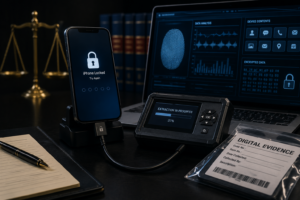
Can Police Get Into Your iPhone? How Apple’s New Security Is Reshaping Digital Evidence
By Douglas E. Huff | Partner, Deandra Grant Law | Dallas, Texas In March 2026, [...]

The Michael Morton Act, the Richard Miles Act and the Heath Opinion Now Under Fire
Most people who are not lawyers do not think much about criminal discovery. It sounds [...]

Pitchford v. Cain: What a Batson Challenge Is, and Why the Jury Is Often Decided Before the First Witness
By Deandra Grant | Deandra Grant Law | Dallas, Texas On May 28, 2026, the [...]

Probabilistic DNA Software in the Courtroom: What Defense Lawyers Need to Watch For
This month Cybergenetics (the company behind the TrueAllele probabilistic genotyping system) announced the launch of [...]
About Deandra Grant Law
Deandra Grant Law is a Texas criminal defense firm with offices in Waco, Dallas, Fort Worth, Allen, Denton, and Rockwall.
Deandra M. Grant, Managing Partner
- More than 30 years in practice, focused on criminal defense and DWI
- Former prosecutor
- J.D.; M.S. in Pharmaceutical Sciences
- Graduate Certificate in Forensic Toxicology
- ACS-CHAL Forensic Lawyer-Scientist from the American Chemical Society
- Standardized Field Sobriety Test (SFST) Instructor
- Texas Super Lawyer since 2011
- Author of 17 law books including Assault Charges in Texas
Douglas E. Huff, Partner
- ACS-CHAL Forensic Lawyer-Scientist
- Digital forensics and electronic evidence training
- Extensive Texas trial experience
James Lee Bright, Of Counsel
- National federal criminal defense practice
- Admitted to all four Texas federal districts (including the Western District of Texas, which covers McLennan County), the District of Columbia, the Fifth Circuit Court of Appeals, and the Supreme Court of the United States
Contact Our Waco Domestic Violence Attorneys
Domestic violence cases are moving the day of arrest. An Emergency Protective Order has issued. The alleged victim has given initial statements. Digital evidence (text messages, call records, social media) has been collected. Defense involvement before the state’s narrative solidifies often determines whether the case becomes a felony or stays a misdemeanor, whether a first-offense plea carries Lautenberg or avoids it, and whether the long-tail collateral consequences are manageable or permanent.
Call Deandra Grant Law at (254) 735-3588 to schedule a consultation. We serve Waco, Hewitt, Woodway, Bellmead, and all of McLennan County from our Waco office.
Client Reviews

“Deandra Grant Law – Criminal & DWI Defense handled my case with diligence and professionalism. Deandra Grant’s reputation is stellar and now I know why. She has a team of individuals who provide quality service.”
N. Coulter


(214) 225-7117
Experienced DWI Defense