
Understanding the GC-FID: How the Instrument That Decides DWI Blood Test Cases Actually Works

GC-FID is the instrument method most Texas forensic labs use to measure alcohol in blood. It separates volatile compounds, identifies the ethanol peak, and calculates a concentration from calibration standards. When the method is properly validated, maintained, and reviewed, it can be reliable. But the final number depends on the whole run: sample preparation, headspace conditions, column separation, internal standard, calibration, quality controls, and chromatogram review. A one-page lab report does not show all of that. To know whether the result is trustworthy, the defense has to examine the underlying data.
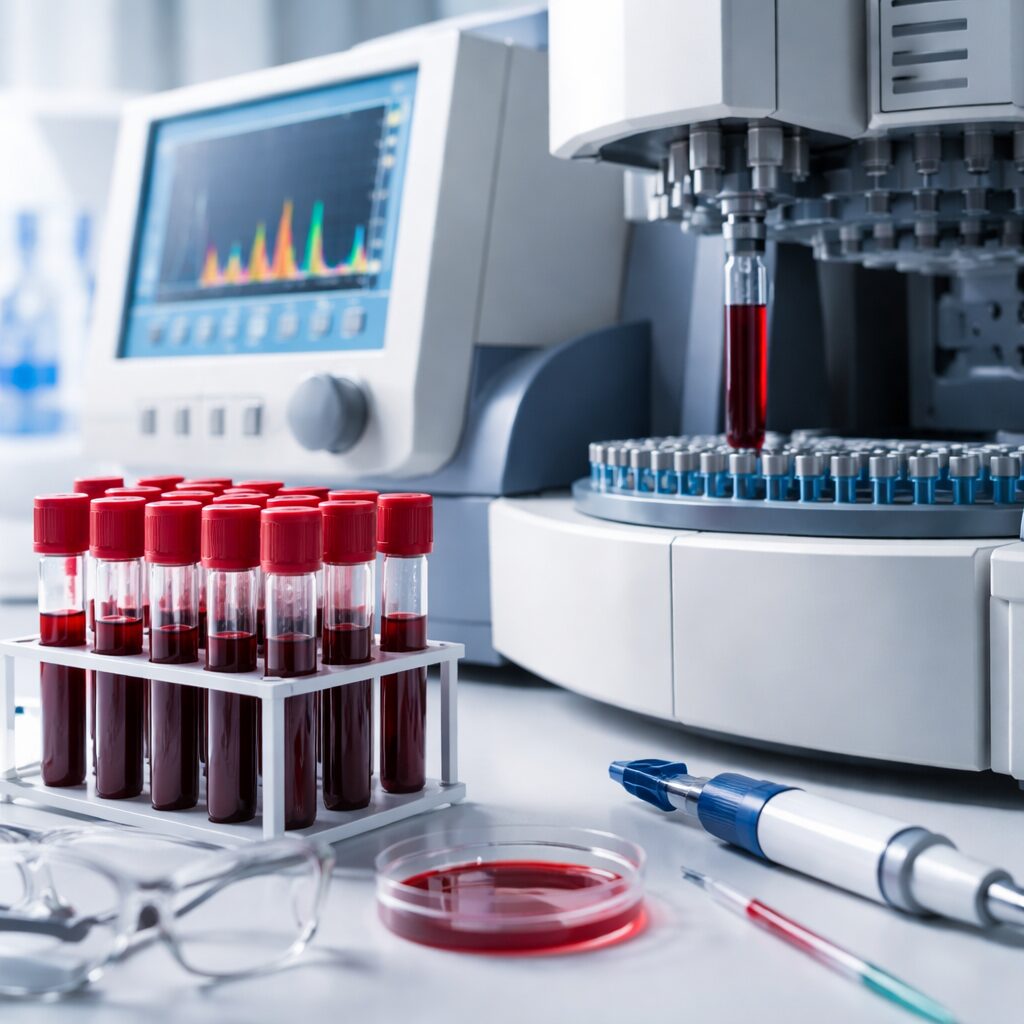
If you were arrested for DWI in Texas and a blood sample was taken, the number that the prosecution will use against you in court was almost certainly generated by a specific laboratory instrument: a headspace gas chromatograph with flame ionization detection, or HS-GC-FID. This instrument is used in crime labs across Texas and the nation to analyze blood samples for ethanol content. The result it produces (i.e. your reported blood alcohol concentration) is treated by prosecutors and juries as scientific fact.
But the GC-FID is not a magic box that produces infallible numbers. It is a complex analytical instrument with multiple components, each of which must function correctly and be properly maintained for the result to be reliable. Understanding how it works, and where it can fail, is essential to challenging blood test evidence in DWI cases.
I teach this material to attorneys and scientists at Axion Analytical Labs in Chicago as part of the ACS Forensic Chromatography course. What follows is a plain-language explanation of the instrument and the process, with an emphasis on the points that matter for defense.
The Big Picture: What the GC-FID Does
The GC-FID takes a blood sample, extracts the volatile compounds from it (including ethanol), separates those compounds from each other, and measures the amount of ethanol present. The result is expressed as a concentration in grams of ethanol per 100 milliliters of blood, which is the unit Texas law uses to define the offense in a blood case. A blood laboratory does not report a breath figure, and it has no reason to: the breath standard is a separate statutory measurement produced by a different instrument, and the two are explained side by side on The Legal BAC Limit.
The process has four main stages: sample preparation (headspace extraction), separation (gas chromatography), detection (flame ionization), and quantitation (comparison to known standards).
Stage 1: Headspace Extraction
A small aliquot of the blood sample is placed in a sealed glass vial and heated in a headspace oven (typically to 50–70°C). As the sample heats, volatile compounds (including ethanol) evaporate from the liquid blood into the airspace (headspace) above the liquid. The composition of the headspace gas reaches an equilibrium that is proportional to the concentration of volatiles in the liquid. An autosampler then pierces the vial’s septum with a needle and withdraws a precise volume of the headspace gas for injection onto the chromatographic column.
Where errors can occur: If the headspace oven temperature is inconsistent, the equilibration time is insufficient, or the autosampler needle is contaminated with residual ethanol from a previous high-concentration sample (carryover), the amount of ethanol in the injected gas may not accurately represent the ethanol in the blood sample.
Stage 2: Gas Chromatography (Separation)
The headspace gas is injected into the GC’s inlet port and carried by an inert carrier gas (typically helium or nitrogen) through a long, thin capillary column coated with a chemical stationary phase. Different compounds interact with the stationary phase to different degrees, causing them to travel through the column at different rates. Ethanol has a specific retention time (the time it takes to travel from the inlet to the detector) under a given set of conditions (column type, temperature program, carrier gas flow rate).
The separation is critical because the detector at the end of the column responds to any compound that produces ions in a flame, not just ethanol. If a compound other than ethanol happens to have a retention time similar to ethanol on the column being used, it will arrive at the detector at the same time and be counted as ethanol. This phenomenon is called coelution, and it produces a falsely elevated ethanol result.
Compounds that can potentially coelute with ethanol: Depending on the column and conditions, these may include acetone, acetaldehyde (a metabolic byproduct of ethanol that may be present in some samples), methanol, isopropanol, and other low-molecular-weight alcohols or volatiles. Acetone is worth singling out: the body produces it during fat metabolism and it runs high in diabetic individuals experiencing ketoacidosis, so a diabetic driver can reach the laboratory with an endogenous interferent already in the sample. A well-validated method uses a column and conditions that resolve ethanol from common interferents, but validation does not guarantee resolution from every possible substance in every sample. Some of those compounds are produced inside the tube itself after collection, which is covered on What Is In Vitro Fermentation?
Stage 3: Flame Ionization Detection (FID)
As compounds exit the column, they enter the FID, where they pass through a hydrogen-air flame. Organic compounds are ionized in the flame, producing electrically charged particles. These ions are collected by an electrode, generating an electrical current proportional to the mass of organic material entering the flame. This current is amplified and recorded as a signal over time, producing a chromatogram which is a graph with peaks corresponding to each separated compound.
The area under the ethanol peak is proportional to the amount of ethanol in the injected sample. The FID is highly sensitive and has a wide linear dynamic range, making it well-suited for forensic ethanol analysis.
Where errors can occur: The FID responds to virtually any organic compound that can be ionized in a flame. It is not specific to ethanol. The specificity comes entirely from the chromatographic separation in Stage 2. If the separation fails due to column degradation, temperature programming errors, or the presence of an unexpected interferent, the FID will faithfully measure whatever arrives at the detector, whether it is ethanol or not.
Stage 4: Quantitation (Calibration and Internal Standards)
The raw FID signal tells you only how much ionizable organic material was present. To convert that signal into a BAC concentration, the lab must calibrate the instrument using known ethanol standards, which are samples containing precisely measured concentrations of ethanol. These standards are analyzed alongside the unknown samples, and the instrument’s response is plotted as a calibration curve (signal vs. concentration). The unknown sample’s ethanol peak area is then compared to the calibration curve to determine its concentration.
Most forensic methods also use an internal standard which is a compound added to every sample and standard at a known, constant concentration. The ratio of the ethanol peak area to the internal standard peak area is used for quantitation, which compensates for small variations in injection volume, instrument response, and headspace conditions. Common internal standards include n-propanol and t-butanol.
Where errors can occur:
- Calibration standards that were improperly prepared, expired, or stored incorrectly will produce an inaccurate calibration curve, and every result calculated from that curve will be wrong
- If the internal standard was degraded, contaminated, or added at an incorrect volume, the ratio calculation is compromised
- If the calibration curve is not linear across the concentration range of interest, or if the unknown sample falls outside the calibrated range, the quantitation may be unreliable
- If the lab does not run quality control (QC) samples at known concentrations within each analytical batch to verify accuracy and precision, there is no independent check on the system’s performance
Reading the Chromatogram: What Defense Attorneys Should Look For
The chromatogram is the primary data output of the GC-FID. It is the objective record of what the instrument measured. Defense attorneys should always request the chromatogram and not just the reported number to look for:
- Unexpected peaks: Peaks at retention times other than ethanol and the internal standard may indicate the presence of interferents or contaminants
- Asymmetric or shouldered ethanol peaks: A pure ethanol peak should be symmetrical, carrying the Gaussian shape of a single compound. A peak that is asymmetric, unusually broad, or showing a shoulder may indicate coelution with another compound
- Baseline noise or drift: Excessive baseline noise can indicate instrument problems, column contamination, or detector malfunction
- Internal standard anomalies: If the internal standard peak area varies significantly from the calibration standards, something went wrong during sample preparation
- Air blanks: The blank runs between samples should show no detectable ethanol. If they do, carryover from a previous sample is occurring
- Whether a second column was run: A laboratory can confirm a result on a second column with different separation properties. If the two columns disagree, coelution on one or both is the likely explanation. Not all laboratories run dual-column confirmation on DWI samples, and whether yours did is a discoverable fact
The Bottom Line
The GC-FID is a reliable instrument when properly maintained, calibrated, and operated under validated conditions. But “when properly maintained, calibrated, and operated” is doing a lot of work in that sentence. Every component in the process, from the headspace oven to the calibration standards to the internal standard to the column to the detector, must be functioning correctly for the result to be trustworthy. A failure at any point can produce a number that is scientifically indefensible.
None of that is guaranteed by the laboratory holding an accreditation certificate. What accreditation actually evaluates, and three accredited laboratories that produced unreliable results for years anyway, is on Why Lab Accreditation Does Not Guarantee Your Test Results Are Correct. Texas forensic laboratories operate under the oversight of the Texas Forensic Science Commission, whose disclosure and complaint records are public. Where this instrument sits in the larger sequence of a blood case is on Can a DWI Blood Test Be Wrong?
At Deandra Grant Law, we teach this material to other attorneys and scientists at Axion Analytical Labs. When we review your blood test results, we examine the chromatogram, the calibration data, the QC results, and the maintenance records — not just the final number. Call (214) 225-7117 or visit texasdwisite.com.
The other guides in this section.
The Breath Test
The Blood Test
The Roadside Tests
Drug Cases
The Science of the Number
The science on this page is the raw material. The moves that turn it into a suppressed result, an excluded expert or a dismissal live in Defenses.
Which county your case is filed in changes how it is charged, who prosecutes it, and which court hears it.
Deandra M. Grant, JD, GC, MS, ACS-CHAL Forensic Lawyer-Scientist
She holds a Master of Science in Pharmaceutical Science and a Graduate Certificate in Forensic Toxicology, both from the University of Florida. She is the author of The Texas DWI Manual and has defended Texas DWI cases since 1994.
Charged With a DWI in Texas?
Intake answers 24/7, and if your case is one we can take on, we schedule a free consultation with an attorney.
Request a Free Case Evaluation
Tell us what happened. We'll respond as soon as possible.