
Medical and Physiological Conditions That Can Produce a False Breath Test Result in Texas

Yes. Medical conditions and physiology can make a breath test look higher than it should. GERD can push alcohol vapor from the stomach into the mouth. Diabetes or ketosis can create acetone in the breath. Fever and breathing patterns can change the amount of alcohol in a sample. Dental work, medications, inhalers, and workplace solvent exposure can also matter. The Intoxilyzer 9000 cannot diagnose these conditions, and the officer’s report usually will not explain them. If the number does not fit the facts, medical history and records may be central to the defense.
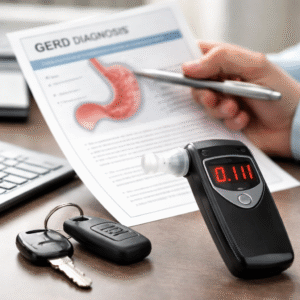
When a Texas law enforcement officer hands you an Intoxilyzer 9000 printout showing a BAC above the legal limit, that number carries enormous weight. Prosecutors treat it as objective science. Juries tend to accept it at face value. But the instrument that produced it operates on a fundamental assumption that the only compound present in your breath sample that absorbs infrared light at the wavelengths it measures is ethyl alcohol.
That assumption is not always correct.
A range of medical conditions, physiological states, dietary choices, and occupational exposures can introduce compounds into your breath or mouth that the Intoxilyzer 9000 may misread as alcohol or can cause the instrument to overestimate your BAC even when alcohol is present. Understanding which conditions create this risk, and how they interact with the instrument’s detection methodology, is the foundation of a breath test defense built on actual science rather than generic objection.
One procedural point that applies across several of the conditions below: Texas breath testing protocols require the administering officer to observe the defendant continuously for 15 minutes immediately before the test. That observation period exists specifically to guard against mouth alcohol contamination. If the observation period was not properly observed and documented, the foundational validity of the test is in question regardless of any medical condition and that is always one of the first things we examine. How that safeguard works and where it breaks down is on Mouth Alcohol and the Breath Test.
GERD and Acid Reflux
Gastroesophageal reflux disease causes stomach contents (including any alcohol present in the stomach) to move back up into the esophagus and oral cavity. When a reflux event occurs, alcohol vapor from the stomach can be present in the mouth at the time of the breath test. The Intoxilyzer 9000 is designed to sample deep lung air, which reflects blood alcohol concentration. It has no reliable mechanism to distinguish between alveolar air and alcohol vapor that originated in the stomach rather than the lungs.
The result is mouth alcohol contamination which is a phenomenon where residual alcohol in the oral cavity produces a reading that is significantly higher than the actual BAC. A reflux event immediately before or during the test, even one the defendant may not consciously notice, can produce a dramatically elevated result.
The instrument’s slope detector is designed to identify some mouth alcohol artifacts, but it is not a complete safeguard. A slope detector that did not flag an abnormality does not mean mouth alcohol was absent. It means the artifact was not severe enough to trigger the algorithm. When GERD is part of a defendant’s medical history, the interaction between reflux events and the observation period documentation is a critical line of inquiry.
Diabetes and Ketosis
Diabetes (particularly poorly controlled or undiagnosed diabetes) can produce measurable amounts of acetone in the breath through a process called ketosis. When the body cannot properly metabolize glucose, it turns to fat as an energy source. The metabolic byproducts of fat metabolism include ketone bodies, one of which is acetone.
Acetone is exhaled through the lungs. The Intoxilyzer 9000 uses infrared spectroscopy to identify compounds by their absorption of light at specific wavelengths and acetone absorbs infrared light at wavelengths that partially overlap with ethyl alcohol. Depending on the concentration of acetone in the breath and the specific detection channels the instrument uses, acetone can register as alcohol and inflate the reported BAC.
Diabetic ketoacidosis is a serious condition that can develop rapidly in Type 1 diabetics and can produce acetone concentrations in the breath that are substantial enough to produce a meaningfully elevated false reading. A defendant who appeared confused, unsteady, or otherwise symptomatic at the roadside may have been experiencing a metabolic crisis rather than alcohol impairment. Those two clinical pictures can look similar to an officer conducting a roadside investigation.
Non-Diabetic Ketosis: High-Protein and Ketogenic Diets
You do not need to be diabetic to be in ketosis. The metabolic state that produces acetone in the breath is triggered any time the body shifts from glucose to fat metabolism including in otherwise healthy individuals following ketogenic or very low-carbohydrate diets.
The ketogenic diet has become widespread. A defendant who has been following a strict low-carbohydrate diet for weeks or months may have chronic low-level ketosis with measurable acetone in their breath at baseline that is entirely unrelated to any alcohol consumption. If that defendant consumed even a modest amount of alcohol, the combination of actual BAC and acetone-related interferent can produce a breath test result that significantly overstates the alcohol component.
This is not a hypothetical edge case. It is a well-documented phenomenon in the forensic toxicology literature, and it is relevant in any case where the defendant’s dietary habits are known or can be established through medical records or personal history.
Fever and Elevated Body Temperature
The Intoxilyzer 9000’s conversion of breath alcohol concentration to estimated BAC relies on an assumed breath temperature of approximately 34 degrees Celsius which is the normal temperature of deep lung air in a person whose core body temperature is normal. The relationship between breath temperature and reported BAC is direct: higher breath temperature means more alcohol vapor per unit of air, which the instrument reads as a higher BAC.
The distinction between body temperature and breath temperature is where this argument is usually made badly, so it is worth stating precisely. Deep lung air leaves the body several degrees cooler than core temperature, which is why the assumed figure is 34°C rather than the 37°C of a healthy core. A fever does not create a gap between 37 and 34. It shifts both figures upward together. What matters is the amount by which the person’s breath temperature exceeded the 34°C the instrument assumed, and published research on the temperature coefficient of breath alcohol testing puts the effect at roughly six to seven percent for each degree Celsius of that excess.
So a defendant running a fever of about two degrees above normal is blowing breath at roughly 36°C rather than 34°C, and the reported figure may overstate the true concentration by something in the range of twelve to fourteen percent. That is not a rounding error at 0.08. It is the difference between a per se case and a contested one. The same mechanism, and the assumed conversion it sits inside, is covered on Partition Ratio Variability.
If a defendant was ill at the time of arrest (running a fever from infection, flu, or any other febrile condition) and that condition was not documented or considered, the breath test result deserves scrutiny on this basis alone.
Occupational Chemical Exposure
The Intoxilyzer 9000’s infrared detection methodology identifies compounds based on how they absorb light at specific wavelengths. Ethyl alcohol has a characteristic absorption pattern but it is not unique. A number of compounds present in industrial and occupational environments share absorption characteristics that can register on the instrument.
Compounds that have been documented as potential interferents include toluene, xylene, acetone, methyl ethyl ketone, isopropanol, and various hydrocarbons and solvents. Individuals who work in painting, auto body repair, construction, manufacturing, chemical processing, dry cleaning, or laboratory environments may have occupational exposure to one or more of these compounds at levels that can affect a breath test result.
The practical defense implication: a defendant who works in an environment with regular chemical exposure, and who was tested shortly after leaving work, may have residual compounds in their respiratory tract that the Intoxilyzer 9000 cannot reliably distinguish from ethyl alcohol. The instrument’s interferent detection system provides some protection, but it does not screen comprehensively for all potentially interfering compounds and a result that was not flagged by the interferent detector is not necessarily free of interferent influence.
Ethanol itself belongs on this list, and it is the case people find hardest to believe. Workers exposed to ethanol vapor in the air, rather than to a solvent that merely resembles ethanol, have produced positive evidential breath results without drinking anything at all. The controlled study documenting it is on A Horse Vet Blew a 0.087 Without Drinking.
Medications Containing Alcohol or Interfering Compounds
A range of common medications contain ethyl alcohol as a carrier or preservative. Liquid formulations of cough syrups, oral rinses, certain herbal preparations, and some prescription liquid medications use alcohol as a solvent. If a defendant used such a medication shortly before the breath test, residual alcohol in the oral cavity can contaminate the sample. This is a mouth alcohol issue that is identical in mechanism to the GERD scenario, but with a different source.
Beyond alcohol-containing medications, certain compounds present in pharmaceutical preparations can potentially interfere with IR-based breath testing. Asthma inhalers, in particular, have been a subject of scrutiny in DWI litigation. Some propellants and active compounds used in metered-dose inhalers have absorption characteristics that may interact with the Intoxilyzer’s detection channels. The clinical and forensic literature on specific inhaler formulations and their effect on breath test results is an area where expert analysis is often warranted.
A complete medication history is part of what we establish in any breath test case where the reported result is inconsistent with the defendant’s described alcohol consumption or clinical presentation.
What These Conditions Mean for Your Defense
None of the conditions described above automatically invalidate a breath test result. What they do is raise documented, scientifically grounded questions about whether the reported number accurately reflects the defendant’s blood alcohol concentration at the time of the test.
Establishing these questions as part of a defense requires more than asserting a medical history. It requires understanding the instrument’s methodology well enough to explain precisely how the condition interacts with it and presenting that explanation through expert testimony that a jury can follow and credit.
As an ACS-CHAL Forensic Lawyer-Scientist with a Master’s Degree in Pharmaceutical Science, I approach breath test evidence with a level of analytical depth that most defense attorneys cannot bring to these cases. The chemistry underlying each of these conditions (ketone body formation, infrared absorption spectra, the partition ratio and its temperature dependence, the pharmacology of alcohol-containing medications) is not foreign territory. It is the foundation of how I evaluate every breath test case at Deandra Grant Law.
If you have been charged with DWI in Texas based on a breath test result, and you have any of the medical conditions, dietary practices, occupational exposures, or medication histories described in this piece, that information is relevant to your defense and needs to be examined. The full set of questions a breath result has to survive is on How Accurate Is the Breathalyzer in Texas.
A diagnosed condition is also a different and stronger argument than a physiological state you have to infer, because it is provable with medical records. How those conditions are developed and presented across the whole case, roadside evidence included, is on Medical Conditions Defense.
Breath Test Defense at Deandra Grant Law
Managing Partner Deandra Grant brings more than 30 years of DWI defense experience, a Master’s Degree in Pharmaceutical Science, and an ACS-CHAL Forensic Lawyer-Scientist designation to every breath test case. That combination of legal and scientific training means your case is evaluated not just as a legal matter, but as a forensic one. Call (214) 225-7117 or visit texasdwisite.com to schedule a confidential consultation.
{
“@context”: “https://schema.org”,
“@type”: “BlogPosting”,
“headline”: “Medical and Physiological Conditions That Can Produce a False Breath Test Result in Texas”,
“author”: {
“@type”: “Person”,
“name”: “Deandra Grant, J.D., M.S.”
},
“datePublished”: “2026-01-24”,
“mainEntityOfPage”: {
“@type”: “WebPage”,
“@id”: “https://www.texasdwisite.com/dwi/medical-conditions-breath-test/”
},
“description”: “Learn how medical conditions like GERD, diabetes, ketosis, fever, and chemical exposure can lead to false breath test results in Texas DWI cases.”,
“articleBody”: “When a Texas law enforcement officer presents an Intoxilyzer 9000 result showing a BAC above the legal limit, that number is often treated as scientific fact. Yet the device relies on assumptions that are not always accurate. Various medical conditions, physiological states, and environmental exposures can introduce compounds that interfere with infrared breath testing. GERD and acid reflux can cause alcohol vapor from the stomach to contaminate the mouth, leading to falsely elevated readings. Diabetes and ketosis can produce acetone in the breath, which may be misread as alcohol. Even non-diabetic individuals on ketogenic diets can experience similar effects. Elevated body temperature can increase breath alcohol readings due to the relationship between temperature and vapor concentration. Occupational exposure to chemicals such as toluene, xylene, and other solvents can also interfere with detection. Certain medications, including alcohol-based cough syrups and inhalers, may contribute to inaccurate results through either mouth alcohol contamination or chemical interference. Texas protocols require a 15-minute observation period before testing to reduce contamination risks, but failures in this process can undermine the validity of results. These scientific and procedural factors form the basis of a strong DWI defense when properly analyzed and presented.”,
“keywords”: “false breath test Texas, Intoxilyzer 9000 errors, GERD breath test, diabetes BAC false reading, ketosis breath alcohol, Texas DWI defense, breathalyzer inaccuracies”,
“image”: [
“https://www.texasdwisite.com/wp-content/uploads/2026/01/GERD-as-a-DWI-Defense-in-Texas-300×300-1.png”
],
“url”: “https://www.texasdwisite.com/dwi/medical-conditions-breath-test/”
}
Related: GERD and acid reflux in depth is in GERD and Acid Reflux. Conditions that change how you appear to an officer rather than how the instrument reads are on Medical Conditions That Mimic Intoxication.


The other guides in this section.
The Breath Test
The Blood Test
The Roadside Tests
Drug Cases
The Science of the Number
The science on this page is the raw material. The moves that turn it into a suppressed result, an excluded expert or a dismissal live in Defenses.
Which county your case is filed in changes how it is charged, who prosecutes it, and which court hears it.
Deandra M. Grant, JD, GC, MS, ACS-CHAL Forensic Lawyer-Scientist
She holds a Master of Science in Pharmaceutical Science and a Graduate Certificate in Forensic Toxicology, both from the University of Florida. She is the author of The Texas DWI Manual and has defended Texas DWI cases since 1994.
Charged With a DWI in Texas?
Intake answers 24/7, and if your case is one we can take on, we schedule a free consultation with an attorney.
Request a Free Case Evaluation
Tell us what happened. We'll respond as soon as possible.