
Roadside Cannabis Testing in 2026: The Science, the Devices, and What’s Actually Ready for the Courtroom

Roadside cannabis tests can detect THC or related substances, but they cannot prove impairment the way alcohol testing is often presented. Cannabis does not behave like alcohol in the body. THC levels rise and fall quickly, can remain detectable after impairment ends, and vary widely between occasional and chronic users. Oral fluid, breath, and sensor devices may show recent exposure, but none can reliably say whether a person lost the normal use of mental or physical faculties while driving. In Texas, that distinction matters because there is no per se THC limit. Presence is not impairment.
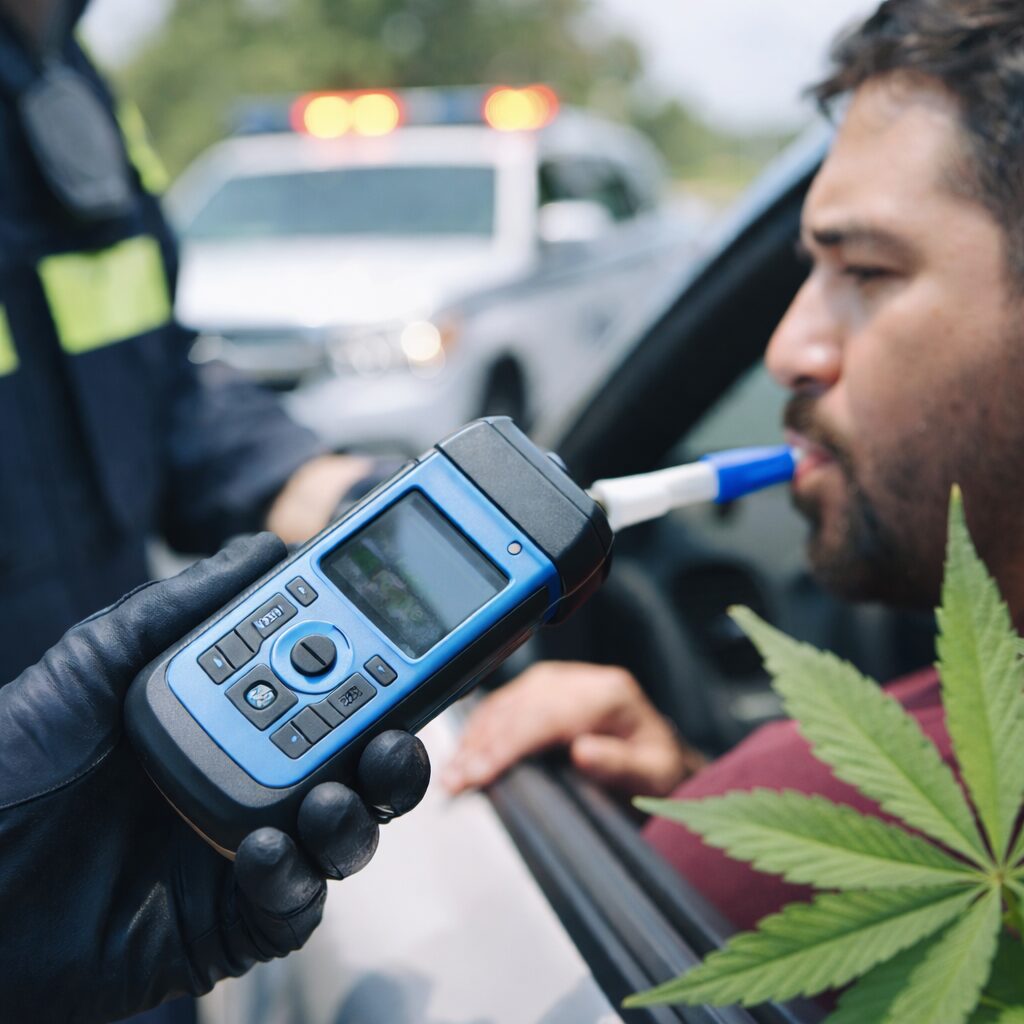
As cannabis legalization expands across the United States, law enforcement agencies are searching for a reliable way to detect recent cannabis use at the roadside. The goal is understandable: impaired driving kills people, and officers need tools. But the science of cannabis detection is fundamentally different from the science of alcohol detection, and the technologies now being marketed to police departments across the country (including in Texas) have significant scientific limitations that every defense attorney, judge, and juror needs to understand.
This article provides a comprehensive, science-based assessment of the current state of roadside cannabis testing technology. We examine the major device categories (oral fluid (saliva) testing, breath-based testing, and emerging electrochemical sensors) and evaluate each on the criteria that matter most: analytical validity, correlation with impairment, forensic defensibility, and readiness for the courtroom.
The central problem is this: no currently available technology can determine whether a driver is impaired by cannabis at the time of the traffic stop. Every device discussed in this article detects the presence of THC or its metabolites. None of them measure impairment. This distinction is not a technicality. It is the fundamental scientific reality that should guide every legal and policy decision about roadside cannabis testing.
The Fundamental Science Problem: THC Is Not Alcohol
Roadside alcohol testing works because the relationship between blood alcohol concentration (BAC) and behavioral impairment is well-established, dose-dependent, and relatively consistent across individuals. Decades of controlled research support the 0.08 g/dL legal limit. Breath alcohol instruments exploit a predictable physiological relationship between blood alcohol and exhaled breath (the partition ratio), and while that ratio varies among individuals, the general correlation is scientifically sound.
Cannabis is fundamentally different. THC (delta-9-tetrahydrocannabinol) does not behave like ethanol in the body:
- Rapid redistribution: After inhalation, THC blood concentrations peak within minutes and then fall rapidly as the lipophilic compound redistributes into fatty tissues. A person can be significantly impaired with a declining blood THC level, or completely unimpaired with a detectable residual THC concentration.
- No reliable dose-response relationship: Unlike alcohol, there is no scientifically validated THC blood concentration that reliably predicts impairment. The National Institute of Justice concluded that THC levels in bodily fluids were not reliable indicators of marijuana intoxication. The National Institute of Standards and Technology (NIST) reached a similar conclusion in its 2023 breath study.
- Tolerance: Chronic cannabis users develop significant pharmacodynamic tolerance, meaning they can function normally at blood THC concentrations that would impair a naive user. This individual variability makes per se THC limits scientifically indefensible. The pharmacology behind it, across cannabis, benzodiazepines, opioids, and prescription stimulants, is on The Tolerance Problem.
- Matrix discordance: THC concentrations in oral fluid, blood, breath, and urine do not correlate reliably at the individual level. A meta-analysis published in the peer-reviewed literature confirmed poor correlation between oral fluid and blood THC concentrations, meaning that an oral fluid result cannot predict what is happening in the blood, or in the brain.
- Residual detection: THC metabolites (particularly THC-COOH) can be detected in urine for days to weeks after last use in chronic users. Even in blood, THC can be detectable at low concentrations for 24–48 hours or longer. Oral fluid THC can persist for more than 22 hours after a single smoking session.
These pharmacokinetic and pharmacodynamic realities mean that the conceptual model underlying alcohol testing (i.e. measure a concentration, infer impairment) does not apply to cannabis. Any technology that detects THC presence without establishing impairment is answering the wrong question.
Oral Fluid (Saliva) Testing Devices
Oral fluid testing is the most widely deployed roadside cannabis screening technology. The two dominant devices in law enforcement use are the Abbott SoToxa and the Dräger DrugTest 5000. Both use lateral flow immunoassay technology to detect THC and other drugs in saliva collected via an oral swab.
What Oral Fluid Testing Actually Measures
Oral fluid testing detects the parent drug, meaning the active substance itself, rather than the inactive metabolites that dominate a urine result. That is a real analytical advantage over urine, and it is the strongest scientific argument the technology has. THC appears in oral fluid shortly after use. Cocaine and its active metabolite appear for a brief window. Methamphetamine and MDMA are detectable for hours.
The detection window is correspondingly shorter. Oral fluid THC is typically detectable for 4 to 8 hours after use in occasional users, and considerably longer in heavy chronic users, rather than the days to weeks that urine THC can persist after cessation. Oral fluid is therefore a better proxy for recent use than urine is.
Recent use is not impairment, and the distance between the two is where the defense of these cases lives. Fitzgerald et al. (2025), in Clinical Chemistry, documented that regular cannabis users can carry blood THC concentrations above per se limits after 48 hours of abstinence with no evidence of driving impairment. The same reasoning applies to oral fluid: a positive result places a substance in the mouth somewhere inside a window measured in hours, and says nothing about faculties at the wheel.
One further limitation applies to every roadside device on the market. None of them report a concentration. The SoToxa and the DrugTest 5000 each return a bare positive or negative for each panel. There is no number to interpret, no number to challenge, and no number for the State to build a dose-response argument on. Any testimony that a roadside oral fluid test showed “a high level” of something is describing a reading the device does not produce.
Abbott SoToxa
- Technology: Handheld, portable immunoassay-based analyzer. Uses an oral fluid collector swab inserted into the device; results in approximately 5 minutes.
- Panel: THC, cocaine, opiates, amphetamine, methamphetamine, benzodiazepines (6-drug panel)
- THC cutoff: 25 ng/mL (oral fluid) in the standard configuration
- Manufacturer claims: Sensitivity ≥90%, specificity ≥99%, accuracy ≥95% (laboratory validation data)
- Deployed: Alabama (first comprehensive state oral fluid program), Michigan, Minnesota pilot, and select jurisdictions in other states
Scientific Strengths:
- Highly portable (about the size of a handheld radio), and preferred by 83% of officers in the Minnesota pilot over the Dräger
- Fast results (approximately 5 minutes)
- Non-invasive sample collection
- Alabama’s 5-year program showed THC positivity rate of 90% in oral fluid vs. 75% in paired blood samples, suggesting reasonable detection sensitivity for THC
Scientific Weaknesses:
- Fentanyl is a panel-dependent blind spot. The six-drug configuration fielded in the state programs evaluated to date does not include fentanyl or its analogs. Minnesota’s pilot detected fentanyl 69 times in laboratory confirmation testing, none of which the roadside device had any capacity to flag. Abbott has since marketed a configuration that adds a fentanyl panel, so the live question in any given case is which configuration that agency actually deployed on that night. Ask for it in discovery rather than assuming either answer.
- Poor amphetamine performance. Alabama’s 5-year evaluation found that SoToxa accuracy fell below 80% for amphetamine detection, failing to meet the ROSITA/DRUID performance thresholds.
- Oral contamination vs. systemic THC. After smoking cannabis, residual THC from smoke deposits in the oral cavity can produce extremely high oral fluid concentrations (>1,000 ng/mL) that reflect local contamination, not systemic absorption. These concentrations decline rapidly but can persist for hours, potentially producing positive results in individuals who are no longer impaired.
- No impairment correlation. A positive SoToxa result confirms recent THC exposure. It does not establish impairment. Abbott’s own position is that SoToxa is a “screening device” requiring laboratory confirmation, an important limitation that is sometimes lost in the field.
- Forensic Use Only, by the manufacturer’s own designation. Abbott labels the SoToxa Forensic Use Only, which excludes clinical diagnostic and workplace use, and its product documentation states that a positive result should be confirmed by a second method such as GC-MS or LC-MS. The device is not offered as a stand-alone answer even by the company selling it.
- The THC assay specifically failed the performance standard. A DOT-commissioned evaluation of the DDS2, the SoToxa’s predecessor device, found that it met ROSITA performance requirements in aggregate but that the THC assay did not. In a cannabis case the aggregate figure is not the relevant figure, and the distinction is worth putting to the State’s witness directly.
- Laboratory certification gap. The Department of Transportation issued final rules permitting oral fluid testing effective June 1, 2023, but laboratory certification to actually perform it lagged years behind the rule. Confirm the current HHS-certified laboratory list before relying on this point, because where the confirmation was not run by a certified laboratory, the gap undermines the evidentiary chain.
Dräger DrugTest 5000
- Technology: Benchtop immunoassay analyzer. Larger than SoToxa; typically operated from the trunk of a patrol vehicle or at a checkpoint station.
- Panel: THC, cocaine, opiates, amphetamines, methamphetamine, benzodiazepines, methadone (configuration varies). Qualitative only: a positive or negative per drug class, with no numerical concentration output.
- THC cutoff: 5 ng/mL (earlier versions used 25 ng/mL)
- Deployed: Canada (national program since 2018), Minnesota pilot, European jurisdictions, select U.S. programs
Scientific Strengths:
- Lower THC cutoff (5 ng/mL) provides better sensitivity than devices with 25 ng/mL cutoffs
- Longer track record with extensive peer-reviewed evaluation
- Updated version (5 ng/mL cutoff) showed 93% sensitivity and 90% efficiency for cannabinoids in suspected drugged drivers
Scientific Weaknesses:
- Cocaine positives were overwhelmingly wrong. A landmark Norwegian study (Gjerde et al., 2018, Journal of Analytical Toxicology) evaluated the Dräger DrugTest 5000 in 369 suspected drug-impaired drivers. When the device produced a positive cocaine result, 87.1% of those positives were false when compared against blood concentrations below Norwegian per se limits. Dräger has not publicly addressed this finding.
- Poor benzodiazepine detection. Both the Alabama 5-year review and the Minnesota pilot confirmed that benzodiazepine detection fell below acceptable thresholds. This is a significant gap given the prevalence of benzodiazepine-involved impaired driving.
- Temperature sensitivity. The Dräger device requires a controlled operating temperature range. Canadian pilot programs documented operational challenges in cold weather, a relevant concern for any jurisdiction with variable outdoor temperatures.
- Size and portability. The DrugTest 5000 is significantly larger and less portable than the SoToxa. Minnesota officers overwhelmingly preferred SoToxa for roadside practicality.
- The manufacturer requires laboratory confirmation. Dräger’s own manual requires a second sample submitted to an accredited laboratory for GC-MS confirmation before any result is used as forensic evidence. A case resting on the roadside screen alone is resting on something the manufacturer itself does not call evidence.
- Same impairment problem. Like SoToxa, the Dräger detects presence, not impairment.
Randox Evidence MultiSTAT
- Technology: Benchtop biochip-array immunoassay analyzer capable of simultaneous multi-analyte detection
- Evaluated: Included in Alabama’s 5-year evaluation alongside SoToxa and Dräger
- Status: Less widely deployed in the U.S. than SoToxa or Dräger; primarily used in European and laboratory settings
- Notable: Broader analyte panel than competitors, but larger instrument footprint and higher per-test cost limit field deployment
Screening Versus Confirmation
Every roadside oral fluid test, whatever the brand on the case, is a presumptive screen. It returns positive or negative, not a concentration. A positive roadside result can establish probable cause for further investigation. It does not establish that a controlled substance was present in a forensically confirmed quantity, and it cannot be where the analysis stops.
Confirmation by LC-MS/MS or GC-MS produces a specific, quantitative result, and it carries the full set of forensic requirements: a validated collection procedure, an analytical method validated for the oral fluid matrix specifically rather than for blood, an intact chain of custody, and qualified analysts. Oral fluid is a different matrix with different recovery and stability characteristics, and a method validated for blood does not transfer to it by assumption. The confirmatory analysis, not the box at the roadside, is where most oral fluid cases are actually decided.
Breath-Based Cannabis Testing
Hound Labs Cannabis Breathalyzer
The Hound Labs Cannabis Breathalyzer is the most prominent breath-based THC detection device. Founded in 2014 and backed by more than $30 million in venture funding, Hound Labs has positioned its device as the “cannabis breathalyzer” that will do for THC what the Intoxilyzer did for alcohol. The scientific reality is considerably more complicated.
- Technology: Collects breath aerosol particles containing THC. Uses LC-MS/MS (liquid chromatography–tandem mass spectrometry) for laboratory confirmation. On-Demand model uses lateral flow immunoassay for screening with lab confirmation of non-negative results.
- Detection level: Parts per trillion (picograms per milliliter). Screening and confirmation cutoff of 20 pg/mL.
- Detection window: Claims approximately 3-hour window of detection after cannabis use
- Cost: Approximately $5,000 per unit plus approximately $20 per test cartridge
- Validation: One published clinical study (UCSF, 20 participants) showing 100% detection within 15–60 minutes post-smoking, dropping to zero at 6 hours
Scientific Strengths:
- Narrower detection window (~3 hours) than oral fluid or blood testing, potentially more relevant to recent use
- Dual-sample collection (immediate screening + preserved sample for lab confirmation) addresses chain of custody concerns
- Targets active THC (delta-9-THC) rather than inactive metabolites
Scientific Weaknesses:
- Extremely limited validation data. The primary clinical study involved only 20 participants. This is not remotely sufficient for forensic validation. By comparison, the breath alcohol science that underpins the Intoxilyzer is built on decades of research involving thousands of subjects.
- Conflicting independent research. A NIST/University of Colorado study (2023), funded by the Department of Justice, analyzed breath samples from 14 participants before and after smoking cannabis. Researchers concluded that their findings “do not support the idea that detecting THC in breath as a single measurement could reliably indicate recent cannabis use.” Only 8 of 14 subjects showed the expected increase in breath THC after smoking. The authors emphasized that “a lot more research is needed.”
- Order-of-magnitude variability. A peer-reviewed study comparing THC recovery from different breath collection devices (ExaBreath, Hound Labs, BreathExplor) found order-of-magnitude differences in THC quantities recovered approximately one hour after cannabis use. This level of variability undermines any claim of reliable quantitation.
- Aerosol particle theory remains unproven. Unlike ethanol, which is present in breath as a vapor and follows Henry’s Law, THC has extremely low volatility. The current hypothesis is that THC is carried in breath via aerosol particles formed from lung surfactant. This mechanism is not yet well-characterized, and the variables affecting aerosol particle generation (breathing depth, respiratory rate, lung health, ambient temperature) have not been controlled for in validation studies.
- No impairment correlation. Hound Labs itself acknowledges that the device detects “recent use,” not impairment. The company’s own VP has stated that “impairment is really based on how recently you’ve used, not how much is found in your breath,” but this claim conflates recency of use with impairment, which is not the same thing, particularly for chronic users with significant tolerance.
- Not currently deployed for law enforcement DWI. Hound Labs is primarily marketing to employers for workplace testing, not to police for roadside DWI enforcement. The device has not been adopted by any U.S. law enforcement agency for routine roadside use.
Emerging and Experimental Technologies
UT Dallas CannibiSenS
Researchers at the University of Texas at Dallas have developed an electrochemical saliva sensor called CannibiSenS that uses modified screen-printed graphene electrodes to detect THC concentrations in saliva. The device can distinguish between THC and CBD (reducing false positives from legal hemp products) and demonstrated 94% accuracy in spiked saliva samples. This is a promising research-stage technology, but it has not undergone field validation, forensic accreditation, or independent peer review of its performance in real-world conditions.
Harvard EPOCH System
Researchers at Harvard Medical School developed the EPOCH (Exhaled Particle Optoelectronic Cannabinoid High-sensitivity) system, which detected recent cannabis use within 5 minutes in a study of 43 users and 43 non-users. THC concentrations dropped below the recommended European DRUID cutoff within 6 hours. While promising, this remains a research prototype with limited validation data.
University of Pittsburgh Carbon Nanotube Sensor
A team at the University of Pittsburgh developed a THC breathalyzer based on carbon nanotubes that can detect THC molecules at low concentrations. This technology is at the proof-of-concept stage and has not been evaluated in clinical or field settings.
Field Testing for THC Content in Products
Separate from impairment testing, some jurisdictions are evaluating technologies to field-test hemp and CBD products to determine whether they contain more than 0.3% THC (the legal threshold distinguishing hemp from marijuana under federal law). As Sol Bobst has noted, mislabeled products are a common issue. If your client is charged with possession of a product containing greater than 0.3% THC, it is critical to preserve the product, the receipt, the location of purchase, and all product labeling for independent testing.
Where Roadside Cannabis Testing Is Actually Deployed
Despite marketing claims that “24 states have adopted roadside saliva drug testing,” the reality is far more limited. As of early 2026, only four states maintain active programs with regular operational deployment:
- Alabama: The first comprehensive state oral fluid testing program in the U.S. (launched 2019), using SoToxa, Dräger, and Randox. The Alabama Department of Forensic Sciences has published the most extensive U.S. evaluation data.
- Indiana: Deployed approximately 200 devices at an initial cost of $700,000–$800,000, with annual operating costs around $250,000 for test cartridges.
- Michigan: Pilot program with published Phase 2 data showing 87%–96% accuracy for SoToxa compared to oral fluid confirmation.
- Minnesota: The most transparent U.S. pilot program: 57 Drug Recognition Experts collected 329 paired samples. Laboratory testing detected 808 positive drug findings while roadside devices detected only 554, a 31.4% under-detection rate. Cannabis showed 86% concordance. 62% of tests found polysubstance use.
Texas does not currently have a state-run roadside oral fluid testing program, but it is not standing still either. For how the State builds a drug DWI case today, without any roadside device, see our overview of how Texas police prove a drug DWI. The state has been developing an oral fluid program through a pilot project examining roadside collection in DWI investigations, with designated devices and protocols for collection and confirmation. The SoToxa is the device most often discussed in that development work. Defense attorneys in Texas should be ready for this evidence now rather than on the day it lands in a file.
Texas also has no per se limit for THC or any other drug, which means that even a confirmed laboratory concentration does not establish intoxication as a matter of law. The State still has to prove loss of the normal use of mental or physical faculties, and how that works is on The Legal BAC Limit and Driving Under the Influence of Drugs. In practice the officer’s observations carry the weight instead, frequently through a Drug Recognition Expert evaluation, which is taken apart on Drug Recognition Experts.
When it does land, the checklist is consistent: which device performed the roadside screen and what its documented error rate is for the drug at issue; whether the collection procedure was followed; how long the sample sat between collection and analysis; whether the laboratory’s method was validated for oral fluid rather than for blood; what cut-off was applied and what supports it; and whether a positive result, even an accurate one, establishes anything at all about impairment at the time of driving.
Oral Fluid Outside the Roadside
Oral fluid testing also appears in probation and bond supervision programs, where the same detection-window facts cut in a different direction. The shorter window makes oral fluid better at catching recent use, but it also means a person who used cannabis several days before a test can screen negative on oral fluid while screening positive on urine. For anyone on supervision whose results are being used to seek revocation, which matrix was tested is not a technicality. It sets the outer limit of what the result is capable of showing.
Defense Implications: What Every Attorney Needs to Know
When roadside cannabis testing evidence appears in your case, and it will, increasingly, here are the critical points of challenge:
- Detection is not impairment. This is the single most important point. No roadside device measures impairment. The National Institute of Justice, NIST, and peer-reviewed literature all confirm that THC concentrations in any biological matrix do not reliably predict behavioral impairment. Demand that the prosecution establish impairment independently of the test result.
- Demand all discovery from the testing device and laboratory. Request calibration records, maintenance logs, lot numbers for test cartridges, operator training documentation, quality control data, chain of custody records, and the device’s internal data log. These devices are new, and many law enforcement agencies have not yet developed the documentation infrastructure that exists for established breath alcohol programs.
- Challenge accreditation and validation. Ask whether the device has been validated by an independent, accredited forensic laboratory and not just by the manufacturer. Manufacturer validation data is generated under ideal laboratory conditions; field performance may differ substantially. The ROSITA project recommended >90% sensitivity, >90% specificity, and >95% accuracy. Many devices fail to meet these thresholds for THC in real-world conditions.
- Oral contamination defense. If your client smoked cannabis recently, residual THC from smoke deposits in the oral cavity can produce oral fluid concentrations orders of magnitude higher than systemic concentrations. This contamination effect declines over time but can persist for hours. A positive oral fluid result may reflect local oral contamination, not systemic impairment.
- Challenge the cutoff concentration. There is no standardized, scientifically validated cutoff for THC in oral fluid that corresponds to impairment. Different devices use different cutoffs (5 ng/mL, 25 ng/mL, 50 ng/mL). The choice of cutoff is a policy decision, not a scientific one. Ask the prosecution’s expert to identify the peer-reviewed literature supporting the specific cutoff used.
- Tolerance and individual variability. Chronic cannabis users can have detectable THC levels in blood and oral fluid while completely unimpaired. The pharmacokinetic and pharmacodynamic variability across individuals is far greater for THC than for ethanol. One-size-fits-all cutoffs are scientifically indefensible.
- Verify the HHS certification status before relying on it. The Department of Transportation authorized oral fluid testing effective June 1, 2023, but the certification of laboratories to perform it lagged well behind the rule. Because that status can change, confirm the current list of HHS-certified oral fluid laboratories before arguing the gap. Where a certified laboratory did not perform the confirmation, it has implications for the admissibility and weight of the result in any proceeding.
- Preserve the product in hemp/CBD cases. If your client was using a legally purchased hemp or CBD product and is charged with THC possession based on a field test, preserve the product, the receipt, the purchase location, and all labeling. Mislabeled products are a known and documented problem in the hemp industry.
Device Comparison: At a Glance
| Feature | SoToxa | Dräger 5000 | Hound Labs | CannibiSenS |
| Matrix | Oral fluid | Oral fluid | Breath | Saliva |
| Time to result | ~5 min | ~8 min | ~2 min screen | Minutes |
| THC cutoff | 25 ng/mL | 5 ng/mL | 20 pg/mL | 1.6 ng/mL |
| Portability | Handheld | Benchtop | Handheld | Handheld |
| Detects fentanyl? | Panel-dependent | No | No (THC only) | No (THC only) |
| LE deployment? | Yes (4 states) | Yes (Canada+) | No (employer) | No (research) |
| Measures impairment? | No | No | No | No |
| Independent validation? | Moderate | Extensive | Minimal | None |
The Bottom Line
The desire for a “cannabis breathalyzer” is understandable. Impaired driving is dangerous, and law enforcement needs tools. But the science of cannabis pharmacology is not the science of alcohol pharmacology, and no technology currently available can do for THC what the Intoxilyzer does for ethanol. The devices reviewed in this article can detect the presence of THC in various biological matrices. None of them can establish impairment. Until the scientific community develops a validated biomarker for cannabis impairment, and not merely cannabis exposure, every roadside cannabis test result should be scrutinized with the same rigor applied to any novel forensic technology entering the courtroom.
As forensic science professionals and defense advocates, we urge attorneys, judges, and policymakers to demand validated, peer-reviewed science before accepting these technologies as reliable evidence of impairment. The stakes (i.e. people’s freedom, their careers, their reputations) are too high for anything less.
About the Authors
Deandra Grant, J.D., M.S. is the Managing Partner of Deandra Grant Law and an ACS-CHAL Forensic Lawyer-Scientist who teaches the ACS forensic chromatography and drug analysis courses at Axion Analytical Labs and serves on the faculty of the Robert F. Borkenstein Drug Course at Indiana University. She holds a Master’s Degree in Pharmaceutical Science (Forensic Science Concentration) from the University of Florida College of Pharmacy and a Graduate Certificate in Forensic Toxicology from UF’s College of Veterinary Medicine. She is a member of the American Academy of Forensic Sciences, the American Chemical Society, the Society of Toxicology, and the International Association of Forensic Toxicology Consultants. She chairs the DUI Defense Lawyers Association’s Board Certification program.
Sol Bobst, Ph.D., DABT is a board-certified toxicologist (Diplomate, American Board of Toxicology) and the founder of ToxSci Advisors LLC. He provides expert testimony in toxic torts, product liability, and food safety. With over 15 years in the field and academic roots at UTHealth Houston, he bridges bench science and the boardroom, holding an MBA alongside his PhD in toxicology and human/molecular genetics. Author and editor of multiple toxicology texts, and adjunct professor at Wright State’s Boonshoft School of Medicine, Dr. Bobst provides forensic toxicology consulting services to attorneys and organizations across the United States.
The other guides in this section.
The Breath Test
The Blood Test
The Roadside Tests
Drug Cases
The Science of the Number
The science on this page is the raw material. The moves that turn it into a suppressed result, an excluded expert or a dismissal live in Defenses.
Which county your case is filed in changes how it is charged, who prosecutes it, and which court hears it.
Deandra M. Grant, JD, GC, MS, ACS-CHAL Forensic Lawyer-Scientist
She holds a Master of Science in Pharmaceutical Science and a Graduate Certificate in Forensic Toxicology, both from the University of Florida. She is the author of The Texas DWI Manual and has defended Texas DWI cases since 1994.
Charged With a DWI in Texas?
Intake answers 24/7, and if your case is one we can take on, we schedule a free consultation with an attorney.
Request a Free Case Evaluation
Tell us what happened. We'll respond as soon as possible.