
Adderall
Possessing Adderall without a valid prescription is a controlled-substance offense in Texas.
Read About This Charge
Deandra Grant Law - Criminal & DWI Defense defends the full range of Texas drug charges, from simple possession to distribution, manufacturing, and everything in between.

Texas drug crimes are charged under the Texas Controlled Substances Act, which sorts drugs into penalty groups. The drug, its penalty group, and the total weight set the charge. Offenses range from possession to distribution, manufacturing, and trafficking, covering drugs like cocaine, marijuana, meth, heroin, and more. Penalties run from a Class B misdemeanor to a first-degree felony with up to 99 years, and every charge is built on lab evidence that can be challenged.
Every drug charge below has a dedicated page covering the statute, the penalties, and the specific forensic challenges that apply. Find your charge and start there.
Possessing Adderall without a valid prescription is a controlled-substance offense in Texas.
Read About This ChargePossessing, delivering, or trafficking cocaine, a Penalty Group 1 controlled substance in Texas.
Read About This ChargeDistributing or transporting controlled substances, a felony with penalties scaling by quantity.
Read About This ChargeProducing or cultivating controlled substances, including operating a lab, a serious felony.
Read About This ChargePossessing equipment used to make, use, or conceal drugs, usually a misdemeanor.
Read About This ChargeDrug offenses near schools or parks carry enhanced penalties under Texas law.
Read About This ChargePossessing or delivering MDMA, a Penalty Group 2 controlled substance in Texas.
Read About This ChargePossessing or delivering fentanyl, an opioid carrying severe Texas and federal penalties.
Read About This ChargePossessing, delivering, or trafficking heroin, a Penalty Group 1 substance in Texas.
Read About This ChargePossessing, delivering, or growing marijuana, still a criminal offense under Texas law.
Read About This ChargePossessing, delivering, or manufacturing meth, a Penalty Group 1 substance in Texas.
Read About This ChargePossession with intent to deliver is a serious Texas felony; we build aggressive, evidence-focused defenses.
Read About This ChargePossessing prescription drugs without a valid prescription is a Texas crime; we defend these cases.
Read About This ChargeTHC concentrates are Penalty Group 2 in Texas, carrying felony-level drug penalties.
Read About This ChargeRelease depends on the charge level. Misdemeanor possession cases often qualify for a personal recognizance bond or a low cash bond, while felony cases are set individually based on the quantity, the penalty group, and your record. Felony drug bonds in North Texas commonly range from $1,500 to $50,000 and climb higher in trafficking cases.
Expect drug testing as a condition of release, along with a no-use order. A failed or missed test while on bond can put you back in jail before your case even starts, so the conditions matter as much as the bond amount.
One exception on deadlines: if your charge is driving under the influence of drugs and you refused or failed a specimen test, the 15 day ALR window to protect your driver’s license applies. See our DUID page for that process.
Texas classifies controlled substances into penalty groups under the Texas Health and Safety Code. The penalty group sets the starting point for the charge, and the weight of the entire mixture, not the pure drug, determines the felony level within that group. Carrier material, cutting agents, and adulterants all count toward the weight.
Cocaine, heroin, methamphetamine, and oxycodone. The most aggressively prosecuted category, where even less than 1 gram is a state jail felony.
LSD, charged by dosage unit rather than weight.
Fentanyl and its analogues. Texas pulled fentanyl into its own group in 2021. Possession follows the same weight tiers as Group 1, but delivery and manufacturing carry enhanced penalties, and causing a death or serious bodily injury with the substance can raise the offense level further. This is why fentanyl is charged and prosecuted more aggressively than other Group 1 drugs.
MDMA, PCP, THC concentrates, and Adderall without a prescription. The structure mirrors Group 1, starting at a state jail felony below 1 gram. THC oil, wax, and vape cartridges fall here rather than under the marijuana statute, which is why a single vape pen can produce a felony charge based on the full weight of the cartridge.
A separate statutory scheme. Under 2 ounces is a Class B misdemeanor, 2 to 4 ounces is a Class A misdemeanor, and 4 ounces to 5 pounds is a state jail felony, with felony degrees escalating above that.
Certain prescription medications and compounds with limited medical use. Penalties are generally lower than Groups 1 and 2, but possession without a valid prescription is still a crime. Small amounts are usually a Class A misdemeanor, while larger quantities become a felony.
Every drug conviction requires proof of three things, and each one is built on evidence that can fail.
A confirmed substance. A field test is not proof. The State needs a laboratory identification, typically by gas chromatography-mass spectrometry, GC-MS, which separates and identifies compounds by molecular weight and fragmentation pattern. The stronger method is liquid chromatography-tandem mass spectrometry, LC-MS/MS, and the gap between what the lab did and what the science supports is defense territory.
A verified weight. The difference between a state jail felony and a first-degree felony can be a matter of grams. The methodology, the balance calibration, and the mixture calculation all have to hold up, especially when the weight sits near a charging threshold.
Possession you actually had. The State must prove you exercised care, custody, control, or management over the substance, knowingly. When drugs are found in a shared car or home, the law requires additional links connecting you specifically to the substance. Proximity alone is not possession.
Behind all three sits the chain of custody: the specimen must be traceable from collection through booking, storage, transfer, and analysis. Any gap in that documentation is a foundation for challenge.
For Penalty Group 1 substances, possession of less than 1 gram is a state jail felony carrying 180 days to 2 years. Possession of 1 to 4 grams is a third-degree felony carrying 2 to 10 years. Possession of 4 to 200 grams is a second-degree felony carrying 2 to 20 years. Possession of 200 to 400 grams is a first-degree felony carrying 5 to 99 years or life, and more than 400 grams carries 10 to 99 years or life with a fine up to $100,000.
Delivery and manufacturing charges run one level higher than possession at the same weight, and a drug-free zone finding adds a mandatory enhancement the prosecutor cannot waive. Federal prosecution brings mandatory minimums that can exceed state penalties significantly.
Two consequences surprise almost everyone. First, a drug conviction no longer carries an automatic license suspension. The old flat 180-day suspension was repealed in 2021. A suspension now runs a minimum of 90 days, and for many first-time misdemeanor possession cases a judge can waive it entirely when you have no prior drug conviction within 36 months. Where a suspension does apply, a drug education program is required. Second, unlike DWI cases, deferred adjudication is available for most possession charges, which keeps a conviction off your record if you complete it. That difference drives a lot of our strategy.
Yes, and drug cases offer more paths than most charges. Realistic outcomes include suppression and dismissal when the stop or search fails constitutional review, dismissal or reduction when the lab work or weight does not hold up, pretrial diversion programs that end in dismissal for first-time offenders in several North Texas counties, deferred adjudication leading to a sealed record, drug court resolutions built around treatment, reduction of state jail felonies to misdemeanor punishment under Penal Code 12.44, and acquittal at trial.
No outcome can be promised, and any lawyer who promises one should worry you. What the options above mean is that pleading guilty at the first setting is almost never the right move in a Texas drug case.
Simple possession means the State claims the drugs were for your own use. Possession with intent to deliver means the State claims you planned to distribute them, and it raises the charge a full felony level at the same weight.
Here is the part that matters: intent is usually proven by inference, not evidence of an actual sale. Quantity, packaging, baggies, scales, cash, and text messages get stacked into a distribution story. Each of those items also has an innocent explanation, and the defense job is to show the inference does not hold. See our possession with intent to deliver page for how these cases are taken apart.
Under Texas Code of Criminal Procedure Article 38.23, evidence obtained through an unlawful stop, an overbroad search, or a defective seizure is suppressible, and Texas recognizes no good faith exception. Most Texas drug cases begin as traffic stops, and the legality of the stop and the scope of the search are often the entire case. A positive lab result is irrelevant if the evidence that produced it was obtained unlawfully.
Managing Partner Deandra Grant holds a Master’s Degree in Pharmaceutical Science, a Graduate Certificate in Forensic Toxicology, and the ACS-CHAL Forensic Lawyer-Scientist designation. Partner Douglas Huff holds the same ACS-CHAL designation. We obtain the complete laboratory data package from DPS Crime Labs, Armstrong, NMS, or whichever lab analyzed the case, and evaluate the identification methodology, reference standards, and instrument calibration directly. Identification errors and calibration deficiencies are grounds for challenge that never appear on the one-page summary report.
When the weight sits near a charging threshold, grams decide years. We independently verify the weight, the methodology, and the balance accuracy rather than accepting the number on the report.
In DUID cases, a substance or metabolite in your blood is not proof you were impaired while driving. Many substances remain detectable long after their effects end. Distinguishing presence from active impairment requires pharmacokinetic analysis, the study of how the body absorbs and eliminates substances, including half-life and metabolite profiles. That is pharmaceutical science, and it is the training this firm was built on.
Intent cases are built on phones. Our digital forensics training means cell phone extractions, call detail records, social media, and metadata get examined directly rather than accepted as presented.
You will have one either way, because the court appoints counsel if you cannot afford it. The real question is what your lawyer can do with the case.
Drug cases have more dismissal and diversion paths than almost any other charge, but those paths have to be found and fought for. Court-appointed counsel rarely has the funding for independent lab review or the time to litigate suppression aggressively, and a quick plea can permanently close doors, including deferred adjudication eligibility, record sealing, and immigration options, that early defense work would have kept open.
A drug case is a science case attached to a search case. Hire counsel who can fight both.
Misdemeanor drug cases typically resolve in roughly 3 to 9 months. Felony cases generally run 6 to 18 months from arrest through indictment, lab production, suppression litigation, and resolution, and trafficking or federal cases can run longer.
The laboratory is often the slowest link, since backlogs at state labs can hold a case open for months. That time is not wasted. It is when suppression motions get litigated, diversion eligibility gets negotiated, and the lab data gets independently reviewed.
Fees depend on the charge level, the county, whether the case involves suppression litigation or independent lab analysis, and whether it resolves before trial. A misdemeanor possession case and a federal trafficking case are different engagements, and we quote each fee after a free consultation so you know the full investment before committing.
Weigh the fee against the alternative: a conviction that can cost you your driver’s license, sits on every background check, and can foreclose jobs, housing, and immigration status. The cheapest path through a drug charge is rarely the least expensive one over time.
In Dallas County, felony drug cases run through the district courts at the Frank Crowley Courts Building with lab work from SWIFS, and lab production timelines are a recurring battle. Tarrant County cases are heard at the Tim Curry Criminal Justice Center in Fort Worth. Collin and Denton Counties both operate first-offender diversion and treatment-court options that can end a case in dismissal, and eligibility windows close early, which is one more reason to engage counsel fast.
The I-35 corridor adds its own pattern. Interdiction stops along the highway feed steady drug dockets in Denton and McLennan Counties, and those cases are frequently won or lost on the legality of the stop itself. Our Waco office handles the McLennan County docket directly, and Rockwall County runs a smaller, faster docket east of Dallas.
A final drug conviction follows you. It appears on every background check, affects employment and professional licensing, can disqualify you from housing, and for any felony, ends your firearm rights. For non-citizens the stakes are higher still: drug convictions are among the most severe immigration consequences in the entire criminal code, carrying deportability and inadmissibility even for some possession offenses. Any non-citizen facing a drug charge needs immigration-aware defense from day one.
The flip side is that Texas drug cases offer real paths to a clean record. A dismissal or acquittal can lead to expunction, which erases the arrest. Successfully completed deferred adjudication can lead to an order of nondisclosure, which seals the record from most employers. Protecting eligibility for those outcomes is a core part of how we evaluate every plea offer.
No. Possession remains a criminal offense statewide. Legal hemp products have created testing complications that sometimes help the defense, but THC concentrates and vape pens are Penalty Group 2 felonies, which catches many people off guard.
Often yes. Pretrial diversion, deferred adjudication followed by nondisclosure, and outright dismissal followed by expunction are all realistic paths for first-time offenders, but eligibility can be lost by pleading too early.
Not always. Officers can search a vehicle on probable cause or with your consent. You have the right to refuse consent, and whether the officer had lawful grounds without it is one of the first questions we litigate.
The court can revoke or raise your bond and put you back in jail while the case is pending. Treat bond conditions as part of your defense, because judges and prosecutors do.
A treatment-based program available in several North Texas counties that substitutes supervision and treatment for conventional prosecution, often ending in dismissal. It is demanding, and whether it is the right path depends on the strength of the evidence against you.
Quantity, interstate transportation, and the involvement of federal agencies such as the DEA, HSI, or FBI. Federal cases carry mandatory minimum sentences, and Of Counsel James Lee Bright handles them in all four Texas federal districts.
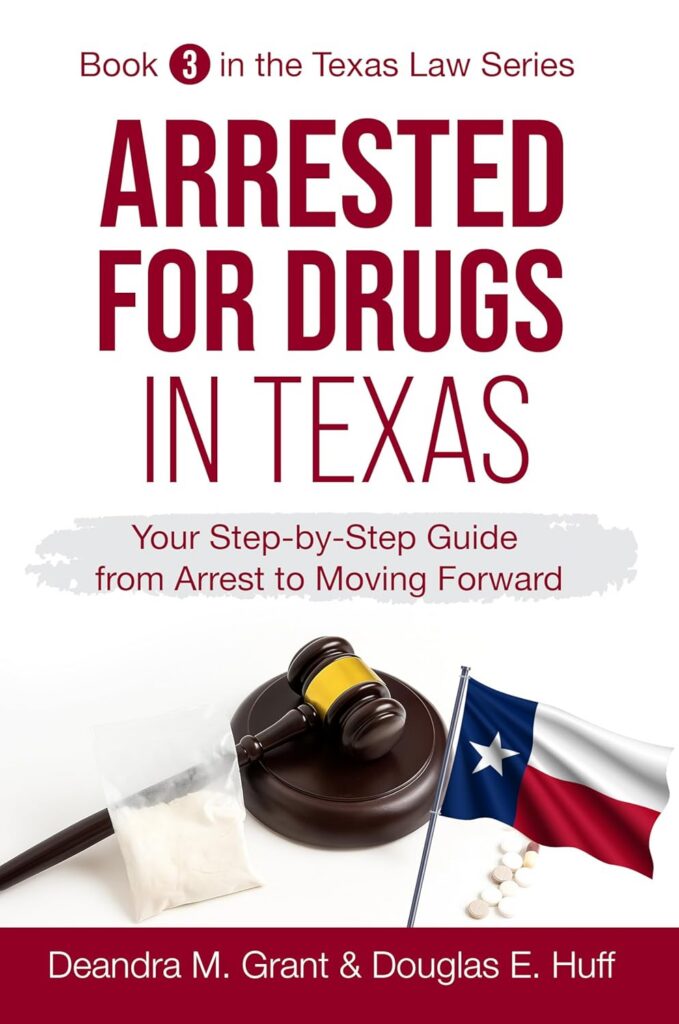
A Texas drug charge is a forensic case: a lab identification, a weight, a chain of custody, and a search that all have to hold up. Deandra Grant Law challenges each one with the science it was built on. We have offices in Dallas, Fort Worth, Allen, Denton, Rockwall, and Waco, with more than 30 years in North and Central Texas courts, 500+ trials to verdict, and 17 published law books including Arrested for Drugs in Texas.
Call (214) 617-0847 for a free, confidential consultation. Available 24/7. No cost, no obligation.
Reviewed by Deandra Grant, Managing Partner, ACS-CHAL Forensic Lawyer-Scientist, MS Pharmaceutical Science, author of Arrested for Drugs in Texas.
Meet the attorneys who will personally handle your drug crime defense.





Find the Deandra Grant Law office nearest you for drug crime defense across Texas.
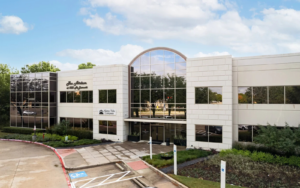
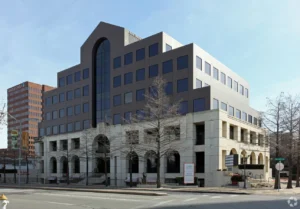

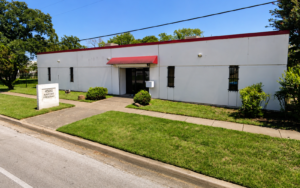
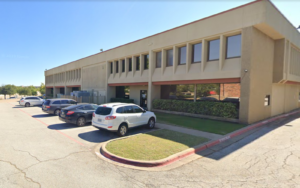
Courthouses where our attorneys represent clients facing this charge across Texas.
Everything you need to know about criminal court in Bell County, Texas: where cases are heard at the…
View Courthouse Info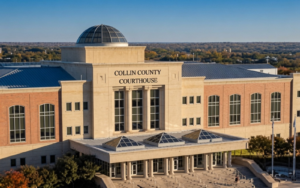
Everything you need to know about criminal court in Collin County, Texas: where cases are heard at the…
View Courthouse Info
Everything you need to know about criminal court in Cooke County, Texas: where cases are heard in Gainesville,…
View Courthouse Info
Everything you need to know about criminal court in Coryell County, Texas: where cases are heard in Gatesville,…
View Courthouse Info
Everything you need to know about criminal court in Dallas County, Texas: where cases are heard at the…
View Courthouse Info
Everything you need to know about criminal court in Denton County, Texas: where cases are heard at the…
View Courthouse Info
Everything you need to know about criminal court in Ellis County, Texas: where cases are heard at the…
View Courthouse Info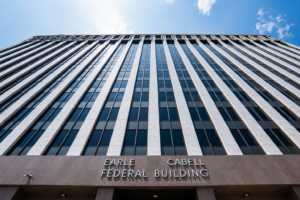
Deandra Grant Law defends federal criminal cases across all four federal districts in Texas, the District of Columbia,…
View Courthouse Info
Everything you need to know about criminal court in Grayson County, Texas: where cases are heard in Sherman,…
View Courthouse Info
Everything you need to know about criminal court in Johnson County, Texas: where cases are heard at the…
View Courthouse Info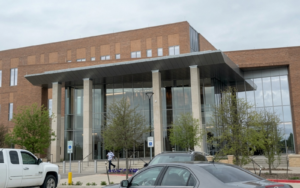
Everything you need to know about criminal court in Kaufman County, Texas: where cases are heard at the…
View Courthouse Info
Everything you need to know about criminal court in McLennan County, Texas: where cases are heard at the…
View Courthouse Info
Everything you need to know about criminal court in Rockwall County, Texas: where cases are heard at the…
View Courthouse Info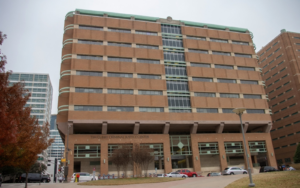
Everything you need to know about criminal court in Tarrant County, Texas: where cases are heard at the…
View Courthouse InfoFree books and guides on drug possession, explaining your rights and options.
Watch our attorneys explain drug possession and how we defend these cases.













What clients say after trusting us with their drug crime defense.
Deandra grant law helped me when no other law firm would take on my case. I was hit with no bonds for several charges while on probation in 3 county’s they came to my rescue and got me a bond within the 1st week of retaining them. The firm worked very well together and even reached out to my attorney in another county and helped me resolve my felony case with out any prison time with only 3 days time served, and within 2 court dates got me off 5 years drug court probation with time served. I really think this firm is one of the best in Denton county.
Every case starts with a conversation. Reach out today and put an experienced, trial-tested team in your corner. We’re available 24/7 across all six Texas offices.
Tell us what happened. We’ll respond within one business hour.
Submitting this form does not create an attorney-client relationship. All communications are confidential.