

Overview
Cocaine is a Penalty Group 1 controlled substance in Texas, placing it in the same category as heroin, methamphetamine, and fentanyl. Every cocaine charge (from a state jail felony for less than a gram to an enhanced first-degree felony for 400 grams or more) is built on forensic evidence that can be challenged. The laboratory report identifying the substance, the weight that determines whether the case is a misdemeanor-equivalent or a charge carrying potential life imprisonment, and the chain of custody connecting the seized material to the laboratory analysis: all of it is subject to independent scientific scrutiny.
Deandra Grant Law defends cocaine charges across North and Central Texas. Managing Partner Deandra Grant holds a Master’s Degree in Pharmaceutical Science, a Graduate Certificate in Forensic Toxicology, and the ACS-CHAL Forensic Lawyer-Scientist designation. Partner Douglas Huff holds the same ACS-CHAL designation.
Texas Penalty Structure for Cocaine
Cocaine possession and delivery are charged under the Penalty Group 1 schedule of the Texas Health and Safety Code. The charge level is determined by the weight of the substance including any cutting agents or adulterants mixed with the cocaine.
Possession (§481.115)
• Less than 1 gram: State jail felony — 180 days to 2 years, fine up to $10,000.
• 1 to less than 4 grams: Third-degree felony — 2 to 10 years, fine up to $10,000.
• 4 to less than 200 grams: Second-degree felony — 2 to 20 years, fine up to $10,000.
• 200 to less than 400 grams: First-degree felony, enhanced minimum — 10 to 99 years or life, fine up to $100,000.
• 400 grams or more: First-degree felony, enhanced minimum — 10 to 99 years or life, fine up to $100,000.
Delivery and Manufacturing (§481.112)
• Less than 1 gram: State jail felony — 180 days to 2 years, fine up to $10,000.
• 1 to less than 4 grams: Second-degree felony — 2 to 20 years, fine up to $10,000.
• 4 to less than 200 grams: First-degree felony — 5 to 99 years up to life, fine up to $10,000.
• 200 to less than 400 grams: First-degree felony, enhanced minimum — 10 to 99 years or life, fine up to $100,000.
• 400 grams or more: First-degree felony, enhanced minimum — 15 to 99 years or life, fine up to $250,000.
The Forensic Science of Cocaine Cases
Every cocaine prosecution in Texas rests on at least three forensic foundations: identification of the substance as cocaine, quantification of the weight, and (where relevant) the chain of custody that establishes the integrity of the sample from collection to analysis. Each is subject to independent challenge.
Identification: GC-MS and the Field Test Problem
Field tests such as the Scott reagent and cobalt thiocyanate test are presumptive colorimetric tests. They suggest the possible presence of cocaine but do not confirm it. These tests are susceptible to false positives from a range of substances including lidocaine, a common cutting agent that reacts similarly to cocaine on some field tests. A positive field test result is not a confirmed identification of cocaine.
Some labs still use gas chromatography-mass spectrometry (GC-MS) which separates and identifies compounds by molecular weight and fragmentation pattern. The better way to identify cocaine is through analysis via Liquid Chromatography-Tandem Mass Spectrometry (LC-MS/MS). The defense should obtain the complete lab data and not just the summary laboratory report. Identification errors, reference standard failures, and instrument calibration deficiencies are all grounds for challenge.
The Mixture-Weight Issue at Penalty Thresholds
Street cocaine is rarely pure. Typical purity levels for cocaine sold at the retail level range from approximately 40% to 70%, with the remainder consisting of cutting agents including lidocaine, levamisole, phenacetin, and inert diluents. Texas charges cocaine offenses based on the weight of the entire mixture, not the weight of the pure cocaine it contains.
This mixture-weight rule has significant implications at penalty thresholds. A seizure that weighs 1.1 grams total (but contains only 0.4 grams of actual cocaine) is charged as a second-degree felony based on the total weight. The defense should independently verify the total weight of the mixture, the purity of the cocaine it contains, and whether the weight places the charge squarely within a penalty tier or within the margin of error of a threshold boundary.
The margin of error of the analytical balance used in the laboratory is a real forensic issue at threshold weights. A measurement of 1.02 grams on a balance with a ±0.05 gram uncertainty means the true weight could be below the 1-gram threshold that separates a state jail felony from a second-degree felony. Where the measured weight is within the instrument’s margin of error of a penalty threshold, the charge level is a legitimate point of challenge.
Levamisole and Phenacetin: The Cutting Agent Question
Levamisole (a veterinary anthelmintic) and phenacetin (a former analgesic withdrawn from clinical use due to toxicity) are now among the most common cocaine adulterants. Their presence in a cocaine sample has no legal significance under Texas law because both are included in the mixture weight. However, the GC-MS spectrum of a sample containing significant levamisole or phenacetin may look different from a pure cocaine spectrum, and the analyst’s interpretation of a complex mixture spectrum is a topic for expert cross-examination.
Blood and Urine Analysis: Presence vs. Impairment
In DUID (driving under the influence of drugs) cases involving cocaine, blood or urine specimens may be tested for cocaine and its primary metabolite benzoylecgonine (BZE). Cocaine itself has a very short half-life (approximately 1 hour in blood) while BZE persists for 24 to 48 hours or longer. A urine or blood test that detects only BZE (without detectable cocaine) establishes that cocaine was consumed at some point but does not establish impairment at the time of driving. The pharmacokinetic distinction between cocaine presence and active impairment is a pharmaceutical science argument that requires graduate-level training to make effectively.
Chain of Custody
A cocaine specimen must be traceable from collection through booking, evidence storage, and laboratory analysis. Cocaine is relatively stable at room temperature but proper preservation and documentation remain required. Any gap in the chain of custody documentation is a foundation for a challenge to the integrity of the laboratory result.
The Constitutional Foundation: Article 38.23
Every cocaine case begins with how the evidence was obtained. Texas Code of Criminal Procedure Article 38.23 (the exclusionary rule with no good faith exception) suppresses evidence obtained through an unlawful stop, an overbroad search, or a constitutionally defective seizure. A traffic stop without reasonable suspicion, a search that exceeded the scope of consent, or a warrant issued without adequate probable cause: any of these suppresses the evidence that drives the prosecution’s case. In cocaine cases arising from traffic stops, the legality of the initial stop and the basis for the search are often the most important questions in the defense.
Why Deandra Grant Law
• ACS-CHAL Forensic Lawyer-Scientist — both Deandra Grant and Douglas Huff.
• Digital forensics training. Cell phone data, social media, CDR records, and metadata examined at the data level.
• 30+ years of criminal defense experience. 500+ trials to verdict across North and Central Texas.
• 17 published law books. Including Arrested for Drugs in Texas
• Texas Super Lawyer since 2011. AV® Preeminent rated by Martindale-Hubbell®.
• Offices in Dallas, Fort Worth, Allen, Denton, Waco, and Rockwall. North and Central Texas courts served directly.
• Federal defense capability. James Lee Bright handles federal charges in all four Texas federal districts.
If you are facing cocaine charges in Texas, call (214) 225-7117 for a free, confidential consultation. Or schedule online at texasdwisite.com.
Attorneys Who Handle This Charge
Meet the attorneys who will personally handle your cocaine defense.

Douglas E. Huff
Read Attorney Profile
Jada Fairley
Read Attorney Profile
Jason Bowes
Read Attorney Profile
Kevin Sheneberger
Read Attorney ProfileOffices Handling These Cases
Find the Deandra Grant Law office nearest you for cocaine defense across Texas.

Allen
1333 W. McDermott Drive, Suite 180, Allen, TX 75013 Visit This Office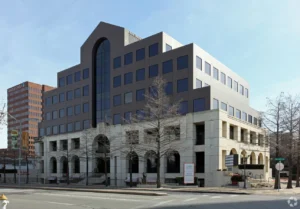
Dallas (HQ)
3300 Oak Lawn Avenue, Suite 700, Dallas, TX 75219 Visit This Office
Denton
1317 E. McKinney Street, Suite 101A, Denton, TX 76209 Visit This Office
Fort Worth
4500 Airport Freeway, Suite 101, Fort Worth, TX 76117 Visit This Office

Waco
605 Austin Avenue, Suite 5, Waco, TX 76701 Visit This OfficeCourthouses We Appear In
Courthouses where our attorneys represent clients facing this charge across Texas.
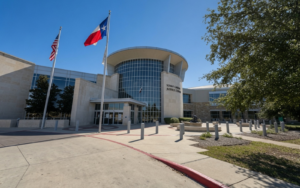
Bell County Courts
Everything you need to know about criminal court in Bell County, Texas: where cases are heard at the…
View Courthouse Info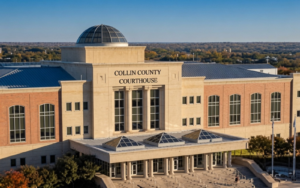
Collin County Courts
Everything you need to know about criminal court in Collin County, Texas: where cases are heard at the…
View Courthouse Info
Cooke County Courts
Everything you need to know about criminal court in Cooke County, Texas: where cases are heard in Gainesville,…
View Courthouse Info
Coryell County Courts
Everything you need to know about criminal court in Coryell County, Texas: where cases are heard in Gatesville,…
View Courthouse Info
Dallas County Courts
Everything you need to know about criminal court in Dallas County, Texas: where cases are heard at the…
View Courthouse Info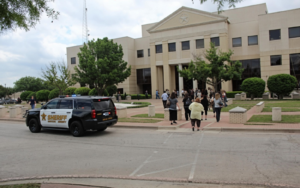
Denton County Courts
Everything you need to know about criminal court in Denton County, Texas: where cases are heard at the…
View Courthouse Info
Ellis County Courts
Everything you need to know about criminal court in Ellis County, Texas: where cases are heard at the…
View Courthouse Info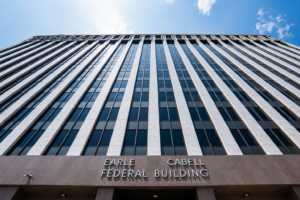
Federal Courts
Deandra Grant Law defends federal criminal cases across all four federal districts in Texas, the District of Columbia,…
View Courthouse Info
Grayson County Courts
Everything you need to know about criminal court in Grayson County, Texas: where cases are heard in Sherman,…
View Courthouse Info
Johnson County Courthouse
Everything you need to know about criminal court in Johnson County, Texas: where cases are heard at the…
View Courthouse Info
Kaufman County Courts
Everything you need to know about criminal court in Kaufman County, Texas: where cases are heard at the…
View Courthouse Info
McLennan County Courts
Everything you need to know about criminal court in McLennan County, Texas: where cases are heard at the…
View Courthouse Info
Rockwall County Courts
Everything you need to know about criminal court in Rockwall County, Texas: where cases are heard at the…
View Courthouse Info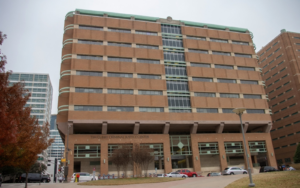
Tarrant County Courts
Everything you need to know about criminal court in Tarrant County, Texas: where cases are heard at the…
View Courthouse InfoVideos
Watch our attorneys explain cocaine charges and how we defend these cases.
Can I be charged with cocaine trafficking if I was caught with a large amount of cocaine in Texas?
Watch the Video
Can I face imprisonment for possessing even small amounts of cocaine in Texas? | Learn More Here
Watch the Video
Can I seek an expungement or record sealing for a cocaine-related conviction in Texas? | Learn More
Watch the Video
How Do I Pick the Best Cocaine Arrest Attorney in Texas? | Contact Deandra Grant Law Today!
Watch the Video
How do you relieve the stress of a cocaine arrest client in Texas? | Find Legal Support Today!
Watch the Video
Should I hire a lawyer if I’m arrested for cocaine possession in Texas? | How can they help me?
Watch the Video
What are Some Mistakes that a Cocaine Arrest Client Can Make in Texas? | Avoid These Pitfalls
Watch the Video
What are the legal defenses available for cocaine possession charges in Texas? | Call Deandra Grant
Watch the Video
What are the penalties for cocaine possession in Texas? | Get the Legal Help You Need Today!
Watch the Video
Charged with Cocaine Possession in Texas? Why Hiring a Lawyer is Critical!
Watch the Video
What Are the Penalties for Cocaine Trafficking in Texas? Know the Consequences!
Watch the Video
How Do You Choose the Right Attorney for a Cocaine Charge in Texas? Know What to Look For!
Watch the Video
Can You Go to Prison for a Cocaine Charge in Texas? Know the Penalties!
Watch the Video
Can a Cocaine Charge Be Expunged in Texas? Learn Your Options!
Watch the Video
Arrested for Cocaine Possession in Texas? Avoid These Common Mistakes That Could Hurt Your Case!
Watch the Video