
Home »

Do You Need Legal Help?

"Deandra Grant Law fights hard for their clients and is always willing to go above and beyond. They are the best firm for DWI cases in DFW and beyond. Definitely hire them to represent you in any pending cases."
- P. Williams
"Deandra Grant made a tough situation so much better. She listened to my concerns and helped me so much with my case. I would recommend her to anyone needing legal services."
- M. Haley
"Deandra Grant Law handled my case with diligence and professionalism. Deandra Grant's reputation is stellar and now I know why. She has a team of individuals who provide quality service."
- N. Coulter
As Seen On







Download Our Free Texas Criminal Guide
Learn what you should and shouldn't be doing to help your criminal defense case.
Dallas Probation Violation Lawyers
Facing Probation Violation in Dallas, TX? Our team of experienced Dallas Probation Violation Lawyers at Deandra Grant Law – Criminal & DWI Defense is here to help you navigate this challenging situation and pursue a positive outcome for your case. If you have landed on this page, know that you are not alone, and we understand the worry and uncertainty you may be feeling about your future.
Deandra Grant Law – Criminal & DWI Defense Helps Residents across Texas with Criminal Defense Matters – Including: Allen , Arlington, Belton, Cleburne, Collin County, Dallas, Denton, Fairview, Fort Worth, Frisco, Gainesville, Granbury, Hood County, Johnson County, Lewisville, Little Elm, McKinney, Park Cities, Parker County, Plano, Princeton, Richardson, Rockwall, Rowlett, Royse City, Southlake, Sunnyvale, The Colony, Waco, and Weatherford.
Understanding Probation Violation Charges in Dallas, TX
Probation is a period of supervised release granted by the court as an alternative to incarceration. It allows individuals to serve their sentence in the community while adhering to specific conditions set by the court. These conditions may include regular check-ins with a probation officer, drug testing, attending counseling or treatment programs, community service, and more. Failure to comply with any of these conditions can lead to a Probation Violation.
Common Violations and Potential Consequences
Probation Violations can occur for various reasons, such as missing a probation appointment, failing a drug test, not completing required programs, or being arrested for another offense while on probation. If you are facing a Probation Violation, the consequences can be severe, potentially resulting in extended probation, additional fines, community service, or even jail time.
Why You Need a Dallas Probation Violation Lawyer
When facing a Probation Violation, it is crucial to have a skilled and experienced lawyer by your side. Our Dallas Probation Violation Lawyers have in-depth knowledge of the Texas legal system and can help you understand your rights and options. We will work closely with you to build a strong defense, advocating for your best interests and presenting evidence to support your case.
As a highly competent criminal defense attorney who is rated by Super Lawyers® for 2011 and 2012, Attorney Deandra M. Grant knows the serious ramifications of being violated while on probation and has helped dozens of clients avoid being convicted for probation violations. When you violate your probation, whatever sentence was suspended when you were put on probation can automatically take effect without a trial.
The court must hear evidence of whether or not you actually violated your probation and decide whether or not the circumstances rise to the legal standard of a violation of probation, but this will all be done at a hearing, not a trial. The underlying charges for which you are on probation will then come back into effect and you will be sentenced to the original terms of your sentence for that underlying charge.
Don’t take chances with any attorney based on a word of mouth referral from a friend or acquaintance when facing such a serious charge. Choose your Dallas probation violation lawyer carefully. Call Deandra Grant Law – Criminal & DWI Defense today and schedule an initial consultation with one of our highly skilled and experienced probation attorneys in Dallas. We will personally meet with you and discuss your case and advise you of all of your available options under the circumstances.
See for yourself why she has been rated as AV® Preeminent ™ by Martindale-Hubbell®, the leader in peer review rating services for lawyers in the United States. We are dedicated to protecting the rights of our clients and serving them with the utmost professionalism and competence in the legal community. Our reputation has been gained with hard work, ethics second to none, and a passion for defending the legal rights of citizens in the State of Texas since 1995.
Relevant Statistical Data on Probation Violations
According to statistics, probation violations are not uncommon, with a significant number of individuals facing these charges each year in Dallas, TX. Having a dedicated Probation Violation Lawyer can make a substantial difference in the outcome of your case. Our team at Deandra Grant Law – Criminal & DWI Defense has a proven track record of successfully representing clients in probation violation cases and helping them achieve positive results.
Related Videos
Defending Against Probation Violation Charges in Dallas, TX
Facing a Probation Violation charge can be overwhelming and uncertain. If you or someone you know has been arrested for Probation Violation in Dallas, TX, it is crucial to have a skilled and experienced team of Dallas Probation Violation Lawyers on your side. At Deandra Grant Law – Criminal & DWI Defense, we are here to provide you with the legal guidance and support you need during this challenging time.
Free Consultations: We understand that being arrested for Probation Violation can leave you with many questions and concerns about your future. That’s why we offer free consultations to discuss your case and provide you with valuable legal advice. Our compassionate team of Dallas Probation Violation Lawyers will listen to your side of the story, assess the details of your case, and help you understand your legal options.
Experienced Representation: With years of experience in handling Probation Violation cases in Dallas, TX, our team of attorneys has a deep understanding of probation laws and the complexities of the legal system. We have successfully defended numerous clients against Probation Violation charges, and we will bring our experience to your case to protect your rights and seek a positive outcome.
Serious Consequences: A Probation Violation conviction can have severe consequences, such as fines and jail time. Additionally, the violation may result in the revocation of your probation, leading to serving the original sentence in custody. Our Dallas Probation Violation Lawyers are well aware of the potential impact of these charges and will work tirelessly to defend you against the serious consequences.
Navigating Complicated Proceedings: Probation Violation cases involve both court and administrative proceedings, making the legal process complex and overwhelming. At Deandra Grant Law – Criminal & DWI Defense, we will guide you through every step of the process, ensuring you understand your rights and options. Our team will collect evidence, interview witnesses, and build a robust defense strategy to protect your interests.
Determining Your Best Chances for Success: Each Probation Violation case is unique, and the outcome depends on various factors. Our skilled Dallas Probation Violation Lawyers will conduct a thorough analysis of your case to identify its strengths and weaknesses. We will then develop a tailored defense strategy to increase your chances of a successful outcome, which may include seeking the dismissal of the violation or mitigating the penalties.
Related Blogs
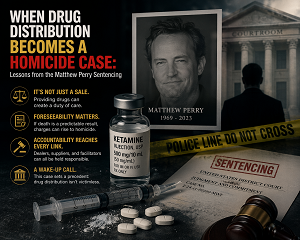
When Drug Distribution Becomes a Homicide Case: Lessons from the Matthew Perry Sentencing
On April 8, 2026, U.S. District Judge Sherilyn Peace Garnett sentenced Jasveen Sangha (the Los [...]
Criminal Justice Reform in 2026: What It Means for Texas Defendants
National headlines about criminal justice reform in 2026 tell a story of accelerating bipartisan progress [...]
How Do Police Track Your Online Activity And Can That Evidence Be Challenged?
Law enforcement agencies have increasingly sophisticated tools for monitoring and documenting internet activity. They can [...]

What to Do if You’re Falsely Accused of Sexual Assault in Texas
Few things are more terrifying than being accused of something you did not do and [...]

How Killing a Cop Went from Murder to Manslaughter
A New York jury recently acquitted Guy Rivera of first-degree murder in the 2024 shooting [...]
When Restraining a Student Becomes a Criminal Charge: What Texas Teachers Need to Know About Injury to a Child
A veteran teacher with twenty-something years in the classroom, no disciplinary history, no prior criminal [...]

When Protest Becomes Terrorism: What the Prairieland Verdict Means for Texas Defendants
On March 13, 2026, a federal jury in Fort Worth returned guilty verdicts against nine [...]
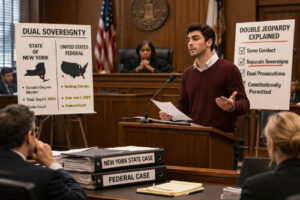
Why Being Charged Twice Isn’t Double Jeopardy: Luigi Mangione and Parallel State and Federal Prosecutions
At a February 2026 hearing, Luigi Mangione stood up in a Manhattan courtroom and told [...]
Avoiding Common Mistakes After a Probation Violation Arrest in Dallas, TX
If you have been arrested for Probation Violation in Dallas, TX, it is essential to handle your situation carefully to protect your rights and future. Making the wrong decisions can lead to severe consequences. Here are some common mistakes to avoid and how Deandra Grant Law – Criminal & DWI Defense can assist you in this challenging time.
Ignoring the Issue: Ignoring the Probation Violation charge will not make it go away. In fact, it can worsen the situation. It is crucial to take immediate action and seek legal representation from experienced Dallas Probation Violation Lawyers to understand your rights and options.
Not Complying with Court Orders: Failing to comply with court orders or violating the terms of your probation can have serious consequences. This can further complicate your situation and lead to additional charges or revocation of your probation.
Representing Yourself: Navigating the legal system without proper legal representation can be risky, especially when facing Probation Violation charges. Without an experienced attorney by your side, you may not be aware of the best defense strategies or how to protect your rights effectively.
Communicating Without Legal Counsel: Making statements or admissions to law enforcement or prosecutors without legal representation can be detrimental to your case. Anything you say can be used against you in court.
Missing Court Dates: Failing to appear for court hearings can result in a bench warrant being issued for your arrest, making your situation even more complicated.
Frequently Asked Questions About Probation Violation in Dallas, TX
When facing Probation Violation charges in Dallas, TX, it’s natural to have many questions and concerns about your situation. Here are some common questions that individuals arrested for Probation Violation may have, along with answers from our experienced Dallas Probation Violation Lawyers at Deandra Grant Law – Criminal & DWI Defense:
What is Probation Violation?
Probation Violation occurs when a person who is on probation fails to comply with the terms and conditions set by the court or probation officer. This can include not reporting to your probation officer, not completing required programs, or committing new offenses while on probation.
What are the consequences of a Probation Violation?
The consequences of a Probation Violation can vary depending on the severity of the violation and the discretion of the judge. Possible outcomes may include extension of probation, additional conditions, fines, or even revocation of probation leading to jail or prison time.
Should I hire a lawyer for a Probation Violation case?
Yes, it is highly advisable to seek legal representation from a skilled Dallas Probation Violation Lawyer. A lawyer will help protect your rights, build a strong defense, and guide you through the complex legal process.
Can I be arrested without a warrant for Probation Violation?
Yes, in many cases, a warrant may be issued for your arrest if there is probable cause to believe that you have violated the terms of your probation.
Can I bond out of jail after a Probation Violation arrest?
In some cases, you may be eligible for bond, but it ultimately depends on the specifics of your case and your criminal history. Consulting with an attorney can help determine your eligibility for bond.
Can I get my probation reinstated after a Violation?
In some cases, it may be possible to have your probation reinstated after a Violation. An experienced attorney can assess your situation and present your best options.
Can I challenge the Probation Violation allegations?
Yes, you have the right to challenge the allegations of Probation Violation. A lawyer can help you gather evidence and present a strong defense in court.
Will a Probation Violation result in a permanent criminal record?
Probation Violation itself does not lead to a separate criminal record, but it can result in more severe consequences and impact future sentencing if you are found guilty.
How can Deandra Grant Law – Criminal & DWI Defense help with my Probation Violation case?
At Deandra Grant Law – Criminal & DWI Defense, our experienced Dallas Probation Violation Lawyers will provide you with skilled legal representation and guidance throughout your case. We will work diligently to protect your rights and pursue a positive outcome.
Probation Violation Client Story
This client story is for educational purposes only.
In the heart of Dallas, Texas, there lived a woman named Latisha, whose life took an unexpected turn when she found herself facing a daunting challenge. Latisha had been on probation, trying her best to turn her life around after a difficult past. She had been making steady progress, determined to build a better future for herself and her loved ones.
One fateful day, Latisha’s world seemed to crumble as she received a notice of Probation Violation. Fear and uncertainty overwhelmed her, and she felt lost and alone. The weight of the charges pressed upon her, and she knew she needed a guiding light to help her find a way out of the darkness.
In her search for hope and justice, Latisha discovered the compassionate team of lawyers at Deandra Grant Law – Criminal & DWI Defense. Among them, Attorney Douglas Huff stood out as a beacon of strength and experience. From their first meeting, Latisha could sense that she had found a true ally in her fight for justice.
With empathy and understanding, Attorney Douglas Huff listened to Latisha’s story, getting to know the person behind the charges. He saw the potential for change and the dedication Latisha had to create a better life. Armed with legal knowledge and a passion for defending the rights of others, Attorney Huff began crafting a strategy to clear Latisha’s name.
Throughout the process, Attorney Douglas Huff tirelessly fought on Latisha’s behalf, meticulously examining every detail of the case. He understood the stakes and the potential consequences of a Probation Violation conviction. Determined to give Latisha the best chance at a bright future, he left no stone unturned.
The courtroom became a battleground where Attorney Douglas Huff fearlessly fought for justice. With unwavering dedication, he presented a compelling defense, shedding light on the truth behind the allegations. Latisha found strength in his unwavering support, knowing that she had a true advocate fighting for her rights.
Finally, the day of reckoning arrived, and Latisha anxiously awaited the judge’s verdict. The weight of the world seemed to rest upon her shoulders. But as the judge delivered the words “not guilty,” a rush of relief washed over Latisha, and tears of joy streamed down her cheeks. Attorney Douglas Huff had done the impossible – he had proved her innocence, giving her a second chance at life.
Contact Our Dallas Probation Violation Lawyers at Deandra Grant Law – Criminal & DWI Defense
If you or someone you know has been arrested for Probation Violation in Dallas, TX, Deandra Grant Law – Criminal & DWI Defense is here to help. Our team of experienced Dallas Probation Violation Lawyers is dedicated to guiding you through this challenging time and fighting for a positive outcome for your case.
We understand the fear and uncertainty that come with facing Probation Violation charges. That’s why we offer free consultations, so you can discuss your situation with us without any financial obligation. We want you to feel comfortable and confident in choosing us as your legal representation.
At Deandra Grant Law – Criminal & DWI Defense, we believe in the power of second chances and the importance of fighting for justice. Our team will work tirelessly to build a strong defense tailored to your unique circumstances. We will thoroughly examine the details of your case, explore every available option, and provide you with the guidance and support you need.
Facing a Probation Violation charge can be overwhelming, but you don’t have to face it alone. Let our compassionate and experienced team be your advocate in the courtroom and help you navigate through the legal complexities.
Contact Deandra Grant Law – Criminal & DWI Defense today to schedule your free consultation. Together, we will work hard to protect your rights and pursue a positive outcome for your future. Your journey to a brighter tomorrow starts with us.
Client Reviews

“Deandra Grant Law – Criminal & DWI Defense handled my case with diligence and professionalism. Deandra Grant’s reputation is stellar and now I know why. She has a team of individuals who provide quality service.”
N. Coulter


(214) 225-7117
Experienced DWI Defense