
Home »


Do You Need Legal Help?

"Deandra Grant Law fights hard for their clients and is always willing to go above and beyond. They are the best firm for DWI cases in DFW and beyond. Definitely hire them to represent you in any pending cases."
- P. Williams
"Deandra Grant made a tough situation so much better. She listened to my concerns and helped me so much with my case. I would recommend her to anyone needing legal services."
- M. Haley
"Deandra Grant Law handled my case with diligence and professionalism. Deandra Grant's reputation is stellar and now I know why. She has a team of individuals who provide quality service."
- N. Coulter
As Seen On







Download Our Free Texas Criminal Guide
Learn what you should and shouldn't be doing to help your criminal defense case.
Dallas Methamphetamine Lawyers
Methamphetamine is a Penalty Group 1 controlled substance under Texas law, which means every meth case in Dallas County begins as a felony. The weight thresholds in Chapter 481 of the Health and Safety Code determine whether a case is a state jail felony with a 180-day floor or a first-degree felony with a life-imprisonment ceiling. For people charged with manufacture, delivery, or possession with intent to deliver, the ranges are materially harsher than for simple possession at every threshold.
Deandra Grant Law represents people charged with methamphetamine offenses in Dallas County. Call (214) 225-7117 to discuss your case.
Methamphetamine Is a Penalty Group 1 Controlled Substance
Texas Health and Safety Code § 481.102 lists the substances that fall within Penalty Group 1, the category the legislature has designated as carrying the most serious criminal penalties. Methamphetamine is expressly listed in § 481.102(6), alongside heroin, cocaine, and fentanyl. Because Penalty Group 1 charges carry the harshest penalty structure in the Controlled Substances Act, a methamphetamine case is never a minor case.
Possession of Methamphetamine — Health and Safety Code § 481.115
Simple possession of methamphetamine is governed by § 481.115. The penalty level is determined by the aggregate weight of the substance, which includes adulterants and dilutants (the state weighs the entire mixture, not just the pure meth).
- Less than 1 gram: State jail felony. 180 days to 2 years in a state jail facility and a fine of up to $10,000.
- 1 gram or more but less than 4 grams: Third-degree felony. 2 to 10 years in prison and a fine of up to $10,000.
- 4 grams or more but less than 200 grams: Second-degree felony. 2 to 20 years in prison and a fine of up to $10,000.
- 200 grams or more but less than 400 grams: First-degree felony. 5 to 99 years or life in prison and a fine of up to $10,000.
- 400 grams or more: Enhanced first-degree felony. 10 to 99 years or life in prison and a fine of up to $100,000.
Manufacture, Delivery, or Possession with Intent to Deliver — § 481.112
Manufacture, delivery, and possession with intent to deliver are prosecuted under § 481.112. The same statute, and the same punishment level, applies to all three variants of the offense. The state does not have to prove a completed sale to charge delivery; possession with intent to deliver is enough. Intent to deliver is typically shown through circumstantial “dealer indicia” (i.e. packaging materials, digital scales, large amounts of cash, text messages, multiple individually-wrapped quantities) and similar facts.
The punishment structure for § 481.112 is more severe than for simple possession at every weight bracket from one gram and above:
- Less than 1 gram: State jail felony. 180 days to 2 years and a fine of up to $10,000.
- 1 gram or more but less than 4 grams: Second-degree felony. 2 to 20 years and a fine of up to $10,000.
- 4 grams or more but less than 200 grams: First-degree felony. 5 to 99 years or life and a fine of up to $10,000.
- 200 grams or more but less than 400 grams: 10 to 99 years or life and a fine of up to $100,000.
- 400 grams or more: 15 to 99 years or life and a fine of up to $250,000.
The difference between possession and delivery at the four-gram threshold alone moves a case from a second-degree felony (2 to 20 years) to a first-degree felony (5 to 99 or life). At 200 grams, the minimum nearly doubles. At 400 grams, the fine cap is $250,000. Whether a case is charged as possession or as possession with intent to deliver is one of the most consequential decisions the prosecutor makes in a methamphetamine case.
Drug Paraphernalia — § 481.125
Paraphernalia offenses are separate from, and less serious than, possession of the controlled substance itself:
- Simple possession of paraphernalia: Class C misdemeanor. Fine-only, up to $500.
- Delivery, or possession with intent to deliver, paraphernalia to an adult: Class A misdemeanor. Up to one year in county jail and a fine of up to $4,000.
- Delivery of paraphernalia to a minor: State jail felony.
Drug-Free Zone Enhancements — § 481.134
Texas enhances punishment when a controlled substance offense occurs in a drug-free zone. A drug-free zone generally means within 1,000 feet of the real property comprising a school, youth center, playground, public swimming pool, or video arcade facility, and, for specified offenses, within 300 feet of certain other listed locations. The enhancement can:
- Double the maximum fine.
- Raise a state jail felony to a third-degree felony and add a mandatory five-year minimum to enumerated offenses.
- Impose consecutive sentencing for drug-free zone offenses committed while the defendant was already serving a sentence for another drug-free zone offense.
Whether a case actually falls within a drug-free zone is a question of fact and measurement. Mapping errors, inaccurate distance measurements, and uncertified zone data are all challengeable.
How Methamphetamine Cases Are Defended
Fourth Amendment Challenges
Most methamphetamine cases begin with a traffic stop, a consent search, or a search warrant. Each of those involves a chain of Fourth Amendment decision points that can be attacked under the Texas exclusionary rule (Code of Criminal Procedure Article 38.23). Suppression of the drugs is often suppression of the case.
Affirmative Links
Texas law requires the state to prove that the defendant exercised actual care, custody, control, or management over the controlled substance. When drugs are found in a vehicle with multiple occupants, in a shared residence, or in luggage not exclusively belonging to the defendant, the “affirmative links” doctrine requires the state to connect the defendant specifically to the substance. The Court of Criminal Appeals has recognized a non-exhaustive list of factors courts consider, and no single factor is determinative.
Challenging “Intent to Deliver”
When the state charges possession with intent to deliver, the intent element is typically circumstantial. A meticulous attack on the claimed dealer indicia (arguing that quantities are consistent with personal use, that packaging has innocent explanations, that cash has alternate sources) can reduce a first-degree felony to a second-degree felony or a second-degree to a third.
Laboratory and Weight Challenges
Methamphetamine identification is performed by gas chromatography/mass spectrometry (GC-MS) or liquid chromatography/mass spectrometry (LC-MS) the Texas Department of Public Safety crime lab or the Southwestern Institute of Forensic Sciences (SWIFS). Weight thresholds can be challenged when the tested sample is a mixture, when multiple exhibits are improperly aggregated, and when the lab’s measurement uncertainty puts the weight near a penalty-group boundary.
Resolution Options in Dallas County
Not every methamphetamine case ends in a trial or a straight plea. Dallas County operates drug courts and treatment-oriented diversion programs, and state jail felonies are eligible for community supervision under Code of Criminal Procedure Article 42A. Whether any of these options are realistic in a particular case depends on the defendant’s record, the facts of the offense, and the court.
Where Dallas County Methamphetamine Cases Are Heard
Felony methamphetamine cases in Dallas County are filed in the Dallas County Criminal District Courts, which sit at the Frank Crowley Courts Building at 133 N. Riverfront Boulevard. The Dallas County District Attorney’s Office prosecutes. State jail felony and third-degree cases are also eligible for resolution in the county’s specialty courts when the defendant qualifies.
Frequently Asked Questions
Is methamphetamine a felony in Texas, even for a small amount?
Yes. Any possession of methamphetamine (including trace amounts that would register as less than one gram) is at minimum a state jail felony under Health and Safety Code § 481.115.
Can I get probation for methamphetamine possession?
Possibly. State jail felonies, third-degree felonies, and second-degree felonies are eligible for community supervision in Texas under Code of Criminal Procedure Article 42A, subject to various limitations. First-degree felonies have stricter eligibility rules, and a 3g-enhanced case (certain drug cases with aggravating facts) is not eligible for regular probation. Eligibility turns on criminal history and the specific charge.
The drugs weren’t mine. Why am I charged with possession?
Texas recognizes both actual and constructive possession. The state has to prove the defendant exercised care, custody, control, or management over the substance (the affirmative links analysis). When drugs are found in a shared car or residence, this is frequently the central defense issue.
What happens if I was near a school when I was arrested?
If the offense occurred within 1,000 feet of a school or another location listed in § 481.134, the state may seek a drug-free zone enhancement, which can increase the fine cap, elevate the felony level, and impose a mandatory minimum. Whether the zone enhancement applies is a question of measurement and proof.
What is the difference between possession and possession with intent to deliver?
Possession is charged under § 481.115; manufacture, delivery, and possession with intent to deliver are charged under § 481.112. Intent to deliver is proved circumstantially, through quantity, packaging, cash, scales, communications, and similar facts. The punishment ranges for § 481.112 are significantly harsher than for § 481.115 at every weight bracket of one gram or above.
Related Blogs
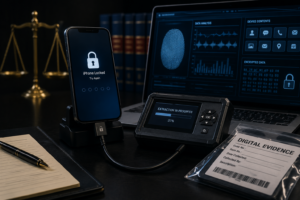
Can Police Get Into Your iPhone? How Apple’s New Security Is Reshaping Digital Evidence
By Douglas E. Huff | Partner, Deandra Grant Law | Dallas, Texas In March 2026, [...]

The Michael Morton Act, the Richard Miles Act and the Heath Opinion Now Under Fire
Most people who are not lawyers do not think much about criminal discovery. It sounds [...]

Pitchford v. Cain: What a Batson Challenge Is, and Why the Jury Is Often Decided Before the First Witness
By Deandra Grant | Deandra Grant Law | Dallas, Texas On May 28, 2026, the [...]

Probabilistic DNA Software in the Courtroom: What Defense Lawyers Need to Watch For
This month Cybergenetics (the company behind the TrueAllele probabilistic genotyping system) announced the launch of [...]

Texas SB 4 Goes Live May 15: What Defense Lawyers and Their Clients Need to Know Right Now
On April 24, 2026, the en banc Fifth Circuit vacated the preliminary injunction that had [...]

How Forensic Misconduct Can Unravel a Conviction: The Missy Woods Case and What It Means for Texas
For 29 years, Yvonne “Missy” Woods was a star analyst at the Colorado Bureau of [...]

Can the Algorithm Convict You? TrueAllele and a Defendant’s Right to Cross-Examine the Code
In March 2026, the U.S. Court of Appeals for the Third Circuit handed prosecutors a [...]

Can a Texas Warrant Expire or Does It Follow You Forever?
One of the most common misconceptions about warrants in Texas is that they eventually expire [...]
About Deandra Grant Law
Deandra Grant Law is a Texas criminal defense firm with offices in Dallas, Fort Worth, Allen, Denton, Waco, and Rockwall. Our Dallas drug defense is led by attorneys whose forensic training is particularly well suited to Penalty Group 1 cases, where laboratory analysis, weight determination, and search-and-seizure doctrine drive outcomes.
Deandra M. Grant, Managing Partner
- More than 30 years in practice, focused on criminal defense and DWI
- Former prosecutor
- J.D.; M.S. in Pharmaceutical Sciences
- Graduate Certificate in Forensic Toxicology
- ACS-CHAL Forensic Lawyer-Scientist from the American Chemical Society
- Standardized Field Sobriety Test (SFST) Instructor
- Texas Super Lawyer since 2011
- Author of 17 law books including Arrested for Drugs in Texas
Douglas E. Huff, Partner
- ACS-CHAL Forensic Lawyer-Scientist
- Digital forensics and electronic evidence training
- Extensive North Texas trial experience
James Lee Bright, Of Counsel
- National federal criminal defense practice
- Admitted to all four Texas federal districts, the District of Columbia, the Fifth Circuit Court of Appeals, and the Supreme Court of the United States
Contact Our Dallas Methamphetamine Lawyers
The early days after a methamphetamine arrest are when evidence is fresh, warrant affidavits are most vulnerable to challenge, and the state’s theory has not yet hardened. Statements to police, consent searches, and cooperation discussions are decisions that should not be made without counsel.
Call Deandra Grant Law at (214) 225-7117 to schedule a consultation. We serve Dallas County and surrounding North Texas counties from our Dallas office.
Frequently Asked Questions After a Methamphetamine Arrest in Dallas, TX
What are the potential penalties for a Methamphetamine conviction in Dallas, TX?
Methamphetamine charges in Texas can result in severe penalties, depending on the quantity and circumstances of the offense. Possession of even a small amount can lead to state jail felony penalties of up to 2 years in jail and fines of up to $10,000. Possession of larger quantities, such as 400 grams or more of crack, may result in enhanced first-degree felony charges, carrying up to 99 years in prison and fines of up to $10,000.
Should I speak to the police without an attorney present?
No, it is essential to exercise your right to remain silent and request legal representation before speaking to the police. Anything you say can be used against you in court, and without an attorney, you risk unintentionally providing incriminating information. Contact an experienced Methamphetamine Defense Lawyer as soon as possible to protect your rights.
What can an attorney do to help with my Methamphetamine case?
An experienced Methamphetamine Defense Lawyer can provide invaluable assistance by thoroughly analyzing your case, exploring all possible defenses, and challenging the prosecution’s evidence. They can negotiate with the prosecutor for reduced charges or alternative sentencing options, and if necessary, represent you in court to fight for a favorable outcome.
Can I avoid jail time if I am convicted of Methamphetamine possession?
The possibility of avoiding jail time depends on the specifics of your case, your criminal history, and the skill of your defense attorney. In some instances, an attorney may negotiate for probation, drug rehabilitation programs, or drug court as an alternative to incarceration.
How much does it cost to hire a Methamphetamine Defense Lawyer in Dallas, TX?
The cost of legal representation can vary depending on the complexity of the case and the experience of the attorney. At Deandra Grant Law – Criminal & DWI Defense, we offer free consultations to discuss your case and explore your options. We work with clients to find a suitable fee arrangement that meets their needs.
Will my criminal record be affected if I am convicted of Methamphetamine possession?
Yes, a Methamphetamine conviction can result in a criminal record, which can have long-lasting consequences on your personal and professional life. It may impact employment opportunities, housing, and other aspects of your future. Hiring an experienced Methamphetamine Defense Lawyer can help you fight to minimize or avoid these negative consequences.
Methamphetamine Defense Client Story
This client story is for educational purposes only.
In the heart of Dallas, Texas, a woman named Laura found herself facing a daunting and overwhelming challenge. One fateful day, her life took an unexpected turn when she was arrested for Methamphetamine possession. Confusion, fear, and worry enveloped her as she grappled with the harsh reality of the legal system.
Feeling lost and unsure of what to do, Laura knew she needed someone who could stand by her side and guide her through this troubling time. That’s when she found hope in an experienced Methamphetamine Defense Lawyer named Douglas Huff, who worked at the esteemed Deandra Grant Law – Criminal & DWI Defense firm.
From their first meeting, Laura felt an immediate connection with Attorney Douglas Huff. His reassuring smile and empathetic demeanor made her feel heard and understood. He listened intently to her story, leaving no detail unexamined. He knew that beneath the legal case, there was a person with dreams, fears, and a future hanging in the balance.
With unwavering determination, Douglas set out to build a strong defense for Laura. He investigated every angle, scrutinized the evidence, and tirelessly worked to uncover any inconsistencies. Douglas believed in Laura’s innocence, and he made it his mission to prove it to the world.
Throughout the legal proceedings, Laura often felt the weight of uncertainty bearing down on her. But Douglas was there, a constant source of support, reminding her that she was not alone in this fight. He explained the process in terms she could understand, guiding her through each step with patience and care.
As the trial date approached, Laura’s nerves were nearly overwhelming. The courtroom felt like an intimidating battlefield, but she drew strength from Douglas’s unwavering confidence in her case. He stood tall beside her, fiercely defending her rights and presenting her side of the story with eloquence.
The trial was intense, but Douglas’s skillful defense was a beacon of hope in the storm. He artfully dismantled the prosecution’s arguments, leaving no doubt in the jury’s mind about Laura’s innocence. His dedication to her case was palpable, and it resonated with everyone present.
In the end, the jury returned a verdict of “not guilty.” Laura’s heart swelled with relief and gratitude. She knew that without Douglas and the team at Deandra Grant Law – Criminal & DWI Defense, this outcome would not have been possible. Her faith in the legal system restored, she now had a second chance at life.
Contact Our Experienced Dallas Methamphetamine Lawyers for Guidance
If you or a loved one have recently been arrested for Methamphetamine possession in Dallas, TX, we understand the overwhelming emotions and uncertainty you may be experiencing. At Deandra Grant Law – Criminal & DWI Defense, our team of experienced Methamphetamine Defense Lawyers, including myself, are here to help you navigate through this challenging time.
We know that facing criminal charges can be frightening, and you may be unsure of where to turn for help. That’s why we offer free consultations, giving you the opportunity to speak with us about your case and receive experienced legal advice without any financial obligation.
Our mission is to provide you with the highest level of legal representation and guidance throughout your entire legal process. We will work tirelessly to build a strong defense tailored to your unique circumstances, seeking a positive outcome for your case. Our dedication to your rights, well-being, and future is unwavering.
With our experience in defending clients against Methamphetamine charges in Dallas, TX, we will stand by your side, fighting to protect your rights and striving to achieve justice. You are not alone in this journey, and we are here to guide you every step of the way.
Contact Deandra Grant Law – Criminal & DWI Defense today to schedule your free consultation and let us put our knowledge and experience to work for you. We understand the gravity of your situation, and we are committed to providing you with the support and representation you deserve. Together, we will face these challenges head-on, with the goal of securing a positive outcome for your future. Your story is important to us, and we are ready to fight for your rights. Don’t hesitate—reach out to us now, and let us be your advocates in the pursuit of justice.
Client Reviews

“Deandra Grant Law – Criminal & DWI Defense handled my case with diligence and professionalism. Deandra Grant’s reputation is stellar and now I know why. She has a team of individuals who provide quality service.”
N. Coulter


(214) 225-7117
Experienced DWI Defense