By Deandra Grant, J.D., G.C., M.S. (Pharmaceutical Science), ACS-CHAL Forensic Lawyer-Scientist, SFST Instructor
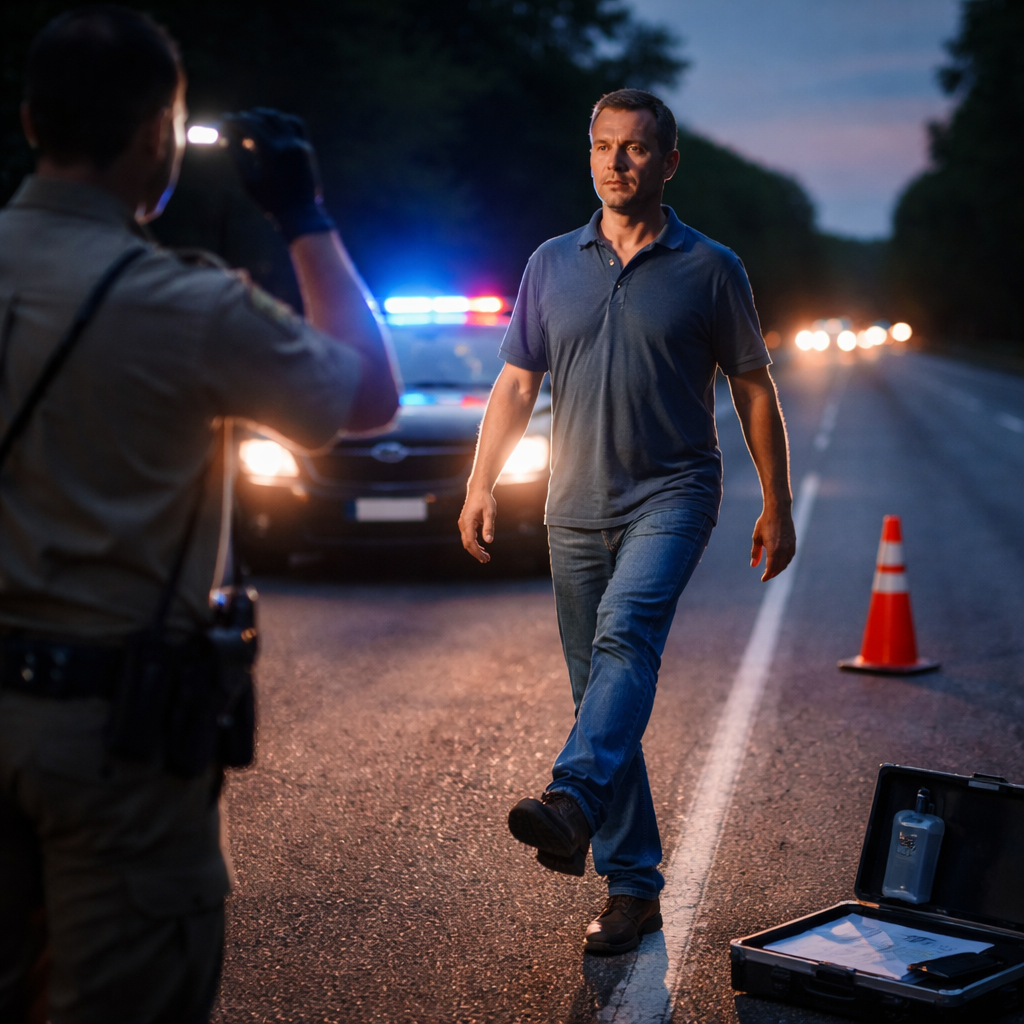
Every DWI arrest in America follows essentially the same script. An officer pulls you over, asks if you’ve been drinking, and then asks you to step out of the car to perform “a few tests.” Those tests (the Horizontal Gaze Nystagmus (HGN), the Walk-and-Turn (WAT), and the One-Leg Stand (OLS)) are the Standardized Field Sobriety Tests, or SFSTs. They are the single most important evidence in the vast majority of DWI cases in the United States.
Officers are trained to tell juries that these tests are “validated by the National Highway Traffic Safety Administration” and that they are “90% accurate.” Prosecutors rely on them. Judges accept them. Juries trust them.
But how were these tests actually developed? Who created them? How were they “validated”? And does the science actually support what officers tell juries in courtrooms across the country every day?
I am trained as a Standardized Field Sobriety Testing Instructor, was the first attorney in Texas to pass the Forensic Sobriety Assessment Certification exam, I serve on the faculty of the Robert F. Borkenstein Drug Course at Indiana University, and I am assistant chromatography instructor for the ACS-CHAL Forensic Lawyer-Scientist courses at Axion Analytical Labs. I am also a member of the American Academy of Forensic Sciences (AAFS), the Society of Toxicology (SOT), the American Chemical Society (ACS) and the International Association of Forensic Toxicology Consultants (IAFTC). I say this not to list credentials, but to make clear that what follows is not the critique of an outsider. I know these tests from the inside. I have taught them. And I can tell you that the science behind them is far weaker than most people, including most defense attorneys, realize.
Act I: The Birth of the SFSTs (1977–1983)
1977: The First Study
The story begins in 1977, when the U.S. Department of Transportation commissioned the Southern California Research Institute (SCRI) to study field sobriety tests. The primary researchers were Marcelline Burns and Herbert Moskowitz. Their task was to evaluate tests that police officers used to assess suspected drunk drivers and determine which ones were most effective.
Burns and Moskowitz started with 16 candidate tests, ranging from finger-to-nose to tongue twisters to coin pickup. Through a statistical technique called stepwise discriminant analysis, they reduced the battery to three: the one-leg stand, the walk-and-turn, and “alcohol gaze nystagmus” (later renamed horizontal gaze nystagmus).
This 1977 study has a fact that should stop every juror in their tracks: the false arrest error rate was 47%. Nearly half of the arrest decisions based on these tests were wrong. And this was in a laboratory and not on the side of a dark highway with traffic rushing past, with a nervous subject, under the stress of a police encounter. Nearly two-thirds of the subjects were male, and no field testing was conducted.
Also critical: these studies were never submitted for peer review and were never published in any scientific journal. This is the foundation upon which the entire SFST edifice is built.
1981: The Second Study
In 1981, Burns, Moskowitz, and Tharp produced a second study for NHTSA: “Development and Field Test of Psychophysical Tests for DWI Arrests” (DOT-HS-805-864). This study standardized the administration and scoring procedures for the three-test battery and evaluated them again in a laboratory setting with 10 police officers and 297 test subjects.
The results were not much better than 1977. 32% of arrest decisions were wrong. Among subjects with zero alcohol in their system, 18% were wrongly identified as impaired. The subjects were again disproportionately young males, and the BAC dosing was bimodal, i.e. subjects were either dosed high (0.15) or low (0.05 and below), with little representation of the 0.06–0.10 range where most real-world DWI stops occur.
The study’s own authors recognized its limitations. The final sentence recommended that “the field evaluation for the three-test battery be completed with a major effort” over an 18-month period with diverse law enforcement agencies. That recommendation would not be followed.
1983: The Field Study That Wasn’t
The recommended 18-month nationwide field evaluation was finally conducted in 1983, but instead of 18 months with diverse agencies, it was a three-month study with four police agencies. Officers received one day of training. Data was collected on the honor system: officers self-reported their results, with no oversight and no verification that they administered or scored the tests correctly. Only on rare occasions did NHTSA researchers actually ride along to observe.
These three studies (1977, 1981, and 1983) are the development research behind the SFSTs. None were peer-reviewed. None were published in scientific journals. None included control groups of non-drinkers. The field “validation” was conducted on the honor system over three months instead of the recommended eighteen. And yet these studies became the scientific basis for a testing program used millions of times per year in courtrooms across America.
Act II: The Validation Studies (1995–1998)
Between 1995 and 1998, NHTSA conducted three field validation studies designed to test the SFSTs under real-world conditions:
- Colorado (1995): Average BAC of arrested subjects was 0.15. One in eight subjects under 0.05 BAC had four or more HGN clues — enough to “fail” the test.
- Florida (1997): Male-only study. Average BAC of arrested subjects was 0.15. Among subjects under 0.08, 18% had five or six HGN clues. 67% of all incorrect arrests had six HGN clues, meaning a “perfect” HGN score did not prevent wrongful arrest. 70% of subjects under 0.08 had two or more clues on walk-and-turn. Wrongly arrested subjects showed an average of two clues on OLS and nearly four on WAT.
- San Diego (1998): Average BAC of arrested subjects was 0.15. False positives (subjects arrested at under 0.08) were six times more common than false negatives (subjects not arrested who were over 0.08). 37% of subjects under 0.08 had four or more HGN clues. 52% had two or more WAT clues. 41% had two or more OLS clues.
Several things stand out about these studies. First, the average BAC of arrested subjects was 0.15 across all three — nearly double the legal limit. These studies were excellent at identifying obviously intoxicated individuals. They tell us very little about the accuracy of SFSTs at the BAC levels where most real DWI cases are contested: the 0.08–0.12 range.
Second, the accuracy percentages that officers cite in court (88% for HGN, 79% for WAT, 83% for OLS when all three are used together) include all three phases of DWI detection — vehicle in motion, personal contact, and the SFSTs. They are not accuracy rates for the SFSTs alone. The individual tests were evaluated in isolation only once, in the 1977 laboratory study, with a 47% error rate.
Third, the false positive rates in these studies are striking. In San Diego, subjects under 0.08 who “failed” the SFSTs outnumbered subjects over 0.08 who “passed” by a ratio of six to one. The tests are far better at creating false positives than they are at creating false negatives.
Act III: The Robustness Study (2007) — NHTSA’s Own Data Undermines the HGN
In 2007, NHTSA once again employed Marcelline Burns to conduct “The Robustness of the Horizontal Gaze Nystagmus Test,” a study examining whether minor deviations from the standardized HGN protocol would compromise test reliability. Twenty-seven paid subjects and seven trained officers participated.
NHTSA intended this study to show that the HGN test was “robust” meaning that slight variations in administration wouldn’t significantly affect results. What the data actually showed was devastating for the prosecution.
When the stimulus speed was varied from the standard two seconds to one second:
- 36 tests were conducted. 26 subjects had BACs under 0.08.
- Of those 26, 20 exhibited four or more HGN clues — a 76.9% false positive rate.
When the vertical position of the stimulus was varied:
- 36 tests were conducted. 24 subjects had BACs under 0.08.
- Of those, 13 had four or more clues — a 54.1% false positive rate.
When the distance of the stimulus from the subject’s eyes was varied:
- 35 tests were conducted. 26 subjects had BACs under 0.08.
- Of those, 18 had four or more clues — a 69.2% false positive rate.
Read those numbers again. In NHTSA’s own study, conducted by the researcher who developed the tests, between 54% and 77% of sober subjects “failed” the HGN test when the administration varied slightly from protocol. And critically, the Robustness study was not even a 0.08 study. It actually used 0.06 as the threshold, making the false positive rates at the actual legal limit even higher.
The Robustness study was quietly removed from the NHTSA SFST curriculum in 2018. It is not hard to see why.
The analogy is simple: Would you take a pregnancy test that told 70% of non-pregnant women they were pregnant? Would you trust a COVID test with that false positive rate? Then why would you trust an HGN test with one?
Act IV: The Medical Community Speaks
The medical community has not been kind to the HGN test. The authoritative medical textbook Duane’s Ophthalmology (2013 edition, Tasman & Jaeger, Lippincott Williams & Wilkins), in the chapter on nystagmus and saccadic intrusions, offered this assessment of the roadside HGN test:
“It is unreasonable to have cursorily trained law officers using the test, no matter how intelligent, perceptive, and well-meaning they might be. As noted, meticulous history-taking and drug-screening blood studies are often essential in evaluating patients with nystagmus. Peer-reviewed research studies have demonstrated that significant numbers of normal individuals have gaze-evoked nystagmus at small gaze angles (i.e., 10° or 20°). Because the pseudoscientific basis for the HGNT has been shown to be demonstrably false, its continued use to convict innocent drivers is untenable; the roadside HGNT should be discontinued in all states currently employing it, and its evidentiary acceptance by the legal system overturned.”
This is not a defense attorney’s opinion. This is a standard medical ophthalmology textbook calling the HGN “pseudoscientific” and recommending its discontinuation.
Independent research confirms the concern. Dr. Jim Booker’s peer-reviewed study, End Position Nystagmus as an Indicator of Ethanol Intoxication (Science & Justice, 41(2):113–116, 2001), documented a high baseline error rate for the HGN test and found that the dose/response relationship varies greatly depending on whether BAC is rising or falling — a critical limitation that is never disclosed in courtroom testimony.
A 2014 study in the Journal of Forensic Toxicology and Pharmacology (Yoshizuka et al., J Forensic Toxicol Pharmacol 3:2) examined the SFST failure rate among drug-naïve, sober subjects and found that 26% failed the SFSTs completely sober. The authors concluded: “There are also a significant number of persons NOT impaired who cannot successfully pass the SFST.”
Act V: The Drug DWI Problem — Using Alcohol Tests to Detect Drug Impairment
Everything discussed above relates to the SFSTs as tests for alcohol impairment. But across the country, these same tests are now being used as evidence of drug impairment — a purpose for which they were never designed, never validated, and for which the science offers little support.
The SFST battery was developed by Burns and Moskowitz to distinguish alcohol-impaired drivers from sober ones. The three validation studies (Colorado, Florida, San Diego) involved alcohol and only alcohol. The NHTSA SFST manual itself was written around alcohol impairment. Yet through the Drug Evaluation and Classification Program (DECP), the SFSTs have been incorporated as Step 5 of the 12-step Drug Recognition Expert (DRE) evaluation — and officers routinely testify that SFST “failure” supports a conclusion of drug impairment.
How Accurate Are DRE Evaluations?
The 2005 Walden study at Texas A&M University (Troy Duane Walden, M.S. thesis, Texas A&M University, May 2005) examined 324 enforcement drug influence evaluations and compared DRE predictions against toxicology results. The findings were sobering:
- Depressants: 60.5% accuracy
- Cannabis: 64.9% accuracy
- Narcotic Analgesics: 51.6% accuracy
- Stimulants: 32% accuracy
- PCP: 46.6% accuracy
- Inhalants: 14.2% accuracy
- Hallucinogens: 12% accuracy
While the DRE tracking system reports an overall success rate of 85.5%, the Walden study submitted a more representative median accuracy of 53.2% — barely better than a coin flip.
Act VI: Where We Are Now
The NHTSA SFST curriculum has been updated multiple times — in 2013, 2015, 2018, 2023, and most recently in April 2025. Each update has been described as “primarily non-substantive” with corrections to typographical errors and formatting. The fundamental science underlying the tests has not changed since the Burns and Moskowitz studies of the late 1970s and early 1980s.
The Robustness study was removed from the curriculum in 2018. The validation study accuracy figures continue to be cited in courtrooms as if they represent the accuracy of the SFSTs alone, when in fact they represent all three phases of detection combined.
Meanwhile, the use of SFSTs in drug DWI cases continues to expand despite the absence of validated scientific support. The DRE program trains officers in a 12-step evaluation that incorporates the SFSTs and produces a drug category “opinion” that is treated as expert testimony in court — even though independent research shows the median accuracy of that opinion is barely above 50%.
What This Means for Your DWI Case
If you are facing a DWI charge in Texas, the SFSTs are almost certainly a central part of the evidence against you. Understanding their history and limitations is not optional — it is essential. Here is what you need to know:
- The tests were developed in a lab, not on the roadside. Real-world conditions such as uneven surfaces, traffic noise, headlight glare, weather, nerves, medical conditions, footwear, and/or fatigue were not part of the original research.
- The “90% accuracy” claim is misleading. That figure represents all three detection phases combined, not the SFSTs alone. The individual tests were evaluated in isolation only once — in the 1977 laboratory study — with a 47% error rate.
- The HGN test has a devastating false positive problem. NHTSA’s own Robustness study showed false positive rates between 54% and 77% for sober subjects. The medical community has called the test “pseudoscientific.”
- 26% of sober people fail the SFSTs. Independent research confirms that a significant percentage of completely unimpaired individuals cannot pass these tests.
- The tests were never validated for drug impairment. Every SFST validation study involved alcohol only. Using them as evidence of marijuana or drug impairment is scientifically unsupported.
- The DRE program’s accuracy is barely above a coin flip. Independent research shows DRE drug category predictions are correct about 53% of the time.
- You need a lawyer who understands the science, not just the law. Challenging SFSTs effectively requires understanding nystagmus physiology, divided attention theory, pharmacokinetics, and the specific methodological weaknesses of the NHTSA research. A lawyer who simply argues “my client was nervous” is leaving the most powerful defenses on the table.
About the Author
Deandra Grant is the Managing Partner of Deandra Grant Law and has been defending DWI cases in Texas for more than 30 years. She holds a Master’s Degree in Pharmaceutical Science (Forensic Science Concentration) from the University of Florida College of Pharmacy and a Graduate Certificate in Forensic Toxicology from UF’s College of Veterinary Medicine. She is an ACS-CHAL Forensic Lawyer-Scientist who teaches the ACS forensic chromatography and drug analysis courses at Axion Analytical Labs in Chicago and administers and grades the ACS-CHAL proficiency examination. She serves on the faculty of the Robert F. Borkenstein Drug Course at Indiana University Bloomington and chairs the DUI Defense Lawyers Association’s national Board Certification program. She is a certified SFST Instructor and was the first Texas attorney to pass the Forensic Sobriety Assessment Certification exam. She is a member of the American Academy of Forensic Sciences, the American Chemical Society, the Society of Toxicology, and the International Association of Forensic Toxicology Consultants. She is the author of 18+ law books including The Texas DWI Manual (James Publishing, updated annually).
If you are facing a DWI charge in Texas and your case involves SFST evidence, contact Deandra Grant Law at (214) 225-7117 or visit texasdwisite.com for a free, confidential consultation.