
The Role of Forensic Evidence in Federal Criminal Cases

Federal criminal cases in Texas often hinge on forensic evidence. From DNA analysis and digital data recovery to fingerprint comparison and financial tracing, prosecutors rely heavily on scientific testing to build their case. Federal investigations typically involve agencies such as the FBI, DEA, ATF, or Homeland Security, and the evidence gathered is often detailed and technical.
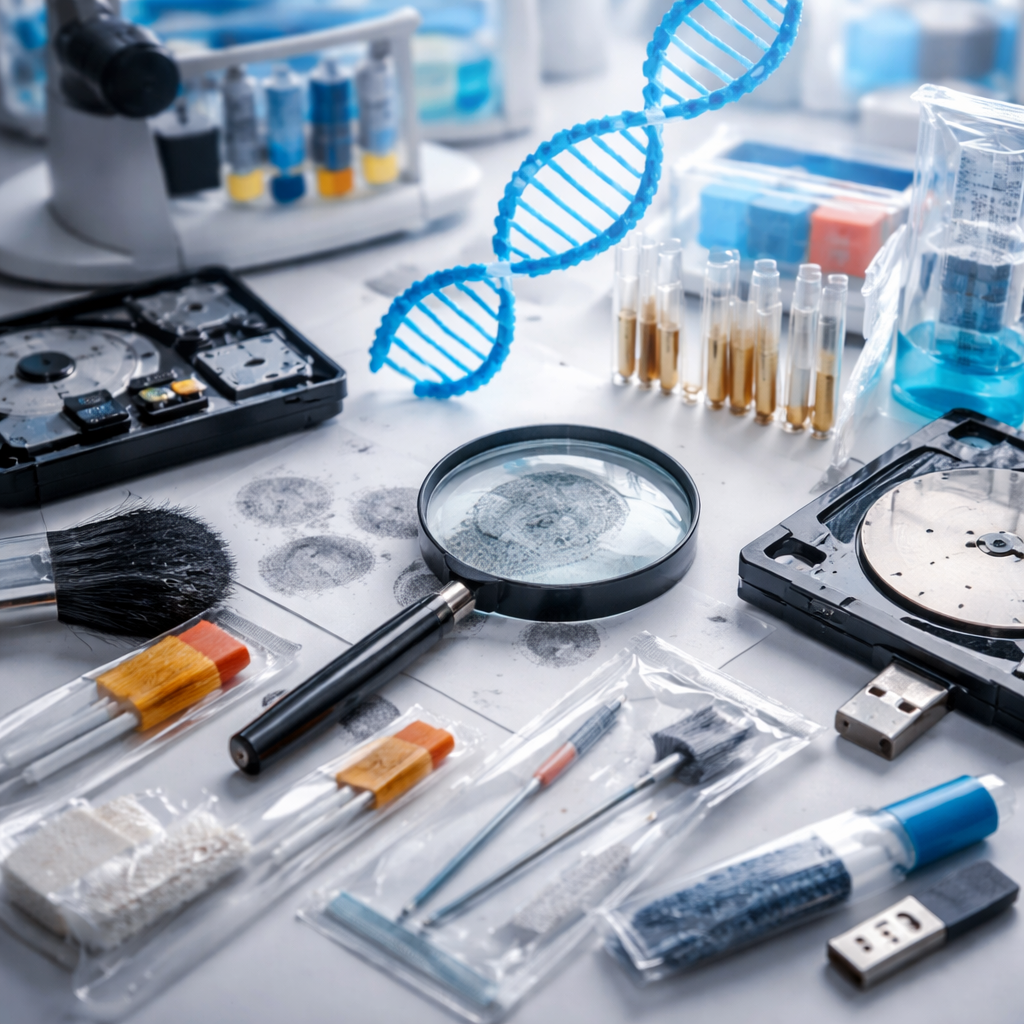
At Deandra Grant Law, we understand how powerful forensic evidence can appear in a federal courtroom. We also know that it is not always as flawless as prosecutors claim. This article explains how forensic evidence is used in federal criminal cases, the risks it presents to defendants, and how an experienced Texas federal criminal defense strategy can challenge questionable science.
Federal criminal cases in Texas frequently rely on forensic tools such as DNA testing, digital forensics, fingerprint analysis, and financial tracing. While juries often view scientific evidence as conclusive, forensic methods can involve human error, lab mistakes, or flawed procedures. A strong defense examines how evidence was collected, preserved, tested, and interpreted. Challenging forensic findings can weaken the prosecution’s case and protect a defendant’s constitutional rights.
What Is Forensic Evidence in Federal Cases?

Forensic evidence refers to scientific or technical information used to prove elements of a crime. In federal prosecutions, this evidence is often central to the government’s case.
Common types of forensic evidence in Texas federal criminal cases include:
-
DNA analysis
-
Fingerprint identification
-
Ballistics testing
-
Drug chemistry analysis
-
Digital forensics
-
Cell phone and tower data
-
Financial and accounting tracing
-
Computer hard drive recovery
Federal cases typically involve allegations such as drug trafficking, wire fraud, healthcare fraud, firearms offenses, cybercrime, child exploitation, conspiracy, or white collar crime. In many of these matters, prosecutors depend on laboratory testing and technical analysis to establish guilt beyond a reasonable doubt.
Why Federal Prosecutors Rely So Heavily on Forensics
Federal prosecutors often present forensic evidence as objective and scientific. Jurors may assume that lab reports, DNA matches, or digital tracking are definitive proof.
In reality, forensic science involves:
-
Human interpretation
-
Laboratory procedures
-
Equipment calibration
-
Chain of custody documentation
-
Statistical probability analysis
Each of these stages presents potential weaknesses.
Federal agencies devote significant resources to forensic testing. However, large caseloads, tight deadlines, and human error can affect accuracy. A strong Texas criminal defense lawyer evaluates each step carefully rather than accepting conclusions at face value.
The Chain of Custody in Federal Cases
Before evidence can be admitted in federal court, the government must establish a proper chain of custody. This means showing who collected the evidence, who stored it, who tested it, and how it was preserved.
Breaks in the chain of custody can raise serious concerns such as:
-
Contamination
-
Mishandling
-
Tampering
-
Mislabeling
-
Improper storage
For example, if a narcotics sample was not sealed correctly or logged properly, the integrity of the chemical testing may be compromised. If digital evidence was accessed without documentation, its authenticity may be questioned.
Challenging chain of custody is a critical defense strategy in many federal prosecutions.
DNA Evidence in Federal Criminal Cases
DNA testing is often viewed as powerful proof. Federal cases involving violent crime, sexual offenses, or large-scale drug conspiracies may include DNA analysis.
Yet DNA evidence is not immune to error.
Potential weaknesses include:
-
Lab contamination
-
Sample degradation
-
Mixed DNA interpretation errors
-
Statistical misrepresentation
-
Analyst bias
In some cases, DNA results only show that a person was present at a location, not that they committed a crime. Context matters. A Texas federal criminal defense attorney may consult independent experts to review lab reports and methodology.
Digital Forensics and Federal Investigations
Federal cases increasingly involve digital evidence. Prosecutors may rely on:
-
Email records
-
Encrypted messages
-
Social media data
-
IP address tracking
-
Hard drive recovery
-
Cloud storage analysis
-
Metadata examination
Digital forensics can appear precise, but interpretation is key. For example, being the registered owner of a device does not automatically prove who was using it at a specific time.
Federal search warrants for electronic devices must comply with the Fourth Amendment. If agents exceed the scope of a warrant or conduct unlawful searches, evidence may be subject to suppression.
Financial Forensics in White Collar Federal Cases
In wire fraud, healthcare fraud, tax evasion, or money laundering cases, forensic accountants analyze financial records.
Federal prosecutors may attempt to show:
-
Patterns of transactions
-
Intent to defraud
-
False billing practices
-
Concealment of funds
However, complex financial data can be interpreted in multiple ways. Business disputes, bookkeeping errors, or regulatory misunderstandings may be mischaracterized as criminal conduct.
A knowledgeable Texas criminal defense lawyer works with independent financial experts to challenge assumptions and provide alternative explanations.
Expert Witnesses in Federal Court
Federal Rule of Evidence 702 governs expert testimony. The prosecution must establish that:
-
The expert is qualified
-
The methodology is reliable
-
The principles are scientifically valid
-
The testimony assists the jury
Defense attorneys may file motions to exclude unreliable expert testimony. If the underlying science is flawed or improperly applied, the court may limit or reject it.
Challenging expert qualifications and testing procedures can significantly impact the outcome of a federal case.
Realistic Case Scenario
Consider a federal drug trafficking case in Texas where law enforcement claims narcotics were found in a shared vehicle. Laboratory testing confirms the substance is illegal.
A strong defense may examine:
-
Who had access to the vehicle
-
Whether fingerprints were properly collected
-
Whether DNA testing was conducted correctly
-
Whether the substance was properly weighed
-
Whether field tests were reliable
-
Whether officers followed proper procedures
If forensic errors are identified, the prosecution’s case may weaken, sometimes resulting in reduced charges or dismissal.
Constitutional Issues in Federal Forensic Evidence
Forensic evidence is also subject to constitutional protections, including:
-
Fourth Amendment rights against unlawful search and seizure
-
Fifth Amendment rights against self-incrimination
-
Sixth Amendment rights to confront witnesses
If evidence was obtained through an invalid search warrant, unlawful surveillance, or improper interrogation, it may be suppressed. Suppression of key forensic evidence can dramatically alter a federal case.
How a Texas Federal Criminal Defense Attorney Protects You
Federal prosecutions are complex and high stakes. Penalties may include lengthy prison sentences, substantial fines, and permanent damage to your reputation.
A strategic defense may involve:
-
Independent forensic review
-
Filing suppression motions
-
Challenging expert testimony
-
Identifying procedural violations
-
Negotiating favorable plea agreements
-
Preparing for federal trial
Forensic evidence may appear convincing, but it must withstand legal scrutiny. Preparation, investigation, and expert consultation are critical.
If you are facing federal charges in Texas, early intervention is essential. Federal cases move quickly, and proactive defense can make a meaningful difference.
Speak With a Trusted Texas Federal Criminal Defense Attorney Today
If you or a loved one is under federal investigation or has been charged with a federal offense, do not assume the evidence is unbeatable. Deandra Grant Law has extensive experience defending clients across Texas against serious criminal allegations, including complex federal prosecutions.
Contact Deandra Grant Law today to schedule a confidential consultation and learn how we can protect your rights, challenge forensic evidence, and defend your future.
Deandra M. Grant, J.D.
ACS-CHAL Forensic Lawyer-Scientist with an M.S. in Pharmaceutical Science and a Graduate Certificate in Forensic Toxicology. Author of The Texas DWI Manual, and a trained SFST instructor. Defending Texas DWI cases since 1994.
Charged with DWI?
We're available 24/7 across all six Texas offices.
Request a Free Case Evaluation
Tell us what happened. We'll respond as soon as possible.