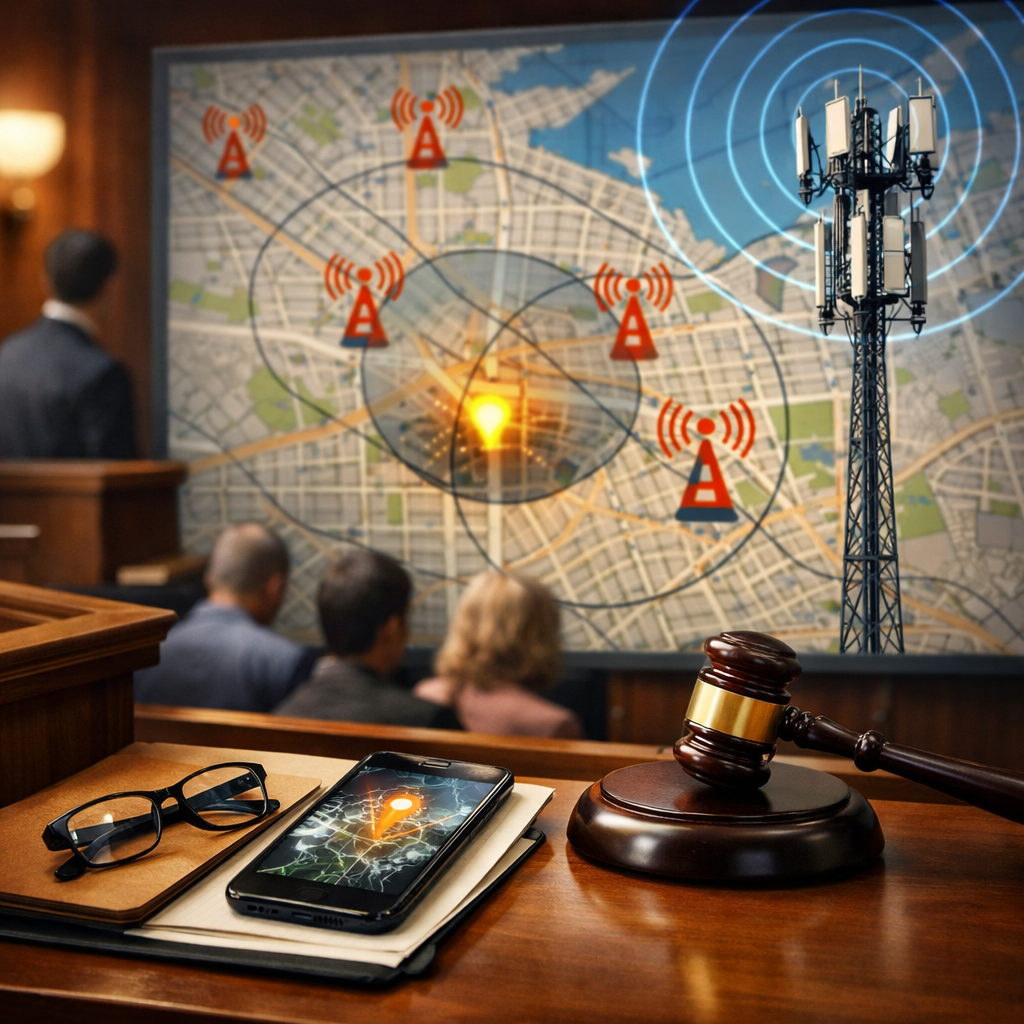
Call detail records (CDRs) are one of the prosecution’s favorite tools for placing a defendant at a specific location at a specific time. The prosecutor stands in front of the jury, points to a map covered in cell tower markers, and says: “The defendant’s phone connected to this tower at 11:47 p.m. which is the tower right next to the crime scene.”
It sounds damning. But the science behind call detail record analysis is far weaker than prosecutors want juries to believe and, in many cases, it does not prove what the prosecution claims it proves.

"Deandra Grant Law – Criminal & DWI Defense handled my case with diligence and professionalism. Deandra Grant's reputation is stellar and now I know why. She has a team of individuals who provide quality service."
- N. Coulter
"Deandra Grant Law – Criminal & DWI Defense fights hard for their clients and is always willing to go above and beyond. They are the best firm for DWI cases in DFW and beyond. Definitely hire them to represent you in any pending cases."
- P. Williams
"Deandra Grant made a tough situation so much better. She listened to my concerns and helped me so much with my case. I would recommend her to anyone needing legal services."
- M. Haley
What Are Call Detail Records?
Call detail records are business records maintained by cellular carriers that document each call, text message, and data session associated with a phone number. A typical CDR entry includes the date and time of the event, the originating and terminating phone numbers, the duration of the call, and, critically, the cell tower and sector that handled the connection.
It is this tower-and-sector information that prosecutors use to make location claims.
The Science Problem: CDRs Cannot Pinpoint Location
Doug’s training with Garrett Discovery addressed this issue directly. Garrett Discovery’s forensic experts have written extensive reports debunking the claim that CDRs can establish precise location. Here is why:
Cell Towers Cover Large Areas
A single cell tower can serve an area ranging from less than a mile in dense urban environments to several miles in suburban or rural areas. When a phone connects to a tower, the CDR tells you the phone was somewhere within that coverage area but not at a specific point.
Sector Information Narrows But Does Not Pinpoint
Cell towers are typically divided into three sectors, each covering roughly 120 degrees. Knowing the sector narrows the coverage area to approximately one-third of the tower’s total range but that can still be an area of one or more square miles.
Phones Do Not Always Connect to the Nearest Tower
Cell networks route connections based on a complex algorithm that considers signal strength, network load, and other factors. A phone may connect to a tower that is not the closest tower to the phone’s actual location. This means the tower identified in the CDR may not even be the nearest tower to where the defendant was.
Network Conditions Change Constantly
Tower coverage areas are not fixed. They change based on weather conditions, network congestion, new construction, equipment changes, and other variables. A coverage map from the time of the crime may look very different from a coverage map at the time of trial.
The “Drive Test” Problem
Some prosecution witnesses conduct “drive tests”, that is, driving through the area with a test phone to demonstrate which towers the phone connects to at various locations. These tests are flawed because:
- They are typically conducted months or years after the alleged offense, when network conditions may have changed significantly
- They use different equipment than the defendant’s phone, which may have different antenna characteristics and connection behavior
- They often test a limited number of locations and extrapolate conclusions about areas they did not test
- They can produce different results at different times of day due to changing network loads
How CDR Evidence Should Be Challenged
When prosecutors present CDR evidence, Doug challenges it at every level:
- The foundational science. Has the prosecution’s analyst overstated the precision of CDR-based location analysis? Is the analyst claiming to “place” the defendant at a specific location when the science only supports a general area?
- The analyst’s qualifications. What training does the prosecution’s CDR analyst have? Are they a certified forensic analyst, or are they a law enforcement officer with limited technical training?
- The methodology. Did the analyst follow accepted forensic protocols? Did they document their methods? Can their analysis be reproduced?
- The alternative explanations. Is the CDR evidence equally consistent with the defendant being at a different location within the tower’s coverage area? Could someone else have had the phone?
Talk to a Defense Team That Understands Digital Evidence
At Deandra Grant Law, Attorney Douglas Huff is our Partner and Criminal Division Chief — a senior trial attorney who has completed advanced training in digital forensics with Garrett Discovery, one of the nation’s leading digital forensics firms. Doug doesn’t just read the prosecution’s forensic reports. He has the training to understand the tools, challenge the methods, and expose the weaknesses in digital evidence.
If you are facing criminal charges involving digital evidence of any kind, contact Deandra Grant Law for a free, confidential consultation.
Call (214) 225-7117 or schedule an appointment online at texasdwisite.com.