
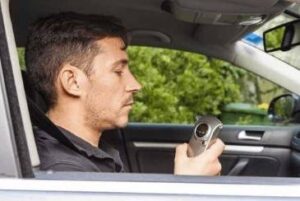
 The answer to that right now is yes. Still, as carmakers advance self-driving technologies, how DWIs involving fully autonomous vehicles will be handled in the future is unclear.
If you have been charged with a DWI in Dallas – whether in a self-driving or traditional car – contact Deandra Grant Law – Criminal & DWI Defense at (214) 225-7117 today.
ARE TODAY’S SELF-DRIVING CARS FULLY AUTONOMOUS?
To clarify why it’s possible to get a DWI in a self-driving vehicle these days, let’s first discuss what it means for a car to be self-driving. The Society of Automotive Engineers identifies six vehicle automation levels:- Level 0: At this level, there is no vehicle autonomy. These vehicles may have technology that allows the car to momentarily assist or warn the driver of possible dangers. However, the driver is still in full control of the vehicle.
- Level 1: Vehicles at this level are equipped with features such as steering or braking/accelerating support, such as adaptive cruise control. Still, the driver must constantly be alert when these systems are engaged and take control when needed.
- Level 2: These vehicles have both steering and braking/accelerating functions to support the driver. Again, even when these features are activated, the driver must monitor the driving conditions and be ready to take control.
- Level 3: With level 3 vehicles, automated driving features allow the car to control driving when certain conditions are met. The driver is not driving but may need to operate the vehicle if the system indicates that human intervention is required.
- Level 4: At level 4, the car’s system fully takes over driving in limited circumstances. The driver will not be required to take over control of the vehicle. The car will stop if the system fails.
- Level 5: This is the highest level of automation, allowing the vehicle full control over driving in all conditions. The car might not even be equipped with pedals or a steering wheel, meaning that driver intervention would never be required.
ARE (ALMOST) SELF-DRIVING VEHICLES LEGAL IN TEXAS?
In 2017, the Texas Transportation Code was amended to include legislation specifically concerning automated vehicles. Section 545.451 defined what the State considers an “automated motor vehicle.” In short, it’s a vehicle that has an automated driving system, which, when engaged, takes over the “operational and tactical” tasks for operating the vehicle and has protocols in place should the system fail. Automated vehicles are legal in Texas, provided that they:- Can comply with traffic and motor vehicle laws,
- Have a recording device installed by the manufacturer,
- Have an automated driving system installed that complies with federal laws and safety standards,
- Are registered and titled, and
- Are covered by liability insurance in the amounts required by law. (Texas Transportation Code § 545.454)
SELF-DRIVING CARS AND TEXAS’S DWI LAWS
Now, let’s break apart Texas’s DWI laws to help more clearly understand how a criminal charge can be filed even if someone were in a self-driving vehicle. Texas Penal Code § 49.04 addresses DWIs. Although the statute is referred to as driving while intoxicated, the actual elements of the offense are not specifically concerned with driving in a strict sense. Instead, the law says that a person commits an offense when operating a vehicle in a public place and is either impaired by drugs and/or alcohol or has an alcohol concentration of 0.08 or more. Texas law does not explicitly define the term “operating.” However, the Transportation Code does define a vehicle operator as “a person who drives or has physical control of a vehicle” (section 541.001(1-a)). Courts have interpreted “operating” as taking some action with the vehicle’s functions to allow the car to be used as intended. These definitions and interpretations mean a couple of things for self-driving vehicles and DWI charges. First, anyone operating one of today’s self-driving vehicles could face prosecution for driving while intoxicated. Remember that current autonomous vehicles are only almost self-driving; the driver may still be required to intervene or take control of the car even when automated or warning systems are engaged. Second, as it stands now, as automation technology advances, operators of self-driving cars may still be responsible for complying with traffic and motor vehicle laws, even when their vehicles have fully automated systems engaged. Thus, a prosecutor may likely pursue DWI charges if the operator is intoxicated. Currently, vehicle autonomy may not allow self-driving cars to avoid DWI charges, as owners are still subject to the same laws as those who drive traditional cars. However, that does not mean defenses cannot be mounted. As with a DWI involving traditional vehicles, the case may be raised that the stop or arrest was illegal, or that errors or external factors caused a chemical analysis to generate a BAC of 0.08 or higher. Whatever the case may be, a seasoned defense attorney can help. At Deandra Grant Law – Criminal & DWI Defense, our team has the knowledge and skills to challenge DWI charges. Attorney Deandra M. Grant has received schooling and training specifically focused on intoxicated driving. She also completed the certification course in administering standardized field sobriety tests.If you have been accused of driving while intoxicated in Dallas, please do not hesitate to reach out to our firm for the defense you need. Call (214) 225-7117 or submit an online contact form today.