
PPP and EIDL Fraud Prosecutions in 2026: Where These Cases Stand in Texas

The Paycheck Protection Program and Economic Injury Disaster Loan program distributed more than a trillion dollars in pandemic relief funding between 2020 and 2022. Federal prosecutors have been working through the resulting fraud cases ever since, and in 2026 those prosecutions are far from finished.
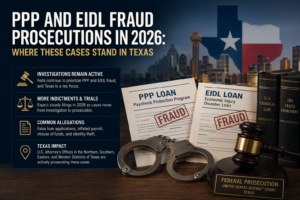
A coordinated federal enforcement sweep in early 2026 charged approximately 200 defendants across Texas, California, Florida, New York, and Illinois in schemes totaling more than $2.7 billion in fraudulent claims. In Texas alone, active prosecutions span all four federal districts, with the Northern District (covering Dallas-Fort Worth) pursuing cases at every scale from individual business owners who inflated revenue figures to organized fraud rings that generated millions in fraudulent applications.
If you received PPP or EIDL funds and are now facing questions from federal investigators, receiving a grand jury subpoena, or under direct investigation, understanding where these prosecutions stand and what the government is using as evidence is essential.
The Statute of Limitations: Why Cases Are Still Coming
The wire fraud statute of limitations is five years. The bank fraud statute of limitations is ten years. PPP and EIDL funds were distributed primarily in 2020 and 2021. This means:
- Wire fraud cases based on 2020 applications were timely through 2025. Cases based on 2021 applications are timely through 2026.
- Bank fraud cases based on 2020 applications are timely through 2030. Cases based on 2021 applications are timely through 2031.
The government is not running out of time. Federal prosecutors have been deliberate about working through these cases systematically, beginning with the largest and most organized schemes and working down to individual business owners. The bank fraud limitations period in particular means that smaller cases (individual applicants who inflated their revenue figures or fabricated their payroll numbers) remain within the prosecution window for years to come.
How Federal Investigators Identify PPP and EIDL Fraud
The scale of pandemic loan programs created an unprecedented dataset, and federal data analytics teams have been mining it systematically. The patterns that flag applications for investigation include:
- Businesses formed shortly before the application date. Legitimate businesses seeking relief for pandemic impacts on established operations are different from entities created for the purpose of obtaining loans. Businesses incorporated weeks or months before applying generated automatic flags.
- Revenue and payroll figures inconsistent with tax filings. PPP loan amounts were calculated based on payroll. EIDL amounts were based on revenue and operating expenses. Applications where the claimed figures significantly exceeded what prior tax returns reported are a primary investigation trigger.
- Multiple applications from related individuals or entities. Individuals who applied on behalf of multiple businesses, or coordinated applications across family members or associates, were identified through data matching across the application databases.
- Spending patterns inconsistent with business operations. EIDL funds were designated for business operating expenses. Data from financial institutions showed funds immediately converted to personal use (luxury purchases, personal travel, real estate) a pattern that SBA auditors and federal investigators documented.
- Applications using fabricated or stolen identities. In organized fraud ring cases, applicants used stolen Social Security numbers, fabricated business registration documents, and fictitious employees to generate loan applications with no legitimate business behind them.
What Charges Are Typically Filed
PPP and EIDL fraud cases almost universally involve wire fraud charges, because the application process was entirely electronic. Bank fraud charges follow when the lender was a federally insured financial institution which is virtually always the case for PPP loans, since they were issued through participating banks. Cases involving false statements on the applications also frequently include charges under 18 U.S.C. §1001 (false statements to federal agents) and, when the funds were then moved through other accounts, money laundering charges under 18 U.S.C. §1956.
The sentencing consequences are driven primarily by the loss amount under the federal guidelines. A scheme involving $100,000 in fraudulent loans produces a very different guidelines range than one involving $1 million or $10 million. The government’s loss calculation (and how effectively the defense challenges it) significantly influences the sentencing outcome.
Defenses in PPP and EIDL Fraud Cases
Absence of criminal intent. All wire fraud and bank fraud charges require specific intent to defraud. Pandemic-era loan programs were implemented rapidly, with confusing and sometimes contradictory guidance about eligible expenses, qualifying payroll figures, and application requirements. Defendants who made good-faith errors in calculating payroll or revenue figures (relying on accountants, using different accounting methodologies, or misunderstanding the program rules) have a genuine intent defense. This is different from defendants who fabricated figures they knew to be false.
Challenging the loss calculation. The government’s claimed loss figure is not always accurate. Businesses that received loan funds and used them for legitimate business expenses (even if some figures in the application were overstated) can argue that the actual loss is less than the face value of the loan. The value provided offsets the government’s loss calculation in appropriate circumstances.
Forgiveness and loan use. Many PPP loans were forgiven meaning the government ultimately did not sustain a financial loss on those loans. The impact of forgiveness on the loss calculation is a contested legal issue, and courts have reached different conclusions. This is an active area of litigation in PPP fraud cases.
Challenging the government’s evidence. Federal pandemic loan fraud investigations involve massive document sets and data analyses. The government’s interpretation of financial records, tax filings, and application data is not always correct. Independent forensic accountants can review the same records and reach different conclusions about what the numbers show.
Pre-indictment intervention. If you know or suspect you are under investigation for pandemic loan fraud (you have received a target letter, been contacted by SBA OIG investigators or FBI agents, or received a grand jury subpoena) engaging federal defense counsel before charges are filed provides the best opportunity to influence the outcome. Pre-indictment, there may be opportunities to present exculpatory evidence, correct misunderstandings about the facts, or negotiate a resolution that avoids or reduces criminal exposure.
If you are facing federal white collar charges or believe you are under federal investigation in Texas, contact Deandra Grant Law for a free, confidential case review. Of Counsel James Lee Bright handles federal criminal defense in all four Texas federal districts. Call (214) 225-7117 or visit texasdwisite.com.
Federal cases out of North Texas are prosecuted in the Northern District, and they move nothing like a state case.
Deandra M. Grant, JD, GC, MS, ACS-CHAL Forensic Lawyer-Scientist
She holds a Master of Science in Pharmaceutical Science and a Graduate Certificate in Forensic Toxicology, both from the University of Florida. She is the author of The Texas DWI Manual and has defended Texas DWI cases since 1994.
Under Federal Investigation or Charged?
In federal cases, the most important decisions often come before an indictment. The sooner you have a defense lawyer, the more can be done. Talk to us today.
Request a Free Case Evaluation
Tell us what happened. We'll respond as soon as possible.