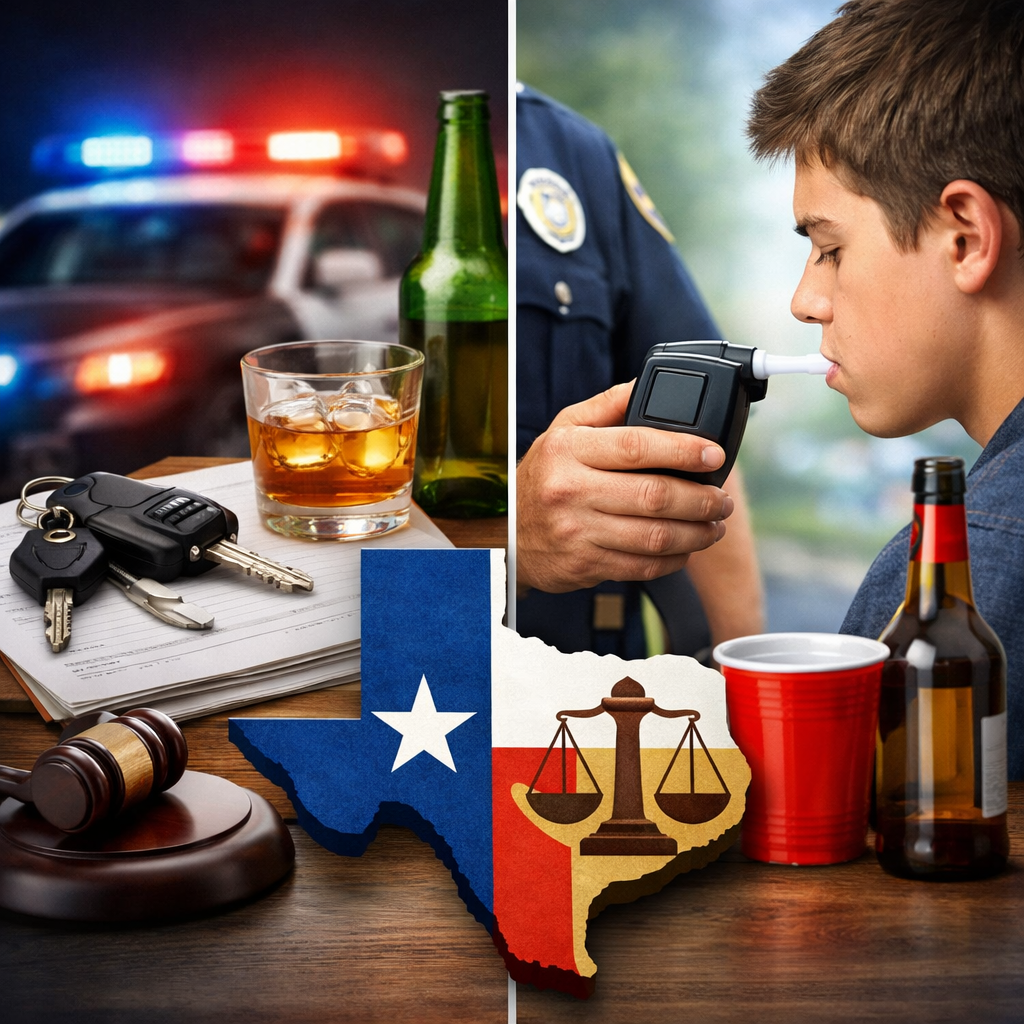
People use the terms “DWI” and “DUI” interchangeably because states define the crime of driving while intoxicated using different terminology. In Texas they are two separate criminal offenses with different statutes, different penalties, and different long-term consequences. Understanding the distinction matters both for knowing what you are facing and for knowing how to defend against it.

"Deandra Grant Law – Criminal & DWI Defense handled my case with diligence and professionalism. Deandra Grant's reputation is stellar and now I know why. She has a team of individuals who provide quality service."
- N. Coulter
"Deandra Grant Law – Criminal & DWI Defense fights hard for their clients and is always willing to go above and beyond. They are the best firm for DWI cases in DFW and beyond. Definitely hire them to represent you in any pending cases."
- P. Williams
"Deandra Grant made a tough situation so much better. She listened to my concerns and helped me so much with my case. I would recommend her to anyone needing legal services."
- M. Haley
DWI: Driving While Intoxicated
Texas Penal Code §49.04 defines the offense of Driving While Intoxicated. A person commits DWI if they operate a motor vehicle in a public place while intoxicated.
Under §49.01, “intoxicated” means either:
- Not having the normal use of mental or physical faculties by reason of the introduction of alcohol, a controlled substance, a drug, a dangerous drug, a combination of two or more of those substances, or any other substance into the body
- Having an alcohol concentration of 0.08 or more (the “per se” definition)
This is critical: Texas gives the prosecution two independent paths to conviction. Even if your blood or breath test is below 0.08, the prosecution can still pursue a DWI conviction by arguing that you did not have the normal use of your mental or physical faculties due to the introduction of a substance. Conversely, if your BAC is 0.08 or above, the prosecution does not need to prove impairment. A jury could convict you on the number alone if they believe in its validity beyond a reasonable doubt.
DWI Penalties
First offense (Class B misdemeanor):
- 72 hours to 180 days in county jail (which can be probated)
- Fine of up to $2,000
- Driver’s license suspension of 90 days to 1 year
- Possible ignition interlock device requirement
Second offense (Class A misdemeanor):
- 30 days to 1 year in county jail (which can be probated)
- Fine of up to $4,000
- Driver’s license suspension of 180 days to 2 years
- Mandatory ignition interlock device
Third offense (third-degree felony):
- 2 to 10 years in the Texas Department of Criminal Justice (which can be probated)
- Fine of up to $10,000
- Driver’s license suspension of 180 days to 2 years
- Mandatory ignition interlock device
DWI with BAC of 0.15 or higher (Class A misdemeanor):
- Up to 1 year in county jail (which can be probated)
- Fine of up to $4,000
- Mandatory ignition interlock device
DUI: Driving Under the Influence (Minors Only)
Texas Alcoholic Beverage Code §106.041 defines DUI as a separate offense that applies only to persons under 21 years of age. A minor commits DUI if they operate a motor vehicle in a public place while having any detectable amount of alcohol in their system.
This is a fundamentally different standard than DWI. There is no requirement that the minor be “intoxicated” or impaired in any way. There is no 0.08 threshold. If a person under 21 has any detectable amount of alcohol in their system and operates a motor vehicle, they have committed DUI under Texas law.
DUI Penalties
First offense (Class C misdemeanor):
- No jail time (Class C misdemeanors are punishable by fine only)
- Fine of up to $500
- Driver’s license suspension of 60 days
- 20 to 40 hours of mandatory community service
- Mandatory alcohol awareness course
Second offense (Class C misdemeanor):
- Fine of up to $500
- Driver’s license suspension of 120 days
- 40 to 60 hours of mandatory community service
- Mandatory alcohol awareness course
Third offense (if minor is 17 or older):
- Fine of $500 to $2,000
- Driver’s license suspension of 180 days
- Up to 180 days in jail
- Mandatory alcohol awareness course
Related Videos
Biggest Mistakes of a DWI Charge
ARVE error: <a href="https://nextgenthemes.com/plugins/arve/documentation/installation/">ARVE Pro</a> license not activated or valid
Choosing a Personal Injury Attorney
ARVE error: <a href="https://nextgenthemes.com/plugins/arve/documentation/installation/">ARVE Pro</a> license not activated or valid
Key Differences at a Glance
The differences between DWI and DUI in Texas come down to five key points:
- Who it applies to. DWI applies to anyone of any age. DUI applies only to persons under 21.
- What the prosecution must prove. DWI requires proof of intoxication (impairment or BAC of 0.08+). DUI requires only any detectable amount of alcohol.
- DWI is a Class B misdemeanor or higher. DUI is a Class C misdemeanor (fine-only) for first and second offenses.
- Jail time. DWI carries mandatory jail time even for a first offense. DUI does not carry jail time for first or second offenses.
- Long-term impact. A DWI conviction carries significantly more serious consequences for employment, insurance, professional licensing, and criminal history than a DUI conviction.
When a Minor Faces DWI Instead of DUI
A minor can be charged with DWI instead of DUI if the prosecution believes the minor was actually intoxicated. If a 19-year-old is stopped with a BAC of 0.12, the prosecution will likely charge DWI rather than DUI because the evidence supports the more serious offense. This is a critical distinction because the minor now faces the full DWI penalty structure.
In summary:
Under 21 with a detectable amount of alcohol but not intoxicated – charge would be DUI.
Under 21 but deemed by officer to be intoxicated – charge would be DWI.
Case Results
Why the Science Matters in Both Cases
Whether the charge is DWI or DUI, the prosecution’s case relies on scientific evidence: breath test results, blood test results, field sobriety test performance, and the arresting officer’s observations. At Deandra Grant Law, our attorneys hold ACS-CHAL Forensic Lawyer-Scientist designations, which means we have completed rigorous training in the forensic science behind alcohol testing. We understand the chemistry of breath and blood testing, the sources of error in gas chromatography analysis, the limitations of field sobriety tests, and the specific points where the prosecution’s evidence is vulnerable.
For DUI cases involving minors, the “any detectable amount” standard makes the reliability of the testing method even more critical. If the test is wrong by even a small amount, it could mean the difference between a detectable amount and no detectable amount which is the difference between a conviction and an acquittal.
Protect Your Future — Contact Deandra Grant Law Today
If you or someone you love is facing DWI or DUI charges in Texas, contact Deandra Grant Law for a free, confidential consultation. Our firm has defended thousands of DWI cases over nearly 30 years. Lead attorney Deandra Grant is a nationally recognized DWI trial attorney who has built one of the most experienced DWI defense teams in Texas. Our attorneys hold ACS-CHAL Forensic Lawyer-Scientist designations, giving us the scientific training to challenge breath tests, blood tests, field sobriety tests, and every other piece of evidence the prosecution relies on.
Call (214) 225-7117 or schedule an appointment online at texasdwisite.com.
Firm Accolades

Better Business Bureaus

D Magazine