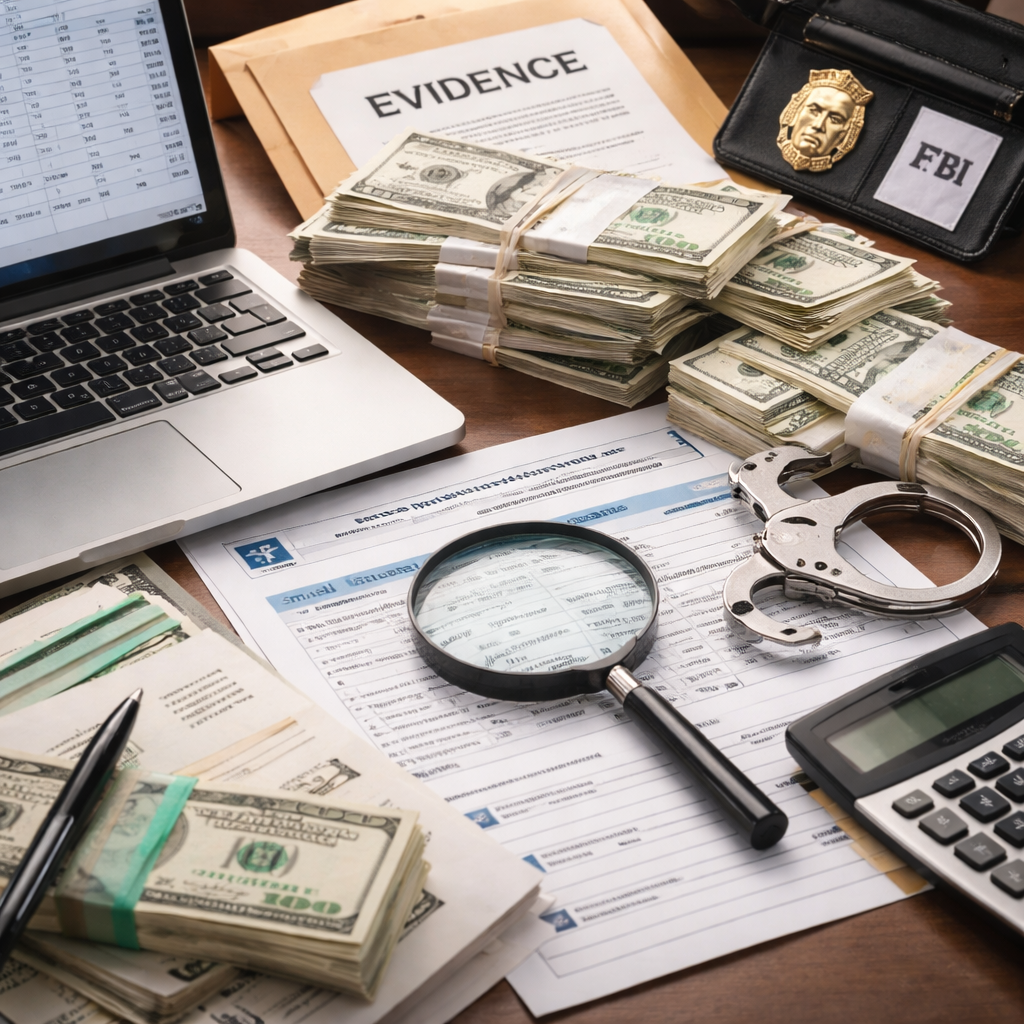
The Paycheck Protection Program (PPP) distributed approximately $800 billion in forgivable loans to businesses during the COVID-19 pandemic. The program was designed to help small businesses retain employees during shutdowns and economic disruption. It was administered through private lenders, backed by the Small Business Administration (SBA), and funded by taxpayer dollars.
The program was created under extraordinary urgency, with minimal verification requirements and rapid disbursement timelines. That combination of massive funding and limited oversight created opportunities for fraud on an unprecedented scale and the federal government has responded with an equally unprecedented enforcement effort that is still accelerating years after the program ended.

"Deandra Grant Law – Criminal & DWI Defense handled my case with diligence and professionalism. Deandra Grant's reputation is stellar and now I know why. She has a team of individuals who provide quality service."
- N. Coulter
"Deandra Grant Law – Criminal & DWI Defense fights hard for their clients and is always willing to go above and beyond. They are the best firm for DWI cases in DFW and beyond. Definitely hire them to represent you in any pending cases."
- P. Williams
"Deandra Grant made a tough situation so much better. She listened to my concerns and helped me so much with my case. I would recommend her to anyone needing legal services."
- M. Haley
What Is PPP Fraud?
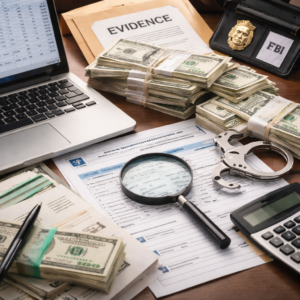
PPP fraud encompasses a range of conduct involving false, misleading, or fraudulent representations made in connection with PPP loan applications, loan forgiveness applications, or the use of PPP funds. Common categories include:
False Statements on Loan Applications
PPP applications required businesses to certify the number of employees, average monthly payroll, and the purpose of the loan. Fraud occurs when applicants inflated employee counts, fabricated payroll figures, created fictitious businesses, used false tax documents, or misrepresented the nature or existence of their business.
Misuse of PPP Funds
PPP loans were required to be used for specific purposes: payroll costs, rent, utilities, mortgage interest, and certain other business expenses. Using PPP funds for personal expenses such as luxury purchases, personal real estate, vehicles, investments, or other non-business purposes constitutes fraud even if the loan application itself was truthful.
False Statements on Forgiveness Applications
PPP loans were designed to be forgiven if the borrower used the funds for qualifying purposes and maintained employee levels. Submitting false documentation to obtain forgiveness such as fabricated payroll records, inflated expense claims, or false certifications about employee retention is a separate fraudulent act.
Identity Theft and Stolen Information
Some PPP fraud schemes involved using stolen identities, EINs (Employer Identification Numbers), or Social Security numbers to submit applications for businesses the applicant did not own or operate. Others involved filing applications using the identities of real businesses without the owners’ knowledge.
Multiple Fraudulent Applications
Some individuals submitted multiple PPP applications through different lenders, for different fictitious businesses, or using different identities. These schemes were often detected through database cross-referencing by federal investigators.
Federal Statutes Used to Prosecute PPP Fraud
The federal government prosecutes PPP fraud under multiple statutes, often stacking charges to increase sentencing exposure:
- Wire Fraud (18 U.S.C. §1343) — up to 20 years per count. Because PPP applications were submitted electronically, virtually every PPP fraud case involves wire fraud.
- Bank Fraud (18 U.S.C. §1344) — up to 30 years per count. PPP loans were processed through federally insured banks and lenders.
- False Statements to a Financial Institution (18 U.S.C. §1014) — up to 30 years per count.
- Money Laundering (18 U.S.C. §1956/1957) — up to 20 years per count. Often charged when PPP funds were converted to personal use or transferred to conceal their origin.
- Conspiracy (18 U.S.C. §1349) — up to 20 years. Charged when multiple individuals participated in the scheme.
- Aggravated Identity Theft (18 U.S.C. §1028A) — mandatory 2-year consecutive sentence when identity theft is used in connection with a fraud offense. This sentence runs consecutive to any other sentence — it cannot be served concurrently.
A single PPP fraud case can involve multiple counts across multiple statutes, creating aggregate sentencing exposure of decades in federal prison.
How the Government Investigates PPP Fraud
PPP fraud investigations are conducted by a coordinated network of federal agencies:
- Department of Justice (DOJ) COVID-19 Fraud Enforcement Task Force — established specifically to coordinate pandemic fraud prosecutions across all 94 federal judicial districts
- FBI — leads many PPP fraud investigations, particularly complex multi-defendant schemes
- SBA Office of Inspector General (SBA-OIG) — investigates fraud involving SBA-backed programs
- IRS Criminal Investigation (IRS-CI) — involved when false tax returns were used to support applications or when funds were not reported as income
- S. Postal Inspection Service — involved when mail was used in furtherance of the fraud
- Secret Service — investigates financial crimes including identity-based fraud schemes
These agencies use data analytics to identify suspicious applications: matching applicant information across multiple loans, comparing reported payroll to IRS records, identifying businesses with no prior tax filings, and flagging applications that share addresses, bank accounts, IP addresses, or device identifiers. The SBA has also engaged private-sector data analytics firms to identify fraud indicators across the entire PPP database.
Why PPP Prosecutions Are Still Happening Now
Many people assume that because the PPP program ended years ago, the risk of prosecution has passed. This assumption is dangerous. The federal statute of limitations for most PPP fraud charges is 10 years from the date of the offense under the special extended limitations period applicable to financial institution fraud (18 U.S.C. §3293). This means the government can bring charges for PPP fraud committed in 2020 or 2021 well into 2030 or 2031.
Federal investigators have been systematically working through the PPP database, and the pace of prosecutions has increased over time as data analytics identify more suspects and early prosecutions produce cooperating witnesses who provide information about additional defendants.
Related Videos
Judge or Jury Trial?
ARVE error: <a href="https://nextgenthemes.com/plugins/arve/documentation/installation/">ARVE Pro</a> license not activated or valid
Choosing a Criminal Defense Attorney
ARVE error: <a href="https://nextgenthemes.com/plugins/arve/documentation/installation/">ARVE Pro</a> license not activated or valid
Defense Strategies for PPP Fraud Cases
Good Faith and Lack of Intent
Every PPP fraud charge requires proof that the defendant acted knowingly and with intent to defraud. If the defendant made a good-faith error on the application the intent element is not satisfied. Ex. miscounted employees, used outdated payroll figures, or misunderstood the eligibility requirements. The PPP program was created under extraordinary time pressure with evolving rules and inconsistent guidance from the SBA. Many legitimate business owners made honest mistakes on their applications.
Challenging the Government’s Evidence of Materiality
Wire fraud and bank fraud require proof that the defendant’s false statements were material which means that they were capable of influencing the lending decision. Because many PPP lenders conducted minimal verification before disbursing funds, there is a legitimate argument that certain misrepresentations were not material to the lending decision that was actually made.
Attacking the Paper Trail
PPP fraud cases are built on documents: loan applications, bank records, tax returns, payroll records, and forgiveness applications. The defense examines every document for inconsistencies, alternative explanations, and evidence that the government has mischaracterized the defendant’s conduct.
Cooperation with Third Parties
Many PPP fraud cases involve third parties such as accountants, loan brokers, or business partners who prepared or submitted the application on the defendant’s behalf. If the defendant relied on a third party’s representations about the application’s accuracy, this can undermine the government’s proof of knowing intent.
Sentencing Mitigation
If conviction is likely or a plea is advisable, Deandra Grant Law’s in-house mitigation team prepares comprehensive mitigation materials that provide the sentencing judge with a complete picture of the defendant’s background, circumstances, and character. Federal sentencing in PPP cases is driven by the loss amount under the U.S. Sentencing Guidelines, but judicial discretion allows for below-Guidelines sentences when compelling mitigation evidence is presented. Our mitigation work begins early and is designed to influence every stage of the case.
Case Results
The Consequences of a Federal PPP Fraud Conviction
Beyond prison time, a federal PPP fraud conviction carries:
- Mandatory restitution — the court will order repayment of the full fraud amount
- Forfeiture — assets purchased with PPP funds or traceable to the fraud are subject to forfeiture
- Supervised release — a period of federal supervision after release from prison, typically 3 to 5 years
- Federal felony record — permanent criminal record that affects employment, housing, professional licensing, and civil rights
- Immigration consequences — for non-citizens, a fraud conviction can trigger deportation and permanent inadmissibility
- Collateral professional consequences — loss of professional licenses, security clearances, and government contracts
Facing a Federal Investigation? Contact Deandra Grant Law Today
If you are under investigation for or have been charged with PPP fraud or any federal financial crime, contact Deandra Grant Law for a free, confidential consultation. Attorney James Lee Bright is our Senior Federal Defense Attorney with extensive experience defending clients against federal fraud charges. Our firm’s federal trial experience gives our clients a level of defense that addresses these cases at every level — from the investigation stage through trial and sentencing.
Call (214) 225-7117 or schedule an appointment online at texasdwisite.com.
Firm Accolades

Better Business Bureaus

D Magazine