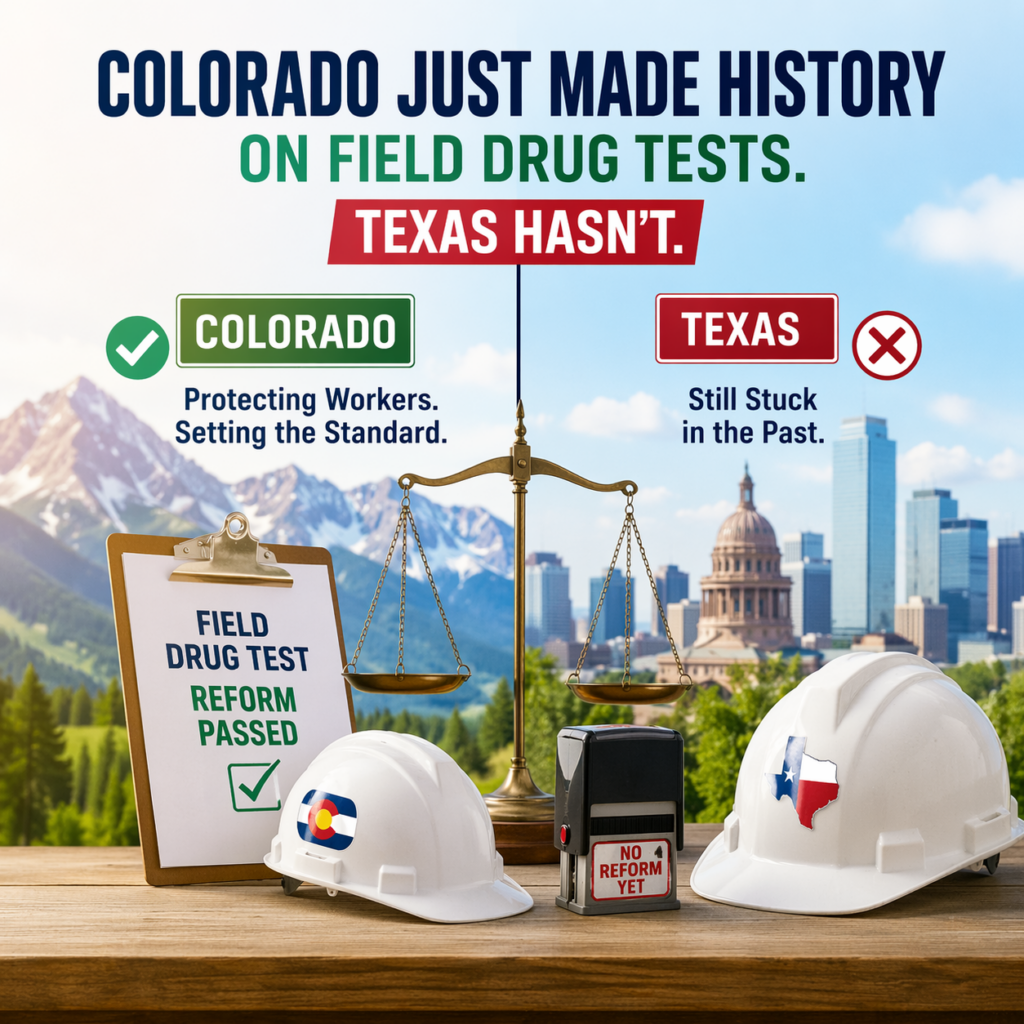
On March 26, 2026, Colorado Governor Jared Polis signed House Bill 1020 into law, making Colorado the first state in the nation to prohibit arrests based solely on the results of colorimetric field drug tests. The bill passed both chambers of the Colorado legislature without a single dissenting vote.
Texas has no equivalent law. Field drug tests are still used as the basis for drug arrests across every county in this state and the same documented reliability problems that drove Colorado to act exist here too.
For anyone charged with a drug offense in Texas, understanding what these tests are, how they fail, and what the research shows about their error rates is not a minor footnote. It is central to your defense.
What Is a Colorimetric Field Drug Test?
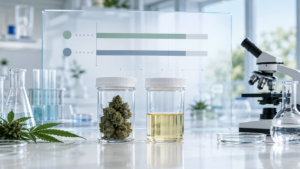
A colorimetric drug test (sometimes called a presumptive field test, a reagent test, or by brand names like NarcoPouch or NIK) is a portable chemical test kit used by law enforcement at the point of a traffic stop or arrest. A small amount of the suspected substance is placed into a bag or tube containing chemical reagents. The bag is shaken. If the reagents change color, the test is recorded as a positive for a particular controlled substance.
The tests take minutes, cost as little as two dollars per kit, and require no laboratory equipment or trained forensic analyst. That convenience is precisely why they are used at scale. According to the Quattrone Center for the Fair Administration of Justice at the University of Pennsylvania Carey Law School, colorimetric tests are involved in approximately 773,000 of the 1.5 million drug arrests conducted in the United States each year.
The problem is not the convenience. The problem is the accuracy.
What the Research Shows About False Positive Rates
The chemical reagents used in colorimetric tests are not selective for controlled substances. They react to broad classes of chemical compounds including compounds found in entirely legal substances. Sugar, vitamins, soap, certain prescription medications, and even bird feces have triggered positive readings for cocaine, methamphetamine, and other controlled substances in documented cases.
False positive results are not just possible they are an inherent defect of presumptive field tests. — Wilson Center for Science and Justice, Duke University School of Law
The published data on error rates is striking:
- A 2024 landmark study by the Quattrone Center at Penn Carey Law School (the first comprehensive national analysis of field test usage) found that while the true national error rate is unknown, available data places it between 15% and 38%.
- A study by the New York City Department of Investigation found error rates between 79% and 91% in certain correctional settings, where incoming mail samples were tested for fentanyl.
- Even manufacturers of colorimetric test kits state in their own product instructions that confirmatory laboratory testing is required and that results should not be used as the sole basis for arrest or conviction.
- The Department of Justice determined as far back as 1978 that field tests should not be used for “evidential purposes.” In many jurisdictions, they remain inadmissible at trial.
The Quattrone Center study conservatively estimates that approximately 30,000 people in the United States are wrongfully arrested each year based on inaccurate colorimetric field test results.
The Plea Bargain Problem
The 30,000 figure likely understates the true harm, because of how drug cases are actually resolved in the criminal justice system. Very few defendants go to trial. Most cases end in plea agreements and plea agreements do not require confirmatory laboratory testing.
The Quattrone Center’s national survey found that approximately 89% of prosecutors accept guilty pleas in drug cases without requiring laboratory confirmation of the field test result. Nearly two-thirds of crime labs surveyed reported they are not asked to test samples when a case is resolved by plea agreement. And 46% of labs reported they would not conduct a confirmatory test even if a guilty plea had already been accepted in the case.
The practical consequence: a person arrested on the basis of a colorimetric test that produced a false positive may spend days or weeks in jail awaiting lab results (assuming they can even afford bail). Faced with the prospect of prolonged pretrial detention and the risk of losing employment, housing, or child custody, many innocent people plead guilty to something that never happened. The lab test that would have proven their innocence is never ordered.
These error-prone tests have become de facto determinants of guilt in a substantial share of criminal cases in the United States. — Ross Miller, Quattrone Center Assistant Director, Penn Carey Law School
Texas Has Seen This Problem Firsthand
The issue of field test reliability is not abstract in Texas. It has produced documented wrongful convictions in this state.
The Timothy Cole Exoneration Review Commission (a Texas panel created specifically to examine wrongful convictions) found that in more than 300 Houston drug possession cases that had resulted in convictions, the substances tested by field kits were not controlled substances at all. The Houston crime laboratory’s own internal research confirmed false positives across those cases.
The Commission’s final report called directly for a ban on using field drug tests as the sole basis for drug convictions in Texas, stating plainly: “Requiring laboratory testing of all drug field tests will reduce the risk of wrongfully arresting and convicting an individual of being in possession of a controlled substance.”
That recommendation was formally submitted to the Texas legislature. Texas has not enacted the reform.
Texas criminal courts process roughly 10,000 drug possession convictions per year. That volume, combined with the documented error rate of colorimetric tests and the plea-bargain dynamics described above, creates ongoing risk for defendants who have no idea the test that triggered their arrest was presumptive and not conclusive.
What Colorado’s Law Actually Does
Colorado HB26-1020, signed into law on March 26, 2026, does three things:
- It prohibits law enforcement from arresting an individual for a Level 1 drug misdemeanor based solely on a positive colorimetric field test. Officers must issue a summons and await laboratory confirmation before an arrest can proceed.
- It requires courts to issue an advisement in drug cases informing defendants that colorimetric tests have known error rates and that they have the right to enter a not guilty plea and request forensic laboratory testing before accepting any plea agreement.
- It was the product of a bipartisan working group that included input from stakeholders directly impacted by false positive results.
The bill passed unanimously in both the Colorado House and Senate which is a rare signal that the underlying science is not politically contested. Colorimetric field tests are unreliable. That is not a defense argument. It is the documented conclusion of manufacturers, independent researchers, and state review commissions alike.
What This Means for Texas Drug Defendants Right Now
Until Texas enacts equivalent reform, anyone arrested in Texas on the basis of a field drug test result should understand the following:
- A positive colorimetric field test is a presumptive result only. It is not a confirmed identification of a controlled substance. In many courts, it is inadmissible as evidence at trial.
- The only scientifically reliable confirmation of the presence of a controlled substance is analysis by an accredited forensic laboratory, using validated methods. For most drug categories, that means GC-MS or LC-MS/MS analysis.
- You have the right to plead not guilty and demand that the state produce laboratory confirmation before any plea is accepted or conviction entered. Do not waive that right because a field test came back positive.
- If you were arrested based on a colorimetric test result that was later contradicted by laboratory analysis, that outcome is not unusual. It is exactly the kind of result the research predicts and it has legal consequences for your case.
If you or someone you know has been arrested on a Texas drug charge, the specific forensic evidence underlying that charge matters. At Deandra Grant Law, we scrutinize the science behind every drug case including how substances were identified, by what method, and whether those results meet the standards required for prosecution. Contact our office to discuss your case.
About the Author
Deandra Grant is the Managing Partner of Deandra Grant Law and one of the most credentialed DWI and drug defense attorneys in Texas. Her qualifications include:
- J.D., with 30+ years of criminal defense practice
- Master of Science in Pharmaceutical Science
- Graduate Certificate in Forensic Toxicology
- ACS-CHAL Forensic Lawyer-Scientist designation
- Trained Standardized Field Sobriety Testing (SFST) Instructor
- Author of 17 law books, including Arrested for Drugs in Texas
- Texas Super Lawyer since 2011
- Executive Director, DUI Defense Lawyers Association (DUIDLA)
Deandra Grant Law represents clients charged with drug crimes, DWI, and related offenses across six Texas offices: Dallas, Fort Worth, Allen, Denton, Waco, and Rockwall.
(214) 225-7117 | texasdwisite.com