


Do You Need Legal Help?

"Deandra Grant Law fights hard for their clients and is always willing to go above and beyond. They are the best firm for DWI cases in DFW and beyond. Definitely hire them to represent you in any pending cases."
- P. Williams
"Deandra Grant made a tough situation so much better. She listened to my concerns and helped me so much with my case. I would recommend her to anyone needing legal services."
- M. Haley
"Deandra Grant Law handled my case with diligence and professionalism. Deandra Grant's reputation is stellar and now I know why. She has a team of individuals who provide quality service."
- N. Coulter
As Seen On





A Fighting Team On Your Side
Since 1994 when our doors opened, Deandra Grant Law – Criminal & DWI Defense has helped thousands of clients get their DWI charges reduced or dismissed. We're ready to fight on your behalf.

Managing Partner

Partner & Criminal Division Chief

Criminal Division Trial Chief

Criminal Trial Division

Criminal Trial Division

Of Counsel

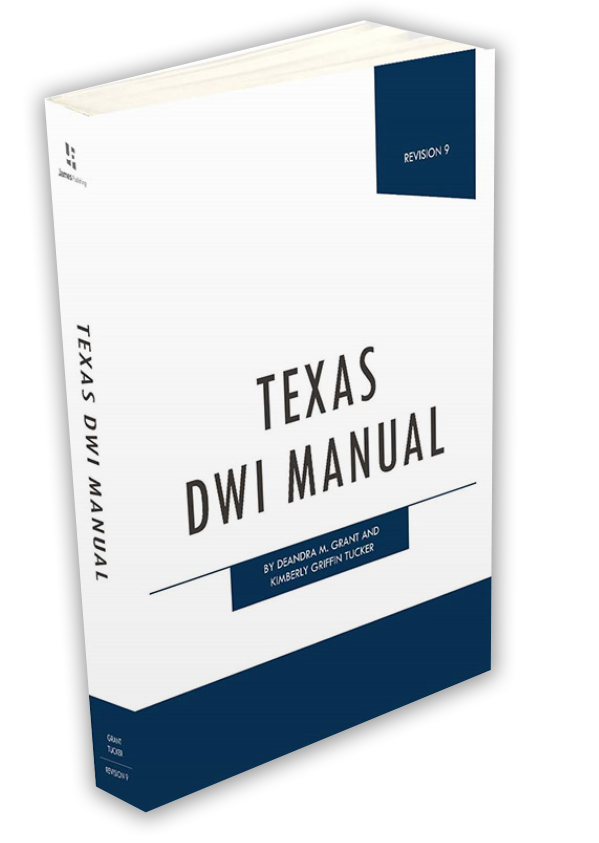
Texas DWI Manual
By Attorney Deandra Grant
Fighting DWI charges can present many challenges, not only for the defense, but prosecutors as well. This is why it is important to be armed with the necessary knowledge so you understand the DWI process.
Attorney Deandra M. Grant is the co-author of the Texas DWI Manual, offering legal advice to both clients and fellow attorneys.
Learn MoreAllen DWI with CDL Lawyers
Navigating the legal consequences of a DWI with a CDL arrest in Allen, TX can be an overwhelming and stressful experience, especially when your livelihood as a commercial driver is at stake. If you find yourself in this challenging situation, rest assured that you are not alone. At Deandra Grant Law – Criminal & DWI Defense, we are here to offer our support and expertise to help you achieve a positive outcome for your case.
Understanding DWI with CDL Charges in Allen, TX:
A DWI with a CDL, is a serious offense that can have severe implications for commercial drivers. In Texas, the legal limit for blood alcohol concentration (BAC) is lower for CDL holders compared to regular drivers. While the legal limit for most drivers is 0.08%, commercial drivers can face charges with a BAC of 0.04% or higher. If convicted, you could be looking at significant fines, potential jail time, and the suspension or revocation of your CDL, which could jeopardize your career as a professional driver.
DWI with a CDL Penalties in Texas
In Texas, the penalties for a CDL (Commercial Driver’s License) DWI (Driving While Intoxicated) are stricter compared to those for regular DWI charges. Commercial drivers are held to a higher standard of sobriety due to the potential risks associated with operating large commercial vehicles. The penalties for a DWI with a CDL in Texas include:
First DWI with a CDL Offense:
- Disqualification of the CDL for one year
- Disqualification of the CDL for three years if the offense occurs while transporting hazardous materials required to be placarded
- Regular DWI penalties (for non-commercial drivers):
- Class B misdemeanor
- Up to 180 days in jail
- Fine of up to $2,000
- Driver’s license suspension for up to one year
- Annual surcharge of $1,000 or $2,000 for three years to retain driver’s license
Second DWI with a CDL Offense:
- Disqualification of the CDL for life (with the possibility of reinstatement after 10 years)
- Regular DWI penalties for subsequent offenses
Refusing to Submit to Chemical Testing:
- If you refuse to submit to a breath or blood test during a DWI stop, your CDL will be disqualified for one year, regardless of whether you are convicted of DWI.
It’s important to note that the above penalties are specific to CDL holders and can significantly impact your ability to continue working as a commercial driver. Additionally, commercial drivers may face harsher consequences for having a BAC lower than the legal limit (0.04%) due to the sensitive nature of their profession.
For CDL holders, the loss of their CDL can result in the loss of their livelihood and future job opportunities. That’s why it is crucial for commercial drivers facing DWI with CDL charges to seek immediate legal representation from an experienced DWI with CDL Lawyer. An attorney can provide expert guidance and mount a robust defense to protect their CDL and pursue a positive outcome for their case.
Why You Need Our Allen DWI with CDL Lawyers
Facing a DWI with a CDL charge requires specialized legal representation, and that’s where our team of experienced Allen DWI with CDL lawyers comes in. We understand the complexities of the law and how it pertains to CDL holders, and we have a proven track record of success in defending clients against DWI with a CDL charges.
Empathetic and Understanding Advocates
We know that the prospect of losing your CDL can be devastating, as it not only affects your ability to earn a living but also impacts your personal and professional life. At Deandra Grant Law – Criminal & DWI Defense, we approach each case with empathy and understanding, knowing that your job as a driver is crucial to you and your family. We are here to support you every step of the way, ensuring that your rights are protected and your voice is heard.
The Power of Relevant Statistical Data
Our results speak for themselves, with a substantial number of successful outcomes for our clients facing DWI with CDL charges in Allen, TX. Through meticulous research, strategic planning, and a thorough understanding of the law, we have achieved positive results that have allowed our clients to move forward with their lives and careers.
Deandra Grant Law – Criminal & DWI Defense Helps Residents across Texas with DWI Defense – Including: Allen, Austin, Arlington, Belton, Cleburne, Collin County, Dallas, Denton, Fairview, Fort Worth, Frisco, Gainesville, Granbury, Hood County, Johnson County, Lewisville, Little Elm, McKinney, Park Cities, Parker County, Plano, Princeton, Richardson, Rockwall, Rowlett, Royse City, Southlake, Sunnyvale, The Colony, Waco, and Weatherford.
Choose Deandra Grant Law – Criminal & DWI Defense for Your Allen DWI with a CDL Defense
If you have been arrested for a DWI with a CDL in Allen, TX, do not hesitate to seek our legal expertise. We are here to provide you with a robust defense tailored to your unique circumstances. Our firm offers free consultations, during which we will listen to your story and outline your options moving forward.
Facing a DWI with a CDL charge in Allen, TX can be a daunting and life-altering experience, especially for commercial drivers whose livelihoods depend on their ability to drive. If you find yourself in this challenging situation, you need a team of experienced Allen DWI with CDL lawyers who can provide you with the strong defense you deserve. At Deandra Grant Law – Criminal & DWI Defense, we are here to be your trusted advocates, guiding you through the legal process and fighting to protect your rights and future.
Why You Need an Experienced DWI with CDL Lawyer: A DWI with a CDL conviction can have devastating consequences for commercial drivers. Apart from the usual penalties associated with a DWI charge, such as fines and potential jail time, CDL holders face additional repercussions that can severely impact their careers. Losing your CDL due to a DWI conviction means losing your ability to continue working as a commercial driver, which can result in financial hardship and uncertainty.
The Importance of Choosing Deandra Grant Law – Criminal & DWI Defense: At Deandra Grant Law – Criminal & DWI Defense, we understand the gravity of a DWI with a CDL charge and its potential impact on your life. Our team of experienced Allen DWI with CDL lawyers has a deep understanding of the laws and regulations that apply specifically to CDL holders. We are dedicated to providing you with a robust and effective defense, designed to maximize your chances of a successful outcome.
Free Consultations to Explore Your Options: We offer free consultations to all potential clients facing DWI with CDL charges. During this confidential meeting, we will listen to your side of the story, assess the details of your case, and explain the legal options available to you. This initial consultation is an essential step in building a strong defense strategy tailored to your unique circumstances.
Guiding You Through Complex Proceedings: The legal process for DWI with CDL cases can be complex, involving both court proceedings and administrative hearings. With our experience and expertise, we will navigate you through each step, ensuring that your rights are protected and your best interests are represented.
Put Your Trust in Deandra Grant Law – Criminal & DWI Defense: Choosing the right legal representation is crucial when facing a DWI with a CDL charge in Allen, TX. Deandra Grant Law – Criminal & DWI Defense has a proven track record of successfully defending CDL holders against DWI charges. We are dedicated to fighting for your rights and working tirelessly to achieve a positive outcome for your case.
Don’t face the complexities of a DWI with a CDL charge alone. Contact Deandra Grant Law – Criminal & DWI Defense today to schedule your free consultation. Our team of experienced Allen DWI with CDL lawyers is ready to stand by your side and fight for your future. Let us help you navigate the legal process and provide you with the peace of mind you deserve.
Related Blogs

Understanding Deferred Adjudication in Underage DWI Cases
Driving while intoxicated is serious in Texas, especially for drivers under the age of 21. [...]

Proving Fault in Texas DWI Injury Cases What You Need to Know
If you or a loved one has been injured in a crash caused by a [...]

Can a Texas DWI Be Reduced to a Lesser Charge?
Facing a DWI charge in Texas can be a daunting experience. If you’re here reading [...]

How Texas Zero Tolerance Laws Affect Underage DWI Cases
If you or someone you care about is facing an underage DWI case in Texas, [...]

Steps to Take After Being Injured in a Texas DWI Accident
If you or a loved one has recently been injured in a Texas DWI accident, [...]

What to Do Immediately After a DWI Arrest in Texas
If you have been arrested for a DWI in Texas, you may feel a mix [...]

Can Out-of-State DWI Convictions Affect Multiple DWI Charges in Texas?
Driving while intoxicated is a serious matter, and the consequences can follow a person for [...]

Can You Be Charged for a Hit and Run DWI If You Were Unaware of the Collision?
In Texas, facing charges for a hit and run DWI can be a serious matter. [...]
Mistakes to Avoid After a DWI with a CDL Arrest in Allen, TX
Facing a DWI with a CDL charge in Allen, TX can be overwhelming and frightening, especially for commercial drivers who rely on their CDL to make a living. If you find yourself in this situation, it’s essential to be aware of potential mistakes that could negatively impact your case. At Deandra Grant Law – Criminal & DWI Defense, our experienced Allen DWI with CDL lawyers are here to help you navigate through this challenging time and avoid common pitfalls that could harm your defense.
Admitting Guilt Without Legal Counsel:
After a DWI with a CDL arrest, it’s crucial to remember that you have the right to remain silent and consult with an attorney before speaking to law enforcement. Making statements without legal counsel could inadvertently incriminate you or weaken your defense. It’s best to seek the advice of a skilled DWI with CDL lawyer who can protect your rights and guide you on what to say and do during this critical phase.
Failing to Understand CDL-Specific Consequences:
A DWI with a CDL conviction carries unique consequences for commercial drivers beyond those faced by regular license holders. These penalties can include the suspension or revocation of your CDL, which may lead to job loss and financial hardships. Understanding the specific implications for CDL holders is essential to building a solid defense strategy.
Neglecting to Act Quickly:
Time is of the essence in a DWI with a CDL case. Waiting too long to seek legal representation can result in missed opportunities to gather evidence, interview witnesses, and build a strong defense. Contacting an experienced Allen DWI with CDL lawyer promptly ensures that critical aspects of your case are addressed in a timely manner.
Frequently Asked Questions about DWI with a CDL in Allen, TX
At Deandra Grant Law – Criminal & DWI Defense, we understand that being arrested for a DWI with a CDL in Allen, TX can be a distressing experience, especially for commercial drivers who rely on their CDL for their livelihood. To provide you with clarity during this uncertain time, we’ve compiled answers to some common questions that individuals facing DWI with CDL charges may have:
What is a DWI with a CDL, and how is it different from a regular DWI?
A DWI with a CDL is a charge specific to commercial drivers operating a vehicle under the influence of alcohol or drugs. The key difference is that CDL holders face stricter regulations and penalties compared to regular drivers, as their job involves operating large vehicles that can pose significant risks if not driven safely.
Can I lose my CDL if I am convicted of a DWI?
Yes, a DWI with a CDL conviction in Allen, TX can lead to the suspension or revocation of your commercial driver’s license. Losing your CDL may result in job loss and challenges in finding future employment as a commercial driver.
Should I take a breathalyzer test if I am pulled over for suspicion of a DWI with a CDL?
As a CDL holder, refusing a breathalyzer test can have severe consequences, including automatic suspension of your CDL. It is crucial to consult with a skilled DWI with CDL lawyer before making any decisions during a traffic stop.
Can I challenge the results of a breathalyzer or blood test?
Yes, the results of breathalyzer or blood tests can be challenged if proper protocols were not followed during the testing process. An experienced DWI with CDL attorney can assess the evidence and identify potential weaknesses in the prosecution’s case.
What are the potential penalties for a DWI with a CDL conviction?
The penalties for a DWI with a CDL conviction may include fines, jail time, probation, mandatory alcohol education programs, and CDL suspension or revocation. Your prior driving record and the specific circumstances of your case will influence the severity of the penalties.
Can a DWI with a CDL be expunged from my record?
Expungement of a DWI with a CDL conviction is not possible in Texas. However, a skilled DWI with CDL lawyer may explore other options for minimizing the impact of the conviction on your record.
How can hiring an experienced DWI with CDL lawyer benefit my case?
An experienced DWI with CDL lawyer understands the complexities of CDL-specific regulations and can build a strong defense tailored to your situation. They can negotiate with the prosecution, explore alternative sentencing options, and represent you effectively in court.
DWI with a CDL Defense Client Story
This client story is for educational purposes only.
In the heart of Allen, Texas, where the roads stretch wide and dreams are chased, a young man named Luke found himself caught in a storm he never saw coming. Luke was a proud and hardworking truck driver, navigating the highways in his 18-wheeler, delivering goods to communities far and wide. Every journey held a promise of new adventures and opportunities.
One fateful night, as the stars shimmered above and the roads stretched out before him, Luke’s life took an unexpected turn. On that moonlit evening, as he made his way through the familiar streets, he was pulled over by the flashing lights of the law. His heart pounded like the rumbling engine of his truck as he was accused of driving under the influence – a DWI with a CDL.
Fear and worry gripped Luke’s soul as he thought of the consequences that lay ahead. He couldn’t bear the thought of losing his cherished CDL, the key to his livelihood and the pathway to his dreams. The uncertainty clouded his once clear vision, and he felt lost in a maze of despair.
But hope flickered in the darkness when Luke’s path crossed with a guiding light – a beacon of legal knowledge and compassion, Attorney Deandra Grant. From the moment they met, Luke felt a sense of comfort, as if a guardian angel had wrapped their wings around him. Deandra understood the turmoil he faced and extended a hand of support, assuring him that together, they would weather the storm.
With every detail of the case meticulously examined, Deandra Grant built a fortress of defense around Luke. She was a fierce advocate, leaving no stone unturned, no evidence overlooked. Her dedication to justice and unwavering belief in Luke’s innocence was a source of strength for him during the darkest days.
As the trial unfolded, Deandra’s unwavering determination shone brightly. She stood firm, like a rock in a tempest, fighting tirelessly for Luke’s rights and future. Her voice echoed in the courtroom, weaving a powerful narrative of truth and justice. Luke found solace in her words, knowing that he was not alone in this battle.
And when the verdict was finally delivered, a ray of light broke through the clouds – “Not Guilty.” The weight that had burdened Luke’s shoulders lifted, and tears of relief streamed down his face. Deandra’s unwavering dedication and expertise had led them to triumph. In her, he found not just a skilled attorney, but a friend, a guiding star through the darkest nights.
Contact Our Dedicated Allen DWI with CDL Lawyers at Deandra Grant Law – Criminal & DWI Defense for Strong Defense
If you find yourself facing the challenging waters of a DWI with a CDL charge in Allen, Texas, remember that you don’t have to navigate them alone. Deandra Grant Law – Criminal & DWI Defense is here to be your steadfast advocate and guide through the legal process. Our team of experienced Allen DWI with CDL Lawyers is dedicated to fighting for your rights and working tirelessly to achieve a positive outcome for your case.
We understand the gravity of the situation you’re facing and the impact it can have on your life and career. That’s why we offer free consultations, providing you with an opportunity to discuss your case with us and learn how we can help. From the very first moment you contact us, our empathetic team will be here to listen, support, and strategize with you.
At Deandra Grant Law – Criminal & DWI Defense, we believe in the power of justice and the strength of relentless advocacy. We will leave no stone unturned in building a robust defense tailored to your unique circumstances. Our goal is to protect your CDL, your future, and your dreams.
Remember, you have rights, and you deserve a strong legal defense. If you are facing a DWI with a CDL charge in Allen, TX, reach out to Deandra Grant Law – Criminal & DWI Defense today. Let us fight for you, so you can face tomorrow with confidence and hope. Your journey to justice starts here.
Client Reviews

“Deandra Grant Law – Criminal & DWI Defense handled my case with diligence and professionalism. Deandra Grant’s reputation is stellar and now I know why. She has a team of individuals who provide quality service.”
N. Coulter


(214) 225-7117
Experienced DWI Defense