
Home »


Do You Need Legal Help?

"Deandra Grant Law fights hard for their clients and is always willing to go above and beyond. They are the best firm for DWI cases in DFW and beyond. Definitely hire them to represent you in any pending cases."
- P. Williams
"Deandra Grant made a tough situation so much better. She listened to my concerns and helped me so much with my case. I would recommend her to anyone needing legal services."
- M. Haley
"Deandra Grant Law handled my case with diligence and professionalism. Deandra Grant's reputation is stellar and now I know why. She has a team of individuals who provide quality service."
- N. Coulter
As Seen On






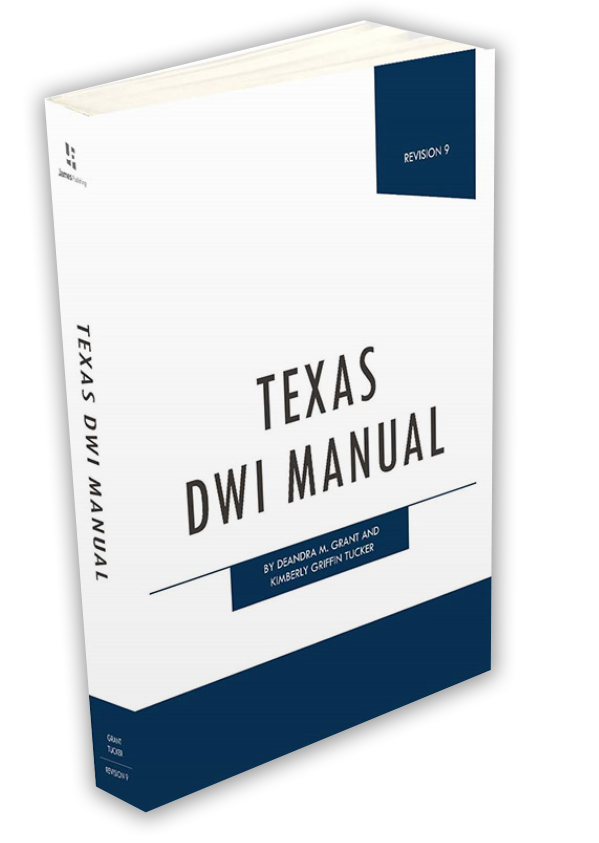
Texas DWI Manual
By Attorney Deandra Grant
Fighting DWI charges can present many challenges, not only for the defense, but prosecutors as well. This is why it is important to be armed with the necessary knowledge so you understand the DWI process.
Attorney Deandra M. Grant is the co-author of the Texas DWI Manual, offering legal advice to both clients and fellow attorneys.
Learn MoreAllen Felony DWI Attorneys
A felony DWI is not a bigger misdemeanor DWI. It is a different statute, a different court, a different prosecutor assignment, and a fundamentally different kind of case. The state can seek a prison sentence starting at 2 years and reaching as high as life, depending on which felony DWI provision applies and the defendant’s prior record. Judge-granted community supervision is restricted. Parole eligibility can be halved by a deadly weapon finding. And unlike first-offense misdemeanor DWI, most felony DWI cases cannot be resolved with deferred adjudication.
Deandra Grant Law represents clients facing felony DWI and related intoxication offenses in Allen, Plano, McKinney, Frisco, and throughout Collin County. Call (214) 225-7117 to discuss your case.
The Five Pathways to Felony DWI in Texas
Texas law creates multiple independent routes from a DWI arrest to felony exposure. Each has its own statute, its own elements, and its own punishment range.
1. DWI 3rd — Texas Penal Code § 49.09(b)
A DWI with two or more prior DWI-related convictions is a third-degree felony. Priors under § 49.09(c) include § 49.04 DWI, § 49.05 Flying While Intoxicated, § 49.06 Boating While Intoxicated, § 49.07 Intoxication Assault, and § 49.08 Intoxication Manslaughter. Out-of-state priors count if they meet the substantial-similarity requirement.
- Third-degree felony.
- 2 to 10 years in the Texas Department of Criminal Justice.
- Criminal fine up to $10,000.
- Transportation Code § 709.001 statutory fine of $4,500 ($6,000 if BAC 0.15+).
- Driver’s license suspension of 180 days to 2 years under § 521.344.
- Mandatory 10 days in jail as a condition of probation under § 49.09(h).
- Mandatory ignition interlock under CCP Article 17.441.
- Permanent loss of firearm rights under 18 U.S.C. § 922(g)(1) and Penal Code § 46.04(a).
Enhancement pathway: where the defendant has one prior felony conviction, § 12.42(a) enhances the DWI 3rd range to second-degree (2 to 20). Where the defendant has two prior felonies, § 12.42(d) enhances to first-degree range (25 years to life). These habitual offender enhancements apply to DWI 3rd as to any other third-degree felony.
2. DWI with Child Passenger — Texas Penal Code § 49.045
Operating a motor vehicle while intoxicated with a passenger younger than 15 years of age is a state jail felony without regard to the defendant’s prior DWI history. A first-offense DWI with a child passenger is a felony, not a misdemeanor.
- State jail felony.
- 180 days to 2 years in a state jail facility.
- Fine up to $10,000.
- Transportation Code § 709.001 statutory fine.
- Loss of firearm rights under federal and state law.
- Collateral CPS and custody implications frequently arise.
A § 49.045 charge can coexist with other DWI charges. A second DWI with child passenger can be charged under § 49.09 AND § 49.045, producing compounded exposure.
3. Intoxication Assault — Texas Penal Code § 49.07
Causing serious bodily injury to another by reason of intoxication, while operating a motor vehicle, aircraft, watercraft, or amusement ride.
- Third-degree felony (2 to 10 years), enhanced in some circumstances.
- Serious bodily injury is defined in § 1.07(a)(46) — substantial risk of death, serious permanent disfigurement, or protracted loss or impairment of the function of any bodily member or organ.
- The state must prove that the intoxication, not some independent cause, produced the injury.
- A deadly weapon finding (vehicle as deadly weapon) is standard and triggers the 50% parole eligibility rule under Government Code § 508.145(d).
4. Intoxication Manslaughter — Texas Penal Code § 49.08
Causing the death of another by reason of intoxication, while operating a motor vehicle, aircraft, watercraft, or amusement ride.
- Second-degree felony.
- 2 to 20 years in prison.
- Fine up to $10,000.
- Transportation Code § 709.001 statutory fine.
- Intoxication Manslaughter is a 3g offense under CCP Article 42A.054. Judge-granted community supervision is restricted; only a jury can recommend community supervision in limited circumstances.
- With a deadly weapon finding (vehicle as deadly weapon), parole eligibility is 50% of the sentence (up to 30 years) under Government Code § 508.145(d). A 20-year Intoxication Manslaughter sentence with a deadly weapon finding means 10 years before any parole consideration.
- The state must prove causation (that the intoxication produced the death). A fatal accident where an independent intervening cause contributed may not satisfy the causation element.
5. Habitual Offender Enhancement — § 12.42
Independent of § 49.09 and § 49.045, the habitual offender enhancements under Penal Code § 12.42 can further escalate felony DWI exposure:
- § 12.42(a) — one prior felony conviction: enhances third-degree to second-degree (2 to 20).
- § 12.42(d) — two prior felony convictions: enhances to first-degree range (25 to life).
- Prior felonies do not have to be DWI-related to trigger the habitual offender enhancement. Any sequence of prior felonies can apply.
Texas Has No Lookback Period for DWI Priors
Former § 49.09(e) (which set a 10-year lookback in limited circumstances) was repealed in 2005. Every prior DWI conviction in the defendant’s lifetime counts for § 49.09(b)(2) enhancement purposes.
The practical effect: a client with two DWI convictions from 15 or 20 years ago, who has been conviction-free since, still faces a third-degree felony (at minimum) on the next DWI arrest. The old priors are not history. They are elements the state can plead into the charging instrument.
Related Videos
Certified in the science and testing of DWI enforcement
Appealing a DWI or BWI
Biggest Mistakes of a DWI Charge
Lawyer Scientist Certification
Boating while intoxicated with a child
DWI with a child in the car
Can I travel out of country with a DWI?
Going to Canada with a DWI
Choosing a DWI attorney
Choosing quality over cost with a DWI attorney
Cost of a DWI attorney
Cost of a BWI attorney
DWI on your criminal record
DWI probable cause
DWI while operating a boat
DWI with prior convictions
Emotional state of a DWI client
How long does a DWI conviction stay on my record?
How long will a DWI case take?
Operating a boat during pending DWI charges
Out-of-state DWI Arrest
Police didn’t have probable cause
Relieving stress of a DWI client
Prescription Drug DWI
Texas DWI Manual
Underage DWI Penalties
Charged with a DWI while sitting in your car
First time DWI charge
Second DWI charges
Third DWI charges
Being sent to jail for a first time DWI
Being sent to jail for multiple DWIs
Can I defend myself against a DWI charge?
Can I refuse a breathalyzer test?
Can refusing a breath or blood test help my case?
College age child arrested for DWI
Court process for a DWI charge
DWI license suspension
Driving during your license suspension
Legal alcohol limit
DWI with injury penalties
DWI written case evaluations
Expunging a DWI charge
Ignition Interlock Device
Losing your job from a DWI
Losing your license from a DWI
Penalties from a DWI conviction
Plea bargaining a DWI charge
Will pleading guilty reduce a DWI charge?
Refusing to answer police questions during a DUI arrest
Refusing field sobriety tests
Why you should choose a DWI attorney with lawyer scientist certification
HB 3582 Deferred Adjudication — Not Available for Felony DWI
House Bill 3582 (2019) made deferred adjudication available for certain first-offense misdemeanor DWIs with BAC below 0.15%. This was a significant change from prior Texas law, which had prohibited deferred adjudication for DWI entirely. However, the availability is narrow:
- Available: first-offense misdemeanor DWI under § 49.04 with BAC below 0.15% and no child passenger.
- Not available: any felony DWI under § 49.09.
- Not available: DWI with child passenger under § 49.045.
- Not available: Intoxication Assault under § 49.07.
- Not available: Intoxication Manslaughter under § 49.08.
- Not available: any DWI with BAC 0.15 or above.
On any felony DWI case, the choices are typically community supervision with the statutory mandatory jail floor, or confinement. The “no conviction on the record” outcome of deferred adjudication is not available.
Mandatory Jail Minimums — Even on Probation
Even when a felony DWI case resolves to community supervision, § 49.09(h) requires a mandatory minimum jail sentence as a condition of the probation:
- DWI 3rd on probation: minimum 10 days in county jail.
- These floors are statutory (the court cannot waive them).
A “probation” on felony DWI includes a mandatory jail term. This surprises many defendants who assume probation means no jail.
Mandatory Ignition Interlock
Code of Criminal Procedure Article 17.441 requires ignition interlock as a condition of bond in:
- Any DWI with BAC 0.15 or above;
- Any DWI with a prior DWI conviction (second, third, or subsequent);
- Any DWI with a child passenger under § 49.045.
Interlock must be installed on every vehicle the defendant operates during the pendency of the case. After disposition, Transportation Code § 521.246 governs interlock requirements for occupational licenses, license reinstatement, and conditions of community supervision. A defendant without practical access to an interlock-equipped vehicle is often unable to drive legally during the case and for extended periods after.
Collateral Consequences of Felony DWI Conviction
- Driver’s license suspension under Transportation Code § 521.344 — 180 days to 2 years.
- ALR administrative suspension under Chapters 524/724 — 90 days to 2 years based on failed test, refusal, and priors.
- Permanent federal firearm prohibition under 18 U.S.C. § 922(g)(1).
- Texas firearm prohibition under Penal Code § 46.04(a).
- Permanent criminal record – felony DWI is ineligible for expunction except in cases of acquittal or dismissal, and it is ineligible for nondisclosure.
- Immigration consequences for non-citizens — particularly serious for § 49.08 Intoxication Manslaughter, which can qualify as an “aggravated felony” under 8 U.S.C. § 1101(a)(43) for immigration purposes.
- Professional licensing consequences across nursing, medical, legal, CDL, and other licensed occupations.
- Employment consequences, particularly in Collin County’s concentration of corporate professional careers.
How Felony DWI Cases Are Defended
Challenge the Priors
A DWI 3rd prosecution requires the state to prove two prior DWI convictions. Judgment documents with incomplete records, out-of-state convictions that do not qualify under § 49.09(c), and convictions obtained without counsel are all areas where a supposedly rock-solid prior can be knocked out and which, in turn, reclassifies the case downward to a Class A misdemeanor.
Forensic Attack on the Intoxication Evidence
Ethanol analysis is performed by headspace gas chromatography with flame ionization detection (GC-FID). Attack points include sample collection, preservative balance, chain of custody, calibration, column chemistry, retention time, internal standards, and measurement uncertainty. Drug testing in § 49.04 cases involving drugs uses LC-MS/MS and has its own attack surface. As Texas’s first ACS-CHAL Forensic Lawyer-Scientist, Deandra Grant reads the underlying lab packet (bench notes, chromatograms, QC data, method validation documentation) not just the one-page report.
Fourth Amendment and CCP Article 38.23 Suppression
Stops, detentions, field sobriety testing, arrests, and breath/blood testing are subject to constitutional review. Texas’s exclusionary rule under CCP Article 38.23 excludes illegally obtained evidence. Suppression motions are often the most powerful tool available in felony DWI defense.
Causation Challenges in § 49.07 and § 49.08 Cases
Both Intoxication Assault and Intoxication Manslaughter require that the intoxication, not merely the driving, produced the injury or death. Accident reconstruction, examination of the physical evidence, and analysis of independent intervening causes can defeat the causation element even where the state can prove the intoxication itself.
SFST Administration
Deandra Grant is a Standardized Field Sobriety Test instructor. She teaches the same curriculum administered to law enforcement and can identify administration errors that undermine HGN, Walk-and-Turn, and One-Leg Stand results.
Where Collin County Felony DWI Cases Are Heard
All felony DWI cases in Collin County (DWI 3rd, DWI with child passenger, Intoxication Assault, and Intoxication Manslaughter) are filed in the Collin County Criminal District Courts at the Collin County Courthouse, 2100 Bloomdale Road, McKinney. The Collin County Criminal District Attorney’s Office prosecutes all criminal cases in Collin County.
Related Blogs
Frequently Asked Questions
My last DWI was twenty years ago. Does it still count?
Yes. Texas has no lookback period for DWI priors. Every prior DWI conviction in the defendant’s lifetime counts toward § 49.09(b)(2) felony enhancement. A twenty-year-old DWI is the same as a one-year-old DWI for enhancement purposes.
Can I get deferred adjudication on a felony DWI?
No. HB 3582 authorized deferred adjudication for certain first-offense misdemeanor DWIs, but deferred adjudication is not available for any felony DWI including DWI 3rd under § 49.09, DWI with child passenger under § 49.045, Intoxication Assault under § 49.07, and Intoxication Manslaughter under § 49.08. This is the law, and it is final for these offenses.
Can I get probation on a felony DWI?
Usually yes for DWI 3rd, but § 49.09(h) requires a mandatory 10-day jail term as a condition of probation. For Intoxication Manslaughter, the 3g framework under CCP Article 42A.054 restricts judge-granted community supervision, and only a jury can recommend probation (and only in limited circumstances). For Intoxication Assault, community supervision is available but subject to the CCP Article 17.441 interlock requirement.
What does a “deadly weapon finding” do on an Intoxication Manslaughter case?
Under Government Code § 508.145(d), a deadly weapon finding on a 3g offense requires that the defendant serve the lesser of 50% of the sentence or 30 years before becoming parole eligible. On a 20-year Intoxication Manslaughter sentence with a deadly weapon finding, that is 10 years before any parole consideration which is a material consequence that is often entered routinely in DWI fatality cases unless actively contested by the defense.
The fatal accident wasn’t my fault. Can I still be charged with Intoxication Manslaughter?
Fault in the traditional sense is not the element. The state must prove that the intoxication, by reason of operating a motor vehicle, caused the death. Where an independent intervening cause (ex. a pedestrian’s sudden entry into the roadway, another driver’s negligence, a mechanical failure) produced the death rather than the intoxication itself, the causation element may fail. Accident reconstruction is central to this defense.
Will this affect my professional license?
Almost certainly. Nursing, medical, teaching, legal, CDL, and most Texas licensing boards conduct separate proceedings after any felony conviction, and DWI convictions in particular are viewed unfavorably. Early defense coordination with licensing counsel is critical in Collin County, where corporate professional careers are concentrated across Allen, Plano, Frisco, and McKinney.
About Deandra Grant Law
Deandra Grant Law is a Texas criminal defense firm with offices in Allen, Dallas, Fort Worth, Denton, Waco, and Rockwall. Our felony DWI practice is built on the forensic training that intoxication cases actually require, three decades of trial experience, and a former prosecutor’s understanding of the state’s case.
Deandra M. Grant, Managing Partner
- More than 30 years in practice, focused on criminal defense and DWI
- Former prosecutor
- J.D.; M.S. in Pharmaceutical Sciences
- Graduate Certificate in Forensic Toxicology
- ACS-CHAL Forensic Lawyer-Scientist from the American Chemical Society
- Standardized Field Sobriety Test (SFST) Instructor
- Texas Super Lawyer since 2011
- Author of 17 law books including The Texas DWI Manual
- Executive Director, DUI Defense Lawyers Association (DUIDLA)
Douglas E. Huff, Partner
- ACS-CHAL Forensic Lawyer-Scientist
- Digital forensics and electronic evidence training
- Extensive North Texas DWI trial experience
James Lee Bright, Of Counsel
- National federal criminal defense practice
- Admitted to all four Texas federal districts, the District of Columbia, the Fifth Circuit Court of Appeals, and the Supreme Court of the United States
Contact Our Allen Felony DWI Attorneys
Felony DWI cases reward early involvement. Priors can be investigated before they are pled into the indictment. Forensic evidence (blood samples, EDR data, accident reconstruction) requires immediate preservation. Bond conditions, including interlock and home confinement alternatives, can be negotiated. Witnesses can be located before memories fade. And the strategic decisions made in the first weeks often define what is possible later at trial or sentencing.
Call Deandra Grant Law at (214) 225-7117 to schedule a consultation. We serve Allen, Plano, McKinney, Frisco, and all of Collin County from our Allen office.
Client Reviews

“Deandra Grant Law – Criminal & DWI Defense handled my case with diligence and professionalism. Deandra Grant’s reputation is stellar and now I know why. She has a team of individuals who provide quality service.”
N. Coulter


(214) 225-7117
Experienced DWI Defense