Home »


Do You Need Legal Help?

"Deandra Grant Law fights hard for their clients and is always willing to go above and beyond. They are the best firm for DWI cases in DFW and beyond. Definitely hire them to represent you in any pending cases."
- P. Williams
"Deandra Grant made a tough situation so much better. She listened to my concerns and helped me so much with my case. I would recommend her to anyone needing legal services."
- M. Haley
"Deandra Grant Law handled my case with diligence and professionalism. Deandra Grant's reputation is stellar and now I know why. She has a team of individuals who provide quality service."
- N. Coulter
As Seen On






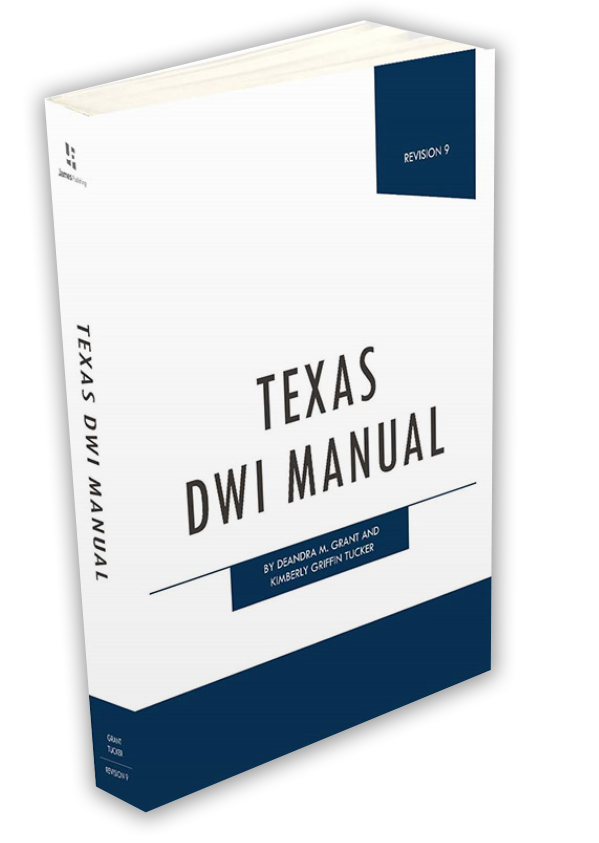
Texas DWI Manual
By Attorney Deandra Grant
Fighting DWI charges can present many challenges, not only for the defense, but prosecutors as well. This is why it is important to be armed with the necessary knowledge so you understand the DWI process.
Attorney Deandra M. Grant is the co-author of the Texas DWI Manual, offering legal advice to both clients and fellow attorneys.
Learn MoreDenton DWI with CDL Lawyers
A DWI arrest is a serious matter for anyone. For a CDL holder, it is a career-level event. Federal law (49 CFR § 383.51 and the associated Part 383 regulations, as implemented in Texas through Chapter 522 of the Transportation Code) requires a minimum one-year CDL disqualification on a first DWI-related offense, and a lifetime disqualification on a second. That disqualification follows the CDL holder whether the DWI happened in an eighteen-wheeler or in a personal pickup, and it cannot be avoided through the kinds of plea bargains that save a non-CDL driver’s license.
Deandra Grant Law represents CDL holders facing DWI charges in Denton County. Call (214) 225-7117 to discuss your case.
CDL DWI Is a Federal Regulation Problem
Most of the CDL-specific consequences in a DWI case are not imposed by Texas law. They come from the Federal Motor Carrier Safety Regulations (FMCSRs) (specifically 49 CFR Part 383) which the Texas Department of Public Safety is required to implement as a condition of federal highway funding. The result is that the penalties applied to a CDL holder’s commercial driving privileges are largely federal regulations enforced through a state licensing system.
Understanding this distinction matters because:
- Many Texas DWI defense strategies that work well for non-CDL drivers (deferred adjudication, pretrial diversion) are foreclosed or limited by federal “masking” rules.
- The CDL consequences run parallel to, and are largely independent of, the Texas criminal case outcome.
- The federal Clearinghouse reporting obligations attach to certain conduct regardless of whether a conviction ever issues.
Two Different CDL DWI Situations
A CDL holder can be prosecuted for DWI in two different factual postures, and the rules differ:
Scenario 1: DWI While Operating a Commercial Motor Vehicle
The BAC threshold for a DWI violation while operating a CMV is 0.04 which is half the 0.08 threshold for a regular vehicle. A CDL holder found with a BAC of 0.04 or above in a CMV is subject to DWI exposure under 49 CFR § 383.51 and Texas Transportation Code § 522.101 even if the Texas Penal Code § 49.04 threshold would not otherwise be met.
Scenario 2: DWI While Operating a Personal Vehicle
A CDL holder can also face CDL consequences for a DWI committed while driving a personal passenger vehicle. The DWI itself is prosecuted under Penal Code § 49.04 with the normal 0.08 threshold, but the conviction (or, critically, certain pre-conviction dispositions) still triggers the federal disqualification framework under 49 CFR § 383.51(a)(3). The CDL holder cannot avoid the CDL consequence simply by having been in a personal vehicle at the time.
Disqualification Periods Under 49 CFR § 383.51
First Major Offense
- One-year disqualification of the CDL for a first major offense, including DWI, test refusal, or leaving the scene.
- Three-year disqualification if the offense occurred while the CDL holder was transporting hazardous materials required to be placarded under 49 CFR Part 172.
Second Major Offense
- Lifetime disqualification under 49 CFR § 383.51(a)(5).
- Reinstatement may be possible after 10 years under 49 CFR § 383.51(a)(6)(iii), subject to completion of a treatment program approved by FMCSA or the state. Reinstatement is not automatic.
What Counts as a “Major Offense”
Under 49 CFR § 383.51(b), major offenses include:
- Driving a CMV with a BAC of 0.04 or above.
- Driving under the influence of alcohol as prescribed by state law.
- Driving under the influence of a controlled substance.
- Refusing to take a test required under the implied consent laws.
- Leaving the scene of an accident in a CMV.
- Using a CMV in the commission of a felony.
- Driving a CMV while disqualified.
- Causing a fatality through the negligent operation of a CMV.
The Masking Prohibition — 49 CFR § 384.226
The single most important federal rule for CDL DWI defense in Texas is the masking prohibition under 49 CFR § 384.226. This regulation bars states from “masking, deferring imposition of judgment, or allowing an individual to enter into a diversion program” that would prevent a CDL holder’s conviction from appearing on the driving record or being transmitted to other states.
The practical consequences for Texas CDL holders:
- Deferred adjudication under HB 3582 (2019) / CCP Article 42A.102, which is available for certain first-offense misdemeanor DWI cases with a BAC below 0.15 and no child passenger, cannot be used for a CDL holder in a way that masks the offense.
- Pretrial diversion and other pre-conviction dispositions that would ordinarily keep the case off the final driving record are foreclosed for CDL purposes.
- A plea that looks favorable under Texas law (because it avoids a conviction on the final record) does not avoid the CDL disqualification. The CDL holder has made a plea that does not help where it matters most.
The defense strategy implication: for a CDL holder, the goal is usually dismissal, acquittal, or reduction to a non-major-offense violation.
Refusal and the § 383.51(a)(9) Disqualification
Refusing a breath or blood test triggers the same one-year CDL disqualification as a DWI conviction, regardless of whether any DWI conviction follows. A CDL holder who refuses (believing they are avoiding the test evidence) has simultaneously triggered the CDL consequence without any of the evidentiary benefit. Unlike an ordinary ALR suspension on a refused test, which is limited in duration and relatively recoverable, the CDL disqualification applies even if the criminal case is later dismissed.
The FMCSA Drug and Alcohol Clearinghouse
Effective January 6, 2020, FMCSA operates a centralized national registry (the FMCSA Drug and Alcohol Clearinghouse) under 49 CFR Part 382, Subpart G. The Clearinghouse is separate from the state driving record and captures:
- Positive drug tests on DOT-regulated testing.
- Alcohol tests with BAC 0.04 or above.
- Refusals to test.
- Actual knowledge of on-duty alcohol use or drug use by employers.
- Return-to-duty status.
Employers are required to query the Clearinghouse before hiring a CDL holder and annually for current drivers. A Clearinghouse entry for a prohibited conduct violation does not automatically clear when a criminal case is dismissed. The record requires return-to-duty completion under 49 CFR Part 40, Subpart O, including substance abuse professional evaluation, treatment, a return-to-duty test, and at least six follow-up tests over 12 months (with the program potentially lasting up to 5 years).
Employer Notification Obligations
Federal regulation imposes CDL-specific notification obligations that apply from the moment of arrest:
- 49 CFR § 383.31 — a CDL holder who is convicted of any traffic violation (other than parking) in any type of vehicle must notify the current employer within 30 days of the conviction.
- 49 CFR § 383.33 — a CDL holder whose license is suspended, revoked, canceled, or whose privilege to operate a CMV is lost for any reason, must notify the current employer by the end of the business day following the day the CDL holder received notice.
- 49 CFR § 391.21 — a CDL holder must list all violations of motor vehicle traffic laws (other than parking) for the past 12 months when applying for employment.
Failure to comply with these notification obligations is itself a violation that can affect the CDL and create employment consequences independent of the underlying DWI case.
The Underlying Texas DWI Case
Alongside the federal CDL framework, the Texas criminal case proceeds under the normal DWI rules. In summary:
- First-offense DWI under Penal Code § 49.04 — Class B misdemeanor. 72 hours to 180 days in county jail, fine up to $2,000, driver’s license suspension of 90 days to 1 year.
- First-offense DWI with BAC 0.15 or above — Class A misdemeanor. Up to 1 year county jail, fine up to $4,000, mandatory interlock under CCP Article 17.441.
- Second DWI — Class A misdemeanor. 30-day mandatory minimum jail time under § 49.09(a), 72 hours of which is non-probatable.
- Third or subsequent DWI (third-degree felony under § 49.09(b). 2 to 10 years in TDCJ. Texas has no “lookback”) any prior DWI conviction at any age counts.
- HB 2630 / Transportation Code § 709.001 state fines apply on conviction ($3,000 first DWI, $4,500 second within 36 months, $6,000 for BAC 0.15 or above), in addition to the criminal fine.
HB 3582 (2019) made deferred adjudication available for certain first-offense misdemeanor DWI cases with a BAC below 0.15 and no child passenger. Deferred is not available for a CDL holder.
How Denton County CDL DWI Cases Are Defended
Forensic Challenges
Blood alcohol is measured by headspace gas chromatography with flame ionization detection (GC-FID). Attack points include sample collection, preservative balance, chain of custody, calibration, column chemistry, and measurement uncertainty.
Field Sobriety and Procedural Challenges
SFST administration errors, video review, body-worn camera analysis, and suppression motions under CCP Article 38.23 are central to every DWI defense. Deandra Grant is an SFST instructor and teaches the same curriculum used to train the officers in your case.
CDL-Specific Strategy
Because deferred adjudication and diversion dispositions are foreclosed or limited for CDL holders by 49 CFR § 384.226, the defense strategy emphasizes dismissal or acquittal, reduction to non-major-offense violations, and separation of the CDL case from the criminal case where possible.
Coordination of the CDL Administrative Side
The Texas DPS administers the CDL side, and administrative proceedings run parallel to the criminal case. Coordinating the criminal and administrative defenses (and preserving both records for CDL reinstatement applications) requires close attention to procedural deadlines.
Where Denton County CDL DWI Cases Are Heard
Misdemeanor CDL DWI cases in Denton County are filed in the Denton County Criminal Courts. Felony DWI cases are filed in the Denton County Criminal District Courts. Both sit at the Denton County Courts Complex, 1450 E. McKinney Street, Denton. The Denton County Criminal District Attorney’s Office prosecutes. The administrative CDL proceedings are handled through the Texas Department of Public Safety.
Related Blogs
Frequently Asked Questions
Can I take deferred adjudication to avoid losing my CDL?
No. The federal masking prohibition under 49 CFR § 384.226 bars states from allowing dispositions that prevent a CDL holder’s DWI conviction from appearing on the driving record or being transmitted to other states. HB 3582 deferred adjudication, which works for ordinary first-time misdemeanor DWI cases, does not protect a CDL in the same way. A separate defense strategy (focused on dismissal, acquittal, or reduction to a non-major offense) is usually needed.
I wasn’t driving my truck. I was in my personal car. Does that change anything?
The factual posture is different, but the federal consequence can still apply. Under 49 CFR § 383.51(a)(3), a DWI conviction in any type of vehicle can trigger CDL disqualification. The personal-vehicle circumstance affects the BAC threshold (0.08 under Penal Code § 49.04 rather than 0.04 under § 522.101) and the prosecution’s evidentiary posture, but it does not shield the CDL.
What happens if I refuse the blood test?
Refusal triggers two separate consequences. First, an ALR suspension of the Texas driver’s license under Transportation Code Chapter 724 (180 days on a first refusal, 2 years on a repeat). Second (and independent of whether any DWI conviction follows) a one-year CDL disqualification under 49 CFR § 383.51(a)(9). Refusal does not avoid the CDL consequence.
Can I keep driving my truck while my case is pending?
It depends. The criminal case itself usually does not disqualify the CDL; a conviction or certain pre-conviction administrative events do. An ALR suspension that goes into effect before trial, or a Clearinghouse reportable event that triggers prohibited-status designation, can pause CDL driving before any criminal disposition. Whether you can continue driving commercially while the case is pending needs specific legal analysis.
Will this show up on the FMCSA Clearinghouse?
Reportable events (BAC 0.04 or above on DOT-regulated testing, test refusals, DOT-reportable conduct) generate Clearinghouse entries. Clearinghouse entries survive a criminal dismissal and require return-to-duty completion under 49 CFR Part 40, Subpart O, including SAP evaluation, treatment, and follow-up testing. Clearing the Clearinghouse record is a separate process from the criminal case.
About Deandra Grant Law
Deandra Grant Law is a Texas criminal defense and DWI firm with offices in Denton, Dallas, Fort Worth, Allen, Waco, and Rockwall. Our CDL DWI practice is built on the forensic and federal regulatory training these cases actually require.
Deandra M. Grant, Managing Partner
- More than 30 years in practice, focused on criminal defense and DWI
- Former prosecutor
- J.D.; M.S. in Pharmaceutical Sciences
- Graduate Certificate in Forensic Toxicology
- ACS-CHAL Forensic Lawyer-Scientist from the American Chemical Society
- Standardized Field Sobriety Test (SFST) Instructor
- Texas Super Lawyer since 2011
- Author of 17 law books including The Texas DWI Manual
- Executive Director, DUI Defense Lawyers Association (DUIDLA)
Douglas E. Huff, Partner
- ACS-CHAL Forensic Lawyer-Scientist
- Digital forensics and electronic evidence training
- Extensive DWI trial experience across North Texas
James Lee Bright, Of Counsel
- National federal criminal defense practice
- Admitted to all four Texas federal districts, the District of Columbia, the Fifth Circuit Court of Appeals, and the Supreme Court of the United States
Contact Our Denton CDL DWI Attorneys
CDL DWI cases require attention to the underlying criminal case, the state administrative side, the federal CDL framework, the Clearinghouse record, and the employer notification obligations which all run on different timelines and respond to different procedural moves. Early defense involvement, with counsel who understands how these systems interact, materially affects outcomes.
Call Deandra Grant Law at (214) 225-7117 to schedule a consultation. We serve Denton County and surrounding North Texas counties from our Denton office.
Client Reviews

“Deandra Grant Law – Criminal & DWI Defense handled my case with diligence and professionalism. Deandra Grant’s reputation is stellar and now I know why. She has a team of individuals who provide quality service.”
N. Coulter


(214) 225-7117
Experienced DWI Defense