

"Deandra Grant Law – Criminal & DWI Defense handled my case with diligence and professionalism. Deandra Grant's reputation is stellar and now I know why. She has a team of individuals who provide quality service."
- N. Coulter
"Deandra Grant Law – Criminal & DWI Defense fights hard for their clients and is always willing to go above and beyond. They are the best firm for DWI cases in DFW and beyond. Definitely hire them to represent you in any pending cases."
- P. Williams
"Deandra Grant made a tough situation so much better. She listened to my concerns and helped me so much with my case. I would recommend her to anyone needing legal services."
- M. Haley
What Is a Forensic Image?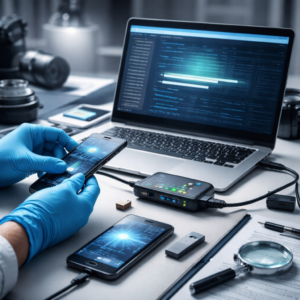
A forensic image is a bit-for-bit, exact copy of every piece of data on an electronic device — including active files, deleted files, system files, metadata, and unallocated space (the portions of the drive where deleted data may still reside). Unlike simply copying files from one location to another, a forensic image captures everything on the device, preserving the data exactly as it existed at the time of imaging.
The forensic imaging process is verified through hash values — unique digital fingerprints calculated using algorithms like MD5 or SHA-256. If the hash value of the forensic image matches the hash value of the original device, it confirms that the copy is an exact duplicate and that no data has been altered during the imaging process.
Why Forensic Imaging Matters
Preserving Evidence Integrity
Digital evidence is fragile. Simply turning on a computer or opening a file can alter metadata, change timestamps, and overwrite deleted data. The forensic imaging process preserves the evidence in its original state so that the analysis can be conducted on the copy without any risk of altering the original.Ensuring Reproducibility
A properly created forensic image allows both the prosecution and the defense to work from identical copies of the same data. This ensures that the defense’s independent expert can verify the prosecution’s findings by examining the same evidence.Recovering Deleted Data
Forensic images capture data that the user may have deleted. When a file is “deleted” on a computer or phone, the data often remains in unallocated space until it is overwritten by new data. Forensic analysis of the image can recover this deleted data which can either help or hurt the defense depending on the case.
Managing Partner

Partner & Criminal Division Chief

Criminal Trial Division

Criminal Trial Division

Associate Attorney

Of Counsel
Where the Process Can Go Wrong
Doug’s training with Garrett Discovery, whose experts have performed forensic analysis at FBI, DEA, and local law enforcement facilities, has given him firsthand knowledge of how the forensic imaging process should be conducted, and where it commonly fails:- Improper write-blocking. Before imaging, a write-blocker must be used to prevent any data from being written to the original device. If law enforcement fails to use a write-blocker, the original evidence may have been altered before the image was created.
- Hash value discrepancies. If the hash value of the forensic image does not match the hash value of the original device, the image is not a true copy. This discrepancy calls into question the integrity of all evidence derived from that image.
- Incomplete imaging. If only selected portions of a device are imaged rather than the entire drive, relevant data may be excluded including data that could be favorable to the defense.
- Chain of custody gaps. From the moment a device is seized to the moment the forensic image is created, the device must be documented, secured, and accounted for. Gaps in the chain of custody raise questions about whether the device was accessed, altered, or tampered with before imaging.
- Delayed imaging. If there is a significant delay between seizure and imaging, the device may have been powered on, connected to a network, or otherwise accessed in ways that altered the data.
What This Means for Your Defense
If you are facing criminal charges that rely on digital evidence, your defense attorney must be able to evaluate whether the forensic imaging was conducted properly. If it was not, the evidence derived from that image may be subject to challenge through a motion to suppress or through cross-examination of the government’s forensic analyst. Doug’s forensic training means he knows what questions to ask and what to look for in the government’s forensic reports. He can identify when the process was not followed correctly and present those failures to the court.Case Results
Talk to a Defense Team That Understands Digital Evidence
At Deandra Grant Law, Attorney Douglas Huff is our Partner and Criminal Division Chief — a senior trial attorney who has completed advanced training in digital forensics with Garrett Discovery, one of the nation’s leading digital forensics firms. Doug doesn’t just read the prosecution’s forensic reports. He has the training to understand the tools, challenge the methods, and expose the weaknesses in digital evidence. If you are facing criminal charges involving digital evidence of any kind, contact Deandra Grant Law for a free, confidential consultation. Call (214) 225-7117 or schedule an appointment online at texasdwisite.com.Firm Accolades

Better Business Bureaus

D Magazine