
Home »

Do You Need Legal Help?

"Deandra Grant Law fights hard for their clients and is always willing to go above and beyond. They are the best firm for DWI cases in DFW and beyond. Definitely hire them to represent you in any pending cases."
- P. Williams
"Deandra Grant made a tough situation so much better. She listened to my concerns and helped me so much with my case. I would recommend her to anyone needing legal services."
- M. Haley
"Deandra Grant Law handled my case with diligence and professionalism. Deandra Grant's reputation is stellar and now I know why. She has a team of individuals who provide quality service."
- N. Coulter
As Seen On






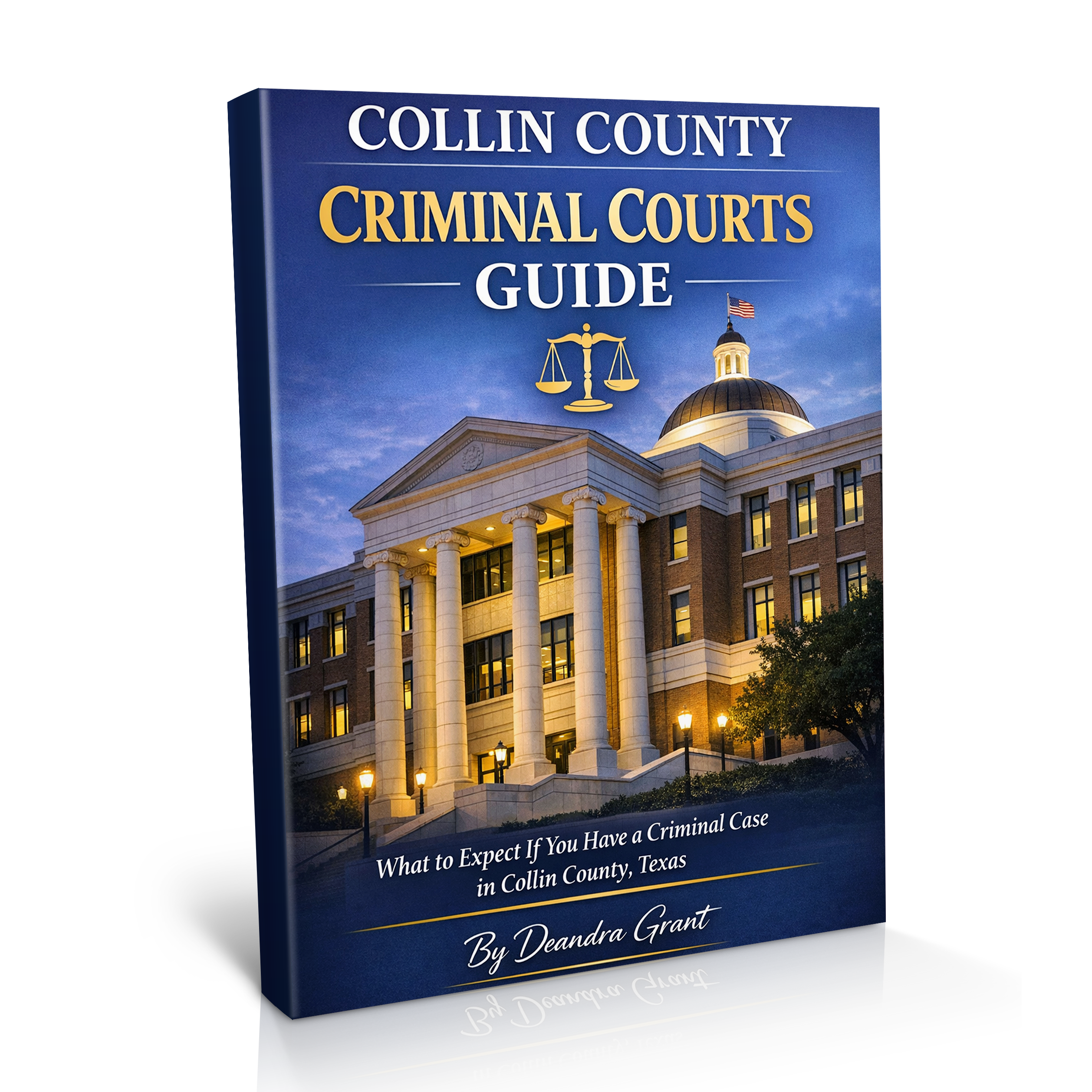
Collin County Criminal Courts Guide
By Attorney Deandra Grant
If you’re facing a criminal charge in Collin County, understanding how the local courts work can make the process far less confusing. This guide explains where cases are heard, what each court handles, and what you can expect as your case moves through the system.
Read NowFrisco Felony DWI Attorneys
A felony DWI is not a bigger misdemeanor DWI. It is a different statute, a different court, a different prosecutor assignment, and a fundamentally different kind of case. The state can seek a prison sentence starting at 2 years and reaching as high as life, depending on which felony DWI provision applies and the defendant’s prior record. Judge-granted community supervision is restricted. Parole eligibility can be halved by a deadly weapon finding. And unlike first-offense misdemeanor DWI, felony DWI cases cannot be resolved with deferred adjudication.
Felony DWI charges arising in Frisco present an unusual procedural feature. Frisco straddles the Collin County / Denton County line roughly along the Dallas North Tollway, with eastern Frisco in Collin County and western Frisco in Denton County. Criminal jurisdiction follows the location of the arrest. A case arising in eastern Frisco is prosecuted by the Collin County District Attorney’s Office at the Collin County Courthouse in McKinney. A case arising in western Frisco is prosecuted by the Denton County District Attorney’s Office at the Denton County Courthouse in Denton. Class C misdemeanor cases from either side of the city go to the Frisco Municipal Court, 7300 Public Safety Way, Frisco, TX 75034. Federal cases from either county are prosecuted in the Eastern District of Texas (Sherman Division). Many Frisco-area arrests originate from traffic stops on the Dallas North Tollway, US-380 (University Drive), SH-121 (Sam Rayburn Tollway), and Preston Road.
Deandra Grant Law has defended criminal charges in both Collin County and Denton County for more than 30 years. Our Allen office serves the Collin County side of Frisco, and our Denton office serves the Denton County side (and is actually right across the street from the courthouse). We are positioned for cases on either side of the county line without the client having to adjust representation based on where the stop occurred. Managing Partner Deandra Grant is a trained SFST instructor and holds the ACS-CHAL Forensic Lawyer-Scientist designation along with a Master of Science in Pharmaceutical Science and a Graduate Certificate in Forensic Toxicology. Partner Douglas Huff holds the same ACS-CHAL designation.
What Makes a Texas DWI a Felony
Texas recognizes four categories of felony DWI. The applicable category (and the corresponding punishment range) turns on the facts of the current case and the defendant’s prior record.
Third or Subsequent DWI — Texas Penal Code § 49.09(b)
A DWI with two or more prior DWI-related convictions is a third-degree felony. Priors under § 49.09(c) include § 49.04 DWI, § 49.05 Flying While Intoxicated, § 49.06 Boating While Intoxicated, § 49.07 Intoxication Assault, and § 49.08 Intoxication Manslaughter. Out-of-state priors count if they meet the substantial-similarity requirement.
- Third-degree felony.
- 2 to 10 years in the Texas Department of Criminal Justice.
- Criminal fine up to $10,000.
- Transportation Code § 709.001 statutory fine of $4,500 ($6,000 if BAC 0.15+).
- Driver’s license suspension of 180 days to 2 years under § 521.344.
- Mandatory 10 days in jail as a condition of probation under § 49.09(h).
- Mandatory ignition interlock under CCP Article 17.441.
- Permanent loss of firearm rights under 18 U.S.C. § 922(g)(1) and Penal Code § 46.04(a).
No lookback period. Texas repealed its DWI lookback statute in 2005. A 25-year-old DWI conviction enhances today’s case the same way a 2-year-old one does. Priors never expire for enhancement purposes. This surprises most defendants — and it is often the reason a “second DWI” expectation becomes a third-degree felony charge.
DWI with Child Passenger — Texas Penal Code § 49.045
Operating a motor vehicle while intoxicated with a passenger younger than 15 years of age is a state jail felony without regard to the defendant’s prior DWI history. A first-offense DWI with a child passenger is a felony, not a misdemeanor.
- State jail felony.
- 180 days to 2 years in a state jail facility.
- Fine up to $10,000.
- Transportation Code § 709.001 statutory fine.
- Loss of firearm rights under federal and state law.
- Collateral CPS and custody implications frequently arise.
Intoxication Assault — Texas Penal Code § 49.07
Causing serious bodily injury to another by reason of intoxication, while operating a motor vehicle, aircraft, watercraft, or amusement ride.
- Third-degree felony (2 to 10 years), enhanced in some circumstances.
- Serious bodily injury is defined in § 1.07(a)(46) — substantial risk of death, serious permanent disfigurement, or protracted loss or impairment of the function of any bodily member or organ.
- The state must prove that the intoxication, not some independent cause, produced the injury.
- A deadly weapon finding (vehicle as deadly weapon) is standard and triggers the 50% parole eligibility rule under Government Code § 508.145(d).
The “by reason of the intoxication” causation element. The state must prove not just that the defendant was intoxicated and that the accident happened, but that the intoxication caused the serious bodily injury. Where the accident was caused by the other driver’s negligence, adverse road conditions, or mechanical failure, the causation element is a defense pressure point that vendor-written content routinely misses.
Intoxication Manslaughter — Texas Penal Code § 49.08
Causing the death of another by reason of intoxication, while operating a motor vehicle, aircraft, watercraft, or amusement ride.
- Second-degree felony.
- 2 to 20 years in prison.
- Fine up to $10,000.
- Transportation Code § 709.001 statutory fine.
- Intoxication Manslaughter is a 3g offense under CCP Article 42A.054. Judge-granted community supervision is restricted; only a jury can recommend community supervision in limited circumstances.
- With a deadly weapon finding (vehicle as deadly weapon), parole eligibility is 50% of the sentence (up to 30 years) under Government Code § 508.145(d). A 20-year Intoxication Manslaughter sentence with a deadly weapon finding means 10 years before any parole consideration.
- The state must prove causation (that the intoxication produced the death). A fatal accident where an independent intervening cause contributed may not satisfy the causation element.
The §49.09(h) Mandatory Jail Minimum on Probation
This is the provision most frequently missed in discussions of repeat-DWI cases. Under Penal Code §49.09(h), if the court grants probation on a Third or Subsequent DWI, the defendant must serve a mandatory minimum of 10 days in county jail as a condition of probation. This is not the same as the punishment range of the conviction. It is a separate statutory floor that attaches even to a probated sentence. The minimum is not negotiable and not waivable.
3g Consequences on Intoxication Manslaughter
Intoxication Manslaughter is one of the few DWI offenses on the CCP Article 42A.054 3g list. The consequences:
- Judge-granted community supervision is not available.
- Only a jury can recommend probation, and only where the defendant has no prior felony conviction.
- Where a deadly weapon finding is entered, Government Code §508.145(d) requires the defendant to serve the lesser of half the sentence or 30 years before parole eligibility. On a 20-year sentence with a deadly weapon finding, that means 10 years minimum before parole consideration.
- A vehicle can be a deadly weapon in DWI-involving-death cases. Both the Collin County DA’s office and the Denton County DA’s office routinely include deadly weapon allegations on Intoxication Manslaughter indictments.
Defending an Intoxication Manslaughter case therefore requires a jury-trial posture from day one.
Habitual Offender Enhancement — § 12.42
A fourth or subsequent DWI with prior felony convictions can be enhanced under Penal Code §12.42:
- §12.42(a) second-degree enhancement. A third-degree felony is enhanced to second-degree (2 to 20 years) with one prior final felony conviction. A fourth DWI with one prior felony DWI can become a 2-to-20 range.
- §12.42(d) habitual offender. A felony is enhanced to 25 years to life with two prior final penitentiary convictions. For a defendant with two or more prior felony DWIs, a new DWI charge can carry a 25-to-life range — an exposure many multi-prior DWI defendants do not anticipate.
Mandatory Interlock and Statutory Fines
CCP Article 17.441 mandatory ignition interlock. For any felony DWI case — and for second DWI, BAC 0.15+, and DWI with Child Passenger — Article 17.441 requires ignition interlock as a condition of bond. The court has no discretion to waive this absent unusual circumstances. Interlock is also typically required as a condition of any occupational license issued during the suspension period.
Transportation Code §709.001 statutory DWI fines. On top of the criminal fine, §709.001 imposes civil statutory fines: $3,000 on first-offense DWI, $4,500 on second offense, and $6,000 when BAC is 0.15 or higher.
Defense Strategies in Frisco Felony DWI Cases
Attacking the priors. For §49.09(b)(2) DWI 3rd cases, a prior that cannot be proved cannot enhance. Challenges to predicate convictions (jurisdiction, defective plea waivers, inadequate admonishments, identity) can reduce a DWI 3rd to misdemeanor treatment. Defective judgment paperwork is a recurring issue on very old priors.
Forensic challenges on the current case. Ethanol analysis in Texas is performed by headspace gas chromatography with flame ionization detection (GC-FID). Drug analysis is performed by LC-MS/MS. Frisco-area DWI blood specimens are typically submitted to the DPS Crime Lab in Garland, which serves both Collin and Denton Counties. Chain of custody, preservative balance, calibration, column chemistry, and measurement uncertainty are all contestable at the chemistry level.
Causation challenges on §49.07 and §49.08. The “by reason of the intoxication” element is not a given. Accident reconstruction, examination of the other driver’s conduct, and analysis of contributing factors can defeat the causation element even where the intoxication itself is proved.
Article 38.23 — no good faith exception. Many Frisco-area DWI arrests originate from stops on the Dallas North Tollway, US-380, SH-121, or Preston Road. Stops, field sobriety testing, arrests, and blood warrants are all subject to constitutional review. Texas’s exclusionary rule carries no good faith exception. Evidence from an unlawful stop or search is suppressible regardless of what it shows. Suppression motions frequently dispose of felony DWI cases that would otherwise produce substantial prison sentences.
ALR as discovery. Requesting the ALR hearing and taking the arresting officer’s testimony under oath months before the criminal case reaches its first setting produces discovery that shapes the criminal defense strategy. The ALR deadline is 15 days from the date of notice of suspension.
Sentencing mitigation. Where conviction is likely, the defense shifts to mitigation such as treatment compliance, employment, family responsibilities, and rehabilitation evidence that can produce probation rather than prison, and when prison is unavoidable, a sentence at the lower end of the range. For Intoxication Manslaughter, jury-probation advocacy and mitigation investigation are essential from the outset.
Why Deandra Grant Law for Frisco Felony DWI Defense
-
- Offices in Allen and Denton — both sides of Frisco covered. 30+ years in both Collin County and Denton County courts. 500+ trials to verdict. Wherever in Frisco the arrest occurred, the county courthouse is familiar ground.
- Trained SFST Instructor — Deandra Grant. Field sobriety test administration, scoring, and interpretation challenged in every case.
- ACS-CHAL Forensic Lawyer-Scientist — Deandra Grant and Douglas Huff. Chemical testing, breath and blood analysis, and the forensic evidence underlying the State’s case evaluated at the scientific level.
- Master of Science in Pharmaceutical Science + Graduate Certificate in Forensic Toxicology. Blood alcohol analysis, retrograde extrapolation, and the pharmacology of alcohol and drug impairment.
- Article 38.23 — no good faith exception. Every felony DWI case begins with the lawfulness of the stop, search, or seizure that produced the evidence.
- Federal defense capability. James Lee Bright handles federal cases in the Eastern District of Texas (Sherman Division) — the federal district for both Collin and Denton Counties.
- 17 published law books. Including The Texas DWI Manual
- Texas Super Lawyer since 2011.
- AV® Preeminent rated by Martindale-Hubbell®.
If you are facing felony DWI charges in Frisco — whether on the Collin County or Denton County side — call (214) 225-7117 for a free, confidential consultation. Or schedule online at texasdwisite.com.
Related Blogs
Ask Deandra: How Accurate Is the Breathalyzer in Texas?
By Deandra Grant, J.D., M.S. (Pharmaceutical Science), ACS-CHAL Forensic Lawyer-Scientist The question: How accurate is [...]
Ask Deandra: What Is a SCRAM Device?
The question: What is a SCRAM device? The short answer: A SCRAM device is a [...]

What Counts as ‘Reasonable Suspicion’? A Plain-English Guide to the Supreme Court’s Latest Fourth Amendment Ruling
On April 20, 2026, the United States Supreme Court issued its decision in District of [...]
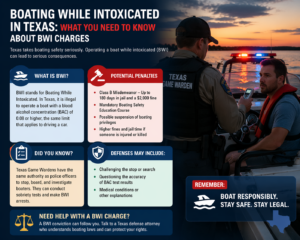
Boating While Intoxicated in Texas: What You Need to Know About BWI Charges
Texas has more than 800,000 registered recreational watercraft and some of the most active boating [...]
Before You Launch: BWI Enforcement on North and Central Texas Lakes
Texas has more than 560,000 registered boats and an estimated 359,000 additional unregistered watercraft operating [...]
Can You Get Life in Prison for a DWI in Texas? The Peace Officer Enhancement Explained
A Tarrant County jury recently sentenced DeAujalae Evans, 26, to life in prison after she [...]
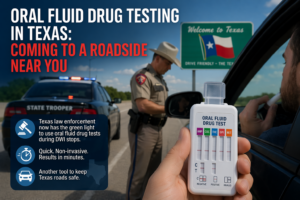
Oral Fluid Drug Testing in Texas: Coming to a Roadside Near You
Oral fluid drug testing (collecting saliva and testing it for the presence of drugs) is [...]

How Texas Uses Out-of-State DWI Convictions for Enhancement and How the Defense Challenges Them
Texas Penal Code §49.09 contains two facts that surprise most people who come to us [...]
Client Reviews

“Deandra Grant Law – Criminal & DWI Defense handled my case with diligence and professionalism. Deandra Grant’s reputation is stellar and now I know why. She has a team of individuals who provide quality service.”