
By Deandra Grant, J.D., M.S. (Pharmaceutical Science), ACS-CHAL Forensic Lawyer-Scientist, and Sol Bobst, Ph.D., DABT, ToxSci Advisors LLC
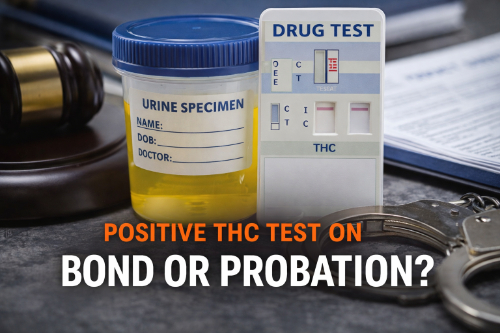
If you are on bond supervision or probation in Texas with a drug testing condition, a positive THC result is not just an administrative inconvenience. It is potential grounds for bond revocation, a probation violation hearing, and a return to custody. The stakes are real and the timeline is brutal. A positive result can move faster through the system than any scientific challenge.
When a client reports stopping cannabis use weeks ago and cannot understand why they tested positive, a defense attorney with pharmacokinetic training treats that account seriously because the pharmacokinetics of THC provide a scientifically documented explanation for exactly this situation. It is one that most drug testing programs, probation officers, and defense attorneys do not understand.
Why THC Is Different from Every Other Drug
 Most drugs are water-soluble. They circulate through the bloodstream, get metabolized by the liver, and are excreted relatively predictably. Detection windows are short and reasonably well-correlated with actual use.
THC does not behave this way. Delta-9-tetrahydrocannabinol is a highly lipophilic compound which means it is chemically attracted to fat tissue. When cannabis is consumed, THC is rapidly absorbed and preferentially deposited in the body’s fat stores: adipose tissue throughout the body, including the gonadal fat deposits where it concentrates at particularly high levels. Research has documented THC in human fat biopsies up to 28 days after last cannabis exposure. In chronic heavy users, positive urine samples have been documented up to 102 days of abstinence (Galhenage et al., 2023).
The persistence of THC in blood is equally striking. A 2025 study in Clinical Chemistry (Fitzgerald et al., 2025) measured blood THC concentrations in 190 regular cannabis users after at least 48 hours of abstinence. The results are notable: 43 percent of participants exceeded zero-tolerance cut off points (≥0.5 ng/mL), 24 percent exceeded the 2 ng/mL per se threshold used by some states, and 5.3 percent exceeded the 5 ng/mL per se threshold. This was after two or more days without use. The maximum observed baseline blood THC concentration was 16.2 ng/mL. Critically, participants who exceeded these cut off points showed no difference in driving simulator performance compared to those who were below them, demonstrating that blood THC concentration at these levels does not reflect impairment.
Under normal conditions, THC passively diffuses from fat tissue back into the bloodstream over time, following the drug’s notoriously long elimination half-life. This is why heavy cannabis users can test positive for weeks after stopping. What is less well understood (including by the courts and supervision programs that enforce drug testing conditions) is what happens when the body begins actively breaking down fat tissue. That process is called lipolysis, and it does not release THC at a slow, passive rate. It releases it in a surge.
The Science of Lipolysis and THC Redistribution
A 2009 study published in the British Journal of Pharmacology (the paper that first systematically documented this phenomenon) examined what happens when the body’s fat-burning mechanisms are activated in subjects who have stored THC in their fat tissue.
The researchers used two lipolysis-triggering conditions: administration of adrenocorticotrophic hormone (ACTH) and 24-hour food deprivation. Both produced the same result. In rats that had been repeatedly dosed with THC and then undergone a two-day washout period, food deprivation significantly increased blood THC and THC-COOH concentrations compared to controls. The increase in blood cannabinoids correlated directly with increased plasma glycerol (a marker of active fat breakdown). Critically, the ex vivo adipocytes taken from the food-deprived animals contained less THC than those from non-deprived animals which is direct evidence that the increase in blood levels came from fat-stored THC being released, not from new drug exposure.
The mechanism is straightforward pharmacologically. THC is bound to triglycerides within adipocyte tissue. When lipolysis is triggered (by fasting, by stress, by exercise) hormone-sensitive lipases hydrolyze those triglycerides into free fatty acids and glycerol. The THC sequestered within the fat cell is expelled along with those free fatty acids, enters the systemic circulation, and produces measurable increases in blood and urine THC levels.
Subsequent human studies extended this finding. A 2013 study published in Drug and Alcohol Dependence found that 35 minutes of moderate-intensity stationary cycling produced a statistically significant increase in plasma THC in 14 regular cannabis users, accompanied by increased free fatty acids and glycerol confirming that lipolysis had occurred. Body mass index correlated with the magnitude of the effect (subjects with more body fat showed larger THC spikes). The study authors concluded that exercise may elevate blood THC levels by releasing dormant fat-stored THC, with direct implications for the interpretation of blood THC levels in roadside and drug testing contexts.
The effect is not universal or guaranteed. A 2014 study using subjects with lower body mass indices found no significant changes with exercise or fasting. The likely explanation: less body fat means less stored THC available for redistribution. The effect appears more pronounced in people with higher body fat and more extensive prior cannabis use which is exactly the profile of the chronic user who has been attempting to abstain.
Screening for Consumption of Hemp or CBD Products
Defense counsel should also interview clients about consumption of hemp or cannabidiol (CBD) products. Under the USDA Farm Bill (Public Law 115-334, 2018) and the Texas Hemp Act, products can contain up to 0.3 percent active Delta-9 THC and be considered legal. Some products sold as hemp meet this requirement; some may not. If the client has documentation of what hemp or CBD products they consumed (where purchased, the packaging, a receipt, or a lot number) that information can be critical to evaluate. Reputable hemp producers should be able to produce a certificate of analysis confirming the product is under 0.3 percent THC. Urine testing of individuals who have consumed hemp or CBD products can result in positive screens several days after consumption (Odell et al., 2015; Gerace et al., 2021; Noor & Zhang, 2020).
What This Means for Someone on Bond or Probation
Texas bond supervision and probation conditions routinely require random drug testing. A person with a history of cannabis use who stops upon arrest faces a meaningful and scientifically documented risk of testing positive. This is not because of new use but because of lipolysis-driven redistribution of fat-stored THC.
The conditions most likely to trigger a positive test through this mechanism include exercise (particularly high-intensity or prolonged cardio) fasting or significant caloric restriction, rapid weight loss through diet or illness, stress-induced lipolysis (the ACTH pathway activates in response to psychological stress), and any combination of the above.
Consider the profile: someone who used cannabis regularly, was arrested, and is now trying to do everything right. The legal situation creates stress. Sleep and eating may be irregular. Exercise may have increased to manage anxiety or reduce weight. Deliberate caloric restriction may be underway. Every one of those conditions promotes lipolysis and with sufficient stored THC, lipolysis releases that stored drug back into the circulation where it will show up on a test.
The test result is real. The positive is real. The implication that the person recently used cannabis is not.
The Defense and Testing Challenge
This is not an easy argument to make in a probation violation hearing. The burden of proof in a Texas probation revocation is a preponderance of the evidence which means the court only needs to find it more likely than not that the person violated the conditions. A positive test result with a credible scientific explanation for a non-use source shifts the burden of that argument onto the defense, and making it effectively requires understanding the pharmacokinetic science well enough to explain it to a judge who almost certainly has never considered it.
Several factors matter for evaluating whether this explanation is viable in a specific case:
Timing relative to last use. The redistribution effect is most pronounced in the days and weeks immediately following cessation, when fat stores are still heavily loaded with THC. A person who stopped using one week ago has far more redistributable THC than one who stopped six months ago.
Body composition. The effect is more pronounced in individuals with higher body fat and more extensive prior use. A chronic heavy user with significant body fat who stops suddenly has a larger reservoir of stored THC than an occasional user with low body fat.
The magnitude of the positive result. A urine result just above the testing cutoff is more consistent with redistribution than a very high result. Even so, research shows that blood THC concentrations that appear alarming can reflect stored rather than recently consumed drug. The Fitzgerald et al. (2025) study documented a baseline blood THC concentration of 16.2 ng/mL in a participant who had abstained for at least 48 hours, with no impairment on driving simulator performance. Her metabolite profile confirmed she was a heavy chronic user whose elevated reading reflected her steady-state baseline, not recent smoking. In urine testing, the trajectory of results over time is often more informative than any single reading.
Corroborating circumstances. Was the person exercising intensively? Dieting aggressively? Under significant stress? Did they lose weight between their last negative test and the positive? Documented lifestyle factors that would promote lipolysis strengthen the argument.
Trend analysis. This is critical. If test results are gradually declining over time (reflecting the passive diffusion elimination of stored THC) an isolated spike above the cutoff in the context of an otherwise declining trend is more consistent with redistribution than with new use. A toxicologist who can chart the trajectory of test results over time can make this argument with data rather than speculation.
What to Do If You Are on Supervision and Test Positive
If you are on bond or probation with drug testing conditions and receive a positive THC result after a period of genuine abstinence, contact an attorney before any hearing is scheduled. Do not attempt to explain the science to the probation officer or the testing lab. Get legal counsel involved immediately.
The evaluation of whether the redistribution defense applies to a specific situation requires the actual test results over time, a documented history of cannabis use before the arrest, body composition information, and the circumstances surrounding the test (i.e. what was eaten, whether exercise occurred, what stress was present, and what weight has been doing).
The science is real. It is peer-reviewed, published in major pharmacology and clinical chemistry journals, and has direct implications for how positive drug tests should be interpreted in the supervision context. Whether that science can be successfully deployed in a specific case depends on the facts, the expert support, and the legal framework — but it is a legitimate argument, not a desperate one.
References
Fitzgerald RL, Umlauf A, Suhandynata RT, Grelotti DJ, Huestis MA, Mastropietro KF, Grant I, Marcotte TD. Per Se Driving Under the Influence of Cannabis Statutes and Blood Delta-9-Tetrahydrocannabinol Concentrations following Short-Term Cannabis Abstinence. Clinical Chemistry 71(12):1225–1233 (2025).
Galhenage J, Rodrigo A. Prolonged detection of cannabis in urine of a consumer in a Forensic hospital, Victoria, Australia, up to 102 days of abstinence — A case report. Psychiatry Research Case Reports 2:100089, 1–5 (2023).
Gerace E, Salomone A, Pramod A, Di Corcia D, Vincenti M. Determination of cannabinoids in urine, oral fluid, and hair samples after repeated intake of CBD-rich cannabis by smoking. Forensic Science International 318:110596 (2021).
Gunasekaran N, Long LE, Dawson BL, Hansen GH, Richardson DL, Li KM, Arnold JC, McGregor IS. Reintoxication: the release of fat-stored Δ9-tetrahydrocannabinol (THC) into blood is enhanced by food deprivation or ACTH exposure. British Journal of Pharmacology 158(5):1330–1337 (2009).
Noor A, Zhang F. Can cannabidiol use cause a false positive tetrahydrocannabinol urine drug screen? In: Toxicology Cases for the Clinical and Forensic Laboratory, Chapter 11.2, pp. 183–185. Academic Press (2020).
Odell MS, Frei MY, Gerostamoulos D, Chu M, Lubman DI. Residual cannabis levels in blood, urine and oral fluid following heavy cannabis use. Forensic Science International 249:173–180 (2015).
Contact Deandra Grant Law
Drug testing conditions attached to bond or probation are enforced aggressively, and a positive result can move toward revocation before any scientific challenge can be mounted. If you or someone you know is facing a positive THC test while under court supervision, and there is a credible basis for arguing that the result reflects redistribution rather than recent use, experienced defense counsel with genuine forensic science training needs to be involved immediately.
Deandra Grant Law brings ACS-CHAL Forensic Lawyer-Scientist credentials and a Master of Science in Pharmaceutical Science to this analysis. The pharmacokinetic argument (the lipolysis mechanism, the redistribution timeline, the body composition factors, and the trend analysis of test results) requires scientific training to evaluate and present effectively. This firm has that training.
Call (214) 225-7117 or visit texasdwisite.com for a confidential consultation.
About the Authors
Deandra Grant, J.D., M.S. is the Managing Partner of Deandra Grant Law and an ACS-CHAL Forensic Lawyer-Scientist who teaches the ACS forensic chromatography and drug analysis courses at Axion Analytical Labs and serves on the faculty of the Robert F. Borkenstein Drug Course at Indiana University. She holds a Master’s Degree in Pharmaceutical Science (Forensic Science Concentration) from the University of Florida College of Pharmacy and a Graduate Certificate in Forensic Toxicology from UF’s College of Veterinary Medicine. She is a member of the American Academy of Forensic Sciences, the American Chemical Society, the Society of Toxicology, and the International Association of Forensic Toxicology Consultants. She chairs the DUI Defense Lawyers Association’s Board Certification program. Stereochemistry, enantiomers, and chiral separation are core concepts in her pharmaceutical science training which is the kind of expertise that most attorneys simply do not have.
Sol Bobst, Ph.D., DABT is a board-certified toxicologist (Diplomate, American Board of Toxicology) and the founder of ToxSci Advisors LLC. Dr. Bobst provides forensic toxicology consulting, expert witness testimony, and scientific review services to attorneys and organizations across the United States. His expertise in analytical toxicology, drug metabolism, and the interpretation of drug testing results makes him a trusted resource in cases involving complex pharmacological questions.