Highland Park, Texas, is a 2.2-square-mile enclave within Dallas that is home to approximately 9,000 residents — and one of the most aggressive DWI enforcement postures in North Texas. If you have been arrested for DWI in Highland Park, your case carries challenges and stakes that differ significantly from a DWI arrest anywhere else in Dallas County.
As attorneys who have defended Highland Park DWI cases for more than 30 years, we want to explain why these cases are different and what you need to know.
Highland Park Has Its Own Police Department
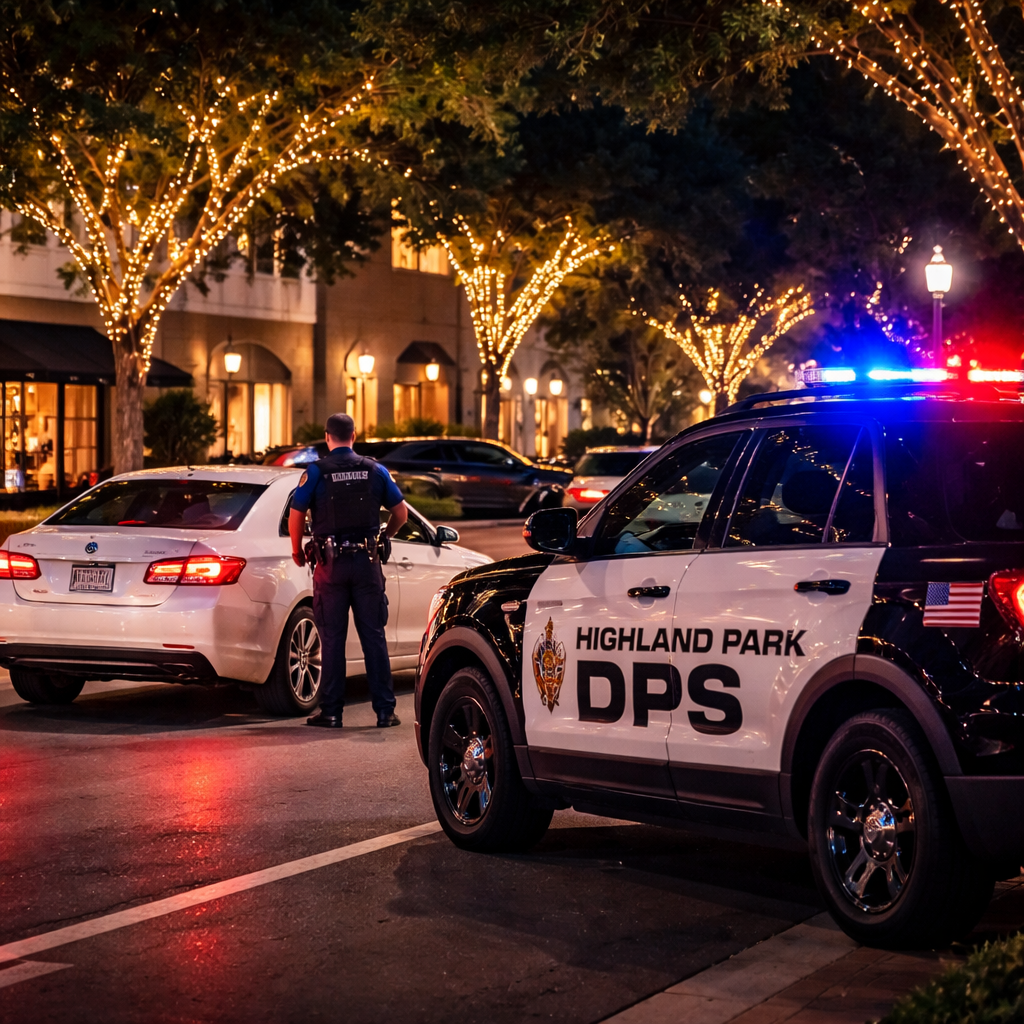
Unlike most Dallas neighborhoods, Highland Park is an independent municipality with its own Department of Public Safety (DPS). Highland Park DPS is a well-funded, well-trained police force that operates independently of the Dallas Police Department. The department’s patrol area is small (just a few square miles) which means officers develop an intimate familiarity with every street, every intersection, and every pattern of traffic in the town.
This matters for DWI enforcement because Highland Park officers are not spread across a large city. Their patrol area is compact, they know every restaurant and bar within their jurisdiction, and they have the resources to conduct thorough traffic enforcement without the competing priorities that occupy officers in larger departments. The result is a high per-capita DWI arrest rate.
Key Enforcement Areas
Highland Park DWI arrests tend to cluster around specific corridors and areas:
- Mockingbird Lane: One of the primary east-west arterials through Highland Park, connecting to SMU and the broader Dallas restaurant and bar scene. Officers frequently patrol this corridor during evening and late-night hours.
- Preston Road: The main north-south commercial corridor, with restaurants, bars, and Highland Park Village. High-visibility enforcement is common here, particularly on weekends.
- Armstrong Parkway and Lakeside Drive: Residential streets where officers observe driving patterns (speed variations, failure to signal, wide turns) that may indicate impairment.
- Highland Park Village and Vicinity: The upscale retail and dining center generates significant evening traffic, and officers are positioned to observe drivers departing restaurants and bars.
The Stakes Are Higher for Highland Park Residents
Highland Park is one of the wealthiest communities in Texas. Its residents include corporate executives, physicians, attorneys, financial professionals, business owners, and prominent families. A DWI conviction carries the same statutory penalties regardless of where you live, but the collateral consequences for Highland Park residents are disproportionately severe:
- Professional Licensing: Physicians, attorneys, CPAs, financial advisors, real estate brokers, and other licensed professionals face mandatory reporting obligations and potential disciplinary proceedings from their licensing boards. A DWI conviction can trigger a board investigation even if the criminal penalties are modest.
- Security Clearances: Defense contractors, government employees, and executives with access to classified information may lose their security clearances following a DWI conviction and with them, their positions.
- Corporate Governance: Board members, C-suite executives, and managing partners may face contractual consequences, morality clause issues, or shareholder/partner pressure following a DWI arrest.
- Immigration Consequences: Non-citizen residents, including those on work visas or holding green cards, face potential immigration consequences from a DWI conviction, including inadmissibility issues and removal proceedings.
- Reputation: In a tightly knit community, a DWI arrest becomes known quickly. The social and reputational fallout can affect business relationships, school parent communities, club memberships, and social standing.
How Highland Park DWI Cases Are Prosecuted
Despite Highland Park’s independent police department, DWI cases are prosecuted through the Dallas County court system. First-offense DWI (Class B misdemeanor) is heard in one of the 11 County Criminal Courts at the Frank Crowley Courts Building. Repeat DWI, DWI with a child passenger, intoxication assault, and intoxication manslaughter are felonies heard in the Criminal District Courts.
The Dallas County DA’s office handles prosecution. Highland Park DPS officers are generally well-trained and thorough in their documentation. Their reports tend to be detailed, video evidence is typically available, and officers are experienced witnesses. This means that challenging a Highland Park DWI often requires a more sophisticated scientific defense rather than relying on procedural shortcomings.
Why the Pharmaceutical Science Degree Matters in Highland Park DWI
When a Highland Park DWI case reaches the evidence phase, it often comes down to the science. Blood draws are common in Highland Park DWI arrests. Officers routinely obtain warrants for blood draws, and samples are sent to the Southwestern Institute of Forensic Sciences (SWIFS) or other accredited labs for analysis.
Challenging these results requires an attorney who can go beyond the standard playbook of “we challenge blood tests.” It requires understanding:
- GC-FID Calibration: How the gas chromatograph’s flame ionization detector is calibrated, whether internal standards were properly used, and whether the calibration curve was valid for the reported concentration range
- Sample Preservation: Whether the blood sample was properly preserved with sodium fluoride and potassium oxalate, whether it was refrigerated within the required timeframe, and whether in vitro fermentation may have produced ethanol in the tube after collection
- Partition Ratio Variability: Breath testing instruments assume a blood-to-breath alcohol ratio of 2100:1. This ratio varies significantly among individuals — a fact that can produce falsely elevated readings. Understanding why requires knowledge of pulmonary physiology and Henry’s Law.
- Retrograde Extrapolation: The prosecution may attempt to use a BAC result obtained 60–90 minutes after the traffic stop to estimate BAC at the time of driving. This calculation depends on individual absorption and elimination rates that vary based on body composition, food intake, time since last drink, and genetic factors — all variables that the pharmaceutical science degree equips Deandra Grant to analyze
- Prescription Drug Interactions: Highland Park residents are often taking prescribed medications. A DWI arrest involving a combination of alcohol and prescription drugs raises complex pharmacokinetic questions about drug-drug interactions, cytochrome P450 metabolism, and the additive or synergistic effects of combined substances
Deandra Grant’s Master’s Degree in Pharmaceutical Science and Graduate Certificate in Forensic Toxicology provides the scientific foundation to address every one of these issues. The ACS-CHAL Forensic Lawyer-Scientist designation, which both Deandra Grant and Partner Douglas Huff hold, adds hands-on instrument-level training in the specific analytical techniques used by crime labs.
This combination is something no other attorney in Dallas County offers.
Discretion and Confidentiality
We understand that for Highland Park residents, a DWI arrest is not just a legal problem. It is also a personal and professional crisis. Every consultation at Deandra Grant Law is confidential and protected by attorney-client privilege. We handle cases with the discretion that your situation demands, and our defense strategies account for the full range of consequences you face, not just the criminal penalties.
Contact Deandra Grant Law
If you have been arrested for DWI in Highland Park, time matters. You have 15 days from the date you are served notice of suspension to request an Administrative License Revocation (ALR) hearing to protect your driving privileges. Contact Deandra Grant Law at (214) 225-7117 or visit texasdwisite.com for a free, confidential consultation.
Our Dallas office is at 3300 Oak Lawn Avenue, Suite 700, Dallas, TX 75219 — minutes from Highland Park.