


Overview
Heroin is a Penalty Group 1 controlled substance in Texas, placing it alongside cocaine, methamphetamine, and fentanyl in the category that carries the state’s harshest drug penalties. Possession of as little as 1 gram is a second-degree felony. Possession of 4 grams or more is a first-degree felony with a potential life sentence. Every heroin charge is built on forensic evidence (identification of the substance, quantification of the weight, and the chain of custody connecting what was seized to what was analyzed) and every category of that evidence can be challenged.
The forensic landscape of heroin cases has changed significantly with the rise of fentanyl adulteration of the heroin supply. What is sold as heroin may contain fentanyl, fentanyl analogs, or no heroin at all which raises both identification questions and, in cases involving overdose deaths, potential escalation to murder-level charges under Texas Penal Code §19.02.
Deandra Grant Law defends heroin charges across North and Central Texas. Managing Partner Deandra Grant holds a Master’s Degree in Pharmaceutical Science, a Graduate Certificate in Forensic Toxicology, and the ACS-CHAL Forensic Lawyer-Scientist designation. Partner Douglas Huff holds the same ACS-CHAL designation and completed digital forensics training.
Texas Penalty Structure for Heroin
Heroin is charged under the Penalty Group 1 schedule. The penalty level is determined by the weight of the entire mixture, not the weight of pure heroin it contains.
Possession (§481.115)
• Less than 1 gram: State jail felony — 180 days to 2 years, fine up to $10,000.
• 1 to less than 4 grams: Third-degree felony — 2 to 10 years, fine up to $10,000.
• 4 to less than 200 grams: Second-degree felony — 2 to 20 years, fine up to $10,000.
• 200 to less than 400 grams: First-degree felony, enhanced minimum — 10 to 99 years or life, fine up to $100,000.
• 400 grams or more: First-degree felony, enhanced minimum — 10 to 99 years or life, fine up to $100,000.
Delivery and Manufacturing (§481.112)
• Less than 1 gram: State jail felony — 180 days to 2 years, fine up to $10,000.
• 1 to less than 4 grams: Secon-degree felony — 2 to 20 years, fine up to $10,000.
• 4 to less than 200 grams: First-degree felony — 5 to 99 years up to life, fine up to $10,000.
• 200 to less than 400 grams: First-degree felony, enhanced minimum — 10 to 99 years or life, fine up to $100,000.
• 400 grams or more: First-degree felony, enhanced minimum — 15 to 99 years or life, fine up to $250,000.
The Forensic Science of Heroin Cases
The Fentanyl Adulterant Problem
The most significant forensic development in heroin cases over the past decade is the widespread adulteration of the heroin supply with fentanyl and fentanyl analogs. Street heroin in Texas routinely contains fentanyl mixed in varying concentrations, or in some cases no heroin at all — only fentanyl sold under the heroin label.
This adulteration has several forensic and legal consequences:
• Identification of the specific substance. A positive presumptive test for opiates does not identify the specific opioid present. Confirmatory analysis by LC-MS/MS (liquid chromatography-tandem mass spectrometry) must distinguish heroin (diacetylmorphine) from fentanyl, carfentanil, acetylfentanyl, and other analogs. These are different controlled substances that may be classified differently, carry different penalty structures, and require separate proof.
• Fentanyl in the mixture changes the weight analysis. If the seized substance contains both heroin and fentanyl, the prosecution must establish which substance’s weight it is relying on for the charge level. The mixture-weight rule applies, but the specific controlled substance identified determines which statute governs.
• Drug delivery resulting in death. When fentanyl-adulterated heroin causes a fatal overdose, the person who delivered the substance may be charged with murder under Texas Penal Code §19.02 (a first-degree felony carrying 5 to 99 years or life). These prosecutions require the state to establish both causation (the delivered substance caused the death) and delivery (the exchange was a transfer, not shared use). The forensic toxicology of the overdose (the concentration of heroin metabolites versus fentanyl in the decedent’s blood, and what each concentration implies about the timing and amount consumed) is central to these cases.
Heroin Metabolism: The 6-MAM and Morphine Problem
Heroin (diacetylmorphine) is rapidly metabolized in the body. After administration, heroin is quickly hydrolyzed to 6-monoacetylmorphine (6-MAM), which is itself further hydrolyzed to morphine. Heroin has a half-life in blood of approximately 2 to 3 minutes. 6-MAM has a half-life of approximately 20 to 30 minutes. Morphine persists for hours.
This metabolic cascade has important forensic consequences for blood specimen analysis in heroin cases:
• A blood specimen collected more than 30 minutes after heroin administration may show only morphine, with no detectable heroin or 6-MAM. Morphine is also a metabolite of codeine and is present in poppy seeds. A blood test showing morphine but not 6-MAM is not specific to heroin use.
• The presence of 6-MAM in a blood specimen is highly specific to heroin use — 6-MAM is not a metabolite of any other common opioid. A positive 6-MAM finding is strong evidence of recent heroin use, but its absence does not establish that heroin was not used.
• The timing of the blood draw relative to any alleged drug use affects what can be detected and at what concentration. LC-MS/MS is the preferred analytical methodology for detecting heroin, 6-MAM, and morphine in biological specimens due to its superior sensitivity and specificity at the low concentrations involved, and its ability to simultaneously quantify multiple analytes in a single run without the derivatization steps required by GC-MS.
LC-MS/MS Identification and Its Challenges
Liquid chromatography-tandem mass spectrometry (LC-MS/MS) is the preferred confirmatory methodology for heroin and its metabolites in biological specimens. It offers superior sensitivity compared to GC-MS, does not require chemical derivatization of polar compounds like morphine and 6-MAM, and can simultaneously identify and quantify multiple opioids in a single analytical run.
The defense should obtain the complete LC-MS/MS analytical data (the chromatogram, the mass transitions used for each analyte, the calibration curve, and the quality control sample results) not just the summary report. Specific challenges include: whether the mass transitions selected adequately distinguish heroin metabolites from isobaric interferences; whether the calibration range encompassed the concentrations found in the specimen; whether internal standards were used and whether they co-eluted appropriately with the analytes of interest; and whether the laboratory’s method was validated for the specific matrix (blood, urine, vitreous humor) from which the specimen was taken.
The Mixture-Weight Rule at Threshold Weights
Street heroin varies significantly in purity (from less than 10% to over 90% depending on the supply chain). The weight used to calculate the charge level is the weight of the entire mixture, not the weight of pure heroin. At penalty thresholds (particularly the 1-gram boundary between state jail felony and second-degree felony, and the 4-gram boundary between second-degree and first-degree felony) the total mixture weight and the margin of error of the measuring instrument are both legitimate forensic challenges.
Chain of Custody
A heroin specimen must be traceable from the point of collection through booking, evidence storage, and laboratory analysis. Heroin and its metabolites are subject to hydrolysis over time, which can affect the relative concentrations of diacetylmorphine, 6-MAM, and morphine if specimens are improperly stored or delayed in processing. Any gap in the chain of custody documentation, or evidence of improper storage conditions, is a foundation for a challenge to the integrity of the result.
The Constitutional Foundation: Article 38.23
Texas Code of Criminal Procedure Article 38.23 (the exclusionary rule with no good faith exception) suppresses evidence obtained through an unlawful stop, an overbroad search, or a constitutionally defective seizure. Heroin cases frequently arise from traffic stops, informant tips, and controlled buys. The legality of the initial encounter, the basis for the search, and the reliability of any informant whose tip supported the warrant are all questions the defense must evaluate from the outset.
Why Deandra Grant Law
• ACS-CHAL Forensic Lawyer-Scientist — both Deandra Grant and Douglas Huff.
• Digital forensics training. Cell phone data, social media, CDR records, and metadata examined at the data level.
• 30+ years of criminal defense experience. 500+ trials to verdict across North and Central Texas.
• 17 published law books. Including Arrested for Drugs in Texas
• Texas Super Lawyer since 2011. AV® Preeminent rated by Martindale-Hubbell®.
• Offices in Dallas, Fort Worth, Allen, Denton, Waco, and Rockwall. North and Central Texas courts served directly.
• Federal defense capability. James Lee Bright handles federal charges in all four Texas federal districts.
If you are facing heroin charges in Texas, call (214) 225-7117 for a free, confidential consultation. Or schedule online at texasdwisite.com.
Attorneys Who Handle This Charge
Meet the attorneys who will personally handle your heroin defense.

Douglas E. Huff
Read Attorney Profile
Jada Fairley
Read Attorney Profile
Jason Bowes
Read Attorney Profile
Kevin Sheneberger
Read Attorney ProfileOffices Handling These Cases
Find the Deandra Grant Law office nearest you for heroin defense across Texas.

Allen
1333 W. McDermott Drive, Suite 180, Allen, TX 75013 Visit This Office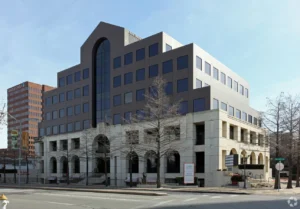
Dallas (HQ)
3300 Oak Lawn Avenue, Suite 700, Dallas, TX 75219 Visit This Office
Denton
1317 E. McKinney Street, Suite 101A, Denton, TX 76209 Visit This Office
Fort Worth
4500 Airport Freeway, Suite 101, Fort Worth, TX 76117 Visit This Office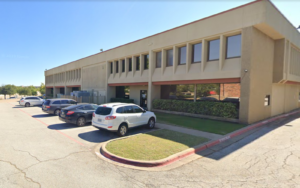

Waco
605 Austin Avenue, Suite 5, Waco, TX 76701 Visit This OfficeCourthouses We Appear In
Courthouses where our attorneys represent clients facing this charge across Texas.

Bell County Courts
Everything you need to know about criminal court in Bell County, Texas: where cases are heard at the…
View Courthouse Info
Collin County Courts
Everything you need to know about criminal court in Collin County, Texas: where cases are heard at the…
View Courthouse Info
Cooke County Courts
Everything you need to know about criminal court in Cooke County, Texas: where cases are heard in Gainesville,…
View Courthouse Info
Coryell County Courts
Everything you need to know about criminal court in Coryell County, Texas: where cases are heard in Gatesville,…
View Courthouse Info
Dallas County Courts
Everything you need to know about criminal court in Dallas County, Texas: where cases are heard at the…
View Courthouse Info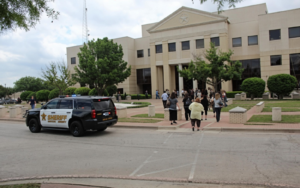
Denton County Courts
Everything you need to know about criminal court in Denton County, Texas: where cases are heard at the…
View Courthouse Info
Ellis County Courts
Everything you need to know about criminal court in Ellis County, Texas: where cases are heard at the…
View Courthouse Info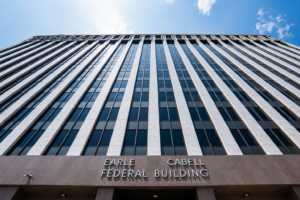
Federal Courts
Deandra Grant Law defends federal criminal cases across all four federal districts in Texas, the District of Columbia,…
View Courthouse Info
Grayson County Courts
Everything you need to know about criminal court in Grayson County, Texas: where cases are heard in Sherman,…
View Courthouse Info
Johnson County Courthouse
Everything you need to know about criminal court in Johnson County, Texas: where cases are heard at the…
View Courthouse Info
Kaufman County Courts
Everything you need to know about criminal court in Kaufman County, Texas: where cases are heard at the…
View Courthouse Info
McLennan County Courts
Everything you need to know about criminal court in McLennan County, Texas: where cases are heard at the…
View Courthouse Info
Rockwall County Courts
Everything you need to know about criminal court in Rockwall County, Texas: where cases are heard at the…
View Courthouse Info
Tarrant County Courts
Everything you need to know about criminal court in Tarrant County, Texas: where cases are heard at the…
View Courthouse Info