
Overview
Texas can prove a DWI in two independent ways under Penal Code section 49.01, and the state only has to prove one of them. The first is the per se prong: an alcohol concentration of 0.08 or more. The second is the loss-of-faculties prong: that you did not have the normal use of your mental or physical faculties because of alcohol, drugs, or any combination.
That second prong is why a person can be arrested and convicted with a BAC under 0.08, or with no chemical test at all. To prove either prong, the state relies on your driving, the officer’s observations, your field sobriety test performance, and anything you said, and every one of those can be challenged.
Texas defines intoxication two ways
Most people think a DWI requires a 0.08 reading. It does not. Texas Penal Code section 49.01(2) defines intoxicated in two separate ways, and either one is independently sufficient:
- (A) not having the normal use of mental or physical faculties because of the introduction of alcohol, a controlled substance, a drug, a dangerous drug, a combination of those, or any other substance, or
- (B) having an alcohol concentration of 0.08 or more.
The state does not have to prove both. It has to prove either one. That structure is the key to understanding how a DWI case works in Texas. The 0.08 prong is called the per se prong, and it is the one most people know about. The loss-of-faculties prong is called the impairment prong, and it is the one that catches defendants by surprise. Both have been part of Texas law for decades, both are charged regularly, and in cases where the chemical evidence is weak, the impairment prong is often where the state plants its flag.
Yes, you can be charged under 0.08
Because the impairment prong does not require any specific number, an officer can arrest and a prosecutor can charge a person whose BAC is below 0.08, or who was never tested at all. A few common scenarios:
- A low-BAC arrest based on roadside performance. A driver blows a 0.06, performs poorly on field sobriety tests, and is arrested on the loss-of-faculties theory. The lab confirms the sub-0.08 result, and the case proceeds on the impairment prong anyway.
- A drug-only DWI. A driver who used cannabis, a prescription medication, or any other substance can be charged on impairment even with no alcohol in their system, because the statute covers any substance.
- A refusal with no test. When there is no chemical result, the state builds the entire case on the officer’s observations and the field sobriety tests.
This is the prong that drives many of the most contestable DWI prosecutions in Texas, precisely because it rests on subjective judgment rather than a number.
The four kinds of evidence the state builds a case on
Whether the case runs on the per se prong, the impairment prong, or both, prosecutors assemble it from the same categories of evidence. Knowing what they are tells you where a case can fall apart.
- Driving behavior. Weaving, speeding or unusually slow driving, failure to maintain a lane, missing a stop sign, hitting a curb, or an accident. Each of these has innocent explanations, and the driving facts in the report often look very different on the dashcam video.
- Officer observations. Bloodshot eyes, slurred speech, the odor of alcohol, fumbling for documents, unsteady balance, and confused responses. These are subjective, and many have ordinary causes like fatigue, allergies, contacts, or anxiety.
- Field sobriety test performance. Officer-scored clues on the eye test, the walk-and-turn, and the one-leg stand. These tests are only valid when administered exactly to protocol, and on the roadside that often does not happen.
- Statements. Admissions about drinking, comments about the night, and anything inconsistent with normal mental functioning. This is why staying quiet about the night protects the record.
Witness testimony, from bartenders, passengers, or other drivers, can supplement these, but the four categories above are the backbone of almost every Texas DWI case.
How police prove a drug-based DWI
When the suspected cause is drugs rather than alcohol, a breath test is useless, because it only measures ethanol. The state turns to two things. First, a blood draw, often by warrant, analyzed for controlled substances or medications. Second, a Drug Recognition Evaluator, an officer trained in a standardized 12-step protocol developed by the International Association of Chiefs of Police and NHTSA, who examines eyes, vital signs, and divided-attention tests to form an opinion about drug impairment. Both the lab analysis and the DRE opinion can be challenged, because the presence of a substance is not the same as impairment behind the wheel.
The seven drug categories, and the limits of a DRE
The Drug Recognition Evaluator program sorts substances into seven categories: central nervous system depressants, central nervous system stimulants, hallucinogens, dissociative anesthetics, narcotic analgesics, inhalants, and cannabis. After the 12-step exam, the officer gives an opinion about which category is supposedly causing impairment. Two things are worth keeping in mind: a DRE is a police officer trained in a protocol, not a physician, and the reliability of these evaluations has been questioned in research. The opinion is evidence, but it is challengeable evidence, especially because having a drug in your blood does not prove it impaired your driving at the time.
Where the proof breaks down
Every category of DWI evidence has a weakness, and a serious defense reviews all of them against the video, the report, and the lab file. The driving facts usually have innocent explanations. The officer’s observations are subjective and often contradicted by the footage. The field sobriety tests are easy to administer incorrectly, and their accuracy collapses when the protocol is not followed. Statements obtained improperly can be suppressed. And the chemical test, the supposedly objective number, has its own long list of failure points from the collection through the lab.
At Deandra Grant Law, this review happens at the level of the science, not just the paperwork. Managing Partner Deandra Grant is an ACS-CHAL Forensic Lawyer-Scientist with a Master’s Degree in Pharmaceutical Science and a certified SFST instructor who administers and grades the same field sobriety tests officers use. When the case rests on the impairment prong, that combination is exactly what is needed to take it apart.
Frequently Asked Questions
How does Texas prove a DWI?
Texas proves a DWI under Penal Code section 49.01 in either of two ways: an alcohol concentration of 0.08 or more, or the loss of the normal use of mental or physical faculties because of alcohol, drugs, or a combination. The state only has to prove one. It builds the case from your driving, the officer’s observations, your field sobriety test performance, and your statements.
Can I be arrested for DWI in Texas if my BAC is under 0.08?
Yes. The 0.08 limit is only one way Texas defines intoxication. Under the loss-of-faculties prong, you can be arrested and charged with a BAC below 0.08, or with no test at all, if the officer believes you lost the normal use of your faculties.
What is the difference between the per se prong and the impairment prong?
The per se prong is the 0.08-or-more standard, based on a chemical test number. The impairment prong is the loss-of-normal-use standard, which requires no specific number and rests on the officer’s observations and the field sobriety tests. Either is enough for a conviction.
Can police prove a DWI without a breath or blood test?
Yes. With no chemical test, the state proves impairment through driving behavior, officer observations, field sobriety test performance, and any statements you made. These are subjective and contestable, which is often where the defense focuses.
How do police prove a drug DWI?
A breath test does not detect drugs, so police rely on a blood draw analyzed for substances and on a Drug Recognition Evaluator who follows a 12-step protocol. Both can be challenged, because the presence of a drug is not proof of impairment while driving.
What is a DRE in a drug DWI case?
A Drug Recognition Evaluator is a police officer trained in a 12-step protocol who sorts suspected impairment into seven drug categories. A DRE is not a doctor, the evaluation’s reliability has been questioned, and the opinion can be challenged in court.
Charged With DWI, Even With a Low or No Test Result?
The impairment prong rests on subjective judgment, and subjective evidence can be challenged. Deandra Grant Law has defended DWI cases on both prongs across Dallas, Fort Worth, North Texas, and Waco for more than 30 years. Call (214) 225-7117 for a free, confidential consultation.
Attorneys Who Handle This Charge

Douglas E. Huff
Read Attorney Profile
Jada Fairley
Read Attorney Profile
Jason Bowes
Read Attorney Profile
Kevin Sheneberger
Read Attorney ProfileOffices Handling These Cases
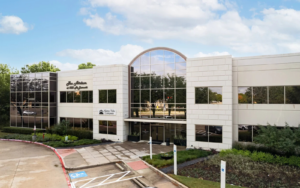
Allen
1333 W. McDermott Drive, Suite 180, Allen, TX 75013 Visit This Office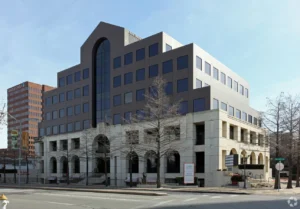
Dallas (HQ)
3300 Oak Lawn Avenue, Suite 700, Dallas, TX 75219 Visit This Office
Denton
1317 E. McKinney Street, Suite 101A, Denton, TX 76209 Visit This Office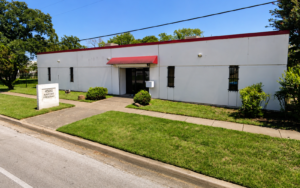
Fort Worth
4500 Airport Freeway, Suite 101, Fort Worth, TX 76117 Visit This Office
Waco
605 Austin Avenue, Suite 5, Waco, TX 76701 Visit This OfficeBooks & Guides
The Texas DWI Manual
Get the Book
Surviving Your DWI in McLennan County
Get the Book
Surviving Your DWI in Bell County
Get the Book
Surviving Your DWI in Hays County
Get the Book
Surviving Your DWI in Tarrant County
Get the Book
Surviving Your DWI in Travis County
Get the Book
Surviving Your DWI in Kaufman County
Get the Book
Surviving Your DWI in Rockwall County
Get the Book
Surviving Your DWI in Ellis County
Get the Book
Surviving Your DWI in Grayson County
Get the Book
Surviving Your DWI in Cooke County
Get the Book
Surviving Your DWI in Collin County
Get the Book
Surviving Your DWI in Denton County
Get the Book