
Home »


Do You Need Legal Help?

"Deandra Grant Law fights hard for their clients and is always willing to go above and beyond. They are the best firm for DWI cases in DFW and beyond. Definitely hire them to represent you in any pending cases."
- P. Williams
"Deandra Grant made a tough situation so much better. She listened to my concerns and helped me so much with my case. I would recommend her to anyone needing legal services."
- M. Haley
"Deandra Grant Law handled my case with diligence and professionalism. Deandra Grant's reputation is stellar and now I know why. She has a team of individuals who provide quality service."
- N. Coulter
As Seen On






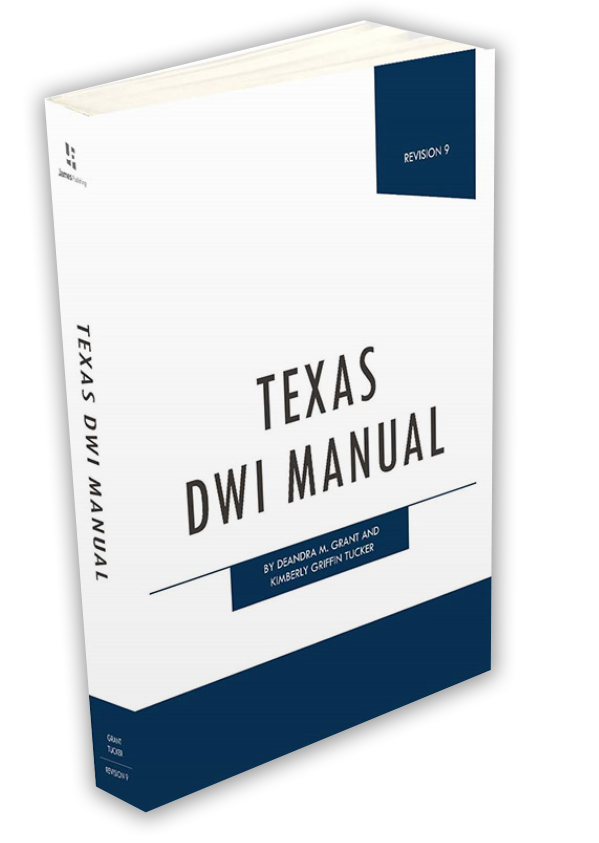
Texas DWI Manual
By Attorney Deandra Grant
Fighting DWI charges can present many challenges, not only for the defense, but prosecutors as well. This is why it is important to be armed with the necessary knowledge so you understand the DWI process.
Attorney Deandra M. Grant is the co-author of the Texas DWI Manual, offering legal advice to both clients and fellow attorneys.
Learn MoreAllen Hit and Run DWI Lawyers
A hit and run DWI in Texas is not one charge but potentially two. The DWI is prosecuted under Texas Penal Code § 49.04 as either a Class B or Class A misdemeanor (with felony elevations for prior convictions, serious injury, or death). The “hit and run” is prosecuted separately as Failure to Stop and Render Aid (FSRA) under Texas Transportation Code §§ 550.021 through 550.026. Depending on what happened at the scene, FSRA can be a $500 Class C ticket or a second-degree felony with exposure to twenty years in state prison. Which one it becomes depends on whether someone was hurt and, critically, on what the state can prove about what the driver knew.
Deandra Grant Law represents clients facing FSRA and DWI-plus-FSRA charges in Allen, Plano, McKinney, Frisco, and throughout Collin County. Call (214) 225-7117 to discuss your case.
The Texas FSRA Framework — Transportation Code Chapter 550
Texas’s “hit and run” statutes are a set of duty-imposing and offense-creating provisions in Transportation Code Chapter 550.
§ 550.021— Accident Involving Personal Injury or Death
The principal FSRA statute. A driver involved in an accident resulting in injury or death must:
- Immediately stop the vehicle at the scene or as close as possible;
- Return to the scene immediately if not possible to stop at the scene;
- Determine whether a person is injured in the accident; and
- Remain at the scene until the driver has complied with § 550.023 (duty to provide information and render aid).
Failure to comply with § 550.021 is punished according to the outcome of the accident:
- Accident involving death — third-degree felony. 2 to 10 years in prison and a fine of up to $10,000.
- Accident involving serious bodily injury — third-degree felony. 2 to 10 years in prison and a fine of up to $10,000.
- Accident involving bodily injury short of SBI — Class A misdemeanor. Up to 1 year in county jail and a fine of up to $4,000.
§ 550.022 — Accident Involving Damage to Vehicle
A driver involved in an accident resulting in damage to a vehicle driven or attended by another person must stop and comply with § 550.023. Failure to comply is:
- Class B misdemeanor if damage to vehicles is $200 or more (up to 180 days in county jail).
- Class C misdemeanor if damage is less than $200 (fine only).
§ 550.023 — Duty to Give Information and Render Aid
A driver involved in an accident must give to any person involved in the accident:
- Name, address, and vehicle registration number;
- Name of the driver’s insurer, on request;
- Reasonable assistance to any injured person, including transporting or arranging transportation to medical care if apparent or requested.
§ 550.024 — Damage to Fixtures
A driver whose vehicle strikes and damages a sign, utility pole, guardrail, mailbox, fence, or other structure on or near the roadway must take reasonable steps to locate and notify the owner and must report the accident to law enforcement. Violation is a Class B or Class C misdemeanor depending on the damage amount.
When DWI and FSRA Combine
DWI under Penal Code § 49.04 and FSRA under Transportation Code § 550.021 are separate offenses. A driver who is intoxicated and leaves the scene of an accident with injury can be charged with both, and convictions on both produce separate sentences that can run concurrently or consecutively.
First-Offense DWI + FSRA (injury short of SBI)
Two Class A misdemeanor charges (if first-offense DWI BAC 0.15+) or one Class A FSRA and one Class B DWI. Maximum combined exposure: up to 2 years in county jail if run consecutively. This is typically a misdemeanor-court case in Collin County.
DWI + FSRA (serious bodily injury or death)
The DWI side may also be charged as § 49.07 Intoxication Assault (third-degree felony) or § 49.08 Intoxication Manslaughter (second-degree felony), in addition to § 550.021 FSRA (third-degree felony). A case involving an intoxicated driver who leaves the scene of a fatal accident can carry 20+ years of stacked felony exposure.
Intoxication Assault and Intoxication Manslaughter
- § 49.07 Intoxication Assault — third-degree felony (2 to 10 years). Causing serious bodily injury to another by reason of intoxication while operating a motor vehicle.
- § 49.08 Intoxication Manslaughter — second-degree felony (2 to 20 years). Causing the death of another by reason of intoxication while operating a motor vehicle. This is a 3g offense under CCP Article 42A.054, which restricts judge-granted community supervision and imposes 50% parole eligibility under Government Code § 508.145(d) if a deadly weapon finding (including the vehicle as a deadly weapon) is entered.
Related Videos
Certified in the science and testing of DWI enforcement
Appealing a DWI or BWI
Biggest Mistakes of a DWI Charge
Lawyer Scientist Certification
Boating while intoxicated with a child
DWI with a child in the car
Can I travel out of country with a DWI?
Going to Canada with a DWI
Choosing a DWI attorney
Choosing quality over cost with a DWI attorney
Cost of a DWI attorney
Cost of a BWI attorney
DWI on your criminal record
DWI probable cause
DWI while operating a boat
DWI with prior convictions
Emotional state of a DWI client
How long does a DWI conviction stay on my record?
How long will a DWI case take?
Operating a boat during pending DWI charges
Out-of-state DWI Arrest
Police didn’t have probable cause
Relieving stress of a DWI client
Prescription Drug DWI
Texas DWI Manual
Underage DWI Penalties
Charged with a DWI while sitting in your car
First time DWI charge
Second DWI charges
Third DWI charges
Being sent to jail for a first time DWI
Being sent to jail for multiple DWIs
Can I defend myself against a DWI charge?
Can I refuse a breathalyzer test?
Can refusing a breath or blood test help my case?
College age child arrested for DWI
Court process for a DWI charge
DWI license suspension
Driving during your license suspension
Legal alcohol limit
DWI with injury penalties
DWI written case evaluations
Expunging a DWI charge
Ignition Interlock Device
Losing your job from a DWI
Losing your license from a DWI
Penalties from a DWI conviction
Plea bargaining a DWI charge
Will pleading guilty reduce a DWI charge?
Refusing to answer police questions during a DUI arrest
Refusing field sobriety tests
Why you should choose a DWI attorney with lawyer scientist certification
The Knowledge Element — Often Overlooked, Often Winnable
FSRA under § 550.021 requires that the driver knew (or was criminally negligent in failing to know) that an accident had occurred and that another person was potentially involved. Knowledge is frequently the weakest link in the state’s case and a central focus of the defense:
- Minor impacts at night or at low speed may not have produced noticeable vibration, sound, or visual feedback.
- A struck pedestrian or cyclist outside the driver’s line of sight may not have been visible at impact.
- Weather conditions, road noise, radio volume, and vehicle design can all affect whether a driver would have known an accident occurred.
- A driver who becomes aware of the accident only upon stopping elsewhere and examining the vehicle has a different knowledge profile than a driver who felt and heard the collision.
Where the state cannot prove knowledge beyond a reasonable doubt, the FSRA charge fails.
Texas Has No “Vehicular Manslaughter” Offense
The Texas offenses that cover causing death in a motor vehicle context are:
- Intoxication Manslaughter (§ 49.08) — second-degree felony. Causing death by reason of intoxication.
- Manslaughter (§ 19.04) — second-degree felony. Recklessly causing death.
- Criminally Negligent Homicide (§ 19.05) — state jail felony. Criminally negligent conduct causing death.
- Murder (§ 19.02) — first-degree felony. Intentional, knowing, or certain reckless causing of death (including felony murder).
Each has distinct elements. A fatal accident is not automatically any of these.
Driver’s License Consequences
FSRA convictions carry their own driver’s license consequences, on top of any DWI-related license suspensions:
- FSRA conviction involving injury or death — 6-month mandatory driver’s license suspension under Transportation Code § 521.345.
- DWI conviction — license suspension of 90 days to 2 years under § 521.344, depending on offense level.
- ALR suspension — administrative suspension under Chapters 524 or 724 for failed test or refusal.
- Occupational license is often available under Chapter 521, Subchapter L, with ignition interlock installation where required.
How Hit and Run DWI Cases Are Defended
Challenge the Knowledge Element
The defendant must have known, or under circumstances should have known, that an accident occurred. A driver who unknowingly struck a stationary object at low speed, who thought the impact was with a pothole or debris, or who did not realize that a pedestrian or cyclist was involved may lack the required knowledge. Knowledge is a fact question and is frequently contested with the help of accident reconstruction, vehicle inspection, and investigation of the lighting, weather, and road conditions at the scene.
Challenge the Identification
In many hit-and-run prosecutions, the state relies on eyewitness descriptions, license plate identifications, video, and circumstantial evidence to prove who was driving. Identification challenges (especially where the investigation was conducted hours or days after the incident) can be dispositive.
Challenge the DWI Element Separately
The DWI portion of the case has its own defense framework. Field sobriety test administration, blood and breath test validity, probable cause for the stop, Fourth and Fifth Amendment issues, and the reliability of the state’s forensic evidence are all contestable under the same framework as any DWI.
Challenge the § 550.023 Duty Compliance
Where the allegation is failure to provide information, the defense examines whether information was in fact provided, whether the other party was available to receive it, and whether the driver took reasonable steps. Partial compliance, interrupted compliance, and good-faith attempts to comply are all fact-specific defense angles.
Forensic Review of the DWI Component
Breath and blood testing in FSRA-DWI cases is subject to the same forensic scrutiny as any DWI case (GC-FID column chemistry, calibration, chain of custody, measurement uncertainty, and method validation).
Where Collin County Hit and Run DWI Cases Are Heard
Class A and Class B misdemeanor FSRA and DWI cases in Collin County are filed in the Collin County Courts at Law. Felony FSRA cases (§ 550.021 involving injury or death), Intoxication Assault cases (§ 49.07), and Intoxication Manslaughter cases (§ 49.08) are filed in the Collin County Criminal District Courts at the Collin County Courthouse, 2100 Bloomdale Road, McKinney. The Collin County Criminal District Attorney’s Office prosecutes all criminal cases in Collin County.
Related Blogs
Frequently Asked Questions
What’s the difference between “hit and run” and FSRA?
“Hit and run” is a colloquial term. Texas calls the offense Failure to Stop and Render Aid (FSRA), codified at Transportation Code § 550.021 and related provisions. The elements are specific: the driver must have been involved in an accident, known (or been criminally negligent in not knowing) that an accident occurred, and failed to satisfy the statutory stopping and information duties.
Can I be convicted of FSRA if I didn’t know I hit anything?
No, knowledge is an element of FSRA. The state must prove that the defendant knew an accident had occurred. A driver who genuinely did not know (because the impact was minor, the conditions obscured the collision, or the struck person was outside the driver’s field of view) has a defense. Knowledge is fact-specific and frequently contested.
Are DWI and FSRA charged as one offense or two?
Two. DWI and FSRA are separate offenses under different codes, with different elements. A driver can be convicted of one without the other, and convictions on both produce separate sentences that can run concurrently or consecutively.
If someone died, am I facing a murder charge?
Not necessarily. Texas has specific offenses for causing death in a motor vehicle context: Intoxication Manslaughter (§ 49.08, second-degree felony) when intoxication caused the death; Manslaughter (§ 19.04, second-degree felony) for reckless conduct; Criminally Negligent Homicide (§ 19.05, state jail felony) for negligent conduct; and Murder (§ 19.02, first-degree felony) for intentional or knowing conduct. Which charge applies depends on the culpable mental state the state can prove.
Will I lose my license?
Possibly yes through both the DWI side (§ 521.344 conviction suspension and Chapters 524/724 ALR suspension) and the FSRA side (§ 521.345 mandatory 6-month suspension for injury or death FSRA). An occupational license is often available with proper petition and interlock installation where required.
About Deandra Grant Law
Deandra Grant Law is a Texas criminal defense firm with offices in Allen, Dallas, Fort Worth, Denton, Waco, and Rockwall.
Deandra M. Grant, Managing Partner
- More than 30 years in practice, focused on criminal defense and DWI
- Former prosecutor
- J.D.; M.S. in Pharmaceutical Sciences
- Graduate Certificate in Forensic Toxicology
- ACS-CHAL Forensic Lawyer-Scientist from the American Chemical Society
- Standardized Field Sobriety Test (SFST) Instructor
- Texas Super Lawyer since 2011
- Author of 17 law books including The Texas DWI Manual
- Executive Director, DUI Defense Lawyers Association (DUIDLA)
Douglas E. Huff, Partner
- ACS-CHAL Forensic Lawyer-Scientist
- Digital forensics and electronic evidence training
- Extensive North Texas trial experience
James Lee Bright, Of Counsel
- National federal criminal defense practice
- Admitted to all four Texas federal districts, the District of Columbia, the Fifth Circuit Court of Appeals, and the Supreme Court of the United States
Contact Our Allen Hit and Run DWI Attorneys
FSRA cases move fast. Surveillance video from nearby businesses is often available for only limited retention periods. Witness memories fade. Vehicle damage evidence deteriorates. The investigator’s first theory about what happened often becomes the charging theory unless the defense is prepared to present an alternative explanation early. For FSRA cases where DWI is also alleged, the stakes compound and the defense strategy must address both charges in parallel.
Call Deandra Grant Law at (214) 225-7117 to schedule a consultation. We serve Allen, Plano, McKinney, Frisco, and all of Collin County from our Allen office.
Client Reviews

“Deandra Grant Law – Criminal & DWI Defense handled my case with diligence and professionalism. Deandra Grant’s reputation is stellar and now I know why. She has a team of individuals who provide quality service.”
N. Coulter


(214) 225-7117
Experienced DWI Defense